UPDATE: Following the publication of this article, a spokesperson for Spotify contacted InsideHook with the news that they had removed the fake King Gizzard songs from the platform. “Spotify strictly prohibits any form of artist impersonation. The content in question was removed for violating our platform policies, and no royalties were paid out for any streams generated,” they added. The original article follows.
This week, two of the biggest trends in streaming music converged in the worst possible way. One of those trends involves artists taking their music down from the service, including Deerhoof and Xiu Xiu, citing political concerns as their reason for opting out. The other is Spotify’s ongoing issue with, for lack of a better phrase, fake artists: music generated by an algorithm to capitalize on what’s currently popular.
One of the bands that have opted out of having their music on Spotify is the Australian psych band King Gizzard & the Lizard Wizard, who have grown steadily from a cult act to a group capable of playing multiple nights at New York City’s Forest Hills Stadium. They have taken a bold and admirable stance in stepping away from Spotify — and so, of course, scammers are now trying to capitalize on this.
In an article at Futurism, Victor Tangermann reported on a likely AI-generated interloper seeking to capitalize on King Gizzard’s absence from Spotify. Tangermann notes that a Spotify user recently found themselves being promoted music by an artist using the name “King Lizard Wizard,” whose songs shared titles with actual King Gizzard & the Lizard Wizard songs.
It goes deeper than that. Tangermann writes that “every song uploaded by the knockoff ‘King Lizard’ artist on Spotify has the same title as an actual King Gizzard song, with its corresponding lyrics ripped straight from the source.” This is, to put it mildly, gross behavior — and apparently it’s working, as the King Gizzard knockoffs have received thousands of streams, according to Futurism’s reporting.
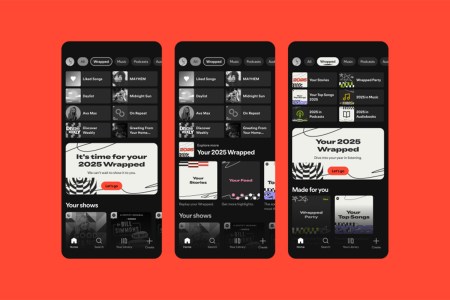
Spotify Is Trying to Guess Your Listening Age, and It’s Embarrassing
For its personalized year-end Spotify Wrapped, the streaming service used an odd series of metrics to determine your age in music tasteFaking music by a popular artist to ride their coattails towards financial success is nothing new. In an article for Pitchfork in 2015, Maura Johnston wrote about the existence of copies of popular hits, described as “soundalike versions courtesy of faceless outfits with vague names.” But in 2015, someone looking to do this still had to actually record a song; with the rise of AI technology, it’s become much easier to produce something in this vein without recording a note of music. In other words, it’s streamlining a system that rewards bad behavior.

More Like This


This article appeared in an InsideHook newsletter. Sign up for free to get more on travel, wellness, style, drinking, and culture..