The Drinking Culture of South Korea
With renewed interest in traditional beverages, excellent cocktail bars and world-class drinking snacks, Korea knows how to have a good time

To celebrate the incredible drinking cultures of Asia, we dove deep into eight different countries to get to know a little more about what’s in their glasses and how it got there in the first place. Click here to see them all.
Few countries have successfully exported their culture around the world in recent decades quite like South Korea. The border-crossing “K-wave” encompasses movies, music, TV dramas and, increasingly, food and drinks.
“As Korean culture has gained global popularity, interest in Korea’s F&B culture has naturally grown as well,” says Demie Kim, co-founder of Seoul’s Zest, one of the top-ranked bars in the world. Kim thinks locality is a key trend right now, and has seen both international visitors and Koreans showing more interest in local products.
Korean drinks are rooted in tradition, but the recent uptick in cocktail bars and craft breweries and distilleries means that it’s now easier than ever to find good drinks. And because local customs dictate that food should accompany drinks, snacks are always within reach.
South Korea is a multi-faceted country with a lot going on, so it’s impossible to cover everything. But consider this guide a primer — and perhaps some travel inspiration — for drinking in Korea.
Iconic Beverages That Define the Culture
Makgeolli
There are three basic categories of Korean alcohol, aka “sool” — fermented, distilled, and fortified — explains Alice Jun, the founder of the rice wine producer Hana Makgeolli in Brooklyn. Makgeolli falls into the fermented category. It’s a traditional, sedimented Korean rice wine below 10% ABV. It’s cloudy and often contains fruity notes as a result of the esters created during the fermentation process. Makgeolli is readily available by the bottle in Korean restaurants and supermarkets, but the best introduction is via the freshly made versions at Hana or one of the many makgeolli breweries in Korea.
“We are to sake what saison is to beer,” says Jun. “When you drink our wines, the energy or acid in them is that much more vibrant, and it has the same effect as a saison does in comparison to a pilsner.”
Soju
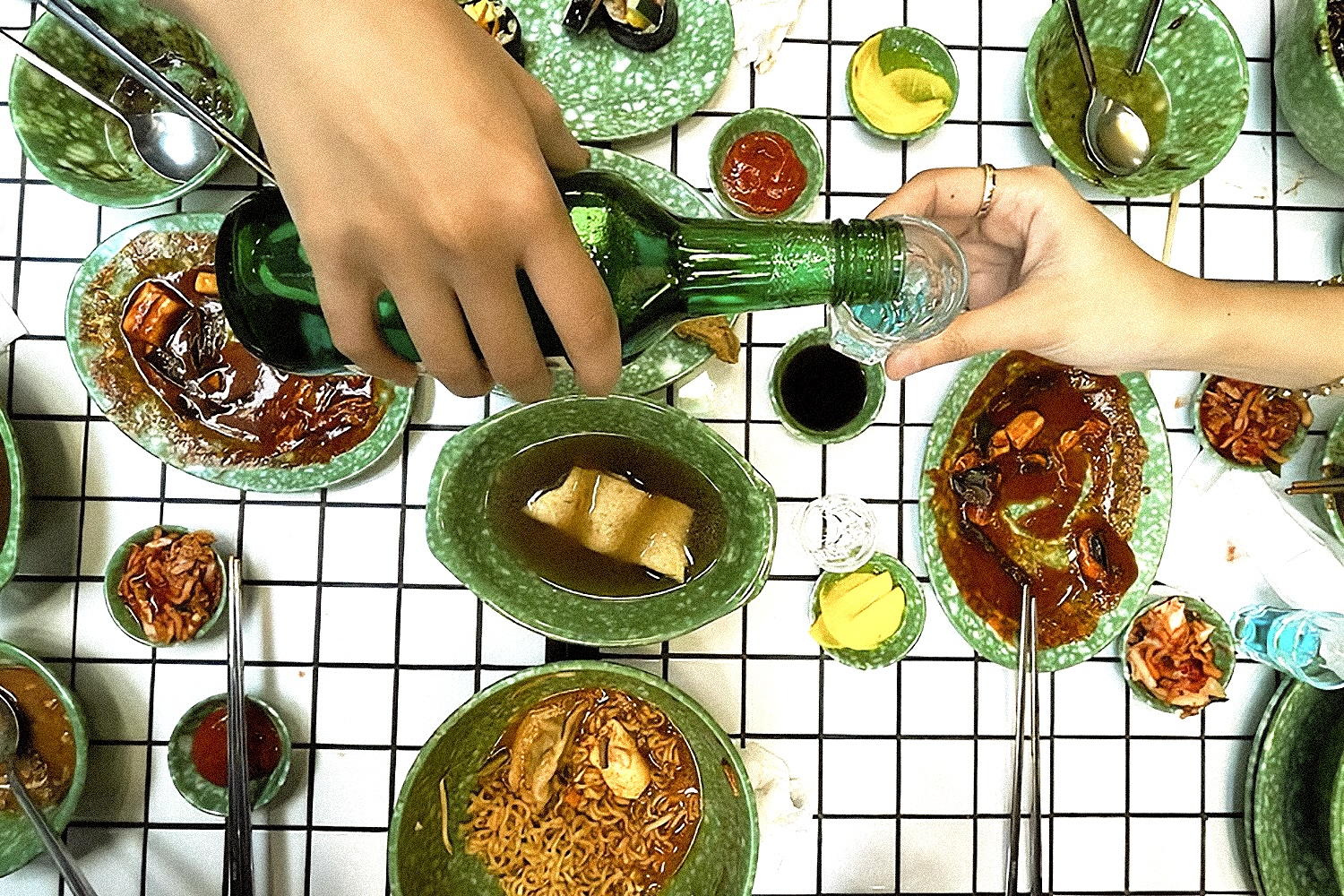
Soju is a Korean distilled spirit traditionally made with rice, but modern versions today often contain other starches, like wheat, potato or barley. Jun explains that there’s a major distinction between traditional soju and “green bottle soju.” The latter term refers to conventional bottles that often exclude the traditional fermentation starter, nuruk, are made with neutral grain spirits, adjusted with artificial sweeteners and sold under 25% ABV. Green bottle soju dominates the market, but it’s worth seeking out craft sojus to taste the spirit the way it was meant to be experienced.
Beer
Beer is everywhere in Korea, available at bars, restaurants and food stalls, and served at any time of day. Popular mass-market brands include Cass, Hite and Terra, but there are also craft breweries around the country making a variety of styles, from lagers to IPAs. At restaurants, beer is often shared among the table and consumed in small glasses, and it’s a regular partner to soju, either consumed side-by-side or together as somaek. This portmanteau of soju and maekju (the Korean word for beer) is basically a boilermaker that combines soju with beer.
Plus, the Homemade Thing
Home brewing and distilling aren’t as common as they used to be, explains Jun, who learned to brew from her father. But Koreans still make their own alcohol, makgeolli more so than soju. For generations, this was based on necessity, especially among those in smaller towns who couldn’t just pop down the street to a bar or liquor store. Drinks like makgeolli were vital to ceremonies and kept at the dinner table to drink with meals.
In the 1900s, Japanese occupation led to a ban on homebrewing and a complete consolidation of conventional breweries. There was also a prohibition on using rice for drinks because people needed it for food. “This almost decimated the makgeolli category,” says Jun, noting that post-colonization production and industrialization led to lower ABVs and the use of other grains besides rice. While homemade alcohols aren’t as common these days, it’s important to distinguish between craft and industrial products, which Jun says is relevant now more than ever. “I don’t think many of us really want to drink aspartame anymore.”

Yearly Events Around Drinking
Korean Makgeolli Festival
The Korea Makgeolli Festival is held every October at Ilsan Cultural Park in Goyang, a suburb of Seoul. Attendees can sample makgeolli from all over Korea and participate in hands-on activities, like brewing demonstrations.
Korean Sool Grand Festival
South Korea’s biggest festival dedicated to traditional alcoholic beverages is held each November in Seoul. Breweries, wineries and distilleries gather at this government-run event to showcase their products, and consumers come to sample and learn about the country’s native drinks.
Yeongdong Wine Festival
This annual festival occurs in October in Yeongdong-gun, Korea’s leading wine-producing region. It offers a variety of programs, such as wine tastings, wine competitions and live performances, and local markets sell agricultural products from the region.

Drinking Snacks
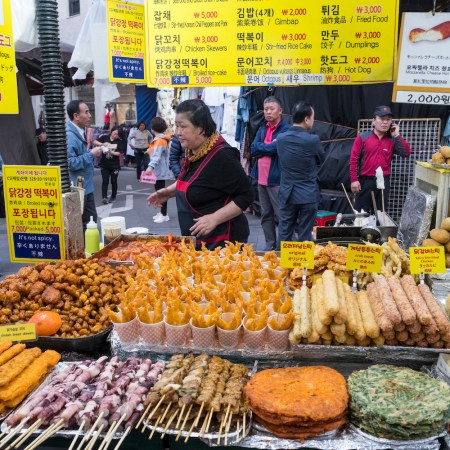
“In Korea, any food that is eaten together with alcohol is called anju,” explains Sung Yoon Kim, who gives food tours in Seoul. Anju can generally be categorized into three types: soup-based dishes, heartier dishes starring meat and seafood, and dried snacks.
“The soup culture is highly developed here,” Kim says, “so people often look for soups when drinking alcohol.”
Scallion pancakes are a classic pairing with makgeolli, and braised pork, barbecue and sliced raw fish are commonly eaten alongside soju. Fried chicken and dried snacks like cuttlefish and squid are especially popular with beer.
“Koreans not only drink a lot, but they also pay great attention to hangover relief so they can go to work the next day without difficulty,” says Kim. Haejang culture refers to eating certain foods the next day to soothe the stomach after a night of heavy drinking. He says that typical haejang dishes include sundaeguk (blood sausage soup), jjambbong (spicy seafood noodle soup), seolleongtang (ox bone soup), yukgaejang (spicy beef soup) and bokguk (pufferfish soup). “Everyone has their own favorite dish for haejang.”
Iconic Drinking Establishments
Zest is named both for the outer skin of citrus fruit and as an abbreviation for “zero waste,” Demie Kim says of his bar, which is currently ranked second on Asia’s 50 Best Bars list and ninth in the world. The name “embodies our philosophy of sustainable fine drinking,” he adds. The bar team is inspired by nature and strives to minimize waste at every turn. They work closely with local producers and feature locally grown ingredients in drinks. “Through this, we aim to show our guests what it truly means to enjoy drinks responsibly — building a sustainable fine drinking culture where the environment, community and people coexist in harmony.”
Another 50 Best favorite (currently number six in Asia), Bar Cham is situated in a hanok, or traditional Korean house. The wood-lined bar stocks an impressive selection of spirits from Korea and around the world, and enlists lots of local ingredients, including herbs, roots and teas, in its cocktails. Try them all. If there’s a wait when you arrive, the team may suggest you pop into nearby Pomme, a great spot in its own right that comes from the same owner.
If you’re pressed for time, you can accomplish a lot within the cozy confines of Four Seasons Seoul. It’s home to three great bars. Charles H. is named for the legendary American author Charles H. Baker and serves a global menu of meticulously made cocktails. The newly opened H. Bar is a laboratory-style bar that resides within Charles H, mixing hyper-seasonal local ingredients with techniques like rotary evaporation and centrifugation. It’s just eight seats and serves an eight-course cocktail experience paired with three snacks. Then there’s OUL, a polished ode to traditional Korean flavors and ingredients. Seasonal cocktails are made with local spirits, and a selection of anju complements the drinks.
Go down the stairs and through the hidden door into a spectacle that channels Alice, she of Wonderland fame. Drinking in this good-looking Seoul lounge begins with a white rose and a whimsical, picture-heavy menu of seasonal cocktails. Each is intricate and technical, but well-balanced, so it’s easy to make your way through a few of them. If you start seeing a mad hatter, it’s probably time to go.
Pull the right book from the bookshelf and you’ll gain access to this speakeasy-style bar, which opened in 2014. It’s all dark woods, rich leathers and fancy chandeliers inside, and the space feels like an industry of titan’s personal library. Shelves are stocked with whiskies, and well-dressed bartenders shake and stir thoughtful cocktails, many presented with unique garnishes or extra flair.

5 Rules for Drinking Like a Local
“In the past, drinking was largely seen as a way to become intoxicated, but today it is more about savoring flavors and strengthening social connections with those you are drinking with,” explains Ike Ryu, assistant head bartender at OUL. These etiquette rules will help you navigate drinking in Korea.
1. Drink with food, and never drink alone. “The spirit of Korean drinking is about abundance and community,” says Jun.
2. Don’t pour your own drink. It is customary to serve others, and then let them serve you.
3. Turn away to drink. This applies more to younger drinkers, who may turn their heads away from elders when drinking as a sign of respect or humility, says Ryu.
4. Pour and receive drinks with two hands. It’s a general sign of respect.
5. Cheers and drink together. In formal settings, like a business dinner or even a family holiday, don’t rush to take a sip. Wait until a toast has been given, then drink with the group.
Cocktail Recipes
Hwachae
“Hwachae originates from the Joseon Dynasty, where it was enjoyed as a refreshing beverage made by floating flower petals and seasonal fruits in honey water,” explains Ryu. “It was often served in royal courts and noble households to welcome esteemed guests. In modern times, it has evolved into more of a dessert food, typically made with watermelon mixed with soda, or assorted fruits combined with carbonated beverages. At OUL, we reimagined this heritage drink into a cocktail inspired by its traditional roots.”
- 40 ml. Korean gin
- 45 ml. pear juice
- 15 ml. chrysanthemum honey
- 1 splash ginger ale
Add gin, pear juice and chrysanthemum honey to a glass, and mix well. Add a splash of ginger ale. Add ice and stir again before garnishing with a pear cut into flower shapes and edible flowers on top.
Gusu Highball
“This highball is especially perfect for cooling down during the hot summer months,” says Ryu.
- 45 ml. barley-infused soju
- 10 m. simple syrup
- Soda water, to top
Infuse one bottle of distilled soju with roasted barley tea for about one day. Strain through a fine strainer or coffee filter. Add barley-infused soju and sugar syrup to a highball glass. Fill with ice, top with soda water, then mix gently. Garnish with a piece of nurungji (toasted rice cracker) or a nurungji chip on top for a nutty aroma that pairs beautifully with the crisp effervescence.
Somaek
If you want to keep things simple, try somaek, the two-part combo of soju and beer. Recipes vary, but a common ratio is 30% soju and 70% beer.
- 3 parts soju
- 7 parts Korean beer
Add soju to a glass, then top with cold beer. Stir (or slam a metal spoon down into the middle of the glass) to create foam, and drink quickly.

More Like This

We're always on the scene eating, drinking and traveling near and far to bring you the best of what's happening out in the real world. Sign up for IRL now.