The Drinking Culture of India
Both heritage drinks and modern cocktailing have a place in the country’s $52-billion-and-growing booze market

To celebrate the incredible drinking cultures of Asia, we dove deep into eight different countries to get to know a little more about what’s in their glasses and how it got there in the first place. Click here to see them all.
The most populous country in the world, India is as rich and diverse in drinking culture as it is in climate, language and cuisine. Indian drinking culture dates back to the civilizations of the Indus Valley circa 2000 BCE, whose fermentation vessels were used for brewing and distilling grains, fruits and flowers. The Rigveda, the oldest Indian Sanskrit text, also references multiple alcoholic beverages, including the now-lost Soma, a hallucinogenic plant-based fermented drink that was believed to have divine properties and was used in religious ceremonies. Colonization and different cultural influences brought new drinks to India, the Mughals bringing wine and rum, the Portuguese Feni and the British whisky, gin and beer.
While India’s increasingly metropolitan urban centers are now home to globally acclaimed craft breweries and distilleries, a myriad of hyperlocal drinks can be found across India’s 28 states and eight territories, demonstrating a proud indigenous drinking culture. Regional variants of rice, millet, sap, fruits, herbs and spices are all fermented, often at home, to make drinks as diverse as sake-esque Sonti; strong, cloudy Ludgi and Chaang; medicinal Xaj; Judima rice wine and Khodo Ko Jaanr – a “hot beer” served with boiling water.
In a nation known for its impressive historic sites, stunning landscapes and, of course, delectable regional food scene, the dynamic Indian drinks culture is a newer but no less significant reason to visit. Factors including greater disposable income, access to social media and international travel – India has the world’s largest diaspora – are all contributors to the recent explosion of growth in the domestic drinks sector, with local producers fighting restrictive codes and legislation to challenge international macro brands for market space, while brewers and mixologists are experimenting with global techniques and local ingredients to make incredibly exciting and innovative drinks.
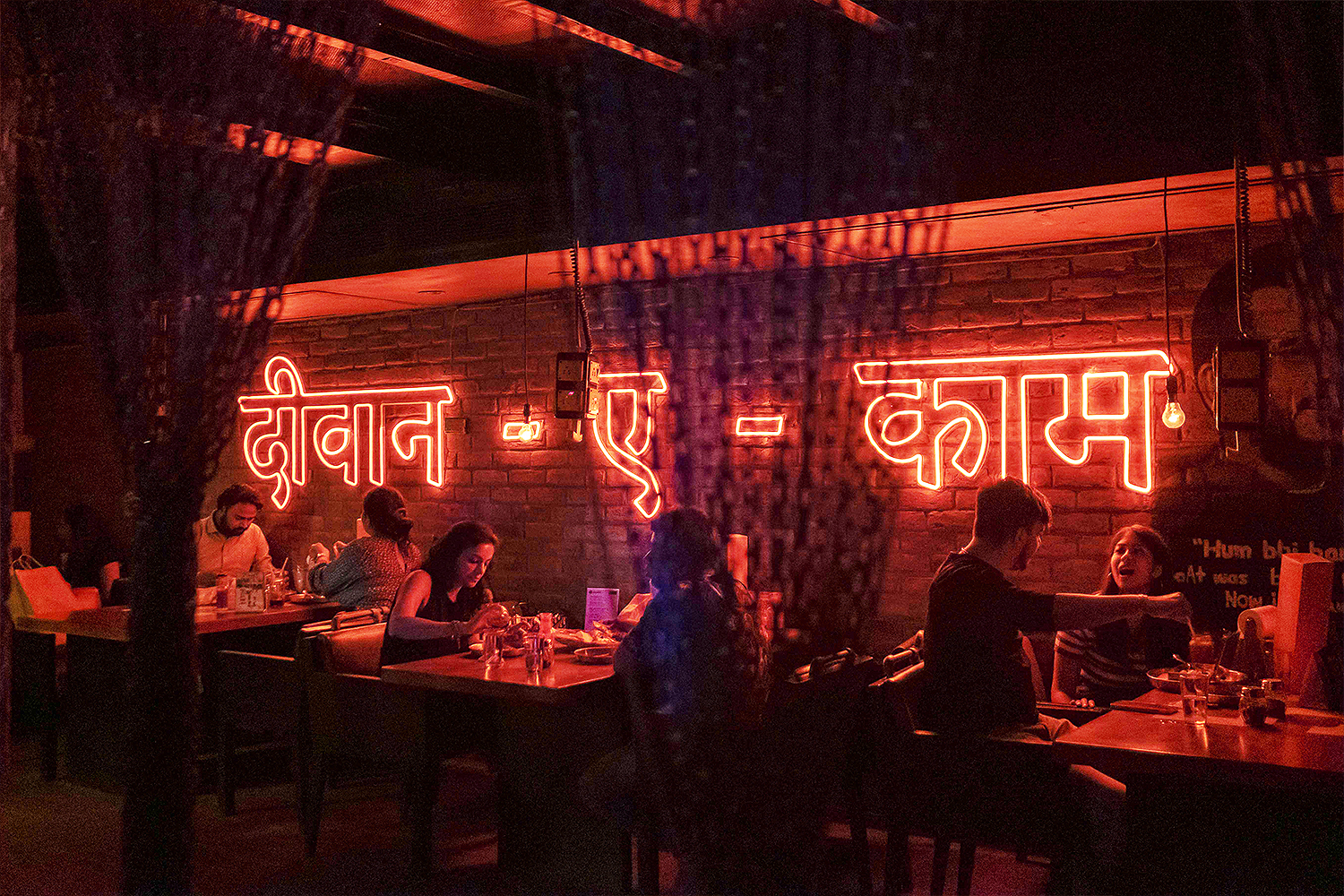
“Indians have definitely stepped up on their game with exploring spirits and flavors like no other,” says cocktail innovator and beverage researcher Feruzan Bilimoria. “We still have a very strong resto-bar culture, but it is slowly changing with the younger generations wanting to enjoy a drink before or after a meal in a separate setting. Travelling has definitely changed most Indians who had previously never experienced cultures like this and have adapted them here as well.”
Co-founder of Rupee Beer Van Sarma is keen to point out that common misconceptions about Indian drinking culture are still pervasive around the world and are ripe for overturning. “When we first started Rupee and were out and about at craft beer festivals and industry events we would get questions from so many Americans around ‘do Indian people even drink?’ ‘Isn’t alcohol banned in India?’ ‘I always thought it was a dry country over there.’ Those types of statements always baffled us,” he says. “Our grandfather used to brew beer on his farm in India.”
As more Indians travel and live abroad and more visitors explore India’s drinking culture, understanding and appreciation of Indian drinks is growing internationally. Five Indian bars feature in this year’s Asia’s 50 Best Bars list, and Indian cocktail bars and craft beers and spirits are receiving international accolades and coverage. Key trends driving the market include a focus on premiumization, the popularity of locally produced craft drinks, a revival of heritage drinks such as Feni and Arrack and an increasing number of women drinking. India’s cities such as Delhi, Bengaluru, Hyderabad, Mumbai and Kolkata are taking the lead with world-class cocktail bars, craft breweries and distilleries. Reports by Statistica and Future Market Insights posited India’s alcohol consumption at 6.21 billion liters in 2024, a significant jump from 5 billion liters in 2020. India’s alcohol market is currently valued at around $52.5 billion and is projected to reach $64 billion by 2028.
“Recognition platforms both in India and internationally are now looking at India as a market with immense potential. The golden age of bartending in India began about four years ago, and it shows no signs of slowing down,” says multi-award-winning bartender and beverage consultant Varun Sudhakar. Van Sharma agrees. “For me, India is the most exciting high-potential growth market in the world, paired with its changing lifestyles, higher disposable incomes, urbanization and also youth and middle class drinking more than ever before.”
Consider this a mere toe-dip into the wide-reaching and dynamic world of Indian beverages where there’s so much to explore and discover.
Iconic Beverages That Define the Culture
Whisky
Whisky is the OG Indian spirit, accounting for over 60% of all Indian alcohol consumption. How did one drink come to dominate the market so completely? The answer is both simple and complicated – both a hangover from colonial times when, like gin, whisky was the beverage of choice for the British elite and also a result of a strong, high-quality Indian whisky industry. “I don’t know many Indian dads or uncles who don’t enjoy their whisky,” says Van Sharma, highlighting whisky’s dominance among the older generation. However, younger drinkers are increasingly on board too, with premium Indian brands like Amrut, Rampur, Indri and Diageo-owned Godawan pulling out the stops to create unique expressions to rival their Scottish counterparts, showcasing local terroir and scooping up international awards. Whether enjoyed neat or in a cocktail, whisky is a staple on any drinks menu and a feature of any celebration.
Beer
Beer has been a common drink in India since the British opened their first brewery in the Himalayas in 1820. Kasauli Brewery, later named Solan, is still operational and open to visitors as a slice of colonial history, but Indian beer is better known for its internationally available brands which are stocked at Indian restaurants around the world. “Before we were even old enough to drink, we always knew how to sell iconic Indian beers like Kingfisher which the world is familiar with, and Taj Mahal which was more seen in the domestic U.S. space,” says Van Sharma, whose parents own Indian restaurants in the U.S. The culture of pairing beer with Indian food, though popularized by the British, is now common worldwide, with Kingfisher sold in over 60 countries. However, India’s fierce embrace of craft beer culture has launched a vibrant, creative industry with brewers around the country developing innovative, hyperlocal, terroir-focused recipes that put a uniquely Indian spin on European brewing practices.
India’s first craft brewery, Doolally, opened in 2009, and there are now approximately 300 microbreweries in India, a figure that is projected to triple by 2030. Most breweries are located in urban areas, with the tech hub of Bengaluru leading the charge at approximately 80 to date with another 25 in the works. “Craft beer, especially fresh draught, has become the defining expression of Bengaluru,” says Geetanjali Chitnis, chief brand officer at Geist Brewing.

While inspired by the craft beer culture of the US and Europe, the Indian craft beer scene is very much its own creation. Taprooms are beautifully designed and landscaped, more in common with luxury hotels than the industrial warehouses common in the US, and breweries place a strong focus on incorporating local herbs, spices and foodstuffs into their craft beer. This makes it more accessible to new drinkers by offering recognizable flavors and also more sustainable. Beer nerds can look out for brews incorporating the likes of Kokum, a sweet-sour relative of mangosteen, red Indrayani rice, kattu buckwheat and astringent jamun black plums.
Gin
Another legacy of colonialism that Indians have innovated and made their own, India’s craft gin market is booming and chock-full of delicious local botanicals. A far cry from when gin was used to make anti-malarial quinine more palatable for the British, brands like Stranger & Sons, Jaisalmer, Jin JiJi, Malhar and Samsara are making an international splash and popularizing sipping gin and upscale gin cocktails among Indian drinkers. While gin and tonic remains a classic Indian drink, these new gins are pushing flavor boundaries and integrating Indian ingredients to the international gin market.
There are now over 30 Indian gin brands from all over the country – look out for flavors like saffron, ashwagandha, sweet paan leaf, angelica root, mace, kaffir lime leaves, Nagpur orange peels, Gondhoraj lime, Himalayan juniper and green chilies which make Indian gins stand out, whether in a Gibson or Gimlet or clean over ice. “Gin has done extremely well in the country, considering how we made it our own,” says Bengaluru-based independent journalist, food writer and author Ruth D’Souza Prabhu.
Feni
The indigenous spirit of Goa, Feni is a clear liquor made from either cashew or coconut. Coconut Feni is native to Goa and made from fermented palm sap, while cashew originates from the time of Portuguese colonization when cashew trees were first introduced to Goa. The ripe fruits are picked from the ground (never from the tree), de-seeded and crushed, the juice left to ferment in a clay pot underground and distilled twice (once will produce uraak, a lighter version). This labor-intensive process earned cashew Feni geographical indication registration in 2009, meaning it can only be made in Goa, and it has recently experienced a surge in popularity, one of several Indian “heritage” beverages to be adopted by craft distillers. “Feni symbolizes Goan identity,” says Varun Sudhakar.
Aficionados will consume fruity and tropical Feni neat, but it is also popular to mix it with local lime and soda or salt and chili. Feni has also been adopted by Indian mixologists who incorporate it in local takes on traditional recipes and new creations. Feni is becoming known in the spirits world outside India too, having featured at this year’s Tales of the Cocktail.
Plus the Homemade Thing
“Mahua is distilled from the flowers of the Mahua tree; this tribal liquor has been a sacred part of community,” explains Varun Sudhakar. Prohibited under colonial law, Mahua was traditionally distilled for medicinal use and ceremonial use for tribes including the Santhal, Gond, Munda and Oraon. These tribes from central and northern India call the mahua tree the “tree of life” and use different parts of the tree for food, drink, medicine and fuel.
There is no fixed way to prepare Mahua, although distilling with a combination of pots and tubes over an eight-day period is common. After Mahua production was forced underground, it became more difficult to make, foreign liquors became popular and Mahua fell out of fashion, relegated to the status of “country spirit” and rarely seen outside tribal culture. However, as interest in heritage beverages has taken off and restrictions have loosened, Mahua is gaining a younger following and being produced by craft brands like DesmondJi, making it more accessible. “There is a renewed spotlight on indigenous alcohols currently – Feni, Mahua, the rice beers of the Northeast and the like. Licensing being the largest hurdle, there are several efforts to mainstream these alcohols,” says Ruth D’Souza Prabhu.
Yearly Events Around Drinking
While local events abound in a country as large, populous and local as India, these are a few of the key consumer, industry and trade events for drinks lovers and professionals to see and be seen at. Pop-up events are also very on-trend in Indian drinking culture right now, especially in major cities where social media is a key tool in promoting special events and guest mixologists, brewers, beers and cocktails.
Heading into its sixth year, India’s biggest cocktail festival brings together over 25 national and international brands for a celebration of mixology every February in rotating cities. Expect guest shifts, masterclasses, live music, culinary pop-ups and interactive booths. Suitable for both industry members and cocktail enthusiasts.
The largest gin festival in the world now hosts over 1 million attendees at multiple Indian locations annually. Founded by entrepreneur and marketing guru Anjali Batra, the event brings together gin lovers of all backgrounds and celebrates both Indian craft and international gin.

India’s biggest vineyard music festival is held each February at the Sula Vineyards in Nashik, Maharashtra. Returning this year after a five-year hiatus, the event celebrates music, food and wine at a scenic working vineyard in India’s wine capital.
A new initiative to celebrate Indian mixologists held in conjunction with Worldwide Bartender Week, whose aim is to celebrate Indian mixology on a worldwide stage, encourage food and beverage tourism, support budding mixologists with grants and career advice and showcase local cocktail ingredients.
India’s branch of this major international wine and spirits trade fair takes place every fall in Mumbai. With over 6,000 attendees and 180+ exhibitors, expect tastings, masterclasses, competitions and product showcases at this industry event primarily for producers, distributors, chefs and mixologists.
Held every November in Bengaluru, this trade event mixes educational expos with networking events, panels and presentations and social gatherings. Now in its sixth year, it focuses on brand development and connection.
This technology-focused trade fair for drinks, dairy and liquid food hosts approximately 14,500 visitors and 300 exhibitors. Business solutions-focused, expect technical panel events and presentations, networking and product promotion.

Drinking Snacks
Although international bar snacks like cheese platters, stuffed olives, canapes, truffle cheese fries, roasted cashew nuts and wasabi peas can be found in high-end cocktail and hotel bars and some craft breweries, traditional Indian foodstuffs make up the fare in the majority of drinking establishments. Spicy peanuts, cheeslings (crispy cheese biscuits), chakli (deep fried chickpea spirals), masala peanuts, masala papad and fried, spicy meat and vegetables are all popular, common drinking snacks.
“Most of these snacks have a salty, umami forward profile, which not only complements alcohol but also encourages thirst, prompting guests to drink more or order water, subtly boosting beverage sales,” says Varun Sudhakar. “Across the country you’ll find staples like masala peanuts, pakoras, chilli chicken and paneer tikka, all designed to cut through or complement alcohol with spice, fat and crunch,” agrees Geetanjali Chitnis.
Iconic Drinking Establishments
Between colonial-era bars steeped in history and upscale newbies hitting international best-of lists, India has iconic bars for all drinking demographics.
Dating back to 1933, the Harbour is the oldest licensed bar in Mumbai and home to Mumbai’s “signature cocktail” From the Harbour Since 1933, which mixes gin and tropical juices, topped with flambeed Green Chartreuse — a guaranteed crowd-pleaser.
This quintessentially Goan spot dates back to the colonial era, oozing rustic charm and serving up traditional Goan Feni alongside moonshine meads, local craft beers, Indian craft gins and whiskies. A place to relax and people-watch.
Making both Asia’s 50 Best Bars and the 30 Best Bars in India 2025 lists, expect mixology magic at this sleek, upscale venue decked out in teak and granite. Try a Houdini with rum, pineapple, melon, lemongrass, honey, Greek yoghurt and coconut soda for something a little different. Reservations are a must.Sidecar, Delhi: A groundbreaking addition to the Indian cocktail scene since opening in 2018, Sidecar is a self-described “bartender’s bar” where style and substance converge. Their quirky themed menus and sophisticated spins on the classics are ultra-Instagramable — try a Donn Ley with tequila, apricot kernals, apricot jam, cheese, chili and red wine.

Rules for Drinking Like an Indian
Indian drinking etiquette is closely tied to culture and cuisine. “In India, we have a ‘hospitality first’ rule of thumb when dealing with anyone, be it a guest or a fellow professional,” says Feruzan Bilimoria. “Everyone is always welcome, even the non-drinkers. We will always keep a bottle of Limca (lime soda drink), Maaza (mango drink) or Jaljeera (a cumin and black salt based drink, often had as a digestif after meals) on hand.”
In addition to soft drinks, snacks are essential. “In India, one of the defining features of the drinking culture is chakna, the assortment of salty, spicy, tangy snacks that always accompany a drink,” says Varun Sudhakar. “Whether it is a streetside permit room or a high-end cocktail bar, the diversity of Indian bar snacks is as unique and vibrant as the country’s produce and people.” Ruth D’Souza Prabhu concurs. “Every state would have its own speciality when it comes to drinking snacks. In fact, states like Kerala have the entire toddy culture built around ‘touchings,’ the colloquial term for bar snacks,” she explains.
Cocktail Recipes
Mango Lassi Cocktail
Lassi is a classic Indian beverage made by blending yoghurt with water and spices. Originating in Punjab, it is traditionally made with water buffalo milk and can be sweet or salty. While lassi can be flavored with any fruit or vegetable, mango is a popular choice as its bright juicy flavor is an excellent foil to the creamy lassi. White rum and vodka are popular for making a boozy version.

1 cup fresh or frozen mango, diced
.5 cup ice
2 oz. rum or vodka
1 cup Greek yogurt (or similar)
.5 Tbsp. honey
.5 tsp. vanilla extract
1/8 tsp. ground cinnamon
Dash ground cardamom
Combine all ingredients in a blender and blend until smooth. Serve with a slice of fresh mango and a sprig of fresh mint.
Gin and Tonic
This historic drink has its roots in colonial India, when tonic, with its high quinine content, was used to prevent malaria. Traditionally made with one part gin and two parts tonic, it can be altered to taste. Experiment with Indian craft gins for a modern Indian cocktail.
2 oz. gin
4 oz. tonic
Stir in a highball with ice, garnish with a fresh wedge of lemon or lime.
Whiskey and Soda
An Indian staple, this simple cocktail keeps the whisky’s flavor profile in a long, cooling drink that can be enjoyed with meals or on its own.
2 oz. whisky
4 oz. soda or sparkling water
Fill a highball glass with ice, pour the whiskey and top with soda. Garnish with lemon or orange peel.

More Like This
We're always on the scene eating, drinking and traveling near and far to bring you the best of what's happening out in the real world. Sign up for IRL now.