Nota bene: All products in this article are independently selected and vetted by InsideHook editors. If you buy something, we may earn an affiliate commission.
Rucking is a “new” activity in name only. If we’re getting technical — that is, if we’re looking for an excuse to invoke the Roman Empire — it actually goes back a couple thousand years.
According to Vegetius, a fourth-century writer, young Roman soldiers carried heavy packs and were expected to hike “twenty Roman miles” (equivalent to 18.4 miles) in a span of five hours. This training was considered so important, it was introduced before the milites even got their hands on weapons; a legion marching along at different speeds was more susceptible to attack.
Even in the age of drone warfare and augmented reality, modern armed forces have continued the tradition of loaded marches, with different nations assigning the activity a delightful array of names: “stomping,” “tabbing,” “yomping.” It’s part of baseline training for new soldiers, and often a defining test for those determined to join special ops.
If you’re surprised by its longevity, you should watch this video of a YouTuber attempting the fitness assessment for Norway’s long-range reconnaissance patrol: 25 minutes on a treadmill with a 55-pound pack on your back and an eight-pound gun in your hand. They raise the incline by 3% every five minutes after the 10-minute mark. Nasty work.
In rucking’s latest evolution, military personnel have taken pains to demystify the activity and package it for the masses. Its popularity has surged in kind. There are now books detailing its origins, clubs from Los Angeles to Seattle that ruck together and all sorts of products to get your practice off the ground.
If you’re in the market for a new fitness routine, why not consider an age-old enterprise that gets you outside and tests your will, while building both endurance and strength? To understand the basics and benefits of rucking, I reached out to Emily McCarthy, a former CIA officer and co-founder of the popular outfitter GoRuck.
The Power of the Pack
“Rucking is essentially walking or hiking with weight on your back, usually carried in a backpack or ‘ruck,'” McCarthy tells me. “It’s a simple, low-barrier workout: you walk as you normally would, but add weight to increase the challenge and the strength and cardio benefits. It’s often described as a hybrid between walking, hiking and resistance training.”
The core pitch for rucking, from brands like GoRuck and the activity’s premier prophets like Michael Easter, is that humans are designed to ruck.
As Easter told InsideHook in an interview last year, “I really got interested in it as I was reporting [The Comfort Crisis]. We evolved to carry…we evolved to run long distances, in order to hunt. We would chase down prey over, say, five or 15 miles, kill it, then have to carry it back to camp.”
It’s a refreshing perspective on early humans. Typically, when evolutionary psychologists explain the mechanics of the fight-or-flight response, we’re the ones getting terrorized by big cats. But we did a whole lot of hunting, too. After pursuing antelope for hours, you’ve got to be strong enough to carry all that meat home.
It’s Never Too Late to Start Pilates. Here’s How.
It looks gentle, but it torches the muscles that matter. No wonder Pilates is recruiting (and humbling) men everywhere. Here’s why it works — and how to stick with it.From that point of view, rucking is much more ancient than the Roman Empire. It’s a prerequisite of prehistoric life, which throws today’s sedentary crisis into pretty sharp relief. We’re not designed to spend 10 of our 16 waking hours sitting on our butts. Obesity and osteoarthritis have become far more common than our biology would suggest.
McCarthy believes rucking represents a return to form. “It fits naturally into everyday life,” she says. “It gets you outside. You don’t need a gym or a rigid routine.”
From a fitness perspective, rucking is a rare combination, managing to “increase heart rate and muscle engagement” at the same time. It doesn’t burn as many calories as cardio, but it’s probably a more reliable weight-loss strategy, while getting you stronger along the way. There’s an isometric hold built into the exercise, meaning your core, legs and back are firing throughout the entire activity.
For those worried that heaving a bag around could injure your joints, it’s important to recognize that long hours in a chair is way worse for your posterior chain. And compared to running, “rucking is relatively low-impact,” McCarthy says.
That said, various criteria like weight, distance, elevation gain and terrain can impact the efficacy and enjoyment of your rucks. In other words, you want to go in with a plan. Here are some crucial dos and don’ts to keep in mind.
Some Rucking Dos
Start small
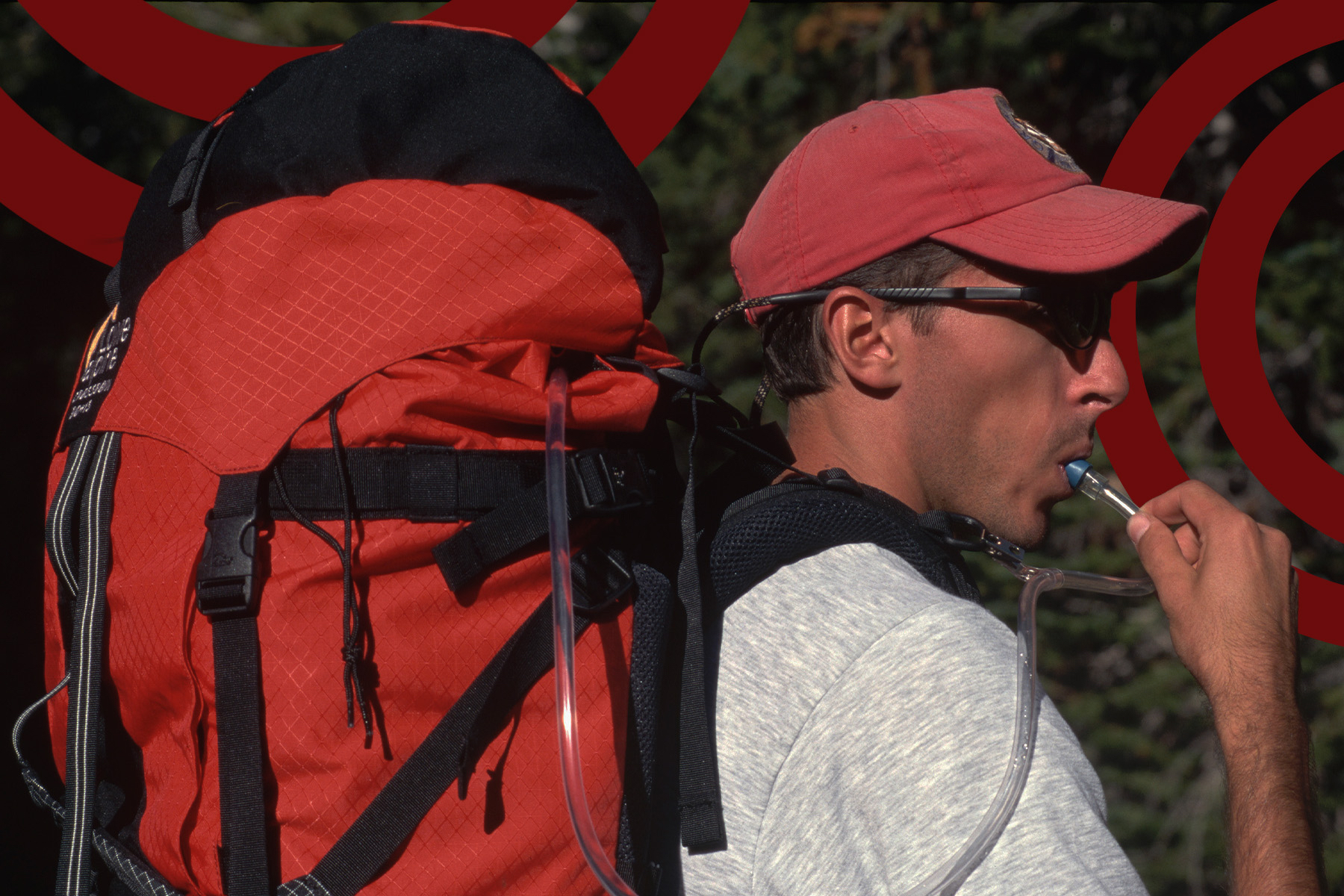
If you’re going on your first ruck this week, McCarthy recommends keeping things very simple. “Grab a sturdy backpack, add 10 to 20 pounds and head out for a couple one to two-mile walks,” she says. You don’t have to monitor your watch, but if you must, aim for a pace of 15 to 20 minutes a mile. That’s the United States Army’s “ruck march standard.”
Where should you go? There are a couple ways to think about this. If you want to establish a consistent rucking routine, maybe don’t overthink it — just walk right out your front door. If you’re feeling a little more aspirational about the activity, and imagine it complementing the other types of exercise you do, it could be a good candidate for a Sunday morning slot at a nearby state park.
Get yourself a pack
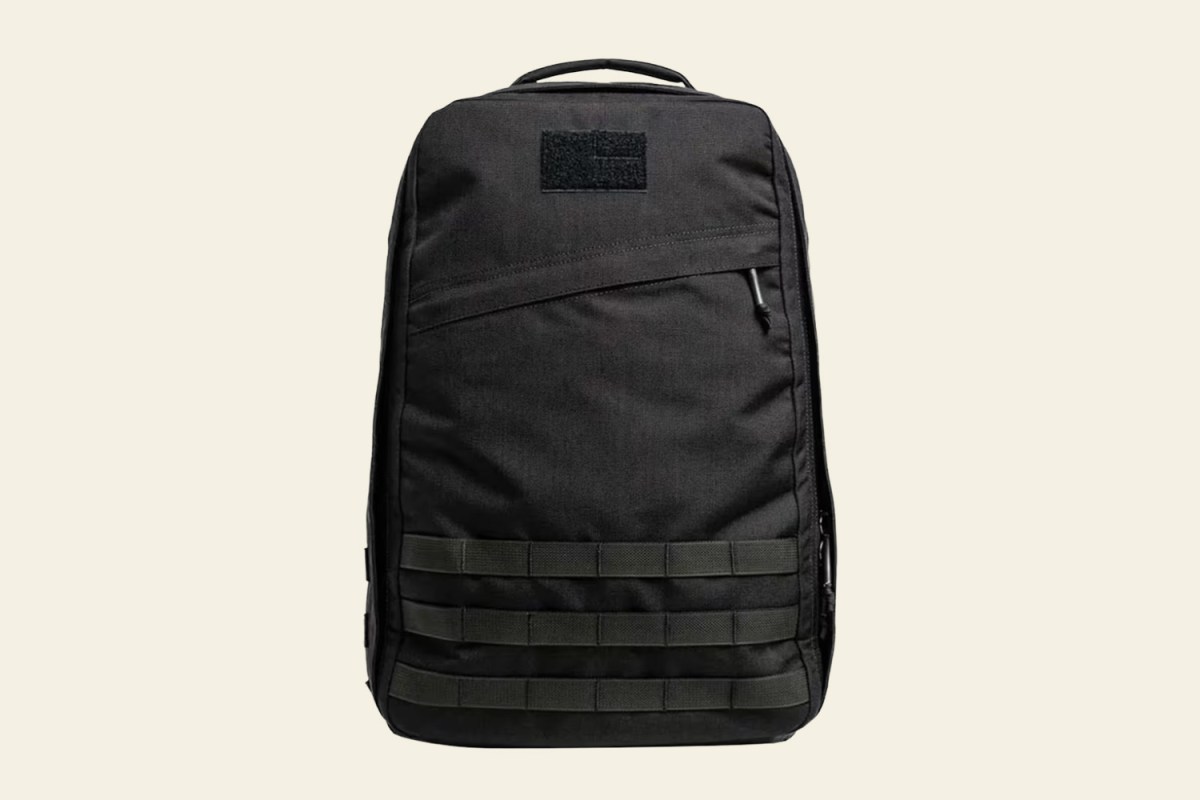
Could you technically throw some textbooks in an old backpack and start walking? Sure. But that’s kind of like going for a run in Chuck All-Stars — you might get injured and there are plenty of better options. GoRuck makes great stuff, but you should also peruse outfitters like Tactical Tailor, Mardingtop and Mystery Ranch.
Typically, you buy the bags and the weighted plates separately. Places like GoRuck and Titan Fitness sell plates, which are shaped like cast-iron griddles. Some rucking faithful prefer purchasing conventional hiking packs (from brands like Osprey) then inserting plates in the laptop sleeves, claiming their all-around design is better than rucking-specific options. Just something to keep in mind.
Master the ruck shuffle
One reason rucking is so good for the body? Proper posture is literally the opposite of hunching over a keyboard. You want to pull your shoulders back to “pinch” the fictional penny between your scapulae, keep your core engaged and keep your head up. Many packs either come with stabilizer belts or offer them as add-ons, for extra support around the waist. (You shouldn’t need one for your early rucking, though.)
When you want to pick up the pace, lean forward a little bit and focus on short, quick steps. Here’s a useful demonstration. The “ruck shuffle” ensures you don’t overstride, which could put undue pressure on your knees. Just focus on the inertia of left-foot, right-foot and get into a groove.
Some Rucking Don’ts
Don’t charge the hill (right away)
Remember, a mile uphill is a completely different ballgame than a mile on level ground. “Beginners should start on flat, predictable routes to get comfortable with the weight before progressing to more technical terrain,” McCarthy cautions. Once you’re more experienced, elevation gain and uneven terrain are useful levers to make rucking even…ruckier (the elevation will help you burn more calories and the uneven terrain will help you recruit more muscles). But for now, aim to ease in.
Don’t up your volume by more than 10%
A good rucking rule of thumb: only increase your weight or distance by 10% from one week to the next. So if you start out with 20 pounds for a two-mile walk, it should take you a couple months before you’re up to 45 pounds, or four miles (or both). What’s a solid goal to shoot for on the far horizon? Rucking a third of your bodyweight. For me, a 170-pound man, that would be about 55 pounds. It’s totally doable in a matter of months.
Don’t wear cushy shoes
A few brands that make maximalist running shoes have convinced the whole world that your feet should be cushioned for any sort of physical activity: hiking, lifting, walking through the airport. Do not go rucking in running shoes. They’re usually not grippy enough, and walking on pillows isn’t a good idea when there’s a ton of weight on your back. You want stability. Wear hiking sneakers, hiking boots or potentially trail-running shoes; it should be a model built for everyday use, not speed.
How to Ruck Forever
Last year, Peloton instructor Rebecca Kennedy hosted a rare “weighted vest hike” on the platform. Dr. Mary Claire Haver, the author of The New Menopause, celebrated the class on Instagram, writing: “I just about fell over. Why? Because we’ve been shouting this from the rooftops: strength and impact matter, especially for women in midlife and beyond.”
Of course, Haver’s focus is on women, but she made some excellent points that apply to all aging adults. “[This] is a science-backed strategy to potentially improve bone density, balance and muscle mass, all of which are critical for reducing the risk of osteoporosis and frailty as we age. When I talk about ‘loss of independence prevention,’ this is what I mean. Resistance, loading and consistency are powerful tools.”
That third bullet point is huge: consistency. Rucking’s long-term benefits are contingent on you showing up. Over time, weaving in new routes or joining a local club can keep things challenging and fresh. It might also help to plan rucks with special meaning.
I ask McCarthy if any rucks from her career really stand out. She offers a couple nominations: “Over this past weekend, I completed 54 miles from Selma to Montgomery in one day, retracing the route of those who marched from March 7 to March 25, 1965,” she said. I rucked alongside friends from The Give Team, a group of inner-city teenage athletes. Our struggle wasn’t comparable to those who went before us, but carrying weight through the night for that distance adds a layer of reflection you don’t get otherwise.”
“Another memorable ruck was one I did with my husband, Jason, and friends from Utah Beach to Omaha Beach [in Normandy, France] for the 75th anniversary of D-Day,” she says. “Moving across that hallowed ground makes history feel real in a way that’s hard to replicate.”
Why is rucking suddenly here to stay? I think its simplicity leaves a lot of space for interpretation. It’s not trying to reinvent the wheel — it’s older than the wheel. No wonder it feels right.