
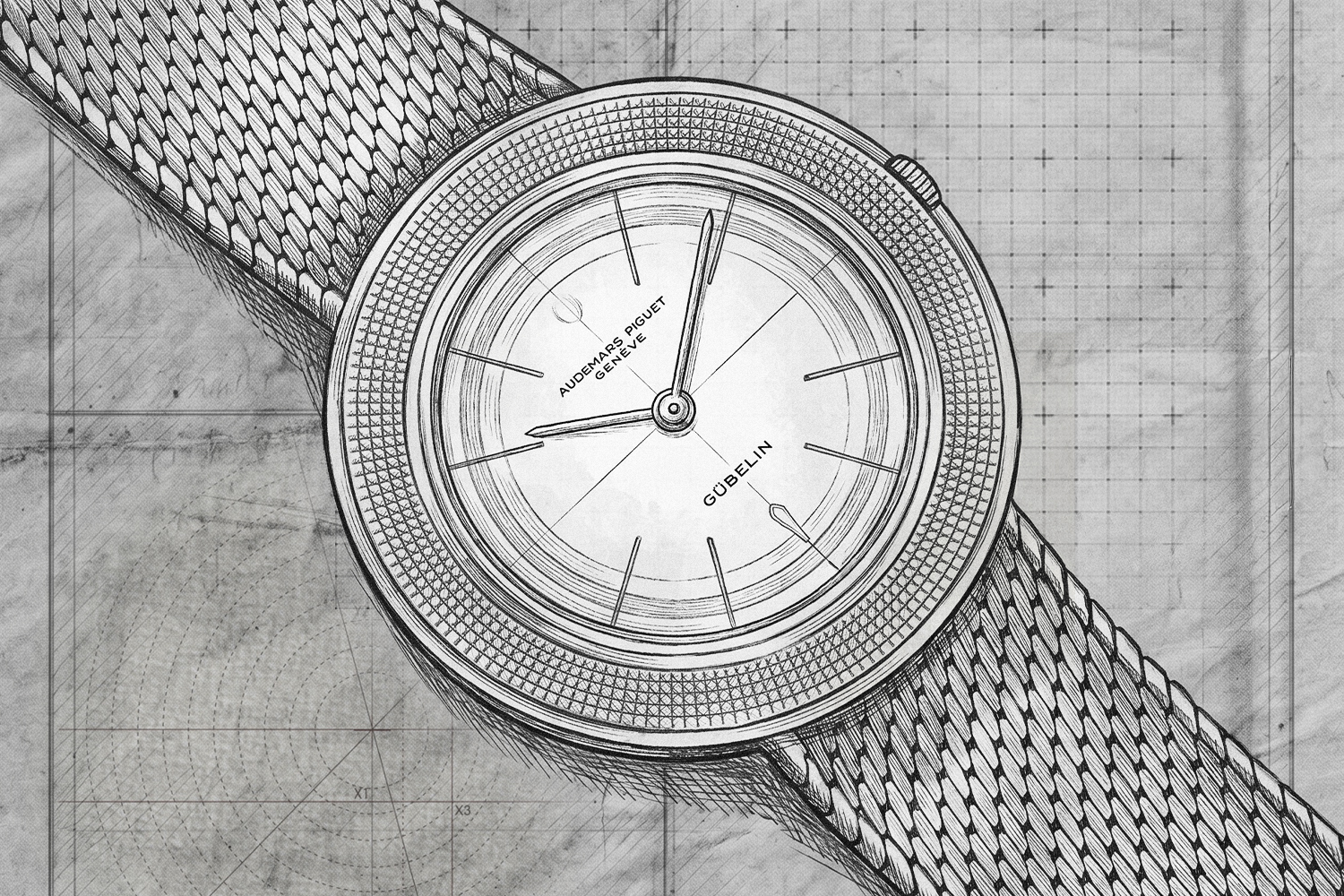
Welcome to Watchword, a series in which we break down key terminology to help you better understand the lay of the horological land. In this piece, we examine the history of the “Disco Volante.“
Few watch designs manage to look both thoroughly midcentury and oddly futuristic at the same time. The “Disco Volante” — Italian for “flying saucer” — is one such curiosity: a watch archetype defined not by its dial or by a complication, but by a perfectly circular case that seems to hover above the wrist.

Watchword: The Sector Dial
In a new series highlighting key horological vocabulary, we’re beginning with one of the watch world’s most pleasing dial designsDespite its evocative name, “Disco Volante” was never an official model designation. Rather, it’s a nickname later applied by collectors to a category of watches produced primarily in the mid-20th century whose cases resemble the smooth, domed silhouette of the flying saucers that captured the public imagination during the early days of the Space Age.
In truth, the style predates the UFO craze by more than a decade. Variations of the saucer-like case can be traced back to the late 1930s, when Swiss manufacturers began experimenting with new shapes inspired by Art Deco design and the increasing popularity of wristwatches. Early examples from brands such as Omega featured rounded cases with broad bezels and minimal lugs, often paired with elegant two-tone sector dials — an aesthetic that would become closely associated with the archetype. (Interestingly, watches such as the ref. CK2013 also featured oversized 39mm cases, which were positively huge by 1930s standards.)
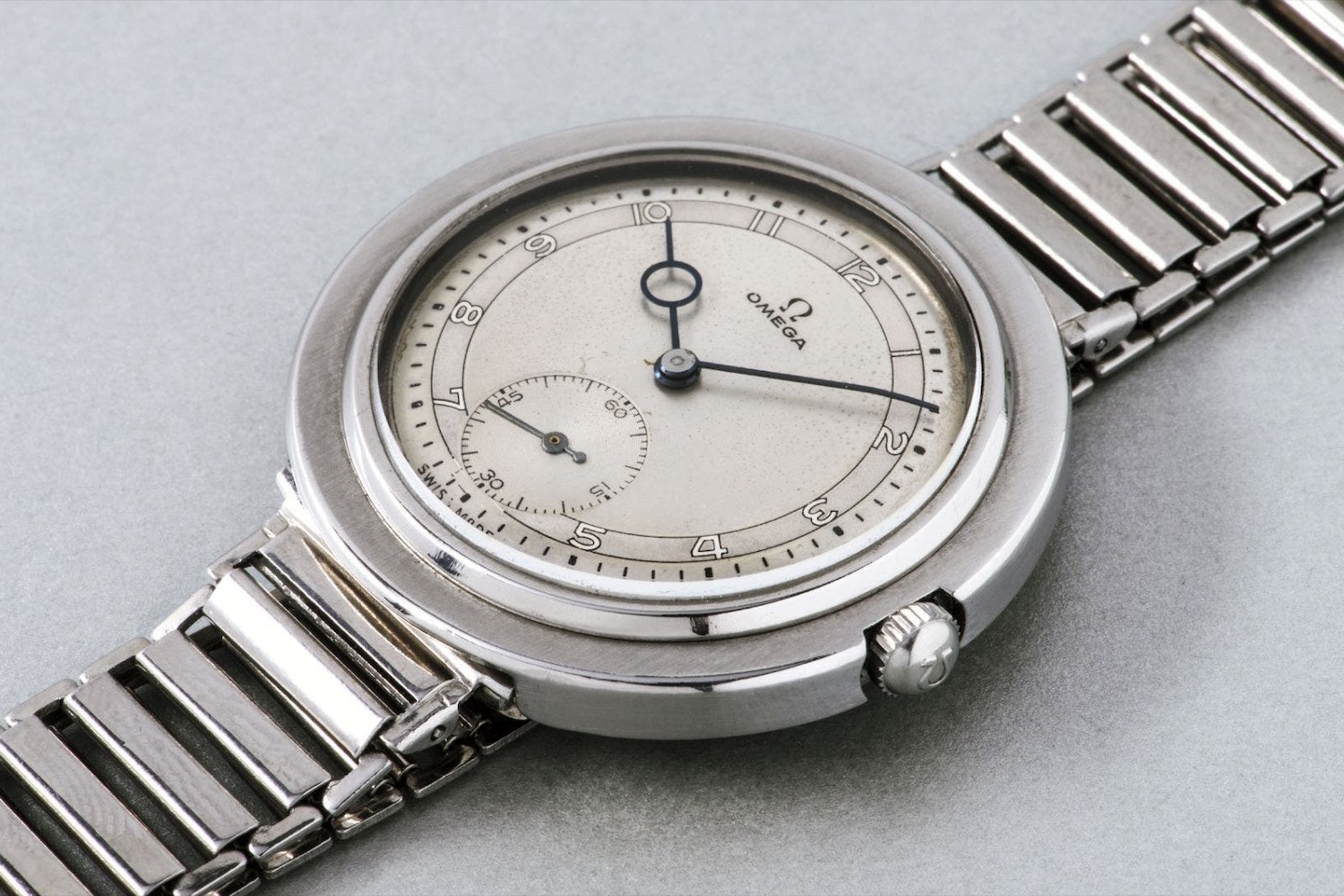
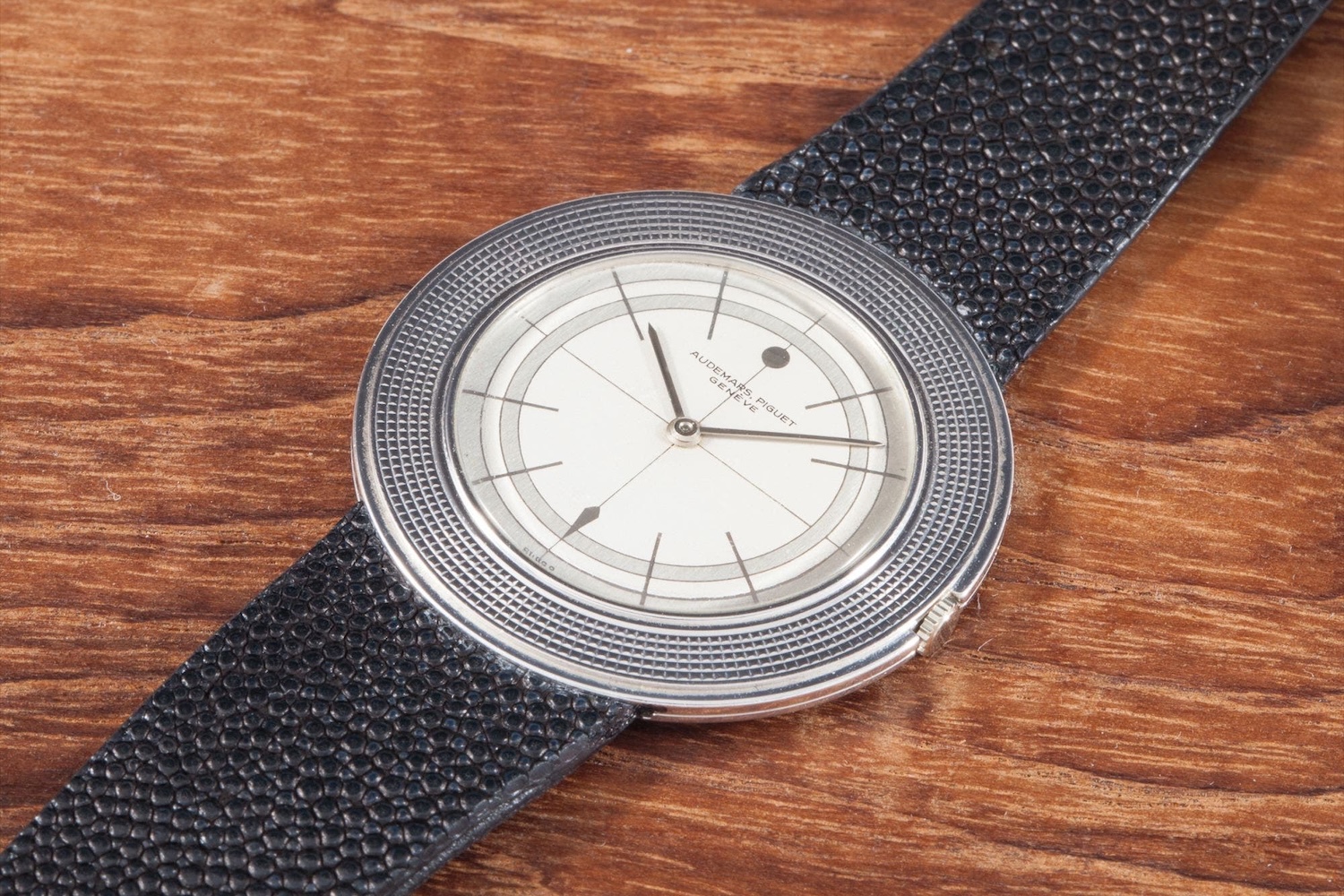
As watch designs evolved through the 1940s and ’50s, these circular cases became more refined and architectural. Rather than extending visible lugs from a central case body — the traditional wristwatch layout — designers began hiding or drastically shortening the lugs, attaching the strap beneath the case itself. The bezel, meanwhile, is often unusually wide — sometimes stepped, sometimes decorated with hobnail or engine-turned patterns. The dial itself typically occupies a relatively small central area, reinforcing the visual dominance of the case. Viewed from above, the watch resembles a metallic disc hovering over the wrist, hence the nickname.
Several prominent houses experimented with the form. Examples appeared from Audemars Piguet, Vacheron Constantin, Patek Philippe, Omega, Universal Genève and others, usually executed as elegant dress watches in precious metals such as yellow or white gold. Among the most famous is the Audemars Piguet ref. 5093, introduced in the 1950s, whose wide engine-turned bezel and compact dial represent perhaps the purest expression of the style.
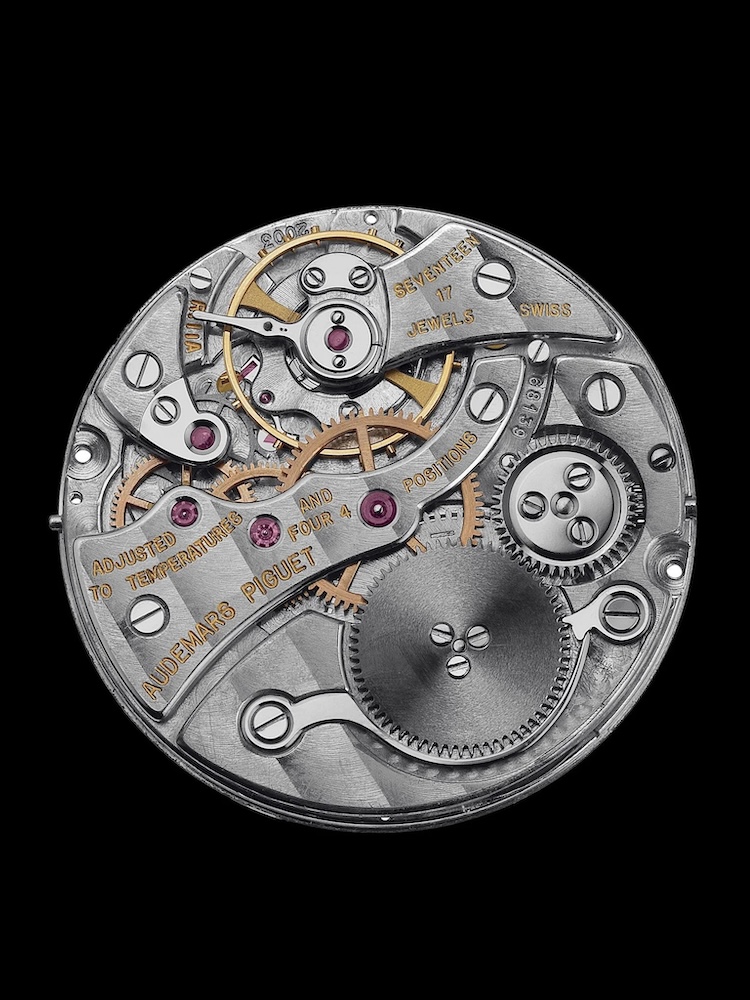
The design was also made possible by a key technical development of the period: the emergence of ultra-thin mechanical movements. Examples such as Audemars Piguet’s Caliber 2003, introduced in 1952 and measuring just 1.64mm thick, allowed watchmakers to create exceptionally slim cases with large diameters and shallow profiles. With so little vertical space required for the movement, designers were free to emphasize broad bezels and sleek, saucer-like proportions without sacrificing elegance.

Dials on vintage Disco Volantes tend to be restrained. Many examples feature simple silver finishes with applied baton markers or crosshair layouts paired with slender pencil hands. Others incorporate sector-style dials with contrasting chapter rings or quadrant divisions — a popular midcentury design motif. The minimalism is intentional: In a Disco Volante, the case, not the dial, is the star of the show.
Most vintage examples measure roughly 34–35mm in diameter, though their broad bezels often make them wear larger than expected. The majority appear on simple leather straps, but some rare variants were fitted with integrated precious-metal bracelets that extend the watch’s circular silhouette even further, transforming the timepiece into a continuous sculptural object.
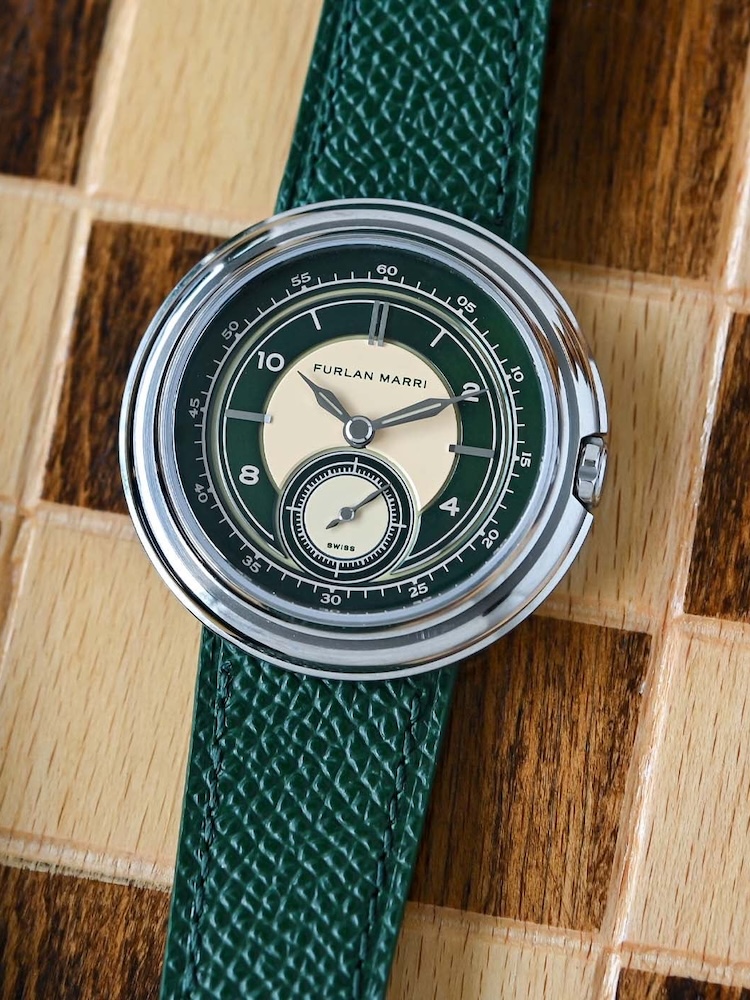
For decades, the Disco Volante remained something of an insider’s design — beloved among vintage collectors but rarely referenced by contemporary watchmakers. Recently, however, the archetype has begun to resurface amid a broader revival of midcentury dress watches and smaller case sizes. Perhaps the most visible modern interpretation comes from the young Swiss brand Furlan Marri, whose Disco Volante models reinterpret the classic flying-saucer case with contemporary proportions while preserving the design language that made the originals so distinctive.
The modern Furlan Marri Disco Volante features a 38mm stainless-steel case measuring just 8.95mm thick, with a broad, stepped bezel, hidden lugs and a recessed crown that faithfully reproduces the archetype’s defining silhouette. The dial layout adds a modern twist with two-tone sector designs, applied markers and a small-seconds display at six o’clock. Inside is the Peseux 7001 caliber — a hand-wound movement only 2.5mm thick that offers a 42-hour power reserve and operates at 21,600 vibrations per hour. The movement’s bridges have been redesigned and decorated with hand-finished beveling and Côtes de Genève, visible through a sapphire caseback.
The watches are typically offered in several colorways — including “Havana,” “Celeste” and “Verde” — each supplied with multiple leather straps and quick-release spring bars. Retail pricing for the core models sits at approximately CHF 2,500 (around $2,780), while more elaborate variants, such as an onyx-dial version with diamond markers, can reach roughly CHF 3,500.
What’s particularly interesting about the Furlan Marri release is that, until recently, modern interpretations of the Disco Volante were surprisingly rare. Despite the abundance of vintage examples from midcentury manufacturers, few contemporary brands had revisited the archetype in earnest.
That may be beginning to change.
The broader watch industry has spent the past several years rediscovering midcentury design codes — smaller diameters, dressier proportions and elegant mechanical simplicity. As watchmakers continue to mine their archives for inspiration, the Disco Volante presents an especially compelling opportunity: a design that feels historically authentic yet visually unusual compared to the luxury sports-watch silhouettes that have dominated the market for decades.
In other words, the flying saucer may yet return. After all, watch design tends to move in cycles. And if collectors’ growing appetite for vintage dress watches is any indication, this quirky silhouette — once a quietly eccentric midcentury experiment — may soon find itself back in orbit.
More Like This
We're always on the scene eating, drinking and traveling near and far to bring you the best of what's happening out in the real world. Sign up for IRL now.