
Bespoke footwear ain’t nothin’ new. Menswear mavens have long coveted the wares of custom shoemakers like John Lobb and George Cleverley, and for years a made-to-order pair of wingtips or monkstraps has ranked right near the top of the Old-School Fashion Flex list alongside the Rolex Datejust and a calfskin jacket.
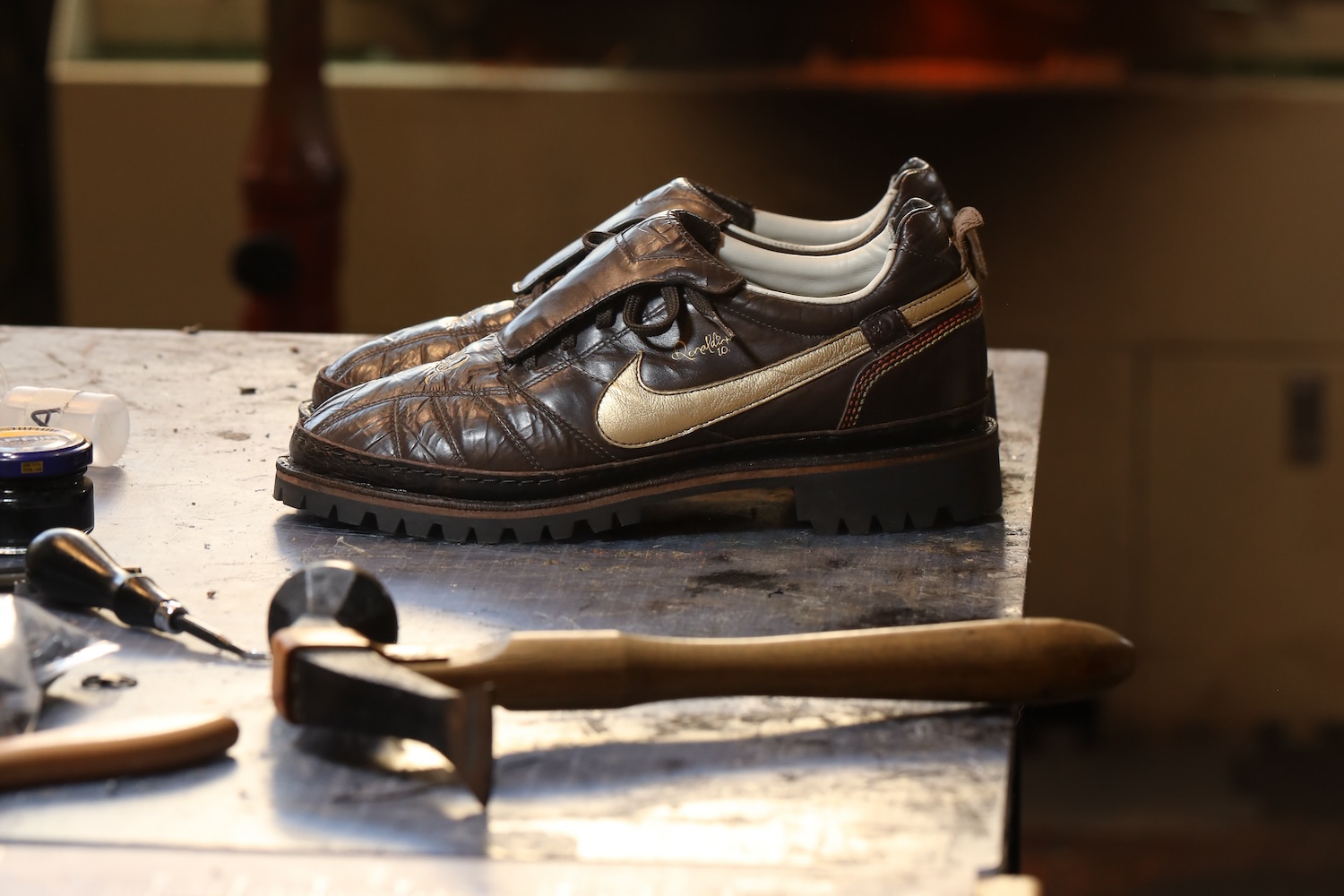
But as a new generation of garm fiend — one raised on sneaker and streetwear culture — embraces an era of increasingly hyper-personal style, a new footwear specialty has emerged: hypebeast kicks reworked with traditional cobbling techniques and materials into something more elevated. These shoes are custom, limited-edition and handcrafted in a way that, in addition to looking mighty slick, also function as an ASMR viewing experience.
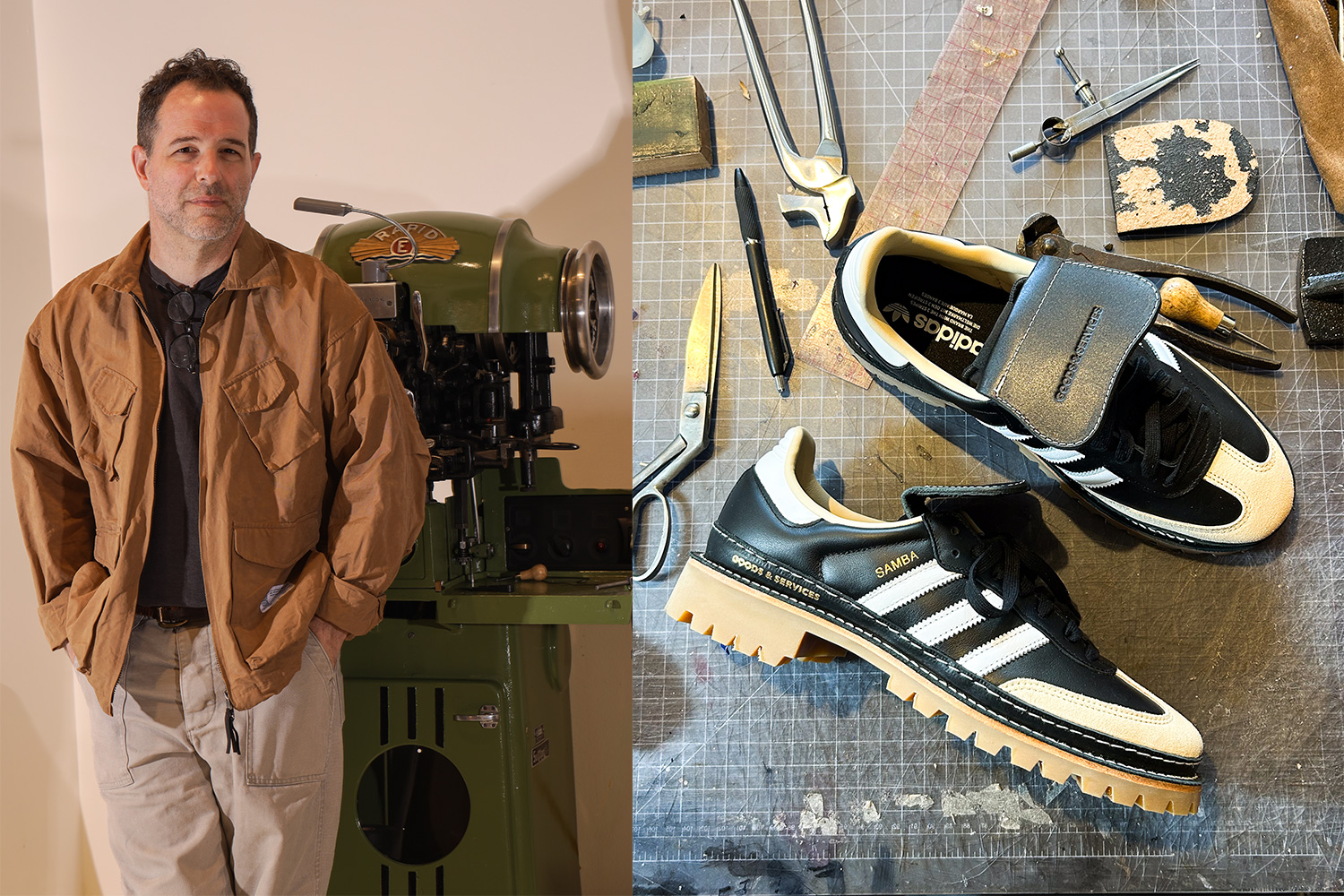
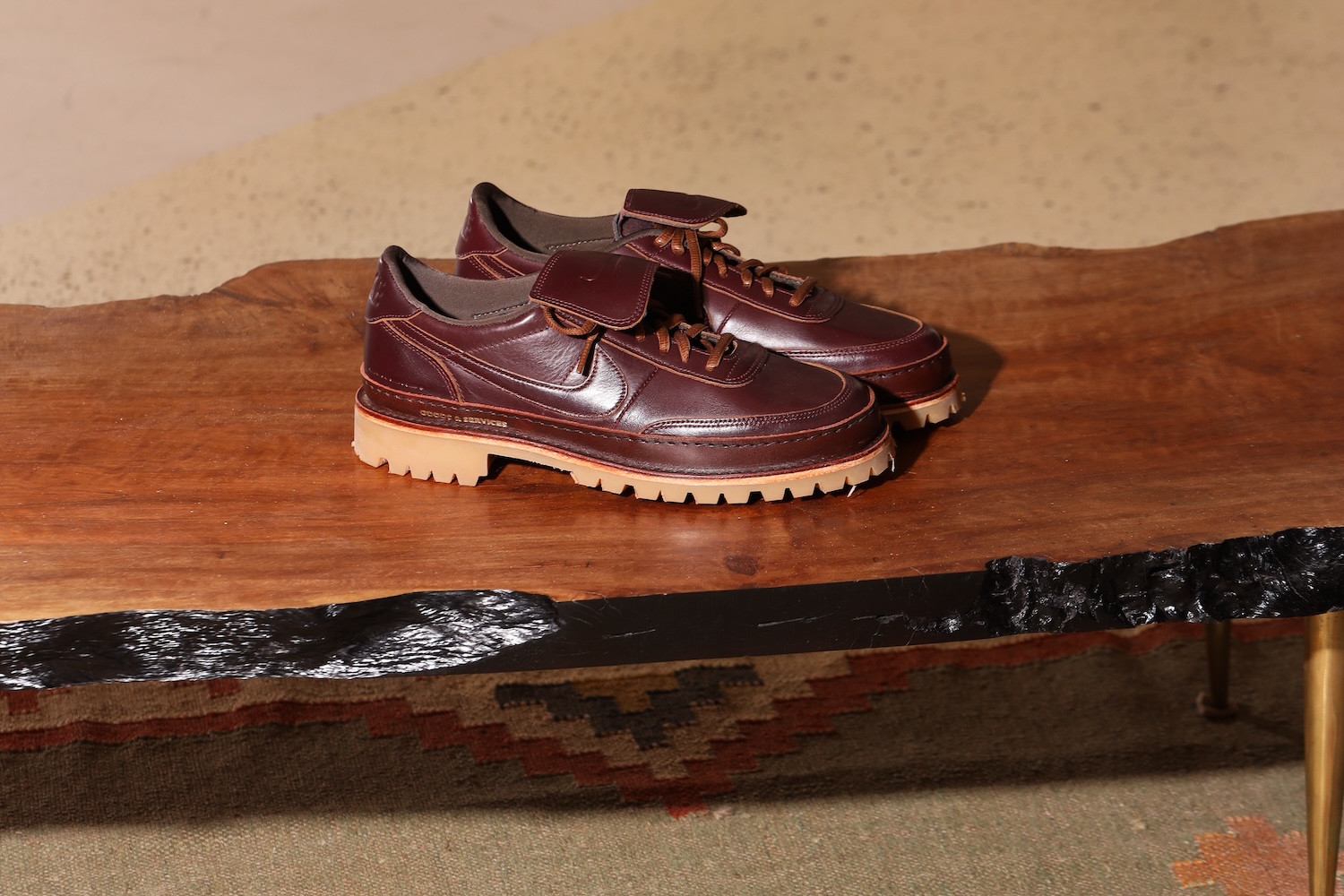
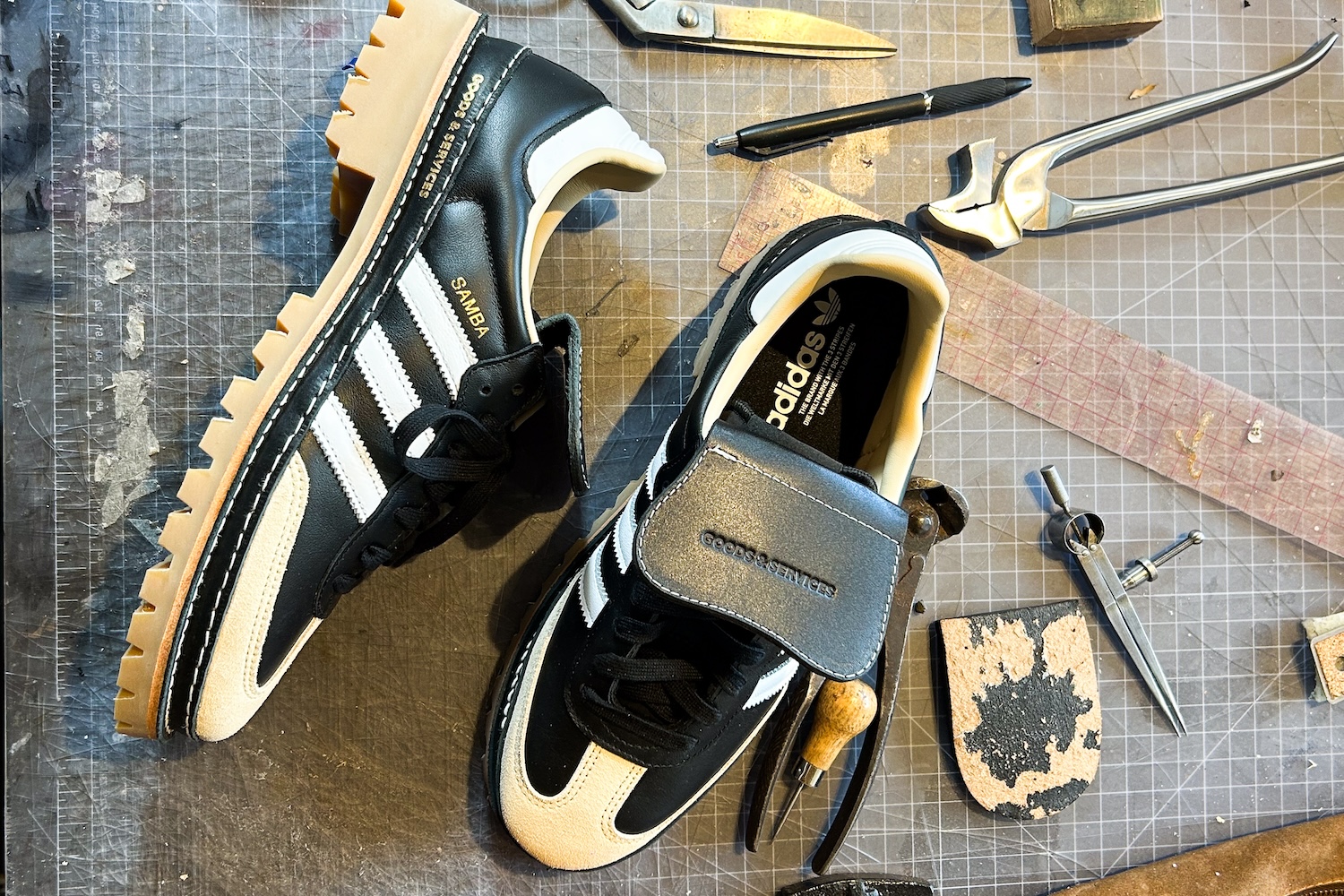
Several players have planted a flag in the space, but those in the know cite L.A.’s Goods & Services, which was founded in 2019, as the gold standard. From crepe-soled Gazelles to lug-soled Killshots to Goodyear-welted Birkenstocks, Rory Fortune and his team are actively rewriting the custom-shoe playbook for today’s fashion heads.
We reached out to Fortune to chat about the origin of the concept, his process and where he sees the footwear game heading.
InsideHook: How did you wind up carving out this niche for yourselves? What was the genesis to arrive at your speciality?
Rory Fortune: I was living in New York and working in the fashion industry along with my wife. I had been in the industry for a little over a decade and was intimately familiar with the systemic problems: toxic workplaces, meaningless and arbitrary deadlines, waste and pollution, exploitation, overproduction coupled with declining consumer interest, and so on.
I still enjoyed product though, so I was motivated to find something that was creative and product-driven but also a realistic business and more able to meet the moment we are in. I don’t like to use the word “sustainable” because it has been diluted of all meaning by fashion marketers, but I wanted to do something that was viable financially and also be able to look myself in the mirror and say that at least I was not contributing to the problem.
We had been discussing this idea around repair for a while in New York, and when we moved back to L.A. the talks started getting more serious. I started to work on the business in my spare time while I was still working a corporate job, and after a couple years, right after our son was born, I dove in.
Our bread and butter is a guy who grew up really into sneakers. Then he went through this phase where he went to college, came out, got a job, moved to a big city, was making okay money or whatever, and had to dress better.
– Rory Fortune
In terms of the art of cobbling, did you have any formal training there? Or are you self-taught?
A friend I grew up with, his dad was a cobbler and owned a shop. I used to hang out there when we were teenagers. His dad got sick and passed away and he had to take over his dad’s shop and he was asking me for advice, like, “How do I update my dad’s shop and make it cool?” Because it’s just this repair shop that’s been around since the ‘70s. That was kind of the beginning of this idea. What if you took a repair shop and made it this modern, cool experience?
Then once Lauren — my wife — and I started talking about the idea and getting serious about it, he taught me the basics. Half soles, heels, real simple repair stuff. Then it’s like anything: you learn a little bit from somebody, you go get some tools, you practice, you get better.
I got to a point where I had some decent skills, then I went and got a part-time job at a repair shop to get some real exposure. Our first year in business, that’s when you really get good because it’s your business, you know? I charged $40 to do a pair of heels and I’d spend like, three and a half hours doing it. My wife was like, “Oh my God, we’re never going to make any money.”
Do you remember the point where you felt like you had hit your 10,000 hours, so to speak? When you felt comfortable?
I think it was about two years in. It’s a generalization, but it does happen. I think it’s like anything. Like going to the gym or learning to play a musical instrument. You practice and it sucks and you hate it and then you just wake up one day and you’re like, “Oh, I know how to do this now. And I’m actually pretty good at it.”
I think that’s when things really started to accelerate because that was when I was like, okay, let’s try this. Let’s try that. I think that pushed some of the creativity and craftsmanship.
What do you consider your “first” pair? Not necessarily the first pair of shoes you ever worked on or made, but the pair that you consider the true jump-off for Goods & Services?
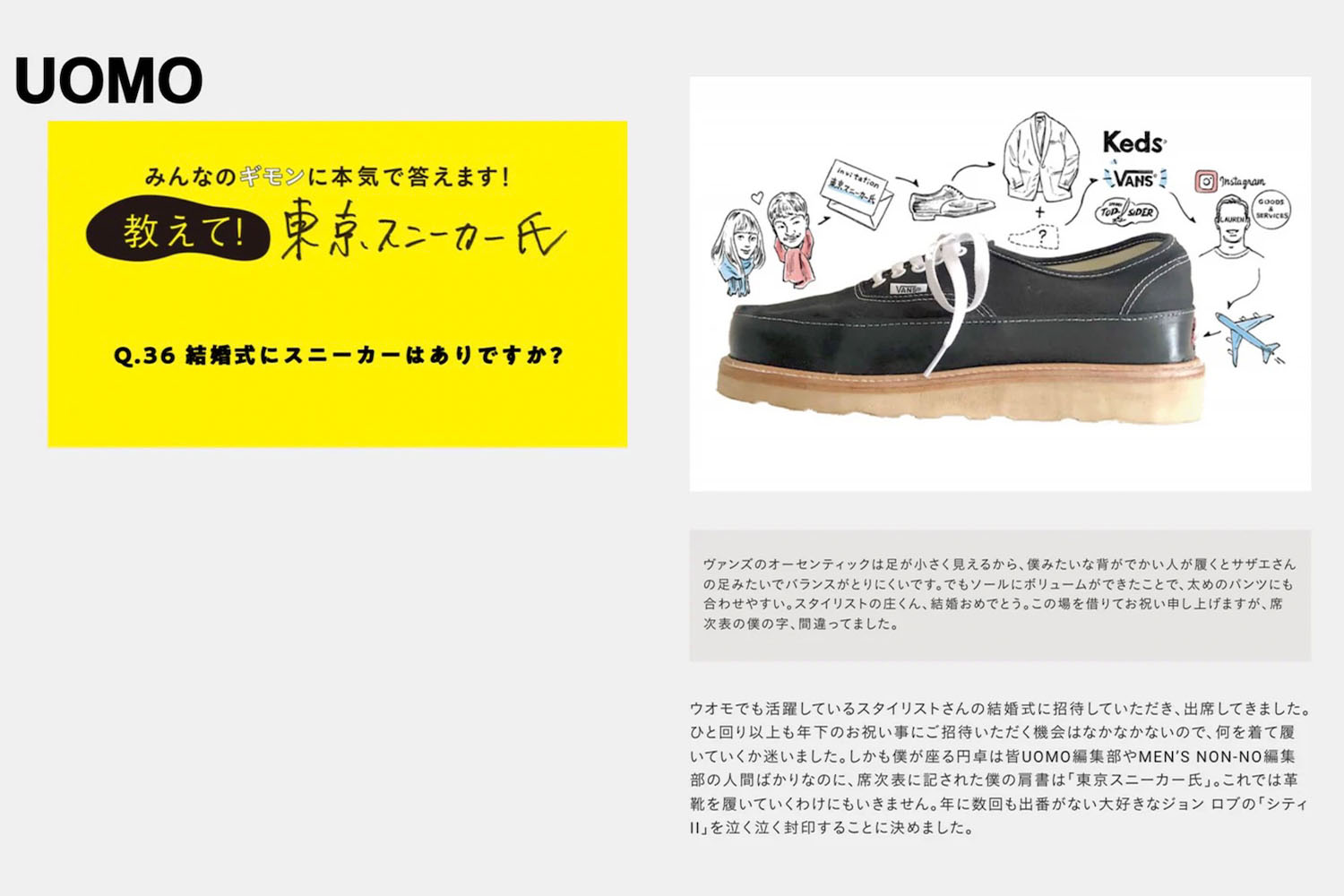
It was a pair of Vans Authentic that we sold to a writer in Japan before we opened our shop. We did a leather rand with a weld with the Christy sole, which we do a lot of, and this was kind of the early, early version of it. I was still working out of my garage and I was doing it on this old Singer patch machine. He contacted us, bought a pair and wrote an article about them in a Japanese fashion magazine. The article about the shoe came out right around the time we first opened.
Did you start to see traction on social media right away?
No, not right away. At the beginning, we didn’t envision the business as having a large social media presence. We had spent some time in Tokyo and we were inspired by small shops, restaurants and bars that you had to know about and had more of an unassuming presence, as well as a large sense of discovery. We didn’t think much about social media. I personally don’t spend a lot of time online and just assumed we’d start an Instagram and post photos of our work like everyone else does.
When COVID happened, that was when we started making videos. We had to close our shop and had the time, so we figured we’d just make videos to promote our shop. There are cobblers on YouTube, so it seemed like something people like watching. There wasn’t much strategy behind it.
Presumably you are aware of the somewhat soothing, ASMR nature of your videos. What are your thoughts on that? Do you think that people just enjoy watching other people work with their hands in an age of digital overload?
I do think there are some things about my work that can be presented in a very calming and enjoyable way to watch and there definitely was a creative vision behind it, albeit poorly executed at the beginning. The traction just developed and grew organically from there. Lots of older videos are pretty cringe to me, but over time we found a loose format that people enjoy and works for us.
I personally like ASMR videos and of course I like to focus on the work we do with our hands. It is definitely a rejection of modernity to a certain extent and I agree that people can find it refreshing. It’s interesting to watch people fix shoes. I think that there’s a deeper conversation around that because in the U.S. we don’t really manufacture things and most people don’t understand how shoes are made and what goes into it. To see somebody take them apart and all the ins and outs of it…many people are just not accustomed to working with their hands.
When we started this business, I was also coming out of the fashion industry, which is full of people who believe their opinions about product are very important and want to impose that on you, so the last thing I wanted to do was make videos pontificating about my knowledge of footwear. I’m lucky that my work is interesting to watch, so I focus on that and can let the work speak for itself instead of giving my opinion.
Coming out of COVID, we were completely inundated with Jordans…[but] there was a point in 2022 where the popularity of Jordans fell off a cliff. It literally evaporated. Now for every one pair of Jordans we get, we’ll get 10 pairs of Adidas.
– Rory Fortune
Other shoemakers you enjoy watching online?
I’m a big fan of Steve from Bedo’s Leatherworks. He’s an old-school guy and he just does repair work and shoots it with his iPhone and talks about the repair while he’s doing it. It has this vibe of very early YouTube internet stuff.
What does the basic customer flow look like to get a pair of shoes made by Goods & Services?
It is a mix. There are some customers who study our feed, pick out certain outsoles, colors, leathers, book an appointment, come in and are ready to go with their selections. Others will bring their shoes and say they liked the look of a certain shoe we did and want to do something like that but are open to feedback.
Others will come in and are totally open and just like what we do and trust our judgment. In my former career I did a lot of product development, so I’m used to working closely with designers. Understanding their vision, helping them execute it. That one skill has translated well to working with customers off the street and providing a creative service.
Has anyone ever given you a pair and said “dealer’s choice”?
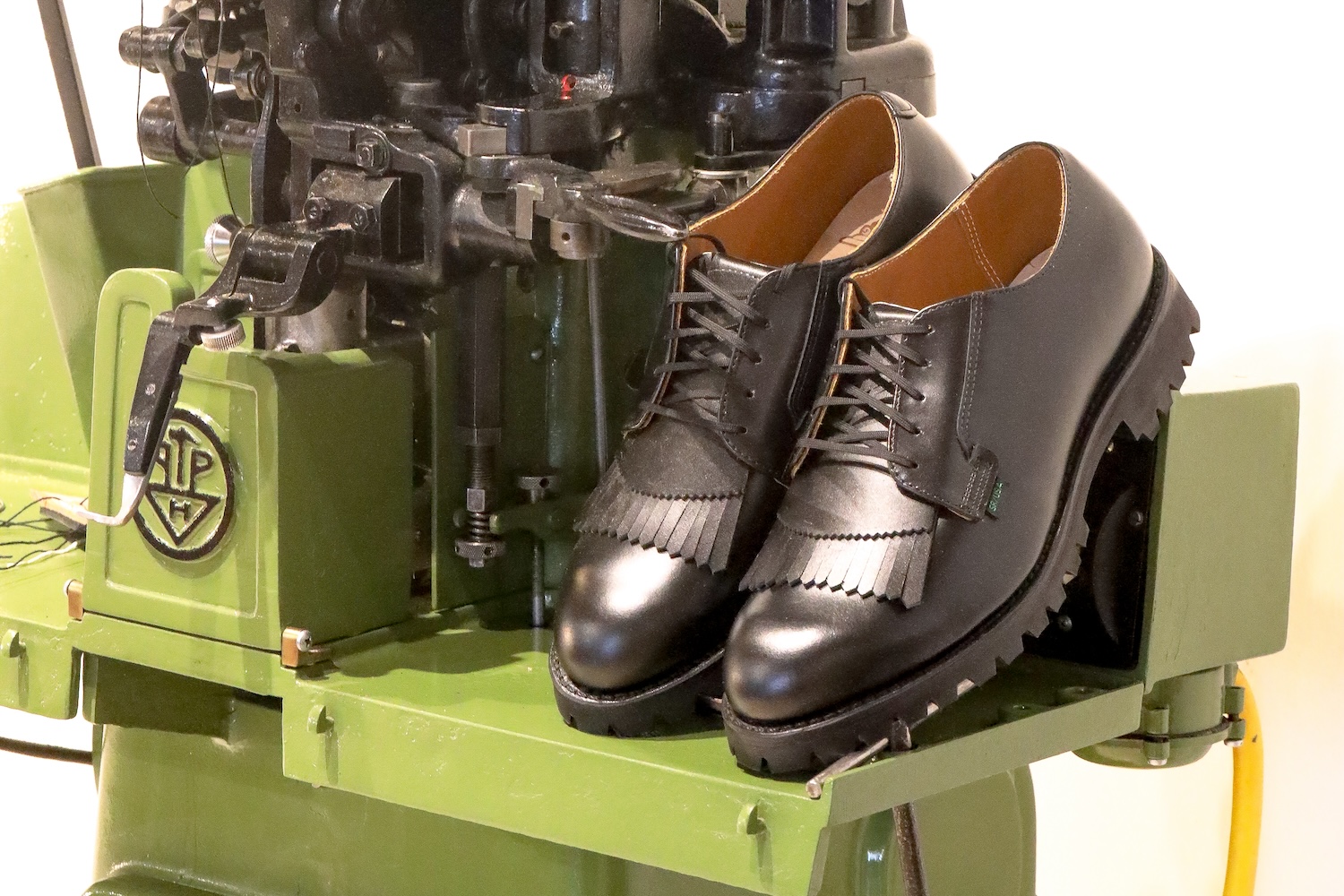
Yeah we get the “dealers choice” request fairly often. It’s very gratifying. People come in and are big fans but don’t want to go through all the details of color and materials selection, so they let me decide what to do.
Have you noticed any through lines in terms of the people you work with? Is there such a thing as a “typical” Goods & Services customer?
Yes, 100%. Let me clarify though. It’s definitely not like a demographic thing. It’s not like an age or race or, you know, whatever type of person. It’s definitely a disposition and a personality type and an attitude. You can almost tell when they walk in. You can see how they approach product and think about it.
I would say our bread and butter is a guy who grew up really into sneakers. Then he went through this phase where he went to college, came out, got a job, moved to a big city, was making okay money or whatever, and had to dress better. Started getting into leather shoes and nicer quality stuff.
They still like sneakers a lot, and they grew up on that stuff, but they’re not that guy that buys the sneaker and takes it home and cleans it and keeps it in the box and shows it off. They actually like to just wear them because they like them and it’s more of a nostalgic affinity thing.
So kind of like the evolution of a sneakerhead. True IYKYK stuff.
Yeah, because there’s a handcrafted element and we have a long waitlist and also…we’re kind of weird. It’s not for everybody. It’s unique, it’s one-of-one, but it’s also this kind of weird cool thing in L.A. that you have to know about.
What sort of things are you seeing clients request, and how has that changed over the 10 years you’ve been doing this?
For better or worse, it does seem to follow what is going on in the footwear market generally. For example, coming out of COVID, we were completely inundated with Jordans and Dunks. We would get dozens a week shipped to us. For every 10 pairs of Jordans, we would get one pair of Adidas. There was a point in 2022 where the popularity of Jordans fell off a cliff. It literally evaporated. Now for every one pair of Jordans we get, we’ll get 10 pairs of Adidas.
Because we work on so many sneakers, our customizations are always evolving. When we were doing so many Jordans we were coming up with so many iterations based on color, model, etc. After a while, you get really familiar with what types of outsoles look good on certain types of models and which ones don’t, and we can always riff off of that. About every couple years the pendulum swings back and a certain profile or shape will be in style while another one is out.
The nice thing for us is that we don’t have to worry about keeping up with it because our work is the constant. As long as we are open-minded and staying creative with our execution, we’ll be able to have an interesting take on whatever is happening in footwear. In the last year we’ve been doing a ton of lug soles with heels. We’ve always done them, but it’s been way more popular lately. It’s a nice symbiotic relationship between our audience and us. On one hand, we are always coming up with cool and different takes on custom shoes, but at the same time we have a lot of cool customers that are always bringing in cool shoes that are in style and are open to our ideas.
Much ink has been spilled on the internet regarding a shift back toward more hyper-personal style, and your work seems to dovetail nicely with that. Is that something you’ve been aware of, or was this more just something you wanted to do and it just worked out that way?
Yes, I’m very aware of it. It’s a complicated topic because while, yes, there is much more of a focus on hyper-personal style — especially with younger people — there still needs to be a kind of guardrail or curation of what’s offered. We see it every day and struggle with it as a business. If you offer every available option to people, they will freeze with decision paralysis. As much as people want something entirely their own and unique, the process of making all those decisions in reality is very overwhelming to most people.
What we do is akin to designing a shoe, and everyone wants to design their own shoe, but it’s harder than it looks and more work than most people think it is. So we really need to guide the process. I encourage people to be creative and come up with their own ideas, but I have to rein it in a lot as well. All this is to say that, yes, it works well with what we’re doing, but it has taken us a while to refine and curate the experience.
Bespoke items are also notoriously difficult to execute at scale. Were the commissions born out of that, or was there a different genesis to that offering?
We’ve done commissions on and off for quite a while. It’s mostly a response to customer requests. We’ve noticed over the years that there is a certain type of customer that understands the custom part of it, and gets ideas about their own shoes and brings them in to apply it to their own.
But there’s another customer who sees us as a brand and just wants to purchase from us because they like our style and point of view. That’s what the commissions were born out of. It’s a way to do things more efficiently and in a larger volume because the customer is not customizing their pair. We choose the design and offer it one way, so the work is more repeatable.
Do you find yourself frequently experimenting in the shop?
Yes, but not as frequently as I should. The biggest issue is prioritizing the time to do it — I’m just too busy running the day-to-day business. That being said, we’re working this year to prioritize time more. We are in a unique position; most small brands don’t have their own workshop. For us, the cost to experiment with new things is relatively low and if we get excited enough about something, we can release it quickly. So the upside is high.
Successes or epic fails on that front?
In terms of successes, I recently did these Chrome Hearts Chuck Taylors and I think it was the first time I did this construction. A million people customize Chuck Taylors and there’s all kinds of different ways to do it, but this was much more complicated because we rebuilt the whole thing out of leather and there’s no visible stitching — it’s all folded in seams. It was really difficult, a lot of handwork, took a long time. I’m really happy with the result. You’ll see it on our Instagram probably today.
In terms of epic fails, I’m trying to think if there’s something that I attempted and said, “Okay, I’m not going to do that anymore.” I’m pretty stubborn, so usually I’ll stick with it until I get it to a pretty good place if I believe in the idea. But I once tried to combine a Moon Boot and an engineer boot. I took a Moon Boot made of quilted, puffy nylon and added a leather toe, vamp and heel counter, along with a leather strap and buckle, and a leather welt and heel. I thought it was a really cool idea, but it just ended up looking dumb. My wife gave me a hard time for wasting so much time on it.
What’s something you’ve been wanting to try but haven’t had the chance yet?
If I had a free day to experiment — and this changes week by week — I would really like to do more with monkstrap shoes and moc-toe stitching, perhaps by designing something original or modifying sneakers with them. I’ve wanted to do it for a long time now, but I just can’t get the time to get to it. That’s my top priority when I get a free moment.
More Like This

This article appeared in an InsideHook newsletter. Sign up for free to get more on travel, wellness, style, drinking, and culture..