

Just five years after making his UFC debut, Alberto Crane was diagnosed with multiple sclerosis in 2012. A chronic autoimmune disease, MS affects the central nervous system, interrupting signals between the brain and body, and slowly diminishes one’s ability to move, even speak. There is currently no cure, but treatments can slow the process.
Now 49, Crane — a former Brazilian jiu-jitsu world champion, and the founder of Legacy Brazilian Jiu-Jitsu in Santa Fe, New Mexico — refuses to be defeated, carrying a fighter’s mentality into what he describes as just another match.
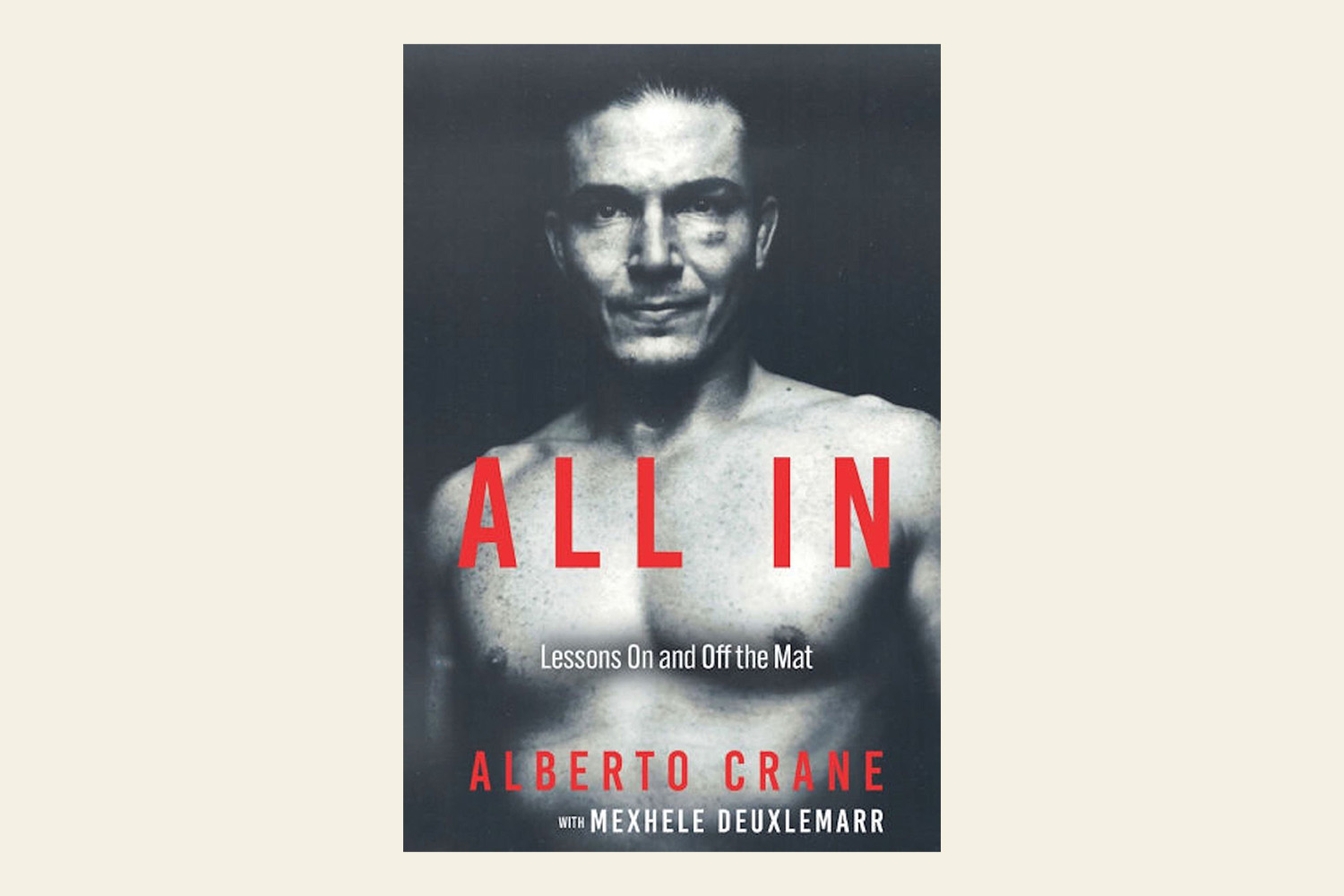
He writes about this, and more, in his new book All In: Lessons On and Off The Mat. Ahead of the launch, he spoke with InsideHook about coming to terms with his diagnosis, his love of jiu-jitsu and how innovative movement training is keeping him in the fight.
InsideHook: How did you initially get into Brazilian jiu-jitsu?
Alberto Crane: It was around the time I finished high school. One of my friends, who was much smaller than me, arm-barred me like 10 times. I couldn’t believe he’d beat me, and he convinced me to start going to classes. I got obsessed right away. Jiu-jitsu just made me happy, it gave me peace of mind. When you’re 18, you’re trying to prove yourself in the world, and it allowed me to do that. When my friend moved to Brazil to compete, I went with him. Down there, being around people who had grown up on jiu-jitsu, I had to learn how to win, and that just made me a better person all round.
How did you start fighting in the UFC?
The UFC wasn’t really established as we know it when I first started training, but after a few years in Brazil and competing in jiu-jitsu tournaments across the world, I moved back to New Mexico and was asked to compete in an event called King of the Cage. They put me down low on the card but I had a big following and got moved up to the semi-main event. This was my first MMA fight and it led to another, and then another, then fighting in Japan. Eventually I was invited to the UFC.
How far were you into your MMA career when you received your MS diagnosis?
They made you do a brain MRI every five years in the UFC. The first time they found something, but it didn’t worry them and they let me fight. Five years later, I did another scan and they found these lesions. They stopped me fighting, did more tests and I was diagnosed with multiple sclerosis. It was definitely a shock, but I’m a fighter, I’ve been competing my whole life, so I don’t accept defeat. My thinking was “OK, what’s next?”
Had you noticed any symptoms?
When my son was about to be born I started feeling numbness in my legs and in my body. I thought it was just all the years of going hardcore. And I was a bit disconnected; I remember playing frisbee in the park and I couldn’t catch it. Which was weird, because I was an elite athlete, right? You blame other things. But after the diagnosis I started to notice I was in pain all day, every day, and sometimes had difficulty walking.
You were fighting for a period after your diagnosis. How did you manage that?
I was told I could still compete in jiu-jitsu, so I went on a world tour, competing everywhere. I realized that I still believed in my technique and started to feel good thoughts. I repeated it like a mantra: “Believe in my technique, believe my technique.” I ended up winning multiple matches through the power of the mind.
Competing has been my life. It elevated my spirit and kept me moving forward. But it was tough on my body, especially all the travel. Sometimes, I had a hard time even moving my feet to walk into the tournament building. I realized I wasn’t too good standing when there was lots of dynamic movement, but if I could get the guy on the ground, I could develop this leg-locking system and other positions which helped. My will to win was so strong that I would find a way to win the match.

The Fitness Secrets of One of Hollywood’s Most Prolific Martial Artists
Scott Adkins has starred and stunted in more than 60 movies and TV shows since the late ‘90sYou credit a system called TACFIT with really helping you. You teach it now, too. What is it?
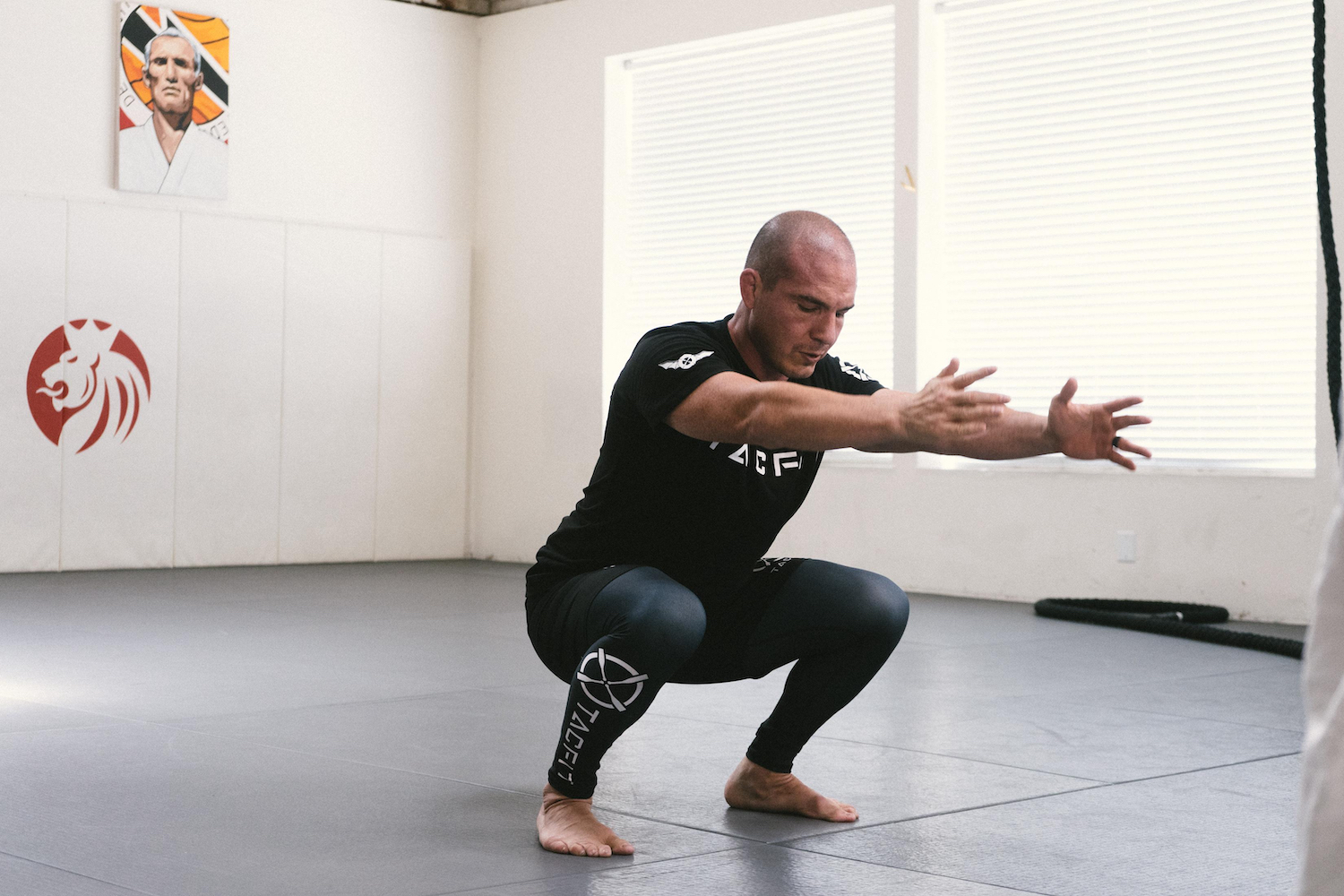
Early on in my UFC career, I got linked up with this guy Scott Sonnon, who’s the creator of TACFIT. I’d recently been suplexed and they were talking about surgery for my neck. Scott had me do some stretches and in 10 days it was better. I never forgot it. After my world tour, I realized Scott could help me heal myself through movement. I studied and got qualified in TACFIT, and it’s been really good for me.
The first thing we do every session is move all of our joints in a specific way — all the way from the neck to the ankles. Then, we activate the muscles for whatever workout we’re doing. Then it’s a 20-minute workout at around 60 to 80% of your heart rate max, which is just enough stress to make a difference, but not too much. As part of the cool down, we do compensation, which means turning the muscles off. You [ever] do squats, go out and it hurts to get into the car? That’s because that muscle is still activated. So, we spend five, six minutes doing antagonistic work to shut these muscles off. For example, if you’ve been doing bicep curls, you might then flex the tricep for a minute to turn the biceps off and prevent soreness.
It’s an amazing training method. We’ve worked with multiple federal law enforcement agencies and they went from all these injuries down to almost nothing, while getting stronger at the same time.
And how did it help you?
It helped reinforce my intuition. By that, I mean my understanding of the body, and what I needed to do to get better. MS affects this sheath around your nerves, called myelin, and it interrupts the signal to the nerves, which means your movement is affected. That’s why people lose their ability to walk, to talk. When you do movements like TACFIT, it lays down myelin and slows the process. “Move it or lose it” is true for all of us, but it’s especially true when you have MS.
You seem like a really positive guy. How do you stay so optimistic?
At first, I didn’t accept this condition. In martial arts you don’t accept defeat. If you panic, it’s game over. But this is just another match, another fight. I tried to stay calm. I tried to find solutions and go into a winning mindset. Still practicing jiu-jitsu, then learning TACFIT, helped. My symptoms are worse when I get stressed, so it’s sort of been a blessing in disguise because I know allowing myself to get annoyed or stressed now would take all my energy away. It’s a mental decision. I choose every day to follow the path that isn’t stressful.
What’s your health like today?
I don’t get upset about [having MS]. I let it be and just live my lifestyle. My jiu-jitsu academy is 25 years old, and I get to make a difference in people’s lives. I get a lot of positive energy every day from getting up in the morning, taking care of my kids, then going to the gym to teach others. I eat well, following a paleo protocol, and I try to surround myself with good company. If I do travel and get stressed by it, I control my mindset. Sometimes I have issues walking and even talking, formulating my thoughts. I definitely deal with things. It depends on the day, but overall I’m pretty good.
More Like This

Twice a week, you'll find proven advice and tips, expert interviews, deeply reported features and personal essays on living better — for however long you’re here. Subscribe to Champ now.