
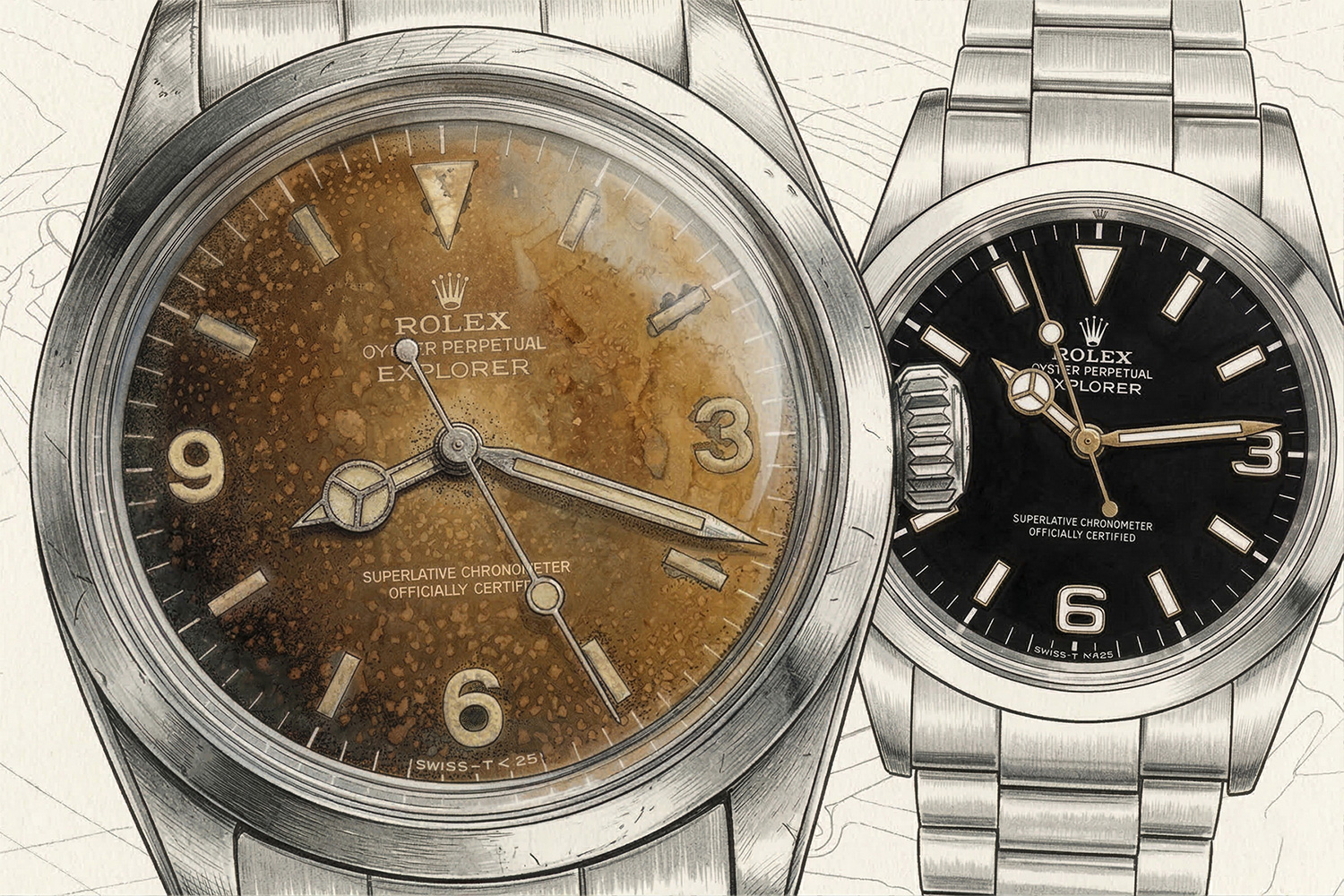
Welcome to Watchword, a series in which we break down key terminology to help you better understand the lay of the horological land. In this episode, we unearth the phenomenon of the “tropical” dial and why such pieces are so valued.
Until roughly the late aughts, much of the vintage watch-collecting community focused on stock that remained in the best physical condition possible, rejecting patination while polishing cases and generally restoring old watches in the manner of old cars. As the watch-collecting hobby proliferated in this century, however, collectors’ tastes shifted dramatically.
Suddenly, “patina” — tasteful patina, that is — was everything. Not only that, but the polishing wheel was off limits, dented and faded aluminum bezel inserts commanded sky-high premiums, and the word “tropical” was part of the vocabularies of people who had never set foot in the Caribbean.
The word “patina” is defined by Merriam-Webster as “a usually green film formed naturally on copper and bronze by long exposure or artificially (as by acids) and often valued aesthetically for its color” or “a surface appearance of something grown beautiful, especially with age or use.” In the case of vintage watches, we typically take it to mean the degradation of the dial regardless of its underlying material — it could be brass, gold, enamel, etc. Said degradation can be aesthetically pleasing…or just plain ugly, and seeing as beauty is in the eye of the beholder, it can be difficult to judge how a particular watch will strike any given collector.
However, there’s one type of patina that has captured the hearts of collectors the world over: the tropical dial.
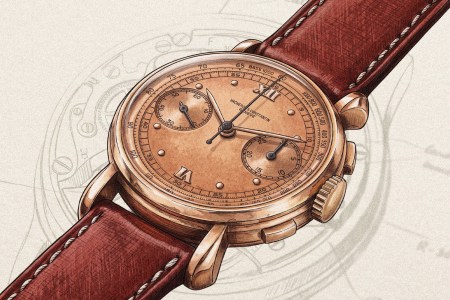
How Salmon Dials Conquered the World of Watch Collecting
“Salmon” is contemporary nomenclature, but the aesthetic goes back to the 19th centuryA tropical dial is one in which the black paint has turned a shade of brown, and ideally a relatively uniform one. How does this happen? The general thesis is that certain forms of paint used between the 1950s and 1970s were essentially defective and unstable, leading to discoloration following exposure to sunlight. Because this discoloration often took years to form — and because it didn’t always form — the defect went unnoticed by Swiss watch companies, and thus took years to correct.
Indeed, far from every black-dialed watch that left European factories in the mid-20th century and was worn in a sunny clime “went tropical.” But when you combine this pleasing chocolate-brown color with an already desirable watch such as a Rolex Submariner ref. 5512, you’ve got a recipe for auction gold.
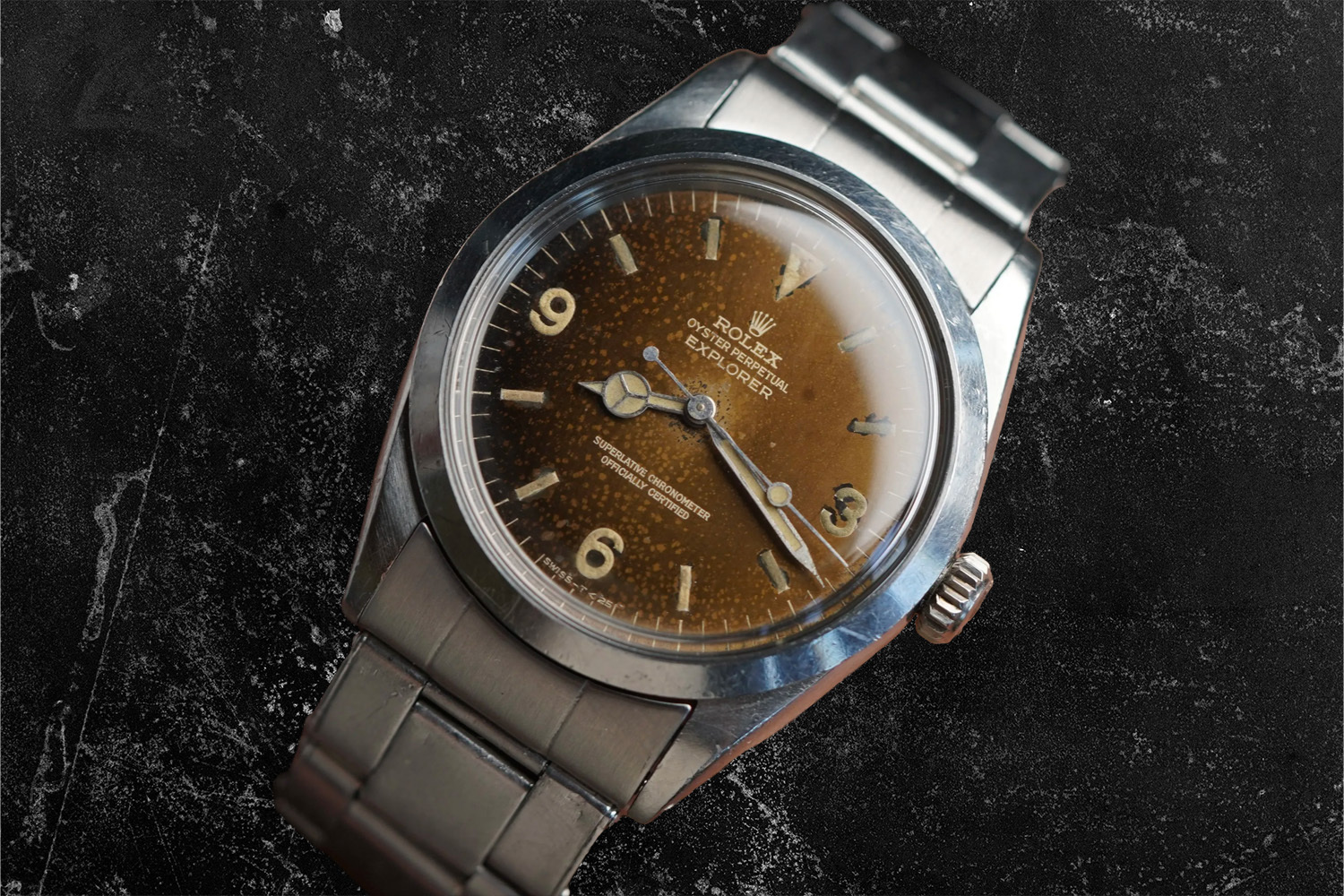
How much of a premium does such a dial add to an otherwise run-of-the-mill Sub, GMT-Master or Speedmaster? Eric Wind, founder of Wind Vintage and one of the top vintage watch specialists and dealers in the world, estimates that it could potentially add a 400% bump to the sticker or hammer price.
“Tropical dials — as long as they are truly tropical brown and not damaged dials — are extremely desirable for collectors,” Wind says. “For any general Rolex model, it is generally well under 1% of watches that are tropical. It is interesting, however, to note that many watches from circa 1969 with dials made by Singer have tropical dials, including the Rolex “Red” Submariner reference 1680 examples from 1969, the GMT-Master reference 1675 examples from 1969, Submariner reference 5513 examples from 1969, and Omega Speedmaster reference 145.022-69 examples from 1969.”
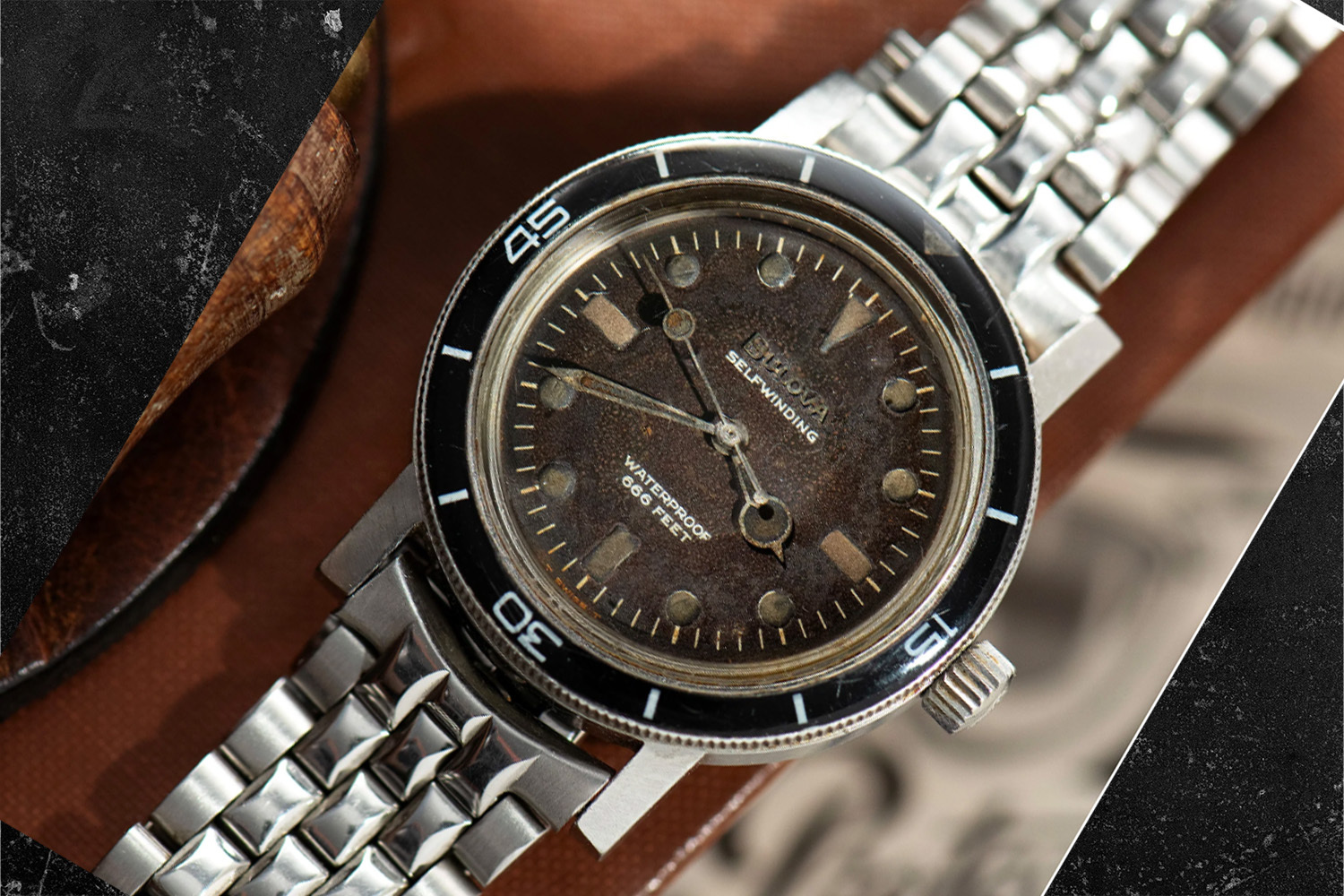
Before you’re scared off by 400% price bumps, however, remember that not it’s not only highly desirable models from Rolex and Omega that “went tropical.” Indeed, a tropical-dialed Longines, for example, might be had for just a couple thousand dollars or less, as would, say, a vintage Bulova.
One should also note that while defective paint is the primary source of what we might term a “true” tropical watch, the term is often applied more broadly to any dial that has turned brown. If the radium used on the hands of a watch with a silver dial has turned it the color of burnt toast? Tropical. If a gold-tone dial has turned soil-colored due to sun exposure? Tropical. The use of the term in these instances isn’t necessarily wrong — the word has simply escaped the confines of its narrower, defective-paint definition to encompass a wider variety of causations.
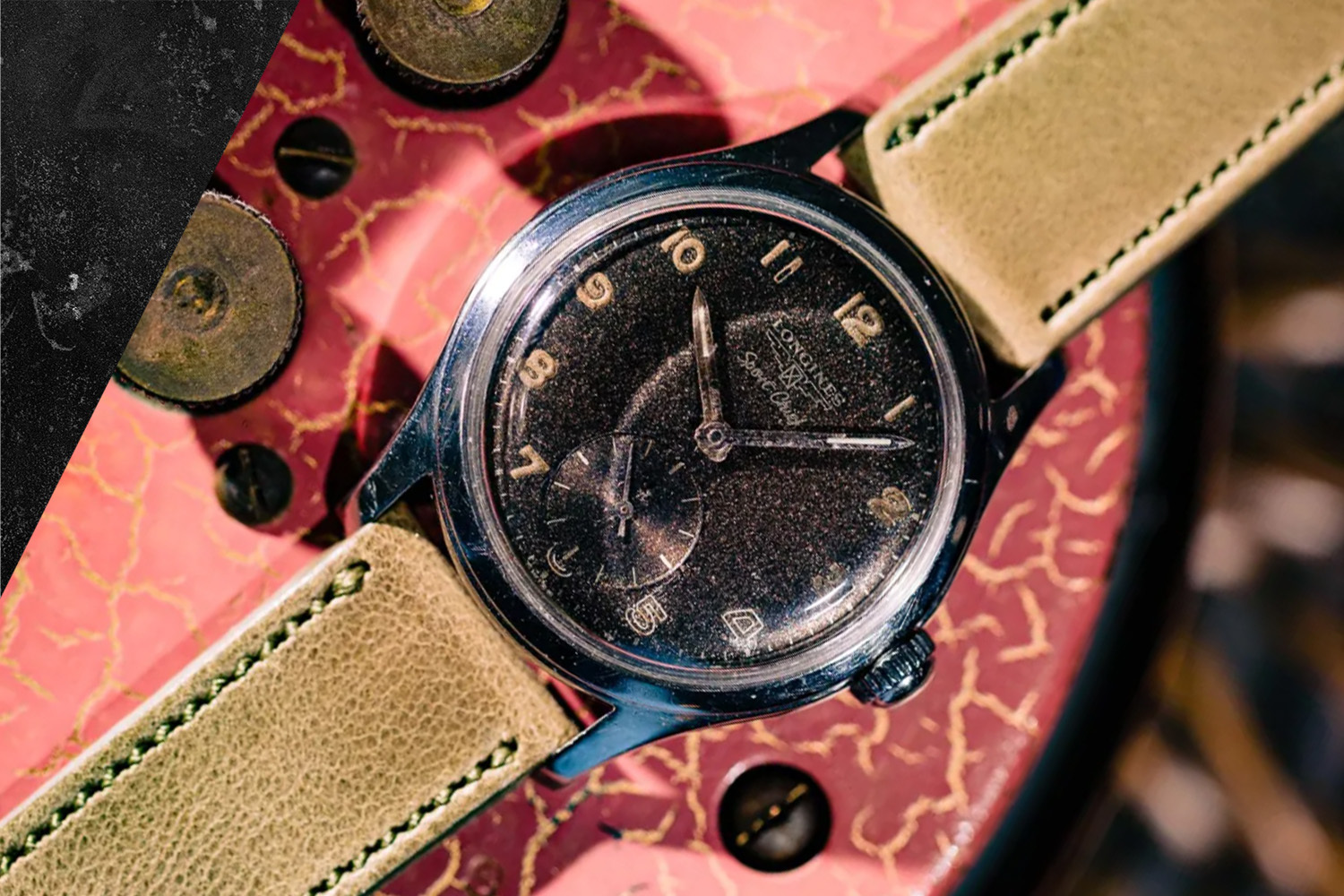
Regardless of expense, brand or the cause of the effect, there’s no doubt that tropical dials are beautiful and command a premium within the vintage-watch market. One should be careful when buying, however, and keep in mind that unscrupulous dealers have been known to alter dials in order to charge more money for them.
If possible, stick with a known quantity such as Wind Vintage, Analog:Shift or Craft + Tailored. And buy the watch that you actually want — not the one that you think your collectors buddies will drool over. If that’s a five figure ref. 1016 from the late 1960s? Great. And if you want something tropical for just a few thousand bucks? Equally great.
The fun, after all, is in the hunt.
More Like This

The world of men’s style, from the streets of NYC to the showrooms of Milan, run down weekly by writer and photographer Christopher Fenimore.