
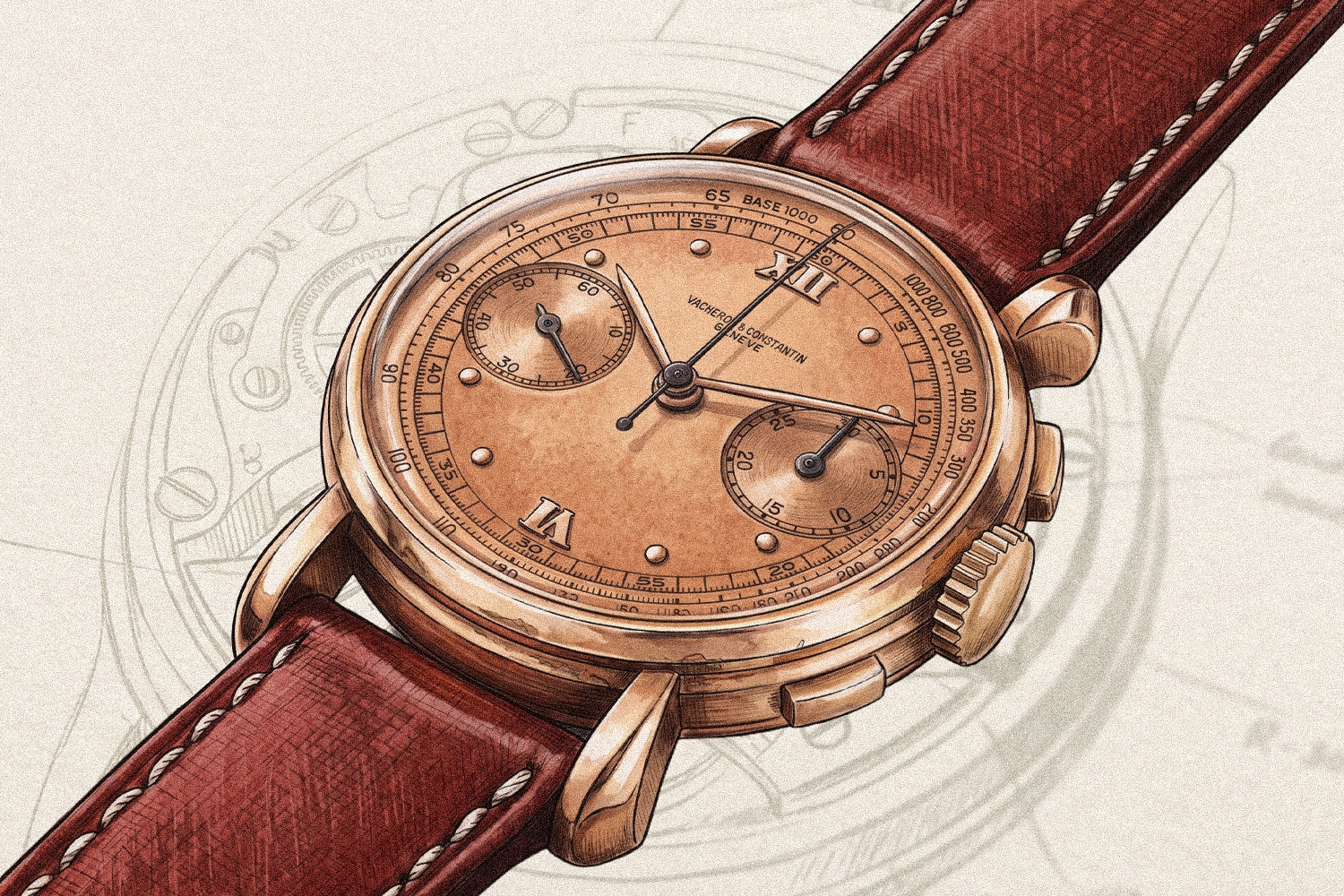
Welcome to Watchword, a series where we break down key terminology to help you better understand the lay of the horological land. In this entry, we examine salmon dials — the pinkish watch faces that have taken over the collecting world.
If a silver-dialed watch is akin to a common sedan, a black-dialed watch is an SUV and a colored dial — say, blue or green — is a fun Sunday-afternoon car, then what is a salmon-dialed watch?
I’d say a high-end convertible. Really, you might ask — a watch the color of a fatty fish? Yes, but with some caveats.
“Salmon” as a watch term is a concoction of the contemporary collector-sphere. In the late 19th century, maisons such as Patek Philippe, Vacheron Constantin, Breguet and others began producing pocket watches by electroplating a thin layer of gold onto a brass dial blank, creating a warm hue that complemented both precious-metal and stainless-steel cases.
Because of the expense inherent in this process, such dials were reserved for the likes of complicated pieces such as minute repeaters, split-seconds chronographs, perpetual calendars, observatory chronometers and special commissions. While Patek in particular referred to this as a “rose-gilt opaline” dial, other manufacturers used terms such as “gilded,” “rose,” “pink” or even “copper.”
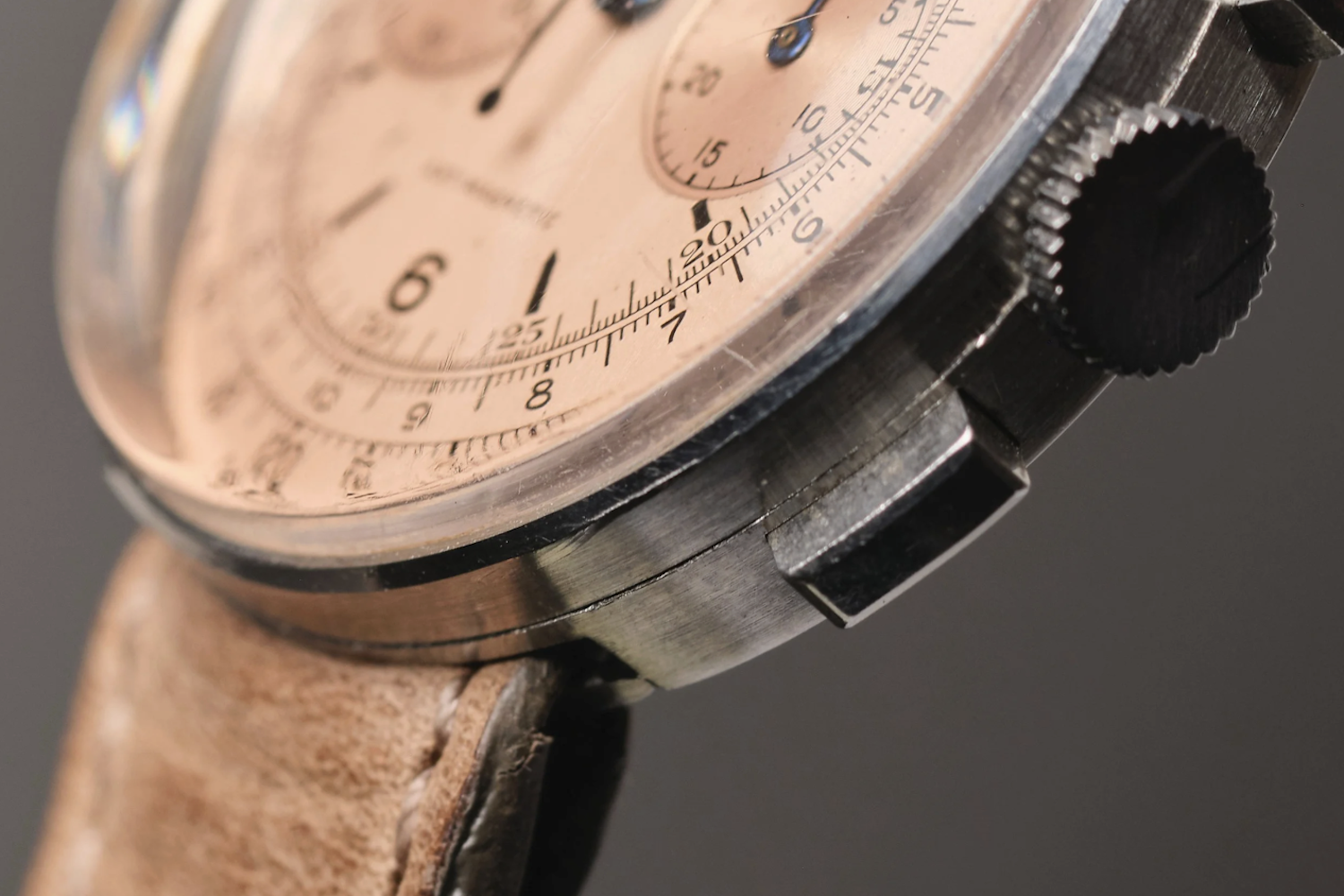
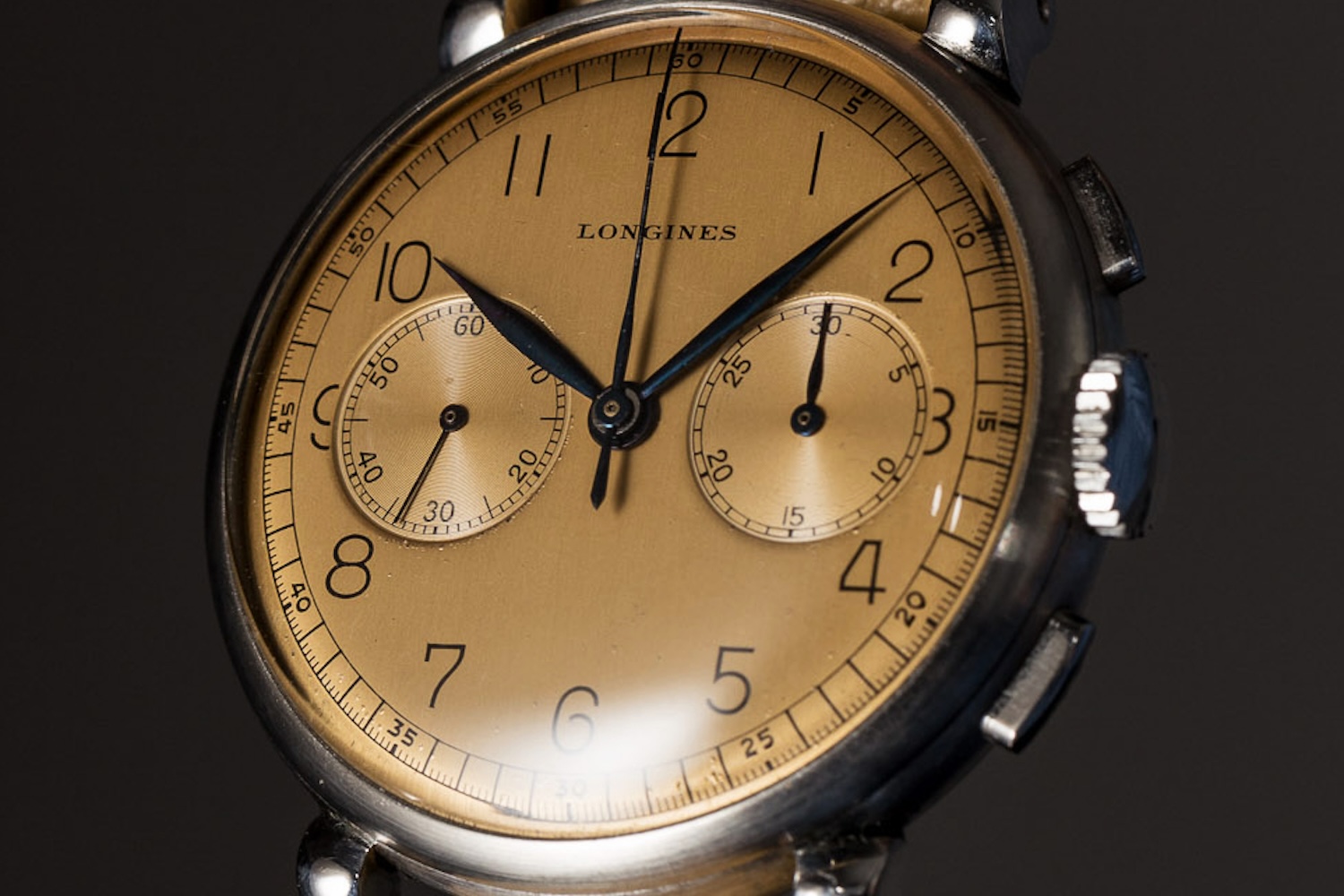
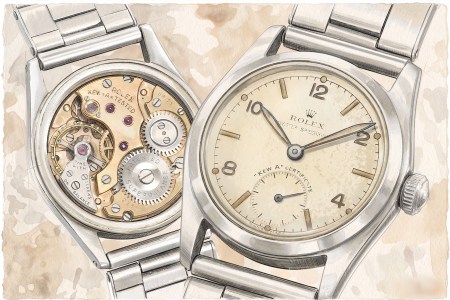
By the 1930s and 1940s, the wristwatch was slowly beginning to overtake the pocket watch as the dominant portable timepiece, and top brands simply carted over the high-end colorway to a more compact form factor. From serially produced pieces made in small series to special commissions, Patek Philippe manufactured some of its most beloved references — the ref. 130 chronograph, as well as the ref. 1518 and ref. 2499 perpetual-calendar chronographs — in salmon-dialed versions, while firms such as Vacheron Constantin, Longines, Rolex and Universal Genève made them in smaller numbers.
While certain of these manufactures used the electroplating technique practiced by Patek Philippe in order to achieve a gilt color, others used different processes: chemical silvering can achieve a similar look without the use of actual gold, for example, while simply exposing the underlying copper-rich brass dial plate via a translucent finish also gives a gold-like tone, albeit in a more muted fashion. Generally, the more expensive the finishing process, the more it was reserved for higher-end pieces — though there are certainly special-commission versions of time-only dress watches, such as Patek’s famous ref. 96, with rose-gilt opaline dials.
Beginning in the 1950s, the rise of the dedicated “tool watch” for scuba diving, flying, driving and other sports saw the market flooded with numerous black-dialed models against which luminous hands and indices stood out in sharp relief at night. While silver-dialed models continued to be the norm for everyday timepieces, rose-gilt dials became even more rare — especially as the Quartz Crisis took hold. By the 1970s, when inexpensive battery-powered watches from Japan were putting hundreds of historic Swiss firms out of business, the idea of a high-end mechanical watch with a difficult-to-produce dial must have seemed downright anachronistic.
Certain firms, however, stuck to their guns, experimenting with quartz technology, to be sure, but largely doubling down on the production of high-end mechanical watches. Beginning in the 1990s and extending into the 2000s, watch collecting expanded significantly, while the rise of blogs such as Hodinkee in the mid-2000s both introduced the hobby to younger generations and provided a place for seasoned collectors to interact and enjoy their hobby with likeminded people. By the 2010s, watches were everywhere, and companies eager to capitalize on their expansive back catalogs began experimenting once again with so-called salmon-dialed watches.
The true rose-gilt opaline dial, however — one created using the electroplating of gold onto a dial blank — is mostly a thing of the past. Today, high-end manufactures largely employ a galvanic process in which dials are given an electrochemical bath that deposits an extremely thin metallic coating. By carefully controlling variables such as the electrolyte composition, metal chemistry, immersion time and current, various shades can be achieved, from “salmon” to silver to anthracite. Patek Philippe, A. Lange & Söhne, Vacheron Constantin and others all use this technique today; whether actual gold is part of the galvanic process is generally not confirmed by the maison.

A History of the Chronometer, the Gold Standard of Watchmaking
How a highly misunderstood term has influenced watchmaking for centuriesAt the highest end of the market are watches from both large manufactures and independent brands that combine several finishing techniques into “salmon” dials of singular beauty. These may consist of a rose-colored galvanic finish over a brass dial plate; multiple clear protective lacquers; recessed chapter rings or subdials; applied precious-metal indexes; printed chronograph scales; or hand-applied lacquer protection. Though dial production techniques are often closely guarded secrets, watches such as Patek Philippe’s refs. 5270P and 5236P; boutique editions of the A. Lange & Söhne 1815 Chronograph; certain examples of the Vacheron Constantin Historiques Cornes de Vache; and the Laurent Ferrier Classic Origin are examples of watches that clearly employ multiple high-end finishing techniques.
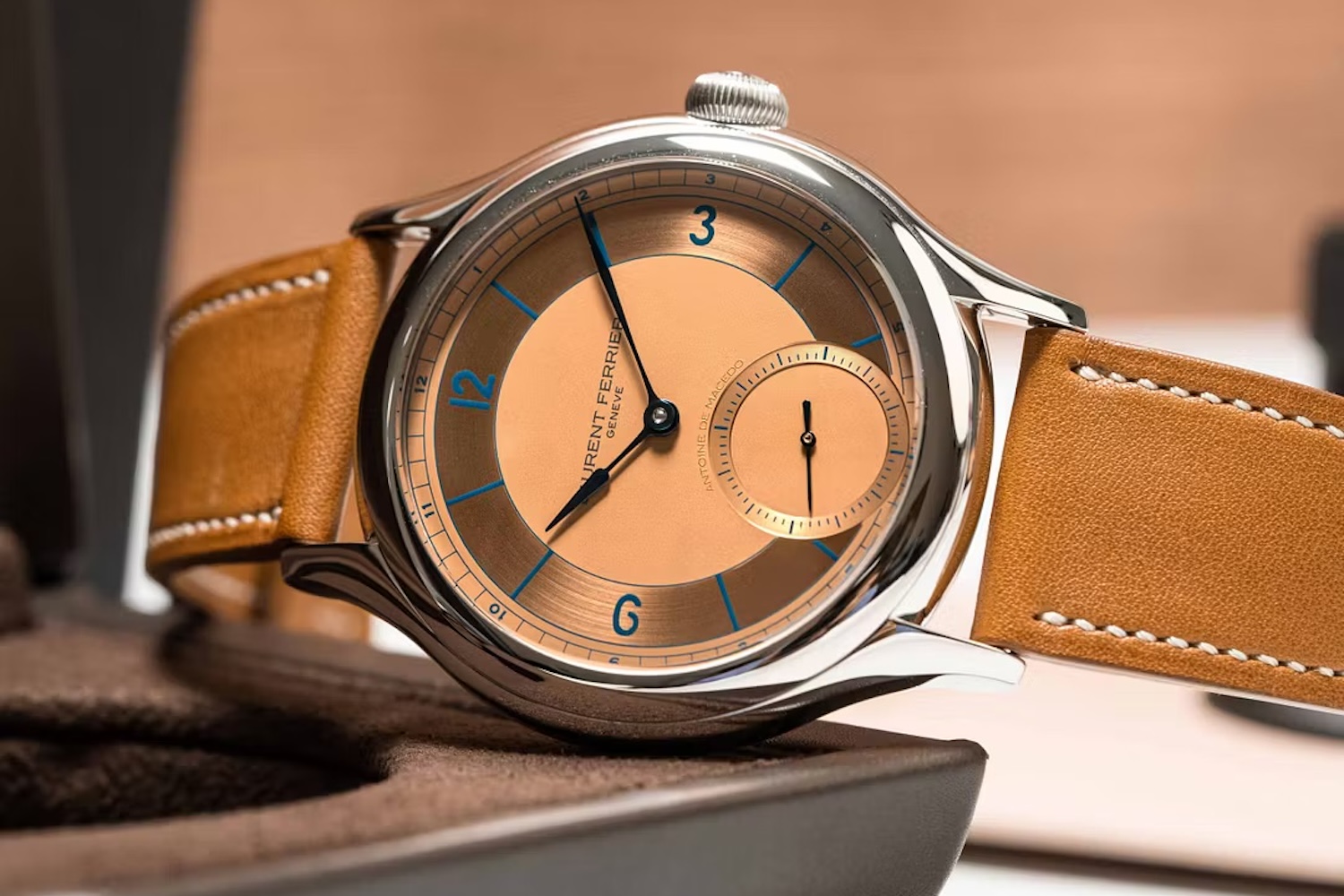
Other watchmakers at different segments of the market might use physical vapor deposition (PVD), chemical vapor deposition (CVD) or lacquer to achieve a similar effect with more consistent, durable results. Though many of these watches lack the depth and dynamism of pieces costing six figures, they nevertheless provide a lovely injection of warm color into the experience of wearing an everyday or dedicated dress watch. Pieces from the likes of Baltic — a French microbrand that draws heavily on vintage watches as inspiration — often cost well under $1,000, while those from microbrands such as Furlan Marri and Farer come in between $1,000 to $2,000, and examples from Longines and Nomos often run between $2,000 to $5,000.
In sum, a collector in search of a salmon-dial watch is almost spoiled for options. From gold-tone microbrand pieces to true masterpieces from high-end independents, there has perhaps never been a better time to secure one of these splendid timekeepers.
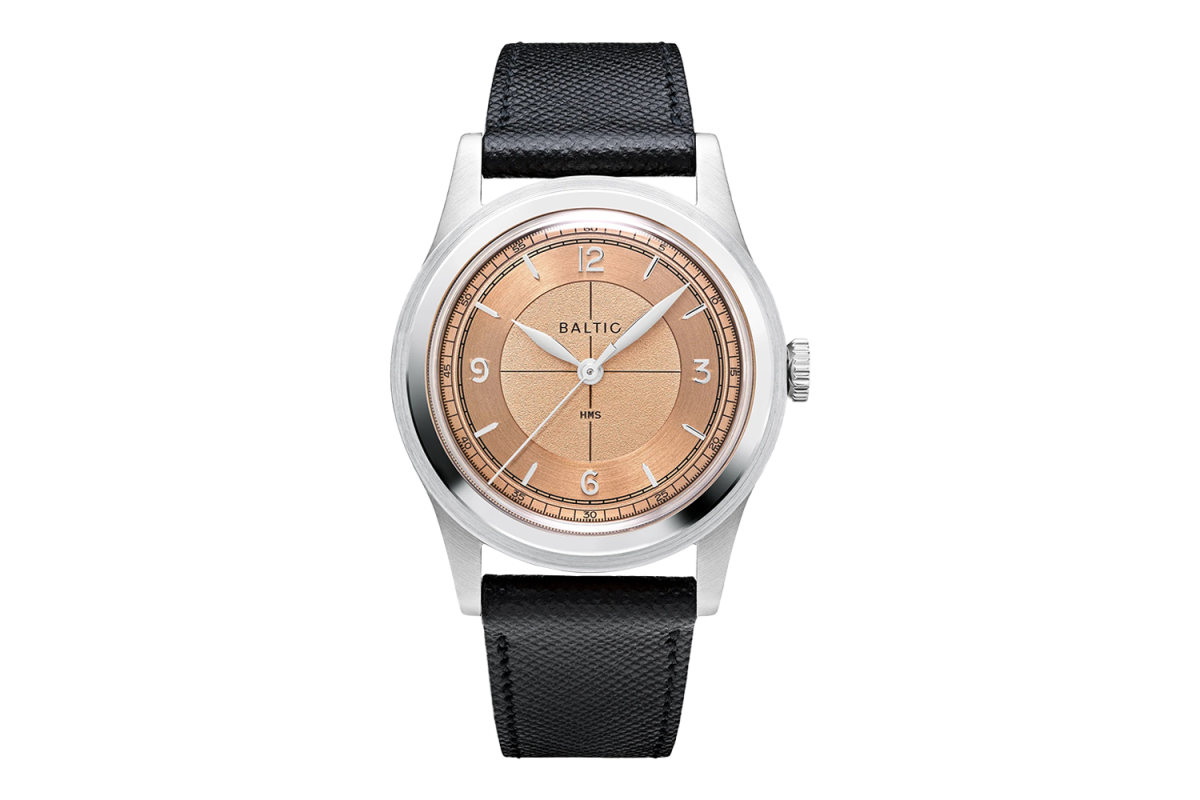
French microbrand Baltic has several salmon-dial watches in its catalog. The most affordable is also one of the best looking: the HMS 003, which features a 36.5mm stepped case in the mode of classic dress pieces from the 1940s, and boasts a dial with both brushed and grained surfaces, lending it a sophistication that surprises given its sub-$500 price point. Powered by an automatic Miyota movement, it’s a great way to get into the salmon game without breaking the bank.
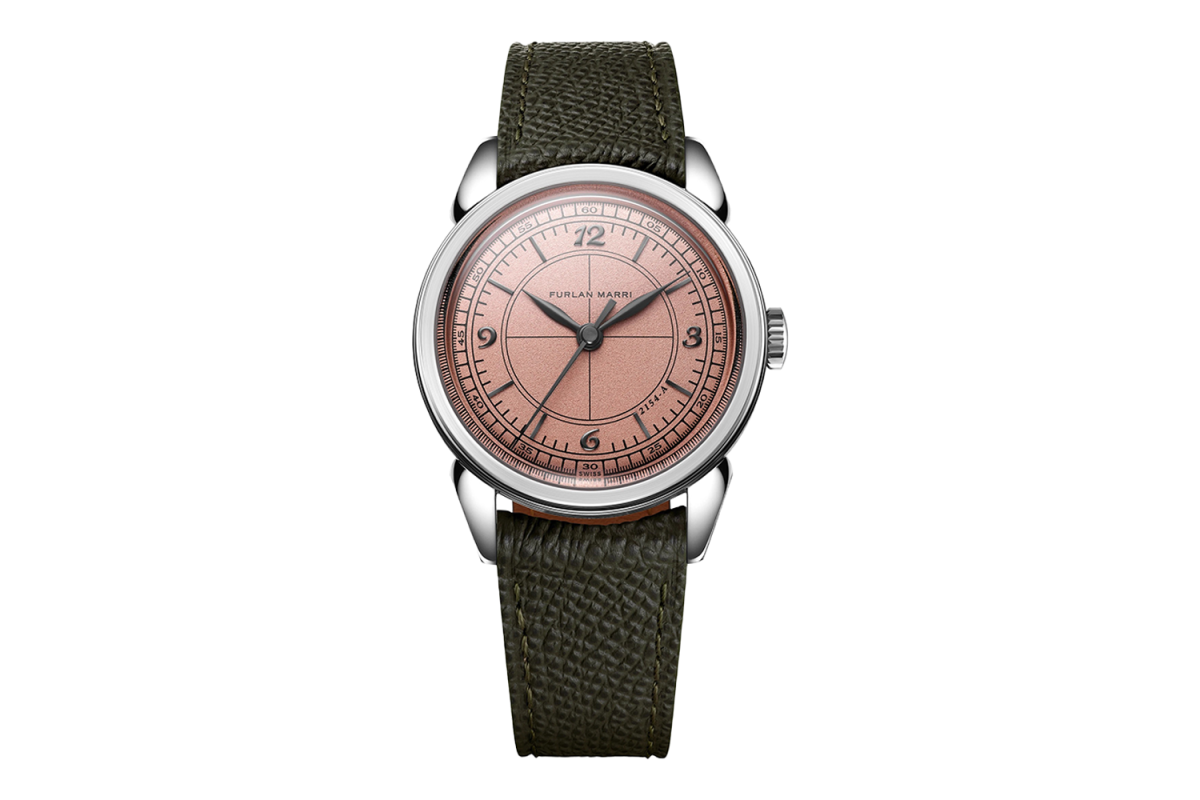
Similarly to the Baltic HMS 003, the Furlan Marri Cornes de Vache Salmon Sector is a stainless steel dress watch with a classic “sector” dial — though this one ups the ante in several departments. First, it’s equipped with beautifully sculpted cow-horn lugs. Second, it boasts an automatic, Swiss-made La Joux-Perret G100 movement. Third, it comes with two interchangeable straps. The dial, with its fine graining, stamped finish and polished Breguet-style indices, is sure to grab collectors’ attention.
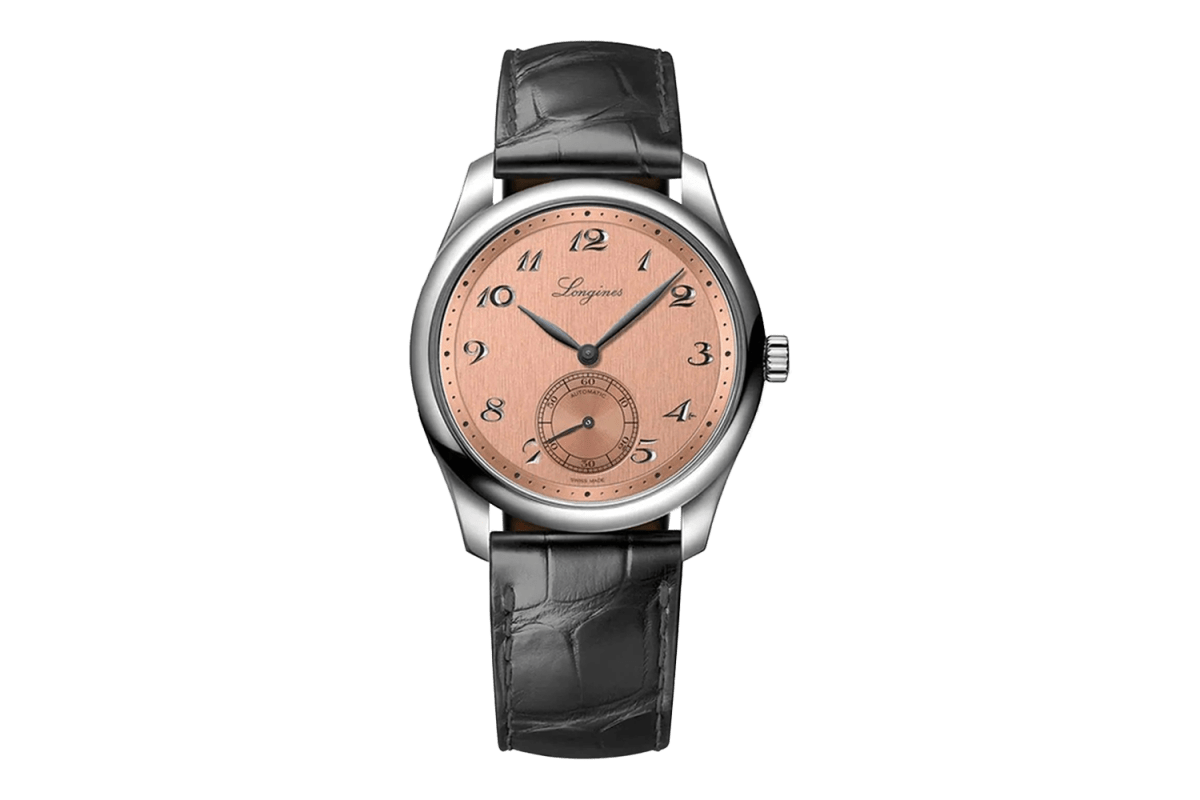
Swatch Group-owned Longines has its own take on the salmon dial in the form of this time-only dress watch in a 38.5mm stainless steel case with ample polished surfaces, a smooth bezel, a simple leather strap and the automatic Longines L893 movement. The dial itself — which features a sub-seconds display, Breguet-style numerals, vertical brushing and a minute track along the rehaut — mixes finishing and color to great effect, yielding a pared-back aesthetic that wears well with just about anything.
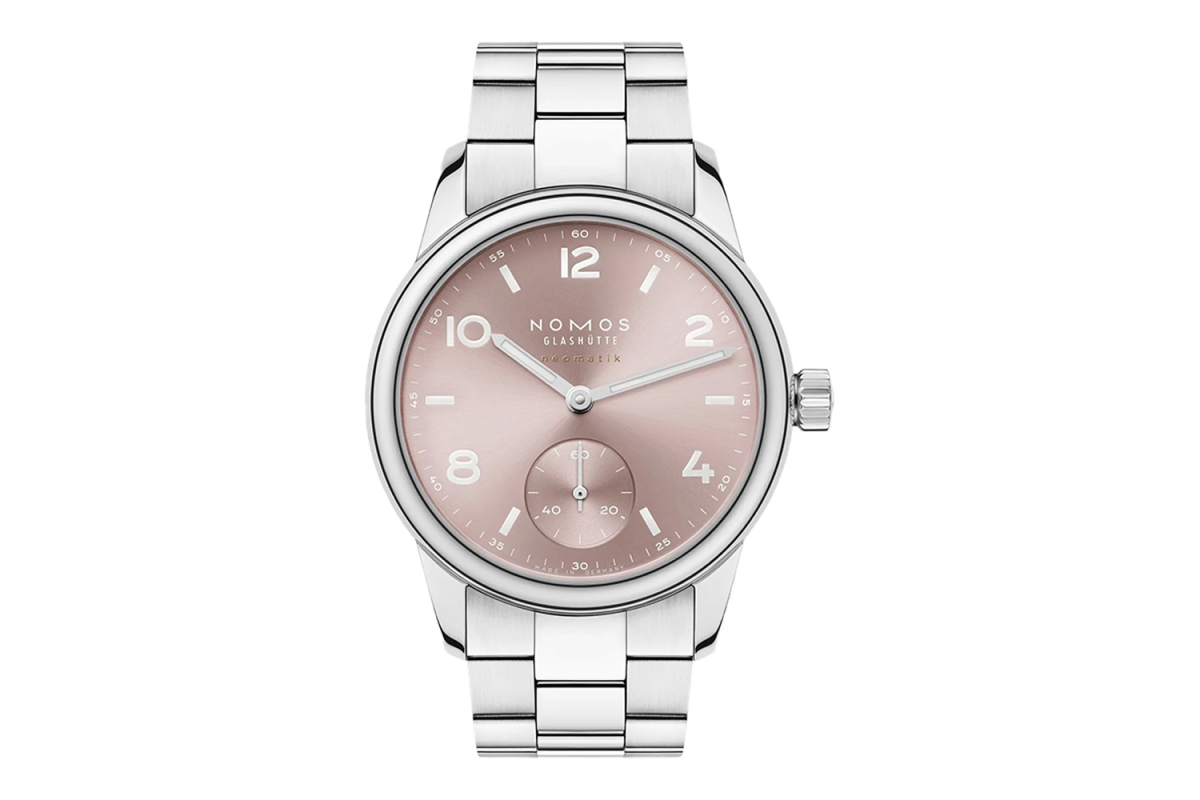
This lovely little sports watch, the smallest from Nomos, packs quite a wallop considering its compact dimensions. Housed in stainless steel and paired to a matching multi-link bracelet, it measures just 8.2mm tall thanks to the in-house cal. DUW 3001 automatic movement with 37 jewels. The dial — with radial brushing, large Arabic and baton indices, a snailed sub-seconds display and luminous sword hands — is contemporary and versatile, making it an ideal choice for a wide variety of wearing situations. It’s even water resistant to 200 meters!
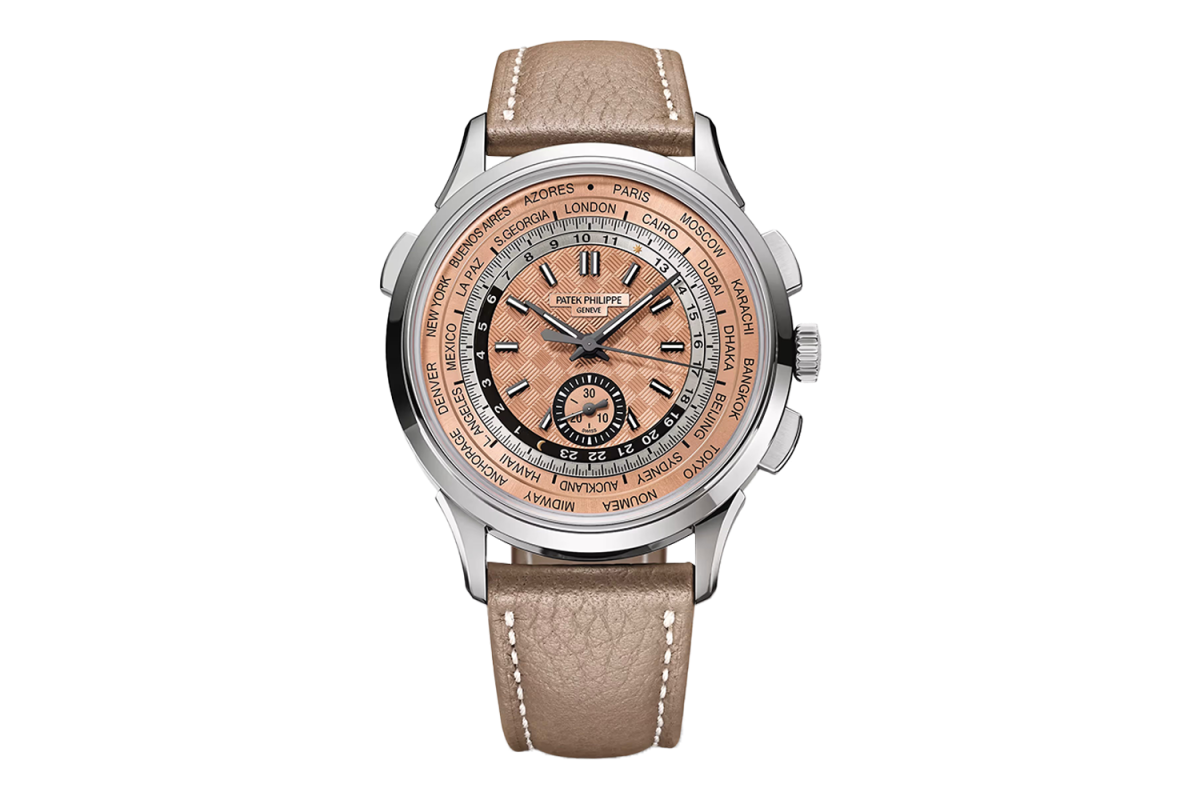
For someone looking to capture the spirit of 1940s-era watchmaking at its finest — and for whom money is no object — the Patek Philippe Complications ref. 5935A-001 captures not only the essence of a salmon dial, but a multi-finish example with extraordinary details. Combining an automatic flyback chronograph with a world-time complication, it features a gorgeous rose-gilt opaline dial with a “carbon” pattern; anthracite white gold indices; luminescent dauphine-style hands; and crisp sand-serif typography. Truly a modern masterpiece, it recalls the Patek Philippe references that began the entire “salmon-dial” style.
More Like This

The world of men’s style, from the streets of NYC to the showrooms of Milan, run down weekly by writer and photographer Christopher Fenimore.