
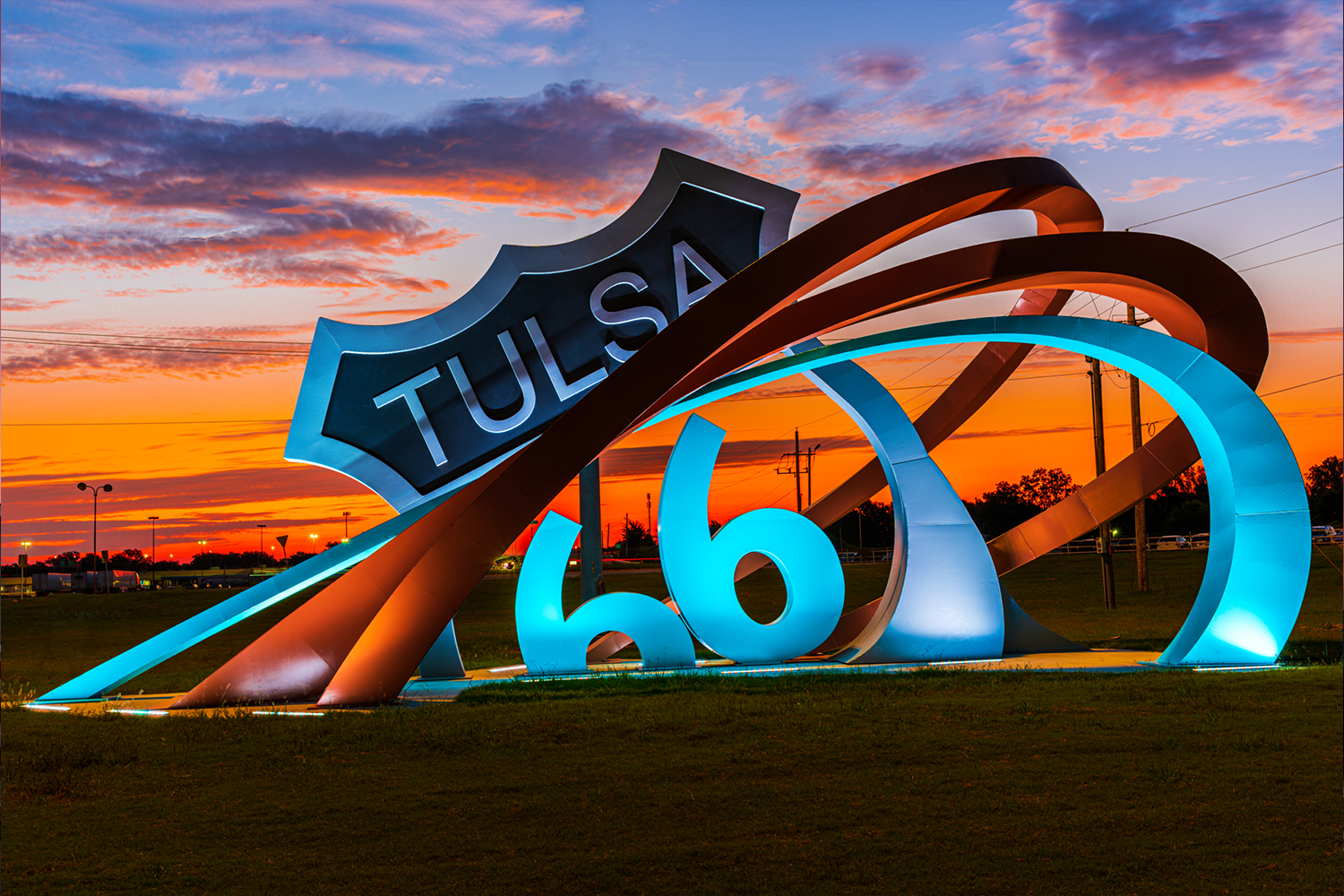
When I first visited Tulsa, Oklahoma, I arrived the same way countless road-trippers had before me: via Route 66. I had just purchased an RV and given myself over to itinerant life. What better way to kick off my new era of meandering, I thought, than to travel the same open road that first drew travelers from the Midwest to the West Coast on America’s most famous highway.
Back in the 1920s and ’30s, families traversed the newly minted Route 66 in Ford Model Ts and Chevy Suburbans, often on dirt and gravel (when it was officially designated, only about one-third of the highway was paved), making pit stops in cities like Flagstaff, Gallup, Amarillo, St. Louis and, of course, Tulsa. Nearly a century later, I was making the same pilgrimage behind the wheel of a 26-foot Class C motorhome.
In November, a few months after the country celebrates its 250th birthday, our most famous road will turn 100. Through the decades, millions of Americans have made the 2,278-mile odyssey across eight states, and nearly every town along the way claims to be its beating heart. But there can be only one Capital of Route 66, and that’s Tulsa.
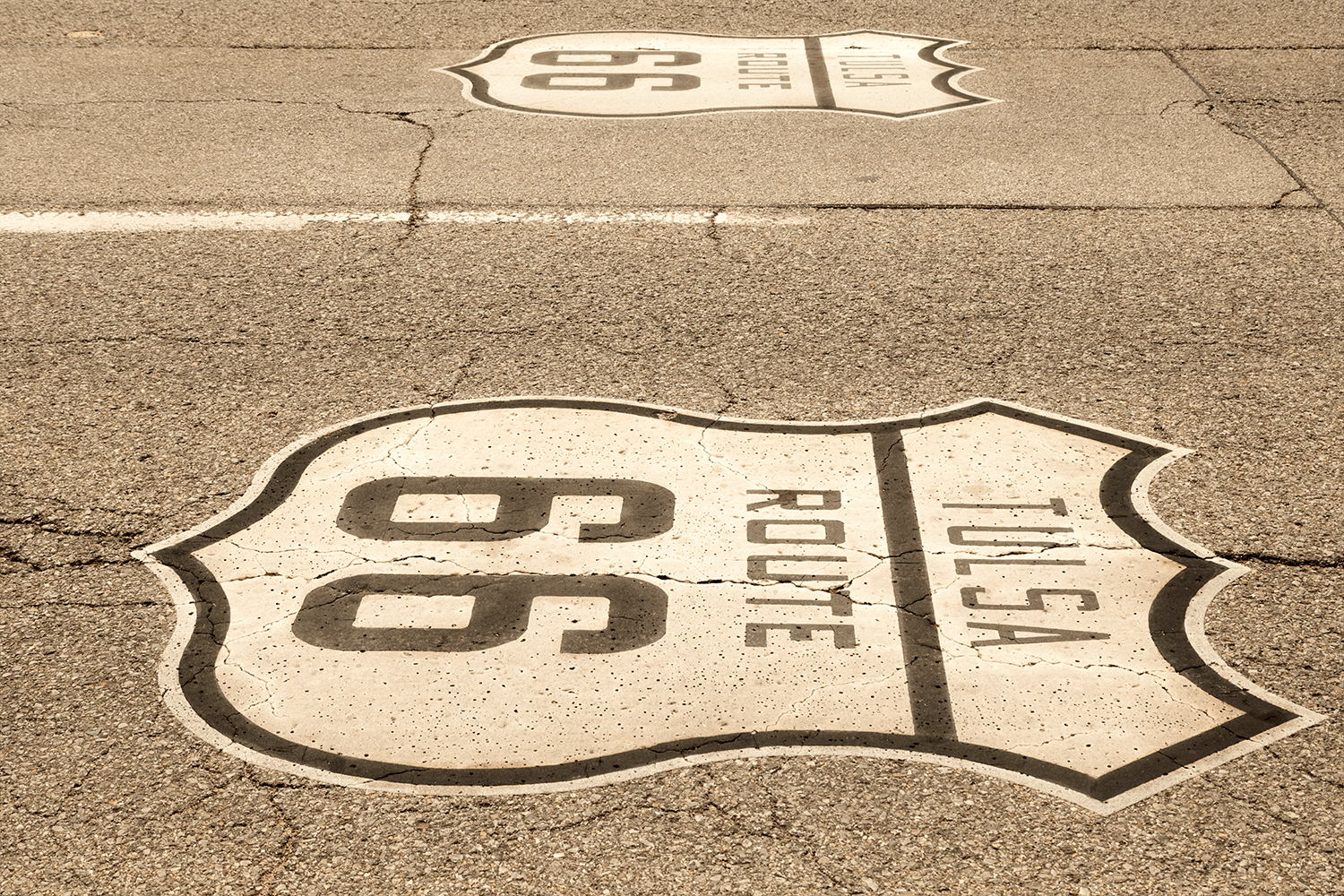
The Mother Road’s father
Tulsa’s claim to Route 66 fame begins with Cyrus Stephens Avery, a local oilman widely regarded as the “Father of Route 66.” Avery played a pivotal role in shaping the highway’s future, advocating for a more southerly alignment that brought the route through Oklahoma for more than 400 miles — the most of any state. He also successfully championed the name “Route 66” over the less memorable “Route 60.” Coupled with the founding of the U.S. 66 Highway Association in Tulsa, that history helped the city secure the trademark on the “Capital of Route 66” in 2024.
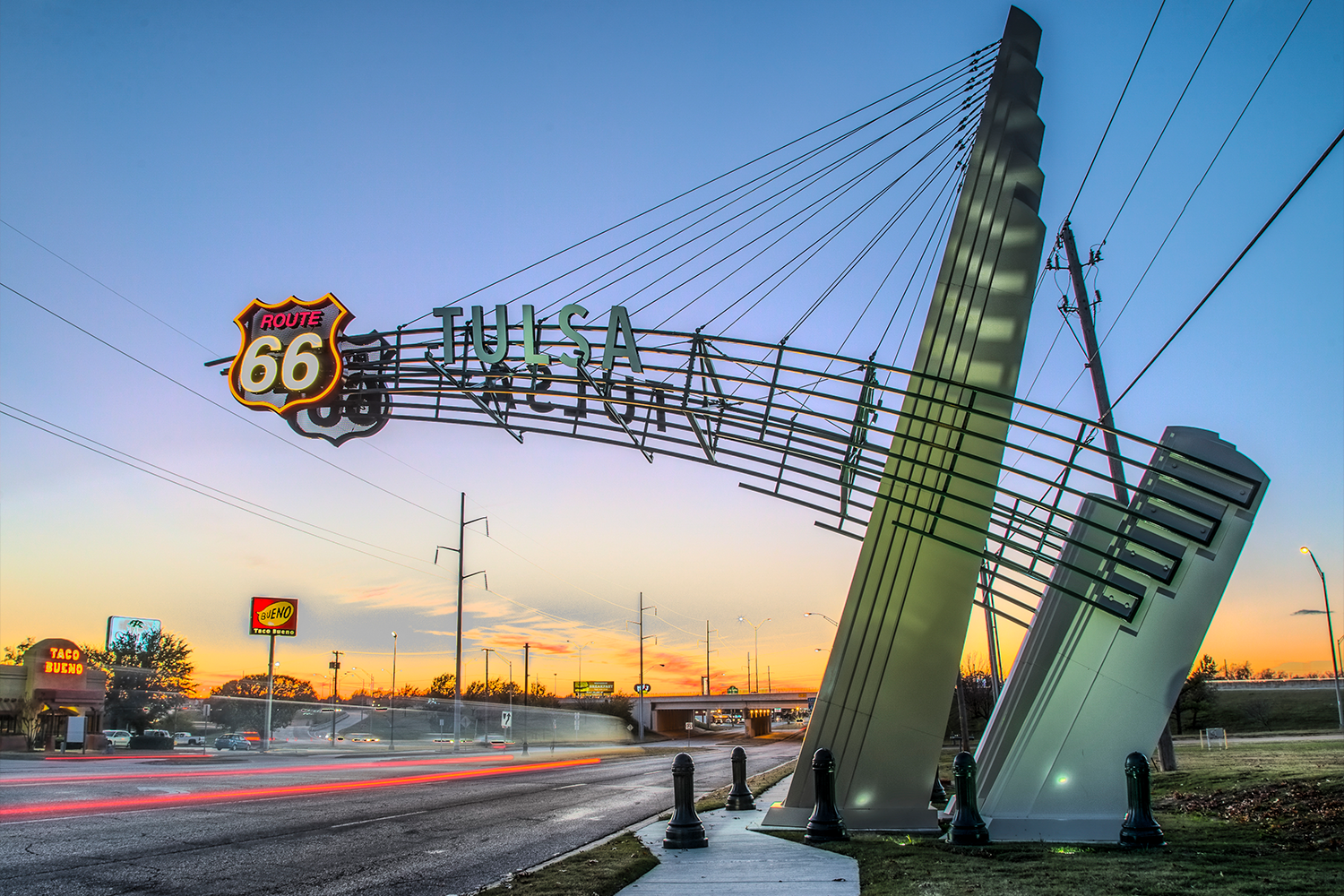
Thanks to Avery’s efforts, 28 miles of Route 66 wind through Tulsa, sandwiched between Gateway Arches and aglow with vintage neon signs. Brian Paschal, the Chief Executive Officer of Tulsa’s Lobeck Taylor Family Foundation and a member of the City of Tulsa’s Route 66 Commission, says driving the entire route offers the best introduction to Tulsa — one that spans historic landmarks, roadside oddities, local restaurants and public art.
“From a demographic standpoint, tourism standpoint and economic development standpoint, you’re getting a little bit of everything,” he notes.
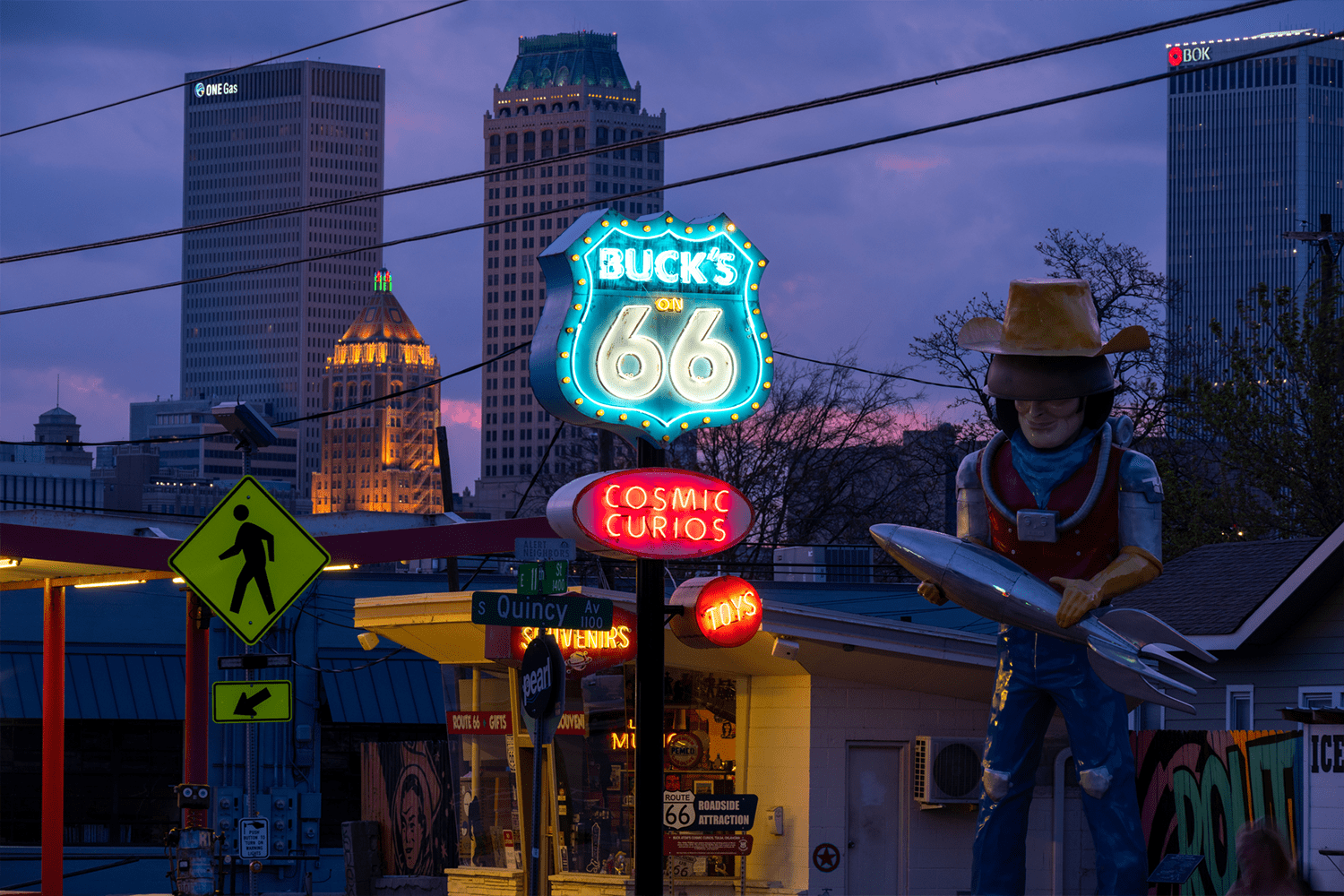
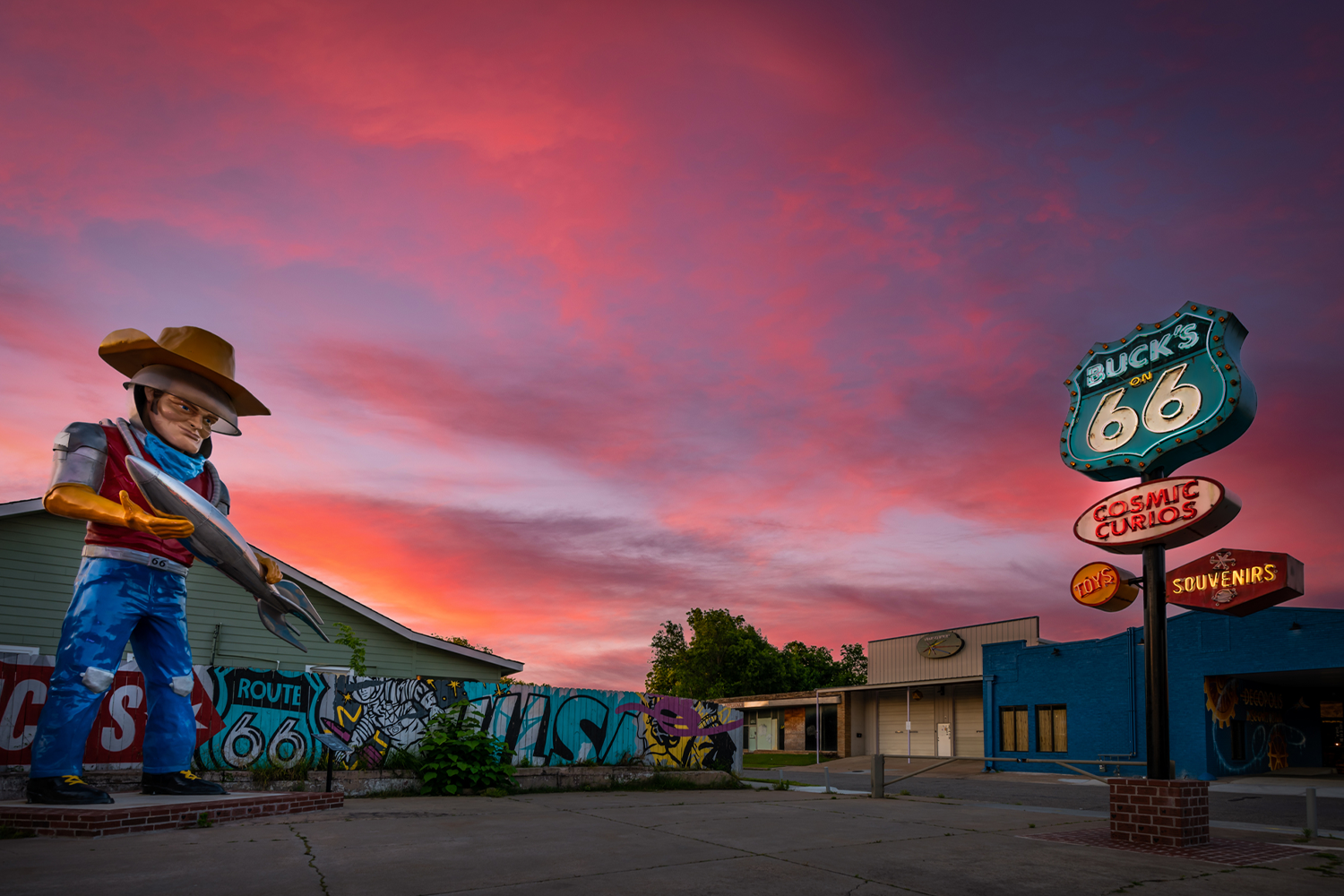
And there’s plenty more to love. The Meadow Gold District is a parade of supersized fiberglass characters — Muffler Men like Space Cowboy Buck Atom and Mack the Friendly Lumberjack looming over the road like gentle giants. Mother Road Market, Oklahoma’s first nonprofit food hall, pairs local bites with mini golf. The Route 66 Rising statue punctuates the skyline with roadside poetry. Then there’s the Golden Driller — a 76-foot oilman standing guard at Expo Square, essentially Oklahoma’s answer to the Statue of Liberty.
Rounding out the route are the Cyrus Avery Centennial Plaza, the Decopolis Discovitorium Art Deco museum and gift shop and my personal favorite, Buck Atom’s Cosmic Curios — because no stretch of Route 66 is complete without a little cosmic weirdness.
That weirdness is what first endeared me to Route 66, and ultimately to life on the road. Over the course of my RV years, I fell in love with the kind of kitsch that’s come to define America’s Mother Road, from partially buried Cadillacs to neon-lit teepees. Tulsa’s particular knack for preserving that whimsy is what kept me coming back. Six years after permanently parking my RV and settling in Oklahoma City, I still make regular road trips here with my husband, a Tulsa native, stopping at Buck Atom’s, American Solera Brewery and Meadow Gold Mack whenever we can. Especially during such taut political times, Tulsa’s Route 66 lore is the kind of Americana that makes me proud to be an American.
While Avery’s advocacy mapped the way, and unique attractions made for colorful pit stops, it’s Tulsa’s commitment to preservation and celebration of the Mother Road — like a grant that funds restoration on the route and master plans that ensure historical consistency in new development — that solidifies it as the rightful Capital of Route 66.
A century later, the capital is ready to party
For the centennial in 2026, Tulsa is going big. Along with what Paschal describes as countless neighborhood events throughout the year (which you can follow on Visit Tulsa’s website), the city just hosted the world’s largest classic car parade on May 30, while the City of Tulsa’s Route 66 Commission is planning a 66-day series of events over the summer, from live music to art markets.
The commission has also installed an interactive art installation with musical bikes in the Tulsa Market District, and there will be a celebration tied to Route 66’s official birthday on November 11, the date the American Association of State Highway Officials adopted the U.S. numbered highway system and officially published the map. In between, travelers have plenty of murals, Muffler Men and neon lights to marvel at, not to mention one of the highest concentrations of Art Deco architecture in the country.
Stay a while
Tulsa is worth more time than a pit stop for a photo op. Like I did back in 2018, be sure to stay the night (might I suggest the Art Deco Tulsa Club Hotel), dine out (I’m obsessed with the smash burgers and Gibsons at retro-cool Tina’s) and explore — from the Bob Dylan Center to the whimsically landscaped Gathering Place, there is plenty to do both on and off the route.
I never could have predicted that the Sooner State would become my home, or that I’d marry a man born in that same city. I couldn’t have fathomed that I’d be back here, on Route 66, signing copies of my Oklahoma book, chock-full of Route 66 lore, under the shadow of the hottest Muffler Man I’ve ever seen. Since leaving Chicago, Route 66 has played a curiously large role in my life, leading me to the home I now live in one block off the Mother Road in Oklahoma City.
Whether escaping the Dust Bowl, venturing westward for new horizons or hitting the open road in an RV, America’s Mother Road has been a beacon of opportunity for a century. And nowhere embraces that legacy quite like Tulsa.
More Like This

We're always on the scene eating, drinking and traveling near and far to bring you the best of what's happening out in the real world. Sign up for IRL now.