
Peter Neff has a collection he wants to show me. On a sunny Friday morning, he leads me down to the basement, walking slightly ahead of me in a plaid shirt tucked into navy pants with a black belt. After shepherding me through a door, he turns the small key on the top of a chest freezer, which has a handwritten note stuck to the top: Don’t forget to put the key back in the lock.
Then he pulls out a plastic bag holding million-year-old ice from Antarctica.
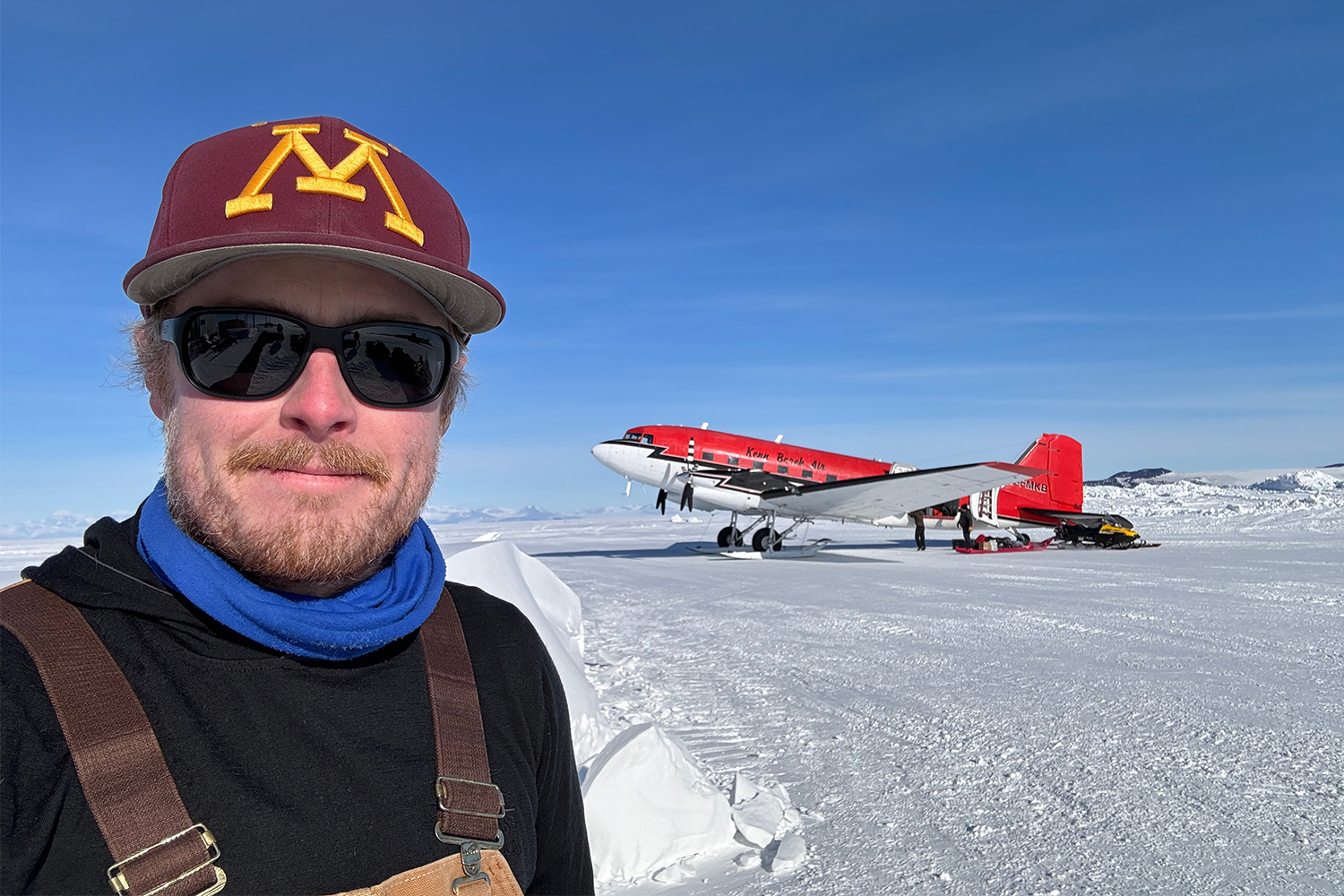
Dr. Neff sports a scruffy mustache under a black University of Minnesota baseball cap with a green camouflage bill. The 39-year-old looks like any Midwestern dad, the kind of guy I’d run into at the playground with my two kids here in Minnesota. Yet his job makes him an anomaly not just in the country, but on the global stage: he’s an ice core scientist and expert on Antarctica’s Thwaites Glacier, which has been nicknamed the “Doomsday Glacier” because its rapid melting could lead to catastrophic sea-level rise around the globe. He’s also, like me, raising a young daughter.
We’re not in the basement of his house, but in an underground room on the St. Paul campus of the University of Minnesota where Neff teaches. To be clear, he also has Antarctic ice in his own basement (in a freezer next to loose packs of Uncrustables, as he’s shared on TikTok, where he has 226,000 followers under the handle @icy_pete). But I haven’t come here to wield ancient icicles for my own social media clout. I’ve come to try and understand how a man on the front lines of the losing battle against climate change can wake up every morning and also parent a child, one who will see far worse effects of that existential, human-caused destruction than her parents will.
Before I can get in any questions about Neff’s philosophy about parenting in the Anthropocene, though, he steers the conversation into territory I normally try to tune out just to make it through a day as a dad.
“I think in the next two to six months, we’ll see the floating part of Thwaites Glacier — it’s showing signs that it’s going to rapidly collapse. So I’ll call it now,” he says, essentially making a wager on when part of the so-called Doomsday Glacier will fail. “I think the floating ice shelf is going to be a big story sometime in the next few weeks.”
A glacier as big as Washington state, where Neff grew up, turning back to liquid in the coldest, most remote region of Earth. Human-created greenhouse gases still rising around the globe despite scientists sounding the alarm for decades. The fact that carbon dioxide, once emitted, stays in our atmosphere “anywhere from decades to centuries and beyond,” as Neff explains, and keeps warming the planet all the time. These are the things that keep me up at night. Meanwhile, Neff talks about them with the composure of someone predicting the outcome of a Golden Gophers football game.
Part of this apparent nonchalance has to do with this particular portion of Thwaites not being critically important to humanity’s survival. (As Neff describes it, the floating ice shelf isn’t going to immediately destabilize the rest of the glacier. “[It] was already cooked,” he says, “and it doesn’t have a major role in that system.”) And part of it is that Neff is worried about a more immediate threat than warming ice: our country actively choosing to fly blind rather than face the reality of climate change head on.
Throughout our conversation, standing between maps of Antarctica with angry red blotches showing sites where ice is melting, Neff keeps drifting back towards one topic: the Trump administration’s cataclysmic cuts to science funding, and its adjacent, nefarious campaign against experts. He never says the president’s name, but his feelings, at least, are crystal clear.
“We need to all come to an agreement and not deny reality,” Neff says about the fact that burning fossil fuels is causing climate change and that we as humans (and certain industries, in particular) are responsible for that pollution. “[It’s] as if you were at the doctor’s office, and they’re telling you, ‘No, really, you have cancer, and it’s stage two. If you don’t start dealing with it now, it’s going to continue to progress, and you will die.’ That’s where we’re at right now.”
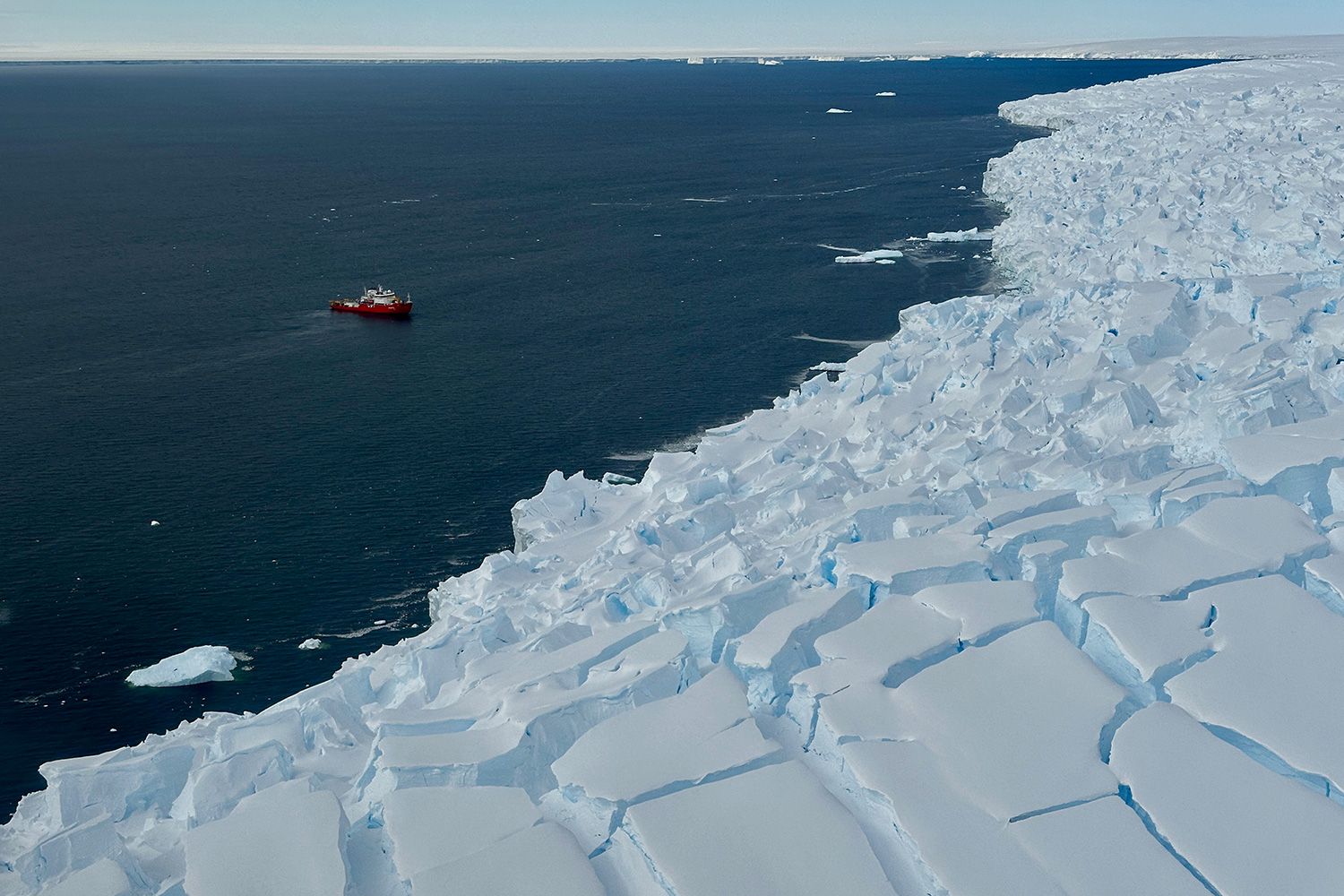
Neff’s last deployment to Antarctica was described in an article in Science as a “‘James Bond’ operation.” The main goal of the joint U.S.-South Korea mission, which took place in late 2023 and early 2024, was to “get a century of climate information near the most important glacier in the world” by drilling a deep ice core out of nearby Canisteo Peninsula. The long cylinders of ice hold the key to understanding temperature fluctuations, ice gain and loss, even storm frequency going back decades, all of which can help people like Neff determine the current state of Thwaites and its impact on global sea level as it continues to melt. In other words, this field research will tell us precisely how screwed we are.
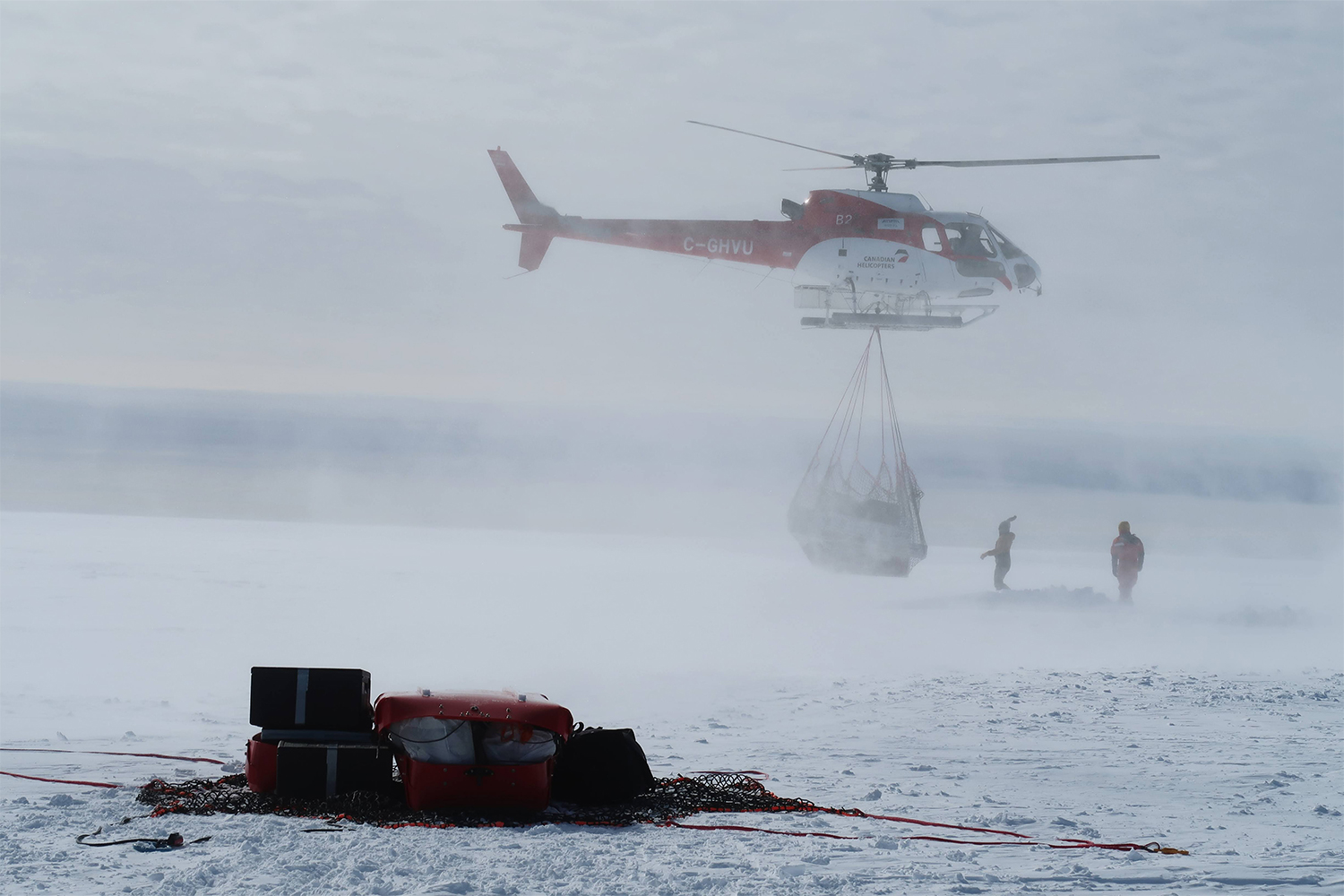
The 007 comparison emerged not from the ice core goal, but from the means of getting them. “Antarctica is rightly described as the highest, driest, flattest continent,” says Neff, “but all of that is not true at the coast of Antarctica.” On the edge, it’s remote, stormy and unpredictable. To set up tents and drill on Canisteo, Neff’s team had two helicopters flying gear back and forth from an icebreaker continuously for five hours so they could set up before a storm hit, bludgeoning them with 60-mile-an-hour wind gusts. Then it was “go, go, go, go,” drilling 150 meters of ice as fast as possible with a deadline of a week and the capability to only drill 20 to 40 meters of ice a day.
Miraculously, they got all the ice they came for. Neff is adamant that it’s the analysis of these frozen climate records — and the planning required to support these ventures, and the teaching he does to support himself and help inspire future scientists — that takes up most of his time. The adventures to the ends of the earth “can dominate discussions,” he admits (not to mention get you hundreds of thousands of followers on TikTok), but the Bond headlines aren’t the point.
The point is trying to “really understand exactly what Antarctica is going to throw at us for global sea-level rise,” Neff says.
When I finally get around to asking about his daughter, Neff says that “she’ll tell you today she’s six and a half. It’s a big day for her.”
That’s not because she’s a kid, and kids love celebrating half birthdays. It’s because Peter has missed at least two of her birthdays already due to his responsibilities as a leading scientist racing against the clock of climate change. So, half birthdays are a big thing in their family now. Before the Canisteo expedition, he flew back from Antarctica during a two-week window so he didn’t miss the actual day again. But if he can’t be there in person, he at least has Starlink internet, which he helped set up in Antarctica.
“I’m the first dad to FaceTime with their kid from Antarctica,” he says. He tries to laugh about the absurdity of it all, but his heart’s not in it.
Patagonia’s Major Microplastic Problem
The outdoor gear brand has long been heralded as proof that a for-profit company can balance consumerism and environmentalism. Then the microfibers were found.The New York Times, The Washington Post, The Guardian and the Los Angeles Times have all published stories this decade about prospective parents deciding not to have children because of all-too-real climate fears. Neff says that didn’t factor into his decision to have a child with his wife, Dr. Heidi Roop, who is also a climate scientist and professor at the U of M. Instead, he sees raising a child as “a helpful act of hope and investment in the future.” To fight for the future of humanity, it helps to have someone to fight for who will be here after you (and maybe certain glaciers) are long gone.
As for now, Neff’s daughter knows there are things humans are doing that are changing the Earth, but he hasn’t told her specifics. It’s probably not appropriate to burden a six-year-old with the fact that the fossil-fuel industry is investing boatloads of money to slow the transition away from sources of energy that are warming the planet. Or that by 2100, when she’ll be in her 70s, current projections show we’ll have around three feet of global sea-level rise, which will have seismic impacts far beyond what most people realize.
“We’re all familiar right now with the global chaos we’re experiencing from U.S. actions in Iran and the Strait of Hormuz,” Neff says. “Global coastal infrastructure and shipping is the heart of our global economy. So if all of our coastal infrastructure is challenged by progressively changing sea-level conditions for the rest of time we can imagine, it’s going to cost a lot of money at a minimum — and it’s going to cost a lot of lives if we don’t appreciate it as an actual hazard.”
That plea cascaded into a refrain I heard from Neff over and over throughout our 90-minute conversation under the fluorescent lights of his glorified closet: that funding and grants from the National Science Foundation are under threat from the Trump administration. “[NSF] funds Americans to do science on behalf of the country that secures our health and our defense and our national security,” he explains. That includes “95% plus” of the ice core research in the U.S.
What bothers him is that leaders seem to be trying to find some “magical snake oil” to solve the problem of climate change rather than listening to the experts who make major sacrifices to understand the hard truths of our situation.
“We’re not just going to Antarctica to have fun and be away from our families for three months.”
More Like This


This article appeared in an InsideHook newsletter. Sign up for free to get more on travel, wellness, style, drinking, and culture..