

Satellite imagery can tell us plenty about the planet on which we live, from the impact of wildfires to the loss of polar ice. As this technology grows more advanced, the range of data that it can provide also expands. And that’s one of the reasons that a satellite situated high above the planet’s surface can provide information about cities getting lower and lower over the years.
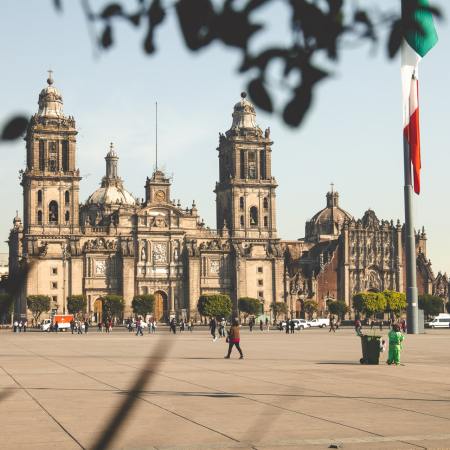
The latest data from NISAR — a scientific collaboration between the U.S. and India — has some unsettling news for the residents of Mexico City. It turns out the city is sinking into the earth, and doing so more rapidly than some of its structures can handle. One effect of this process: the Angel of Independence statue has required more than a dozen new steps as a result of shifts to the landscape around it.
In a recent announcement, NASA pointed out that NISAR offers an even more detailed way to monitor the city than previous iterations of this technology. “Mexico City is a well-known hot spot when it comes to subsidence, and images like this are just the beginning for NISAR,” said science team member David Bekaert in a statement.
Now, the idea that some major cities are sinking is not new: research released a few years ago showed that a number of coastal cities are doing just that. What makes Mexico City different, at least on the surface, is its inland location. Though to view it as an entirely landlocked urban space isn’t entirely accurate, either: the city succeeed the Aztec capital of Tenochtitlan, which was situated near a group of inland lakes. The draining of those lakes was one of the steps involved in the building of what is now Mexico City.


New York City Might Be Sinking Under Its Own Weight, Scientists Warn
The cumulative weight of over a million buildings in the city is 1.68 trillion poundsThe effects of the city sinking can be seen from orbit, but the consequences are behind felt on the ground. Enrique Cabral of the National Autonomous University of Mexico told the Associated Press, “It damages part of the critical infrastructure of Mexico City, such as the subway, the drainage system, the water, the potable water system, housing and streets.” It’s a new perspective on a challenge that will require a massive response to remedy.
More Like This



This article appeared in an InsideHook newsletter. Sign up for free to get more on travel, wellness, style, drinking, and culture..