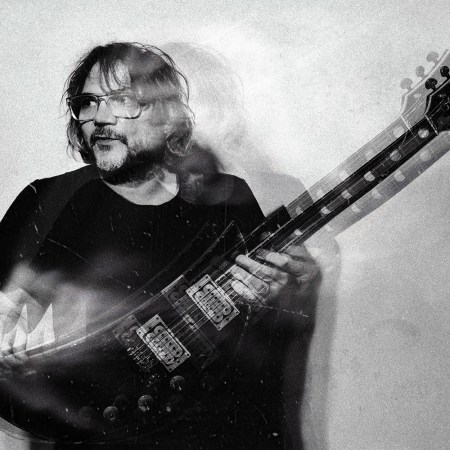
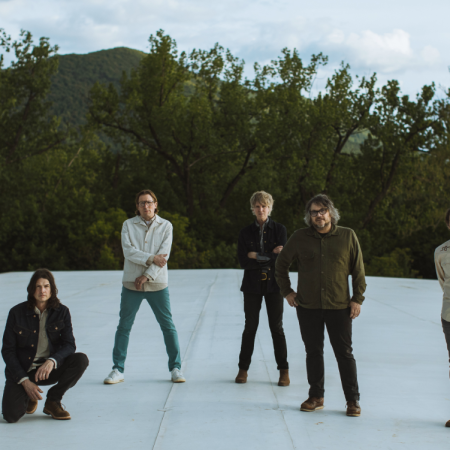
In November of 2017, it was announced that Wilco would be going on hiatus through 2018. For the first time since forming in 1995, the band, led by Jeff Tweedy, would go a full year without touring. Drummer Glen Kotche’s wife had received a Fulbright scholarship in bioengineering to work and study in Finland, and rather than forcing him to send his family abroad on their own or, on the other hand, finding some way to continue touring without him, Tweedy famously decided it would be a “lovely idea” to take some time off from Wilco.
How does the line go? “You have to learn how to die if you want to want to be alive.”
Over the course of 2018, Jeff Tweedy published his first book, the memoir Let’s Go (So We Can Get Back Home), as well as his first two proper “solo” albums in Warm and Warmer, and it marked the beginning of one of the most fruitful creative periods of his entire career.
Those two albums featured a lyrical directness that felt revelatory at the time, a departure from recent Wilco material that had started to feel bogged down by… something. By whatever Wilco was supposed to be, or what people wanted it to be. But on Warm and Warmer, Tweedy sang more openly than ever. About his addiction and his eventual recovery. About his parents dying. About his marriage. He started playing electric guitar in a way he hadn’t needed to in years because he’d grown accustomed to Nels Cline being right there beside him for well over a decade by that point.
You started to see glimpses of a new persona taking shape, a far cry from the somewhat grumpy, troubled rock star he’d come to be known as — accurately or not — in the early aughts. Even if the songs themselves were still sad, there was a defiantly joyful quality to them that somehow canceled out all the darkness. The source of that joy started to come into focus around that time as well, through various passages in his memoir and especially in his second book, How to Write One Song, in 2020.
The payoff wasn’t critical adoration or the catharsis of the live shows or any of the other ostensibly sexy stuff people think they’re signing up for when they commit to the life of an artist. The joy — and, moreover, the value — of it all was simply in the making of it.
In June of 2019, on the Sunday of Wilco’s biannual Solid Sound festival in North Adams, Massachusetts, Tweedy took the stage for a “solo” show, backed by his son Spencer on drums, James Elkington on electric guitar, Liam Kazar on bass, and Sima Cunningham and Macie Stewart of Finom (then OHMME) on backing vocals. Now six-plus years later, that same group of people — with the addition of Tweedy’s youngest son Sammy — is still making music together, and in a more deliberate and collaborative way than ever before.
Twilight Override is a 30-song triple album that is technically being billed as the fourth Jeff Tweedy solo album, following Warm, Warmer and the outstanding 2020 pandemic album Love Is the King. It is as sprawling and weird and unexpected as you would imagine any 30-song triple album to be, and it is an absolute delight from start to finish.
It’s also the first of these “solo albums” where the very term doesn’t seem to apply.
“I love the Tweedy band,” Jeff tells me over Zoom. “That’s what we call it, you know? It’s a special, special group, and there’s a really wonderful feeling in the room when we’re all together.”

Over the course of a two-week period earlier this summer, I interviewed every member of the band, aside from Elkington, who contributed to the album’s recording sessions but won’t be joining them on the upcoming tours to support it. During each of my interviews, I explained that my reason for wanting to write this article at all was that I feel like this particular group of people perhaps hadn’t gotten the credit they deserved in helping Tweedy usher in and continue to build upon what I believe will come to be viewed as a hugely important era in his songwriting.
It could easily be argued that the nucleus of the band is the relationship, both familial and musical, between Jeff and Spencer. They’ve been playing together since Spencer was a kid, of course, but more seriously since 2013 when he drummed on a Mavis Staples album Jeff was producing, and then even more so starting in 2014 when they released an album called Sukierae and toured extensively behind it. Since then, Spencer has played on everything Jeff has recorded outside of Wilco, and the connection between them is uncanny.
“They have a sort of telekinetic or telepathic relationship with each other that I can barely approach,” says Liam Kazar, who contributes bass, vocals and guitar to Twilight Override. “There’s like a one-millisecond delay from Jeff’s brain to Spencer’s. Jeff’s right hand on the acoustic guitar is the metronome, the North Star — for Spencer, it’s in his blood to be able to follow that, and I’ve been playing with Spencer long enough that I can approach that closeness via my closeness to him.”
Kazar and his sister, Sima Cunningham, have been in the Tweedy orbit for many years. “We were friends with their family,” says Jeff. “I knew them before I knew them as musicians, as little kids that went to the same school that my kids went to. I saw Liam perform at a talent show one time when he was really little, and I was like, ‘Who the fuck is this kid?’ I knew who he was, but I was like, ‘Where did that come from?’” Kazar released his debut full-length, Due North, in 2021, and its follow-up, Pilot Light, is out this November; the first two singles have been astounding.
Sima Cunningham and Macie Stewart have been making music together since 2014 in the band Finom (previously known as OHMME), and they’ve come to be integral components of the Tweedy band as well, adding piano, violin and other various instruments between them, in addition to their vocals, which have been all over Jeff’s solo material, but nowhere more prominently than on Twilight Override. “At the outset, Jeff was like, ‘We are a band, and I really want your voices to come through,’” says Cunningham. “I think he feels really deeply connected to how a bunch of voices sound in a room. It’s one of the most moving human experiences.”
Stewart, for her part, was struck by how much freedom they were given during the making of the album. “Jeff invited us all in as a band, and we’d come to the studio, and he’d play us these songs that he had made,” she says. “He starts them himself and fleshes them out a bit, but then Sima and I really had free reign to write a lot of vocal parts and arrange harmonies for ourselves. Same with the strings, too.”
It probably goes without saying that everyone in the band has learned an inordinate amount from Jeff. He’s been making records and touring for nearly 40 years at this point. He’s been on major labels, been dropped from them, started his own label, won Grammys, toured incessantly, produced albums for legends, put together a fully functioning recording studio at The Loft in Chicago. He has a wealth of industry experience that is nearly unmatched, and yet, what they all seem to take away from their interactions with him has more to do with views on creativity and a lifestyle that supports it than anything else.
“The thing that strikes me most about working with Jeff is that he truly is in love with music,” says Stewart. “He’s inspired by it. It excites him. And I think he has a very, very good perspective on how, because it brings him joy, he knows it will be infectious and bring other people joy as well.”
Kazar speaks to Jeff’s aforementioned longevity and how he’s gone about achieving it. “You know, there’s a lot I’ve learned from Jeff,” he says. “But something very tangible that he’s mentioned is that every decision he makes is for the purpose of being able to do more of this. So he can make more records, so he can play more shows, so he can make more records, so he can play more shows. This is what he wants to do with his life, and I consider it a huge gift to have had somebody in my life who was so successful.”
He makes another point that strikes me as extremely important: “I’ve traveled with a lot of artists who are, if not Jeff’s age, maybe even a little younger, where getting off the road is certainly a goal of theirs. And that’s just not Jeff’s goal whatsoever, you know?”
Speaking with Spencer over lunch in Brooklyn’s Fort Greene neighborhood, he offers even more insight on his father’s desire to keep working and how the Tweedy band helps him do it.
“Sometimes I think it has less to do with what we’re actually doing with our instruments and more to do with our attitude,” he says. “And that’s no disrespect to any other collaborators. But there’s just an attitude of gratitude, excitement. We’re not jaded. I think sometimes, depending on the room, my dad can feel unmatched in his enthusiasm for creating, for performing, for putting in the work.”
Jeff has a more succinct way of expressing this sentiment: “I wear people out.”

He’s also, perhaps predictably, somewhat reticent to cop to his role as a mentor. “I would have a tough time calling myself a mentor because I always feel like I’m the one learning,” he says. But then he reconsiders in a way that feels more on-brand: “You know, the only way I feel like I could be a mentor is about giving yourself permission and a space to be yourself and to fuck up. I don’t know, to develop your own individualistic self-expression. It’s more to be an example of that.”
During each of my interviews with the band, we spent a considerable amount of time talking about this idea of creativity as a lifestyle — as a choice you make that is even more important than whatever the final result of that creativity winds up being. The point, in lots of ways, is that merely deciding to make something, to align yourself with the spirit of creating, is in itself transformative. I spoke with all of them about how this philosophy has an effect that, for me, a guy who’s written about music on and off for most of his career, turns much of the artist/critic relationship upside down in a way that I find jarring but ultimately freeing. When just making stuff is the point, it almost puts the stuff being made above criticism.
I mention this to Jeff, and he helps bring it into focus. “Well, on some level, everything is above criticism,” he says, “I mean, obviously the drawings that some little kid makes are above criticism. You’re not going to critique it, you know? Or you’re an asshole. But it’s really not that much different in my opinion. Will the culture make something out of it? Will it be societally important? I don’t know. But to my mind, what could possibly be better than, on an individual level, making other consciences feel not alone and be emboldened to make their own version of the world that rejects the things that are troubling them. I’m just like, fuck you… it’s the best thing, let’s all do it.”
One of my other main reasons for wanting to write this article was that it’s started to feel like maybe this spirit, this way of conducting the business of making music, has started to reach beyond Tweedy’s inner circle. Spencer has been drumming consistently for Katie Crutchfield’s Waxahatchee over the past couple years, appearing on her breakthrough 2024 album Tiger’s Blood and in a live setting ever since. Liam has also joined, on bass. Crutchfield is in a long-term relationship with Kevin Morby, with whom Liam has also collaborated, in addition to releasing albums on Morby’s imprint label Mare Records. The tentacles seem to be reaching farther and farther outside of Chicago in a way that feels meaningful to me.
Jeff is once again a little cagey about accepting the compliment. “It’s a difficult thing to talk about,” he says, “because on one hand, uh, I’m very flattered, and I do see the possibility that that’s the case. But on the other hand, I don’t necessarily want to be, you know, someone who thinks of himself as a leader.”
Sima is far more willing to play along, and she gives a lot of the credit to Spencer. “I think it’s because of the kind of drummer Spencer is. It’s what everyone wants now. Everyone wants to sound like Spencer, and it’s because of his relationship with Jeff, which is about listening.
“A lot of really celebrated bands are coming in and grabbing Chicago musicians,” she continues. “And I think it’s because there’s an ethos, a code, that we all believe in, which is that it’s not about how you look or how much you play. It’s about how good you are at listening and tuning into what’s going on.”
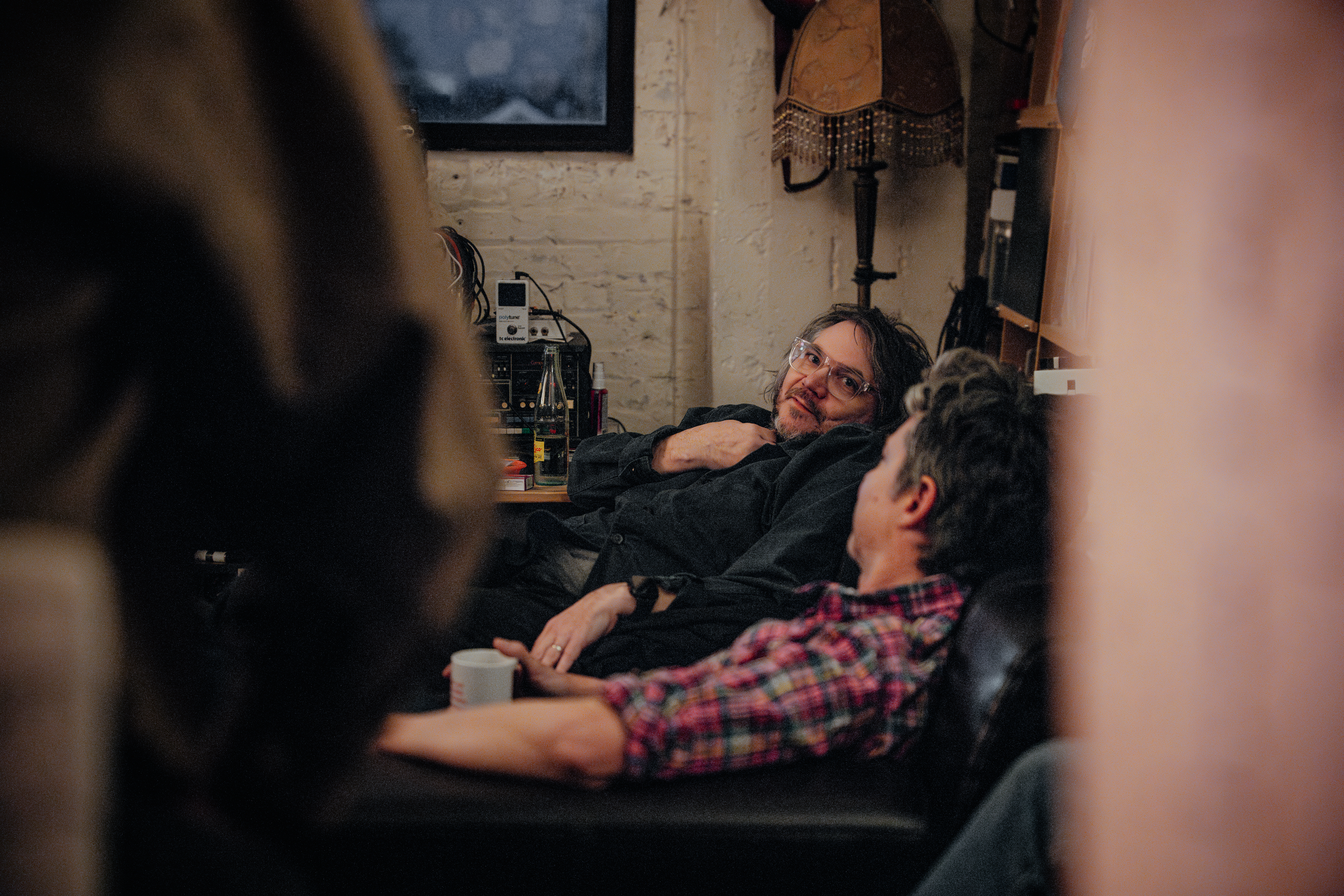
Eventually, Jeff comes around, and the way he explains it stops me in my tracks — it’s as close to a mission statement as I’ve ever heard him express. Please indulge me in a long quote here, because I want you to read it, but also because I want to have the feeling of these words coming from my hands:
“Well I believe in it, and I’ve been vocal about believing in it. You know, I’m not espousing the dark underbelly of, like, New York nightlife or decadence or anything like that because I was so disappointed — even as an addict, I was so disappointed with the cliche of it, the hypocrisy of it. The disgusting nature of advocating for things that are really bad for people.
“You know, honestly, it’s like, the way rock and roll was marketed as a culture was just bullshit and awful. And the part that I knew was there and was disappointed to find wasn’t really the guiding principle was the part that I thought was really beautiful. It was just like, ‘Oh, you get together with your friends and then the world is a little less painful. You get together with your friends, make some music and you’re all transported. And then all of a sudden, you have a community around it. And then other bands start because they see that there’s this opportunity, there’s this place. There’s a strategy for fucking living. It isn’t what you’ve been sold. And it isn’t what you’ve been told in school. Schools kill creativity.
“And so, you know, I fucking reject it. I fucking reject it in rock and roll. The radical, individuated self-expression of rock and roll and the self-liberation of it — that’s all that fucking matters.”
He makes it sound so simple. What if it is?