

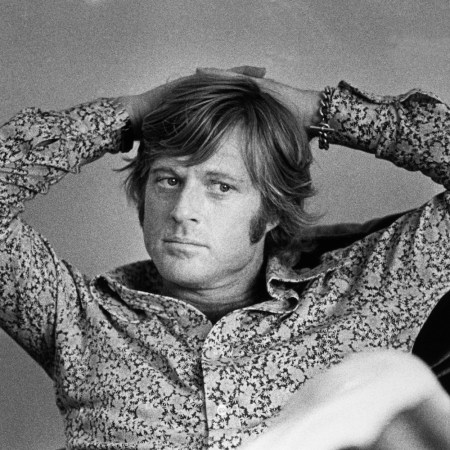
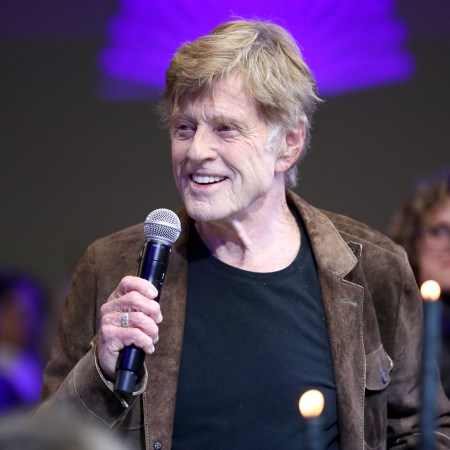
If you want a lesson in what a movie star does, watch Robert Redford. It’s not that Redford, who died today at 89, lacked ability as an actor. But he had other tools as his disposal, too, with his astonishing golden-boy beauty: the tousled reddish hair, the blue eyes with the slight crinkle, the ability to sport a mustache without looking like a goofball. (Granted, he didn’t exercise that one so often in his later years.) Looking at the other actors who came up around the same time and became major stars, he looked a little out of place; the ’70s saw the ascension of guys like Al Pacino, Robert De Niro, Dustin Hoffman and Gene Hackman in place of more traditionally debonair figures. That’s not to say they weren’t also good-looking — young Al Pacino! My god! — but collectively, it was a decidedly different, less WASPy vibe. The movies admitted as much when they put Redford alongside Hoffman for Woodward-and-Bernstein contrast in All the President’s Men, or, for that matter, when he was placed alongside Paul Newman in Butch Cassidy and the Sundance Kid and The Sting, with the assumption that he could hold his own next to one of the most handsome men in the world.
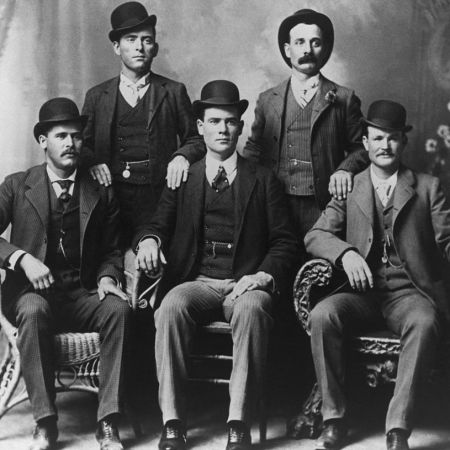
Handsomeness is not a skill, of course. Mostly it’s luck. But Redford used his handsomeness, his physicality, in a deceptively skillful way. Watch him in the final scene of The Way We Were, a slightly sudsy but effective romantic drama he made with Barbra Streisand. Characters meet by chance, years after the end of their tumultuous affair, and Redford plays it pretty straightforward, as he tended to do, everything in its right place, with just the right hint of concealed anguish. Streisand is a little more demonstrative — reaching out to touch her scene partner, bringing herself closer to tears — while Redford mostly looks her over and makes visible his careful choice of words, all with a restraint that somehow only heightens the emotion of their limited interaction. Or for a more comic register, look at this famous scene from Butch Cassidy and the Sundance Kid, where his grimmed-up cowboy desire to fight gives way to his revelation that he cannot swim, making his bravado look more like cover. Watch any given scene from Sneakers, where he leads an eclectic ensemble and plays off actors as varied as Dan Aykroyd, Sidney Poitier, River Phoenix and David Strathairn equally well, with perfect steadiness.
That last one was how I was introduced to Redford, in 1992, following a decade where he spent increasing time behind the camera — as a director and as founder of the Sundance Film Festival — as his starring vehicles became less frequent and less lustrous. (Have you watched The Natural lately? You needn’t!) I saw it with my dad, who loved Redford, and could obviously see himself in his characters despite the handsomeness gap that he and probably 95 percent of the actor’s fans had to accept. Redford may have been legendarily dismissed from the possibility of starring in The Graduate by director Mike Nichols, who claimed his friend simply didn’t understand the question when he asked, by way of explanation, about his experience “striking out” with a woman. But in a way, Redford’s easy charm enhanced his performances, because he was so good at making clear what else might be worrying him, even if it wasn’t necessarily striking out. In Sneakers, still handsome as he approaches 60, he’s believable as a slightly rumpled semi-loser, and he’s believable as a guy who can instinctively think his way out of a problem in a pinch.
Getting into Robert Redford’s career from Sneakers might seem borderline ridiculous to anyone who saw his ’70s run firsthand. Yet in retrospect the tech-based caper now feels like a pivotal film for him, as he moved into elder statesman roles that nonetheless (mostly) refused to lionize the characters at hand, even in dreck like Indecent Proposal. Clint Eastwood, only a few years older than Redford, has played plenty of flawed older guys, but so many of his movies engage in some form of ego-stroking self-aggrandizement. Despite his ease in certain areas, Redford seemed surprisingly at home playing guys who could read as callow or intellectual lightweights. (He may have been ultimately mishandled in the failed 1974 version of The Great Gatsby, but it was still a part he wanted and took.) In Sneakers, playing a hacker with the haunted past called back to Redford’s late-’60s youth as well as a couple of paranoid ’70s thrillers; he echoed the role in a more serious context, playing a former radical in the self-directed The Company You Keep a decade later. He was also on hand to donate some of those ’70s bona fides to Captain America: The Winter Soldier, whether the movie deserved it or not.

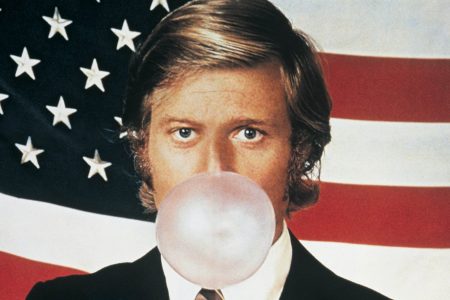
Why Robert Redford’s Style in “The Candidate” Still Matters
From technically flawless tailoring to avant-garde accessories, Redford’s wardrobe from the 1972 film carries just as much power 50 years on. Here’s how to get the look.Redford knew a thing or two about deserving movies, having directed acclaimed dramas like Ordinary People and Quiz Show, and changed independent cinema with his Sundance Film Festival. I focus here on his own movies simply because his work with Sundance, helping to launch countless films and careers, is simply too immense to catalog. He would be a major figure in American cinema if Sundance was all he ever did. But it’s his on-screen presence that leaves the most immediate void, even if he had mostly retired following his starring role in The Old Man and the Gun in 2018. He had another late-career highlight in 2013’s All is Lost, a dialogue-light part where he plays an unnamed man fighting the elements to survive alone, at sea — yet another example of the less-is-more approach that made him so easy to read without extra underlining or undue emphasis.
Being a handsome guy at a great time for American cinema was no guarantee of a long-lasting top-tier career; just look at Redford’s Bridge Too Far co-star Ryan O’Neal, one of plenty of newfangled matinee idols he outlasted on the A-list. Or, better, just watch his movies with Newman, or the ones directed by Sydney Pollack, or The Hot Rock. Or bask in the comfort of a movie like Sneakers, where at point he must retrieve potentially world-annihilating tech through analog security-system evasion that amounts to him moving very slowly and deliberately. It could be read as a preemptive goof on the coming proliferation of old-guy action heroes — a caper built around a 60ish fellow called upon to walk carefully. But it’s also yet another example of Redford’s quiet craft as an actor. He’s doing what’s asked of him with precision while revealing the humanity behind that beautiful face.
More Like This



This article appeared in an InsideHook newsletter. Sign up for free to get more on travel, wellness, style, drinking, and culture..