
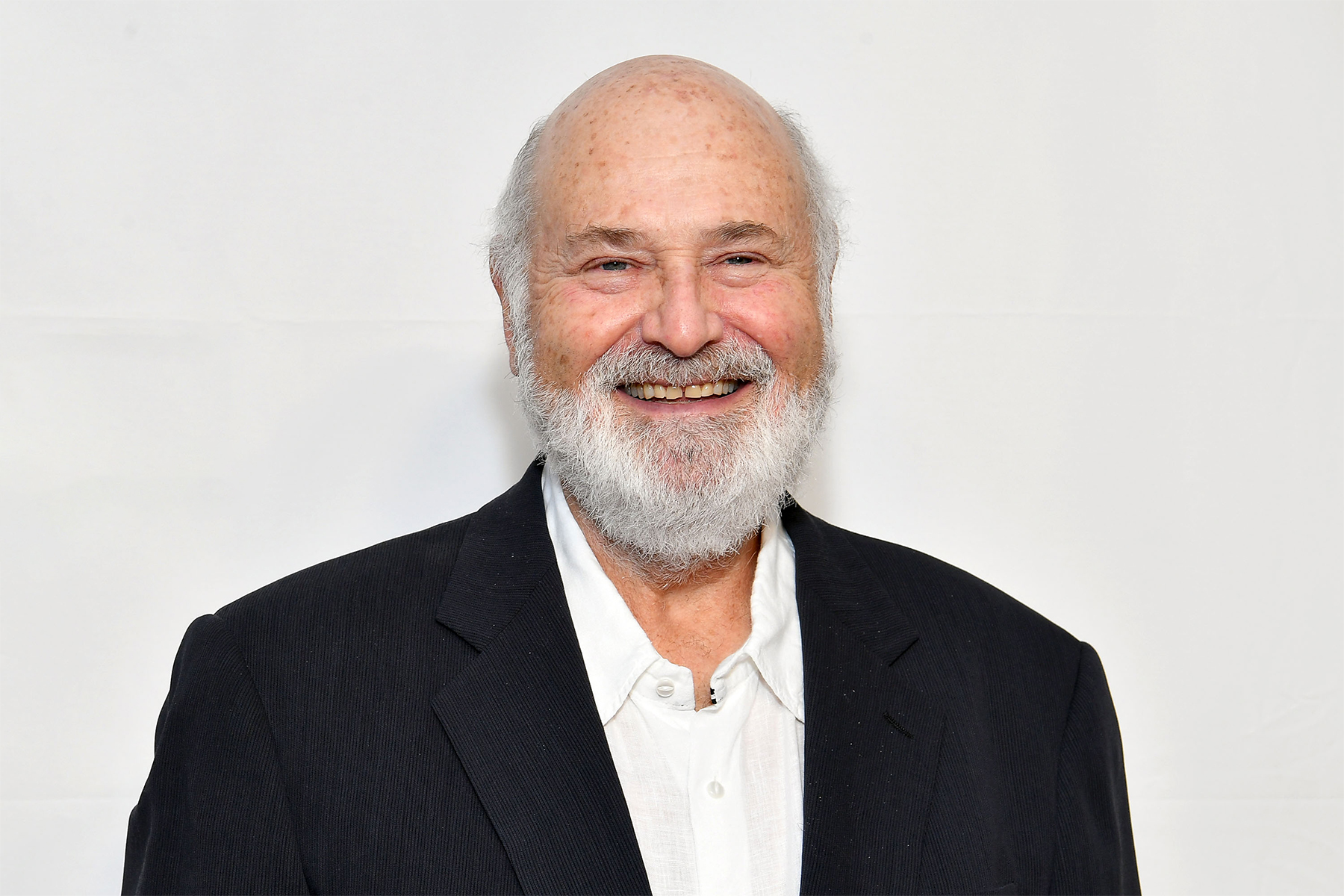
This Is Spinal Tap, When Harry Met Sally, The Princess Bride, Stand By Me, A Few Good Men, Misery — if Rob Reiner had directed just one of these films, it’d be more than enough to cement his legacy as an all-time great. These are some of the most beloved movies of all time, and to get a sense of their enormous impact on pop culture as a whole, one just has to reflect on how quickly the quotes roll off our tongues: “This one goes to 11.” “I’ll have what she’s having.” “You can’t handle the truth.” “Hello. My name is Inigo Montoya. You killed my father. Prepare to die.”
Even if you personally haven’t seen all of them, they’ve become so ubiquitous that they’ve transcended the medium itself and hammered themselves into our collective consciousness. Our contributor Mark Asch said it best when he wrote, “As a critic he’s an impossible case: thinking about Princess Bride/Spinal Tap/Stand By Me/Harry Met Sally/Few Good Men as the work of a director is like thinking about ‘Happy Birthday’ as the work of a songwriter.”
What’s so striking about Reiner’s body of work isn’t just the sheer number of great movies, but the amount of genres he spans. Consider the fact that one man is responsible for arguably the best romantic comedy of all time, the best coming-of-age film, the best courtroom drama, a fairy tale for the ages, the only Stephen King adaptation to win an Academy Award and a comedy so influential that it brought the term “mockumentary” into the lexicon. Then remember that this same director was nominated for five Emmys (two of which he won) for his performance on one of the most groundbreaking sitcoms of all time. If that’s not range, what is?
Of course, Reiner isn’t the only one responsible for these timeless classics; his career is a testament to the power of collaboration, whether it was with Christopher Guest, Michael McKean and Harry Shearer (who improvised most of their dialogue in Spinal Tap), Nora Ephron, William Goldman or even his own son Nick, who co-wrote 2015’s Being Charlie — which was inspired by the younger Reiner’s struggles with drug addiction — and who, in a heartbreaking twist, now stands charged with his murder. Perhaps we can credit that lack of ego and willingness to work together to his time on All in the Family. As Reiner once explained, “Every week, we came up with a little play, and the collaborateness, and the way that Norman Lear allowed us all to contribute, that was the most fun, and what I’ve learned from Carroll O’Connor has held me in very good stead…Carroll set the tone of how we were to work on All in the Family. He was very inclusive — he allowed everybody to participate and say what they wanted.”
Unlike many directors who fancy themselves auteurs, whose singular visions make their work instantly recognizable as their own, Reiner’s ethos is a bit tougher to pin down. His movies are so different, but like that infamous amp in Spinal Tap, they’re all electric. When Harry bursts into that New Year’s Eve party at the end of When Harry Met Sally to tell Sally that he loves the little crinkle above her nose she gets when she’s looking at him like he’s crazy, our hearts skip a beat. Even though we know how it’s going to end — rom-coms all tend to adhere to the same template — there’s something about that scene that makes us feel like we’re the ones anxiously but excitedly admitting feelings that have been there for over a decade. It’s one of the genre’s most memorable endings, but it almost never was; the original idea was to have Harry and Sally go their separate ways, but Reiner changed it after meeting his wife, Michele, on the set of the movie. Inspired by his own love, he opted for a more optimistic route.
When Inigo Montoya finally comes face-to-face with the Six-Fingered Man who killed his father in The Princess Bride, we hold our breath and feel a jolt of similar electricity. Much of that is due to Mandy Patinkin’s delivery of that now-iconic line, one that Patinkin told CNN Reiner encouraged him to “do less” with: “In my sleepless night, I realized he wanted less anger from me to allow my broken heart to be felt.” The result is a scene so emotionally charged, Reiner had to immediately turn it down from 11 and allow the audience to exhale by adding a laugh as Guest’s Six-Fingered Man pauses for a beat before immediately turning and running away. The movie’s climax is, ultimately, centered around an act of vengeance, but it’s presented in a way that feels almost hopeful — the good guys prevailing over the bad guys, and a character who admits he’s “been in the revenge business so long, now that it’s over, I don’t know what to do with the rest of my life” finally able to move on to the next chapter.
Even a drama like A Few Good Men offers a satisfying conclusion as the military men who abused their power and ordered a vicious “code red” beating are brought to justice. But Reiner’s death is a harrowing reminder that life isn’t always like the movies; sometimes a happy ending — or even a gratifying bit of revenge — is nowhere to be found. But that’s why we’ll always need movies like his, to feel the little hairs on the back of our neck stand up when that will-they-or-won’t-they couple finally does, or to sit on the edge of our seats and wince as a crazed fan breaks an author’s ankles, or remember how magical it felt to be a little kid sitting in bed listening to our grandpa read us a story. We need these stories, sometimes to distract us when things get too dark, other times to help us process our own lives or figure out how to handle the truth. As Reiner once joked, “I like to make movies about human beings who live on Earth” — and he managed to churn out a truly remarkable number of the best ones.
More Like This



This article appeared in an InsideHook newsletter. Sign up for free to get more on travel, wellness, style, drinking, and culture..