
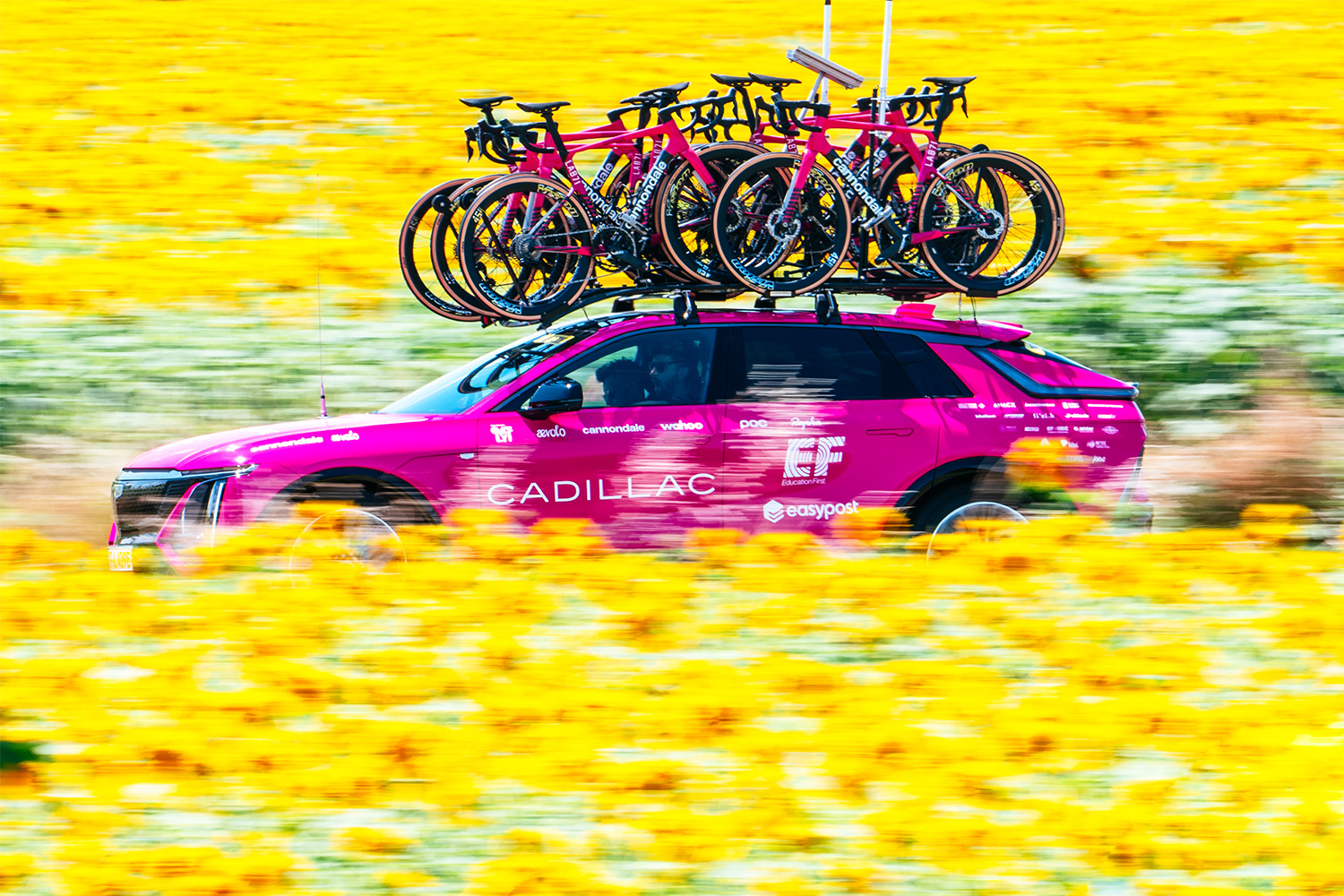
Among the parade of vehicles that follow the Tour de France as it winds through the country, the bright pink Cadillacs are hard to miss.
Team branding around the world’s most famous cycling race has been hit and miss over the years, but the striking, almost gaudy highlighter pink of team EF Education-EasyPost is a fan favorite, and the squad even unexpectedly had the race leader this week in Irishman Ben Healy, when he swapped his standard getup for the famed yellow jersey (with pink accents, naturally).
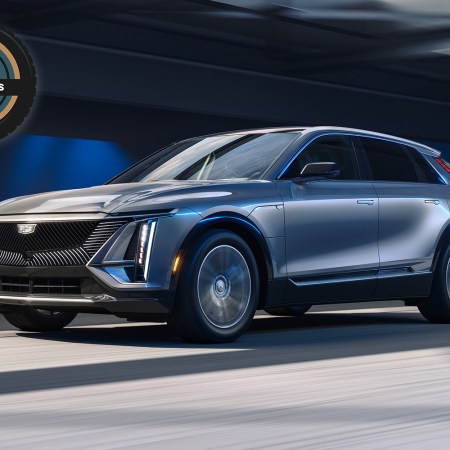
These liveried Cadillacs are also electric, a demonstration of what’s to come as the Tour contends with a rapidly changing climate and its own goals to reduce its carbon output and overall environmental impact. The three Cadillac Lyriq SUVs that EF is running are the most high-profile examples of an elite professional cycling team trying to tackle one of the event’s largest carbon emissions problems.
This year’s Tour de France, which runs through July 27, features 23 teams fielding eight cyclists each across 21 stages over 23 days. Each of those teams has its own mini-fleet of vehicles and a bus that follows each stage to provide all of the nutrition, equipment and training support required of a world-class cycling organization. The vast majority are powered by diesel.
“Everything’s moving all the time,” says EF Pro Cycling Sports Director Tom Southam, who manages team logistics.
EF is one of three teams on this year’s Tour using electric vehicles as their official race support cars. This is in addition to a handful of the Tour’s official lead cars that are EVs, from the automaker Skoda. EF Pro Cycling (the moniker for the entire organization, which includes an elite women’s team and several other racers) currently has 10 Lyriqs across its entire fleet, meant to cover 460 race days annually, primarily across Europe.
The Logistics of Charging
EF’s partnership with Cadillac began last year. According to Southam, the transition to electric driving has been fairly smooth.
“It’s not prohibitive,” he says, “but we’ve had to adapt the way we work.”
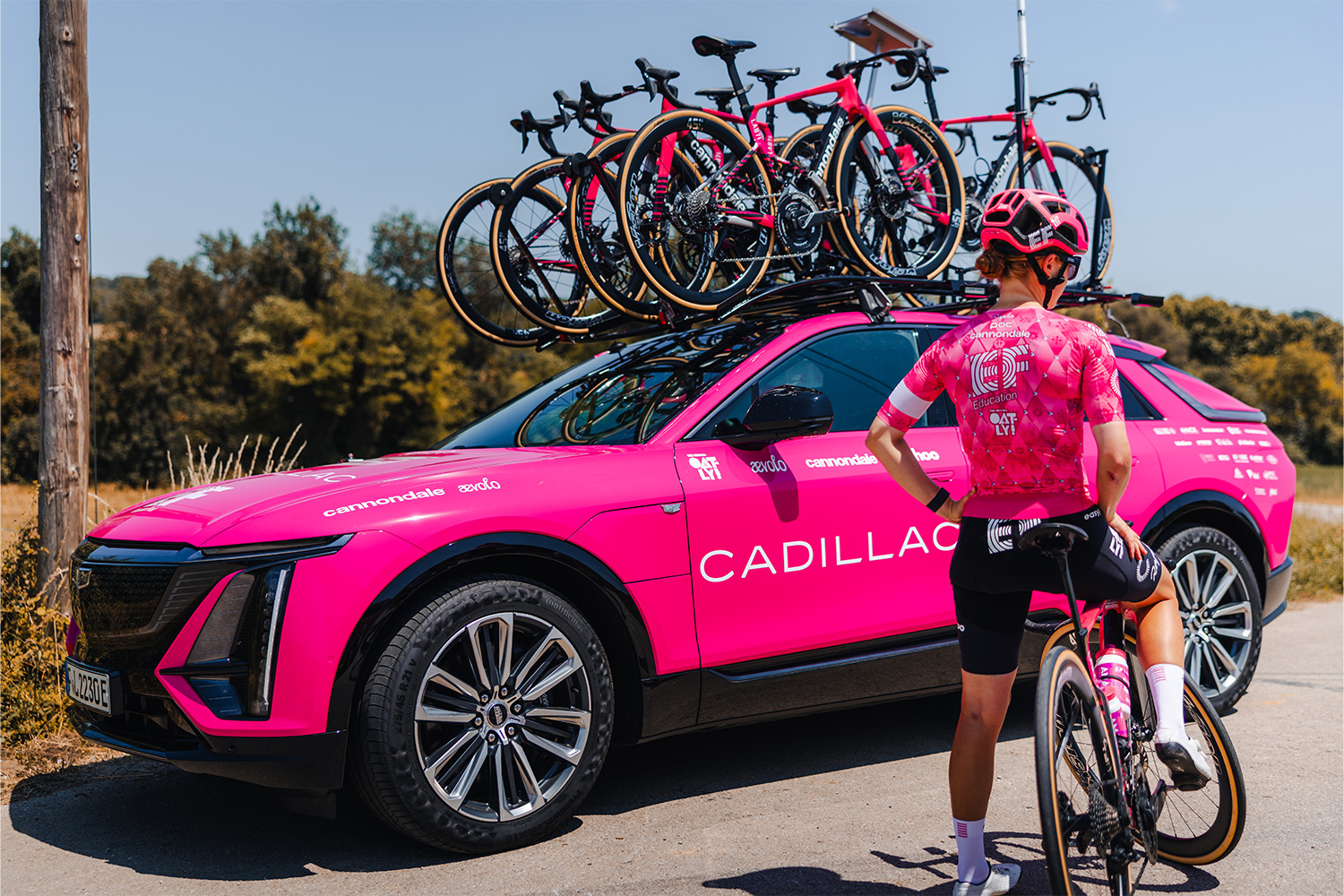
Cadillac provides stock Lyriqs and the team makes a number of modifications to handle the weight of as many as eight bikes on a roof rack plus extra equipment stocked inside. The team has a separate partnership with charging network Electra, which offers them free charging across a wide range of stations across Europe.
How Do You Electrify an Icon Like the Escalade? Go Even Bigger.
The Cadillac Escalade iQ has best-in-class range, spacious interiors and eye-popping weight. Brand diehards will love it.Teams drive slowly throughout the actual Tour stages, as they need to be available at certain moments to restock athletes with nutrition, water and potentially new bikes or parts as required. On days when the course is flat, the team may need to recharge vehicles an additional time; Southam says that he prefers the mountainous stages because although the long, slow climbs are a demand on the range, they can usually regain a significant amount using regenerative braking when going downhill.
With only two other teams using EVs for now, there isn’t a huge demand for charging space along the route. The team books hotels with charging stations and charges the Cadillacs overnight. Jean-Pierre Diernaz, General Motors Europe CMO, notes that they’ve worked with EF Pro Cycling to “fine-tune” the charging strategy through the Tour.
“As a result, the Lyriq has remained fully operational and dependable throughout, stage after stage,” Diernaz says.
Small-Scale Adoption, For Now
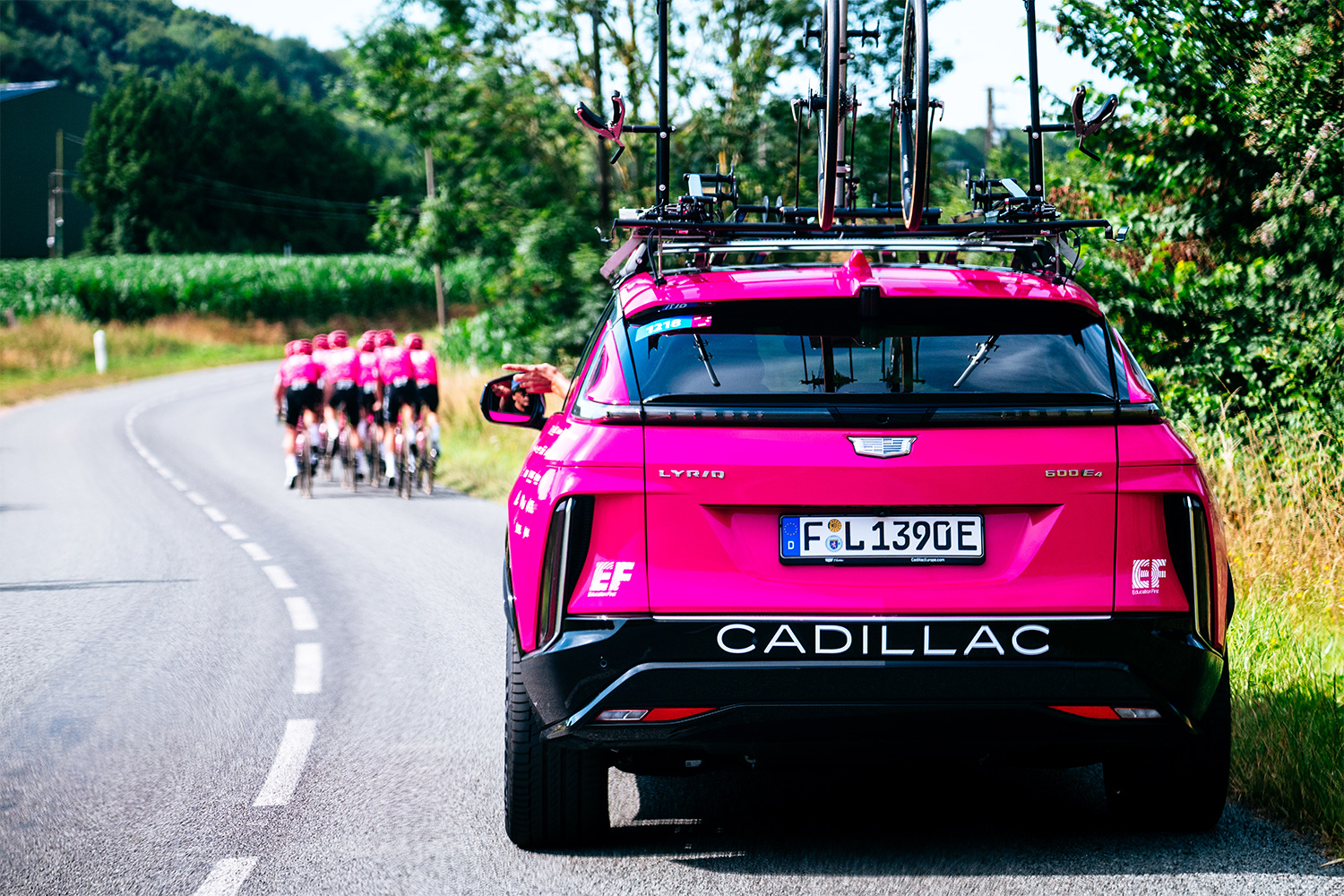
While the EF-Cadillac partnership has been successful by all acounts, other teams aren’t exactly rushing to go electric, and cycling’s global governing body, the Union Cycliste Internationale (UCI), isn’t holding teams to any sort of benchmark.
In the UCI’s 2030 Cycling Agenda statement, there’s a vague mention of reducing the number of vehicles teams use and increasing the number of them that are EVs. There’s a broader goal of getting to carbon neutrality by 2030, too, but it’s unclear how the UCI gets there without a swift transition to EVs on the Tour. (The Tour didn’t respond to our request for comment.)
Notably, Southam says there isn’t much collaboration between the teams using EVs on best practices or charging optimization. Whether that’s based on competition or lack of bandwidth, the teams are largely on their own. Diernaz adds that Cadillac is mainly focused on this partnership for now and isn’t collaborating with other EV manufacturers involved with the Tour.
So the flashy pink Cadillacs remain the most significant example of beginning this transition to less-impactful support while not sacrificing the performance and edge required of a team at the pinnacle of the sport. Looking toward the future, EF is in discussions to expand the partnership, including an expanded presence across North American races.
As Southam says, “Now that we’ve done it, we see it as an advantage.”
More Like This


Twice a week, you'll find guinea pig features, personal essays and expert interviews on living better — for however long you’re here. Subscribe to Champ now.