

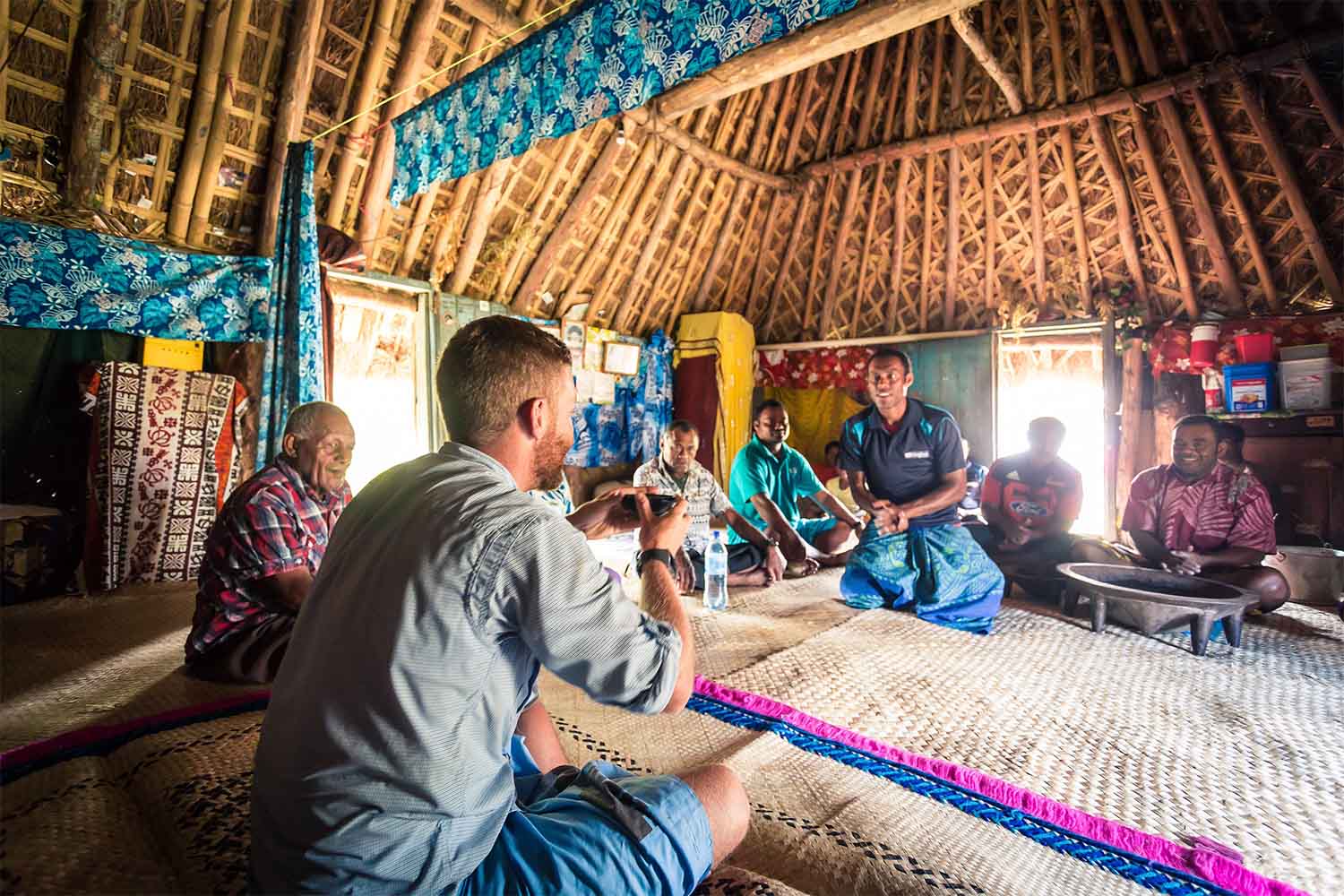
The morning after my 13-hour flight from DFW to Fiji’s Nadi International Airport, speeding down the Sigatoka River in a jet boat proved to be the perfect cure for jet lag. Fresh air brought me back to life just in time for the ensuing kava ceremony in Tuvu village, a riverside hamlet blanketed in lush greenery.
We sat across from the villagers, who welcomed us with food, song and hospitality punctuated by a communal bowl of kava, hand-mixed on the spot by filtering dried kava root through a cloth and blending it with water. Cups were filled and toasts were made, as village leaders shared this ceremonial ritual with our merry band of visitors from the United States and Australia.
It tasted intensely earthy and slightly bitter, leaving a numbing sensation on my tongue similar to the aftereffects of eating Sichuan peppers (but without the spice). Many drinkers report a sense of euphoria after consuming kava. I certainly felt relaxed, although at least some of that feeling can probably be attributed to the combination of a gorgeous setting, warm hospitality and a massive lunch spread.
What Is Kava?
Kava is made from the dried roots of a pepper plant called piper methysticum. It’s a cultural staple on Pacific islands like Hawaii, Fiji, Vanuatu and Tonga, playing a role in traditional ceremonies, celebrations and everyday social life. And it’s good form to bring a kava root as a gift when visiting a village.
“It is presented as a gesture of respect with many meanings depending on the occasion, such as welcoming guests, asking for forgiveness and traditional gatherings that bring families and loved ones together,” says Peni Ravitu, a senior destination development consultant with Tourism Fiji. “It symbolizes respect, unites families and acknowledges traditional hierarchy where its rituals are followed.”
Ravitu says that these rituals can also ease interactions and communication between different provinces. “Whether it be paying respects at a funeral or celebrating the birth of a new baby, kava plays a major role in making known the purpose of the gathering,” he says.
Kava roots contain various chemical compounds called kavalactones, which are responsible for their effects. Judd Rench, the owner of Bula Kava House in Portland, Oregon, says different kavas can affect you differently. Some are more uplifting, others are more relaxing, but there’s a general feeling of mild euphoria, relaxation and stress relief. Depending on consumption volume, it can slow reaction time and affect motor skills, so don’t make plans to operate heavy machinery after downing a few bowls. Otherwise, most kava drinkers report having no hangover or most of the other negative effects associated with alcohol.
Where to Drink It
If you get the chance to drink kava straight from the source in a Fijian village or on another Pacific island, do it. There’s no better way to experience the traditional beverage.
“Visitors will fully understand the significance of kava in a village setting,” Ravitu says. “This setting tells a lot about the traditional structure and the significance of kava to the Fijian culture.” You’ll get to take part in the ritual, see the village hierarchy and witness the hospitality and respect Fijians have for visitors. Many resorts offer more informal experiences, and local kava bars let you try the beverage in less ceremonial settings.
As nice as a Fiji vacation sounds right about now, you don’t have to fly halfway across the world to drink it. Kava bars are in several U.S. cities, and companies have even begun bottling kava drinks, many of which you can purchase online. Portland’s Bula Kava House opened in 2011, after Rench became enamored with the drink while working as a dive instructor in Hawaii. The bar imports dried and ground kava root from Vanuatu, Fiji and Tonga, mixing the powder with water in Rench’s desired ratio. The bar serves traditional kava in coconut bowls and also mixes it into juices, smoothies and wellness shots.

A Weekend at Joshua Tree, With a Case of Psychedelic Water
Test-driving a brand new, entirely legal take on tripping in the desertRench has seen an uptick in patrons recently as more people embrace sober lifestyles, especially with Gen Z notably drinking less alcohol than previous generations. “The bar survives on regulars, but we’ve been seeing lots of younger customers in recent years,” he says.
Down the coast, Kavahana in Santa Monica, California, is a bright and airy kava bar. It’s more like a coffee shop than a traditional bar, and they sell straight kava as well as specialty drinks featuring ube, mango and coconut. Like Bula Kava House, Kavahana sells packaged kava powder that can be purchased on-site or online to make drinks at home.
In Los Angeles, Kava Kulture serves kava straight and in lattes and teas, and Kava Bar & Botanical Lounge has a menu of shots, mocktails and matcha drinks.
The Nak in Boca Raton, Florida, has been open since 2002 and is one of the oldest kava bars in the country. It serves several types, including single cultivars sourced from different South Pacific islands, offering it by the shot and the pitcher. Other Florida cities like Miami and Orlando also house kava bars.
New York has a more fractious relationship with the beverage. A couple of years ago, the city’s health department began shuttering kava businesses, citing safety concerns, despite the irony that many enthusiasts drink kava instead of partaking in alcohol. Legal battles are ongoing, and just like we’ve seen with cannabis and CBD regulation over the years, bureaucratic agencies aren’t known for nuance.
“Kava is growing quickly, and I’m excited that more people are finding out about it,” says Rench, who considers kava a healthier alternative to alcohol and knows of customers in recovery. “People need kava bars and other places to go out and be social without poisoning themselves. Kava gives you that option.”
More Like This

Every Thursday, our resident experts see to it that you’re up to date on the latest from the world of drinks. Trend reports, bottle reviews, cocktail recipes and more. Sign up for THE SPILL now.