Nota bene: All products in this article are independently selected and vetted by InsideHook editors. If you buy something, we may earn an affiliate commission.
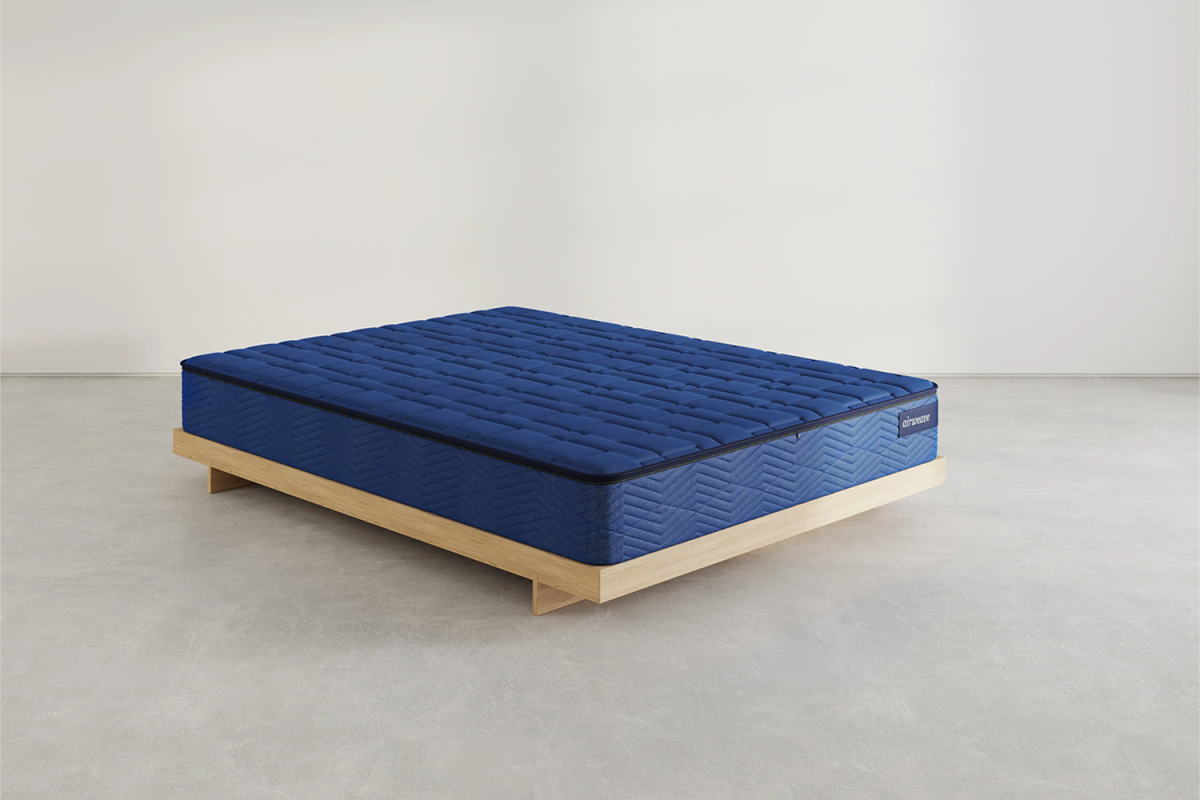
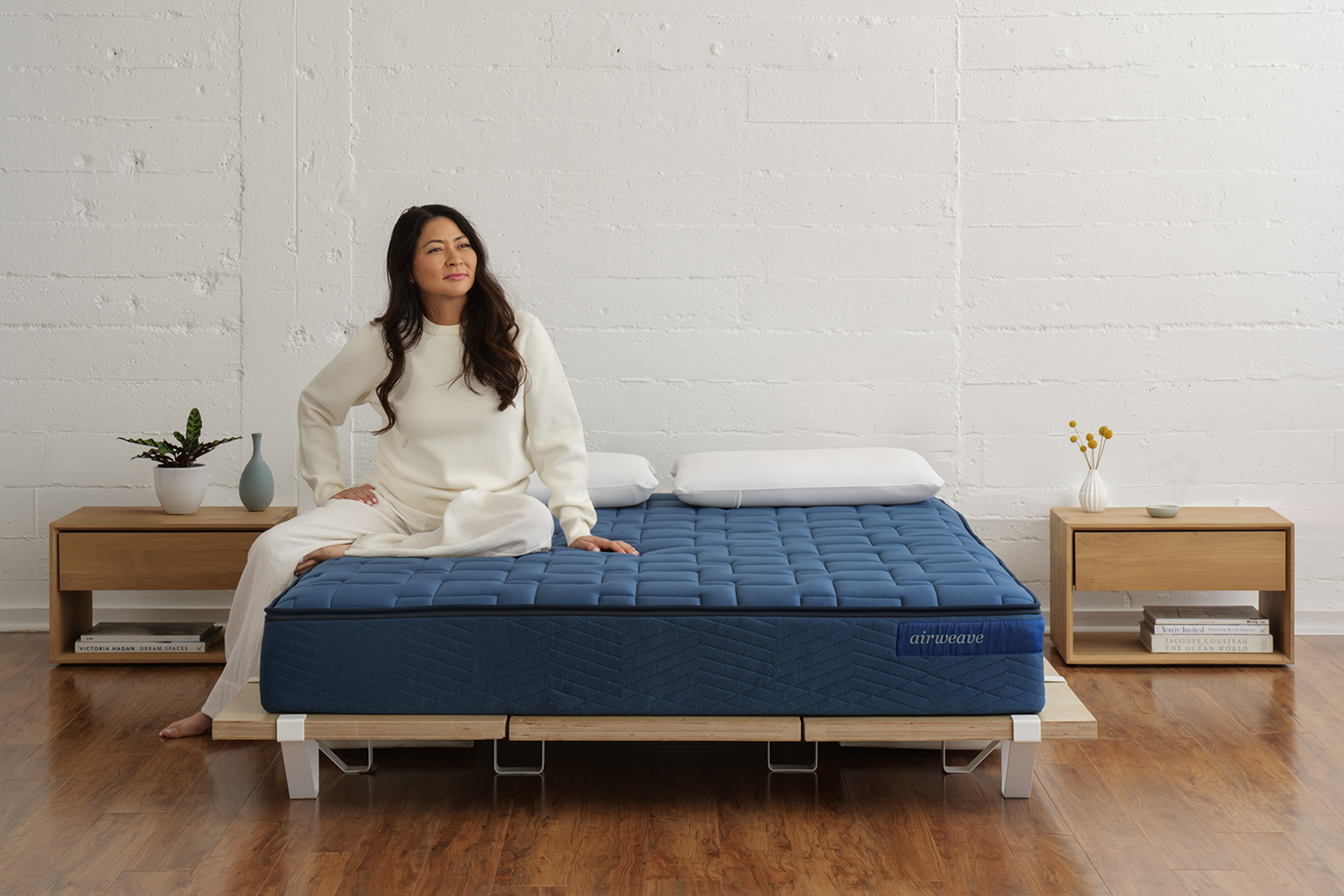
My girlfriend, in not so many words, gave me an ultimatum: either we upgrade from my saggy old double bed, or we go our separate ways. Finding a new romance seemed like a difficult proposition, so I opted for the former…and in the process, reviewed the cushy, Japanese-made Airweave Mattress, so that you don’t have to. You’re welcome.

This Ancient Practice Could Save You From an Awful Sleep
People have sworn by yoga nidra for centuries. We tried it alongside its Andrew Huberman-backed equivalent, called “non-sleep deep rest.”Let’s back up a step. Shortly into my injunction-induced research, I discovered Airweave — a Japanese sleep company that, despite flying relatively under the radar in the U.S., has built a cult following overseas. Their origin story is unusual: CEO and founder Motokuni Takaoka took over his family’s fishing line business and realized that resin fiber — typically used in industrial applications — could be reengineered into a mattress material. The result is something genuinely different in a sea of foam-based sameness.
A Unique Construction
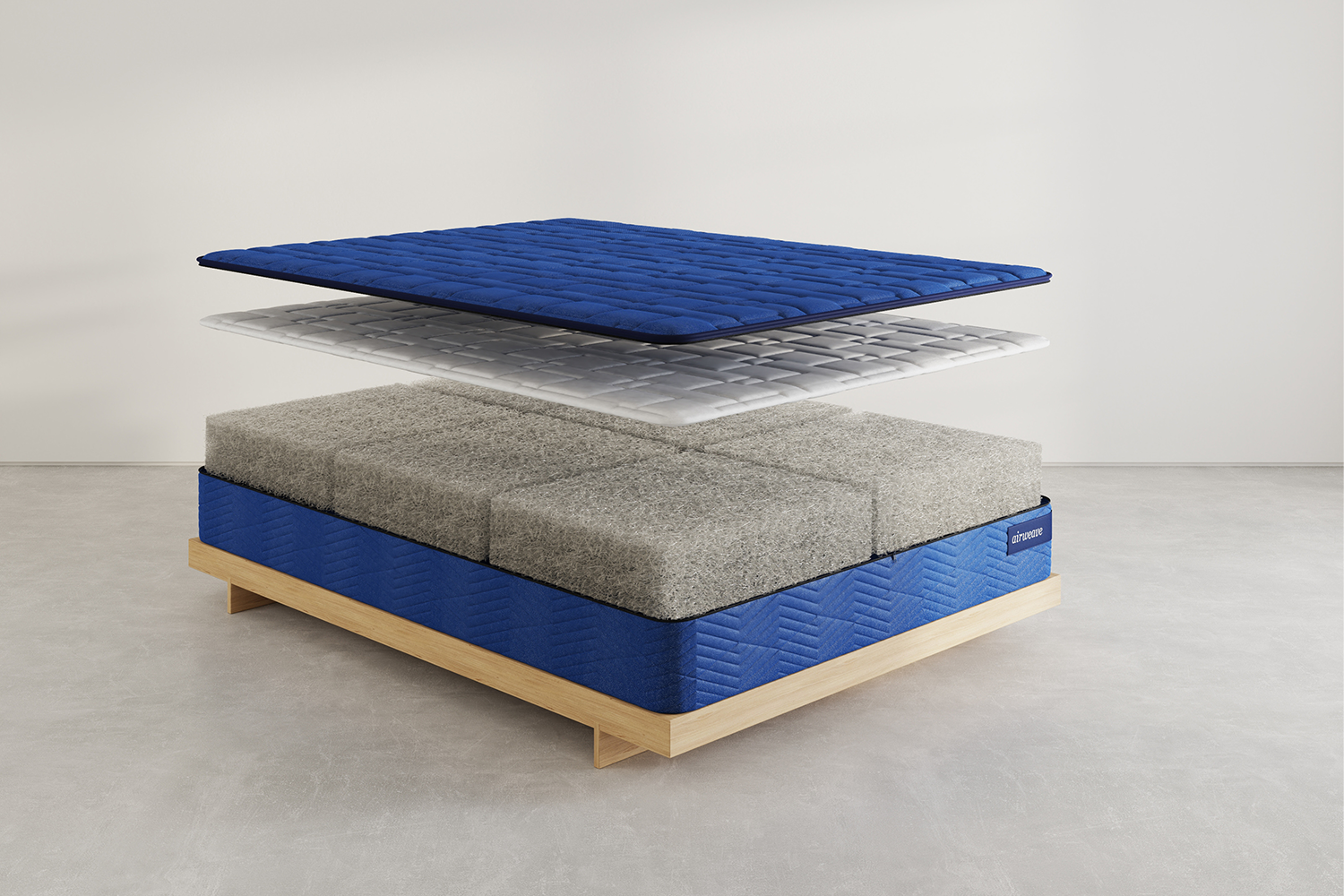
While Airweave offers a range of sleep products, my orders were clear — a new mattress, or else. The Nagomi 1.0 arrived not as a single unwieldy slab, but as a thoughtfully designed system.
Inside the box: a modular configuration of three internal blocks, each engineered with varying firmness levels to support different parts of the body. Think of it less like a traditional mattress and more like a customizable sleep platform. The interior is made from interwoven Airfiber® — a springy, open-structure material that looks a bit like thousands of fine filaments fused into a breathable core.
Assembly is refreshingly simple. No tools, no confusion — just a few minutes of light lifting and you’re done. And because it breaks down into manageable components, moving it (or reconfiguring it) is infinitely easier than wrestling a conventional mattress through a narrow hallway.
How It Feels
I won’t lie: I was initially concerned about firmness. The Nagomi 1.0 is not marketed as plush, and if you’re expecting that sink-in, memory foam experience, this isn’t that. But here’s the thing — it works.
The best way I can describe it is firm, but not hard. Supportive, but not rigid. It distributes weight so evenly that you don’t feel pressure points — instead, there’s a subtle sensation of floating. It’s a different paradigm of comfort, one that prioritizes alignment over softness. My girlfriend, who was skeptical at first, adjusted quickly. So did I. In fact, we both slept well from night one — though it’s worth noting that Airweave recommends giving your body time to adapt to proper alignment if you’re coming from a softer mattress.
A few characteristic highlights:
- The website claims that because of the filament filled interior, the Airweave promotes airflow, which keeps you much cooler throughout your sleep. I can’t empirically say that my undercarriage has remained any cooler than it had before, but I can certainly tell you I have yet to wake up a hot sweaty mess in the morning. And I’ve been sleeping with flannel sheets the past few months.
- If this was one of those terrible mattress commercials from the early 2000s, I would be dropping a bowling ball on the Airweave while some crystal stemware full of red wine sat next to it unmoved. That’s just to say that the Airweave is pretty great at not transferring motion. My girlfriend and I go to bed and wake up at drastically different hours, so we’re able to rise and retire on our own schedules without waking each other.
- The best way I can describe how it feels is that it is indeed very firm, but it does not concentrate pressure on any points of the body, so while it seems like a cliché, it does feel a bit like you’re floating. Support is the headline: It keeps your spine aligned in a way that feels intentional — less “cloud-like,” more “engineered.”
Additional Perks
Because of the unique construction, the Airweave is 100% washable. All the outerlayers are machine washable, and the inner layer is made from plastic fibers, so you can just throw it in the bathtub and rinse it down should the mood strike you. I have yet to do this, so I can’t speak to the ease of it. And, let’s be honest, I’m probably never going to, and neither will you.
They’ve also done studies (take these with a grain of salt, of course) that indicate sleeping on Airweave can improve athletic performance. The likely explanation for this is that, because Airweave transwers very little motion during natural sleep movements, you have far less muscle activity, which causes you to feel more refreshed in the morning. It’s also great for relieving back and joint pain.
And yes, there is a 100-day return policy, but as they state on the website, it can take up to 30 days to acclimate to your mattress, so they ask that you give it that long before returning it. Then you can, no questions asked.
What Needs Work:
I suppose if you like a super soft and plush mattress, then the Airweave will not be for you. But they also sell super luxe mattress toppers if you need a little extra softness.
Airweave is a premium product, and it is priced accordingly. A Twin XL-sized version of the new Airweave model will run you $2,995. That’s about double, if not more, than most of these mattress-in-a-box companies will run you.
Final Thoughts
I really do love my Airweave Mattress. I didn’t think I could ever love a mattress this way, but here we are. I tell all my friends about it. I’m thinking about bringing it home to meet my parents. If you have general soreness or back pain, this mattress will help. If you want a more convenient mattress for moving and cleaning, Airweave is perfect.