

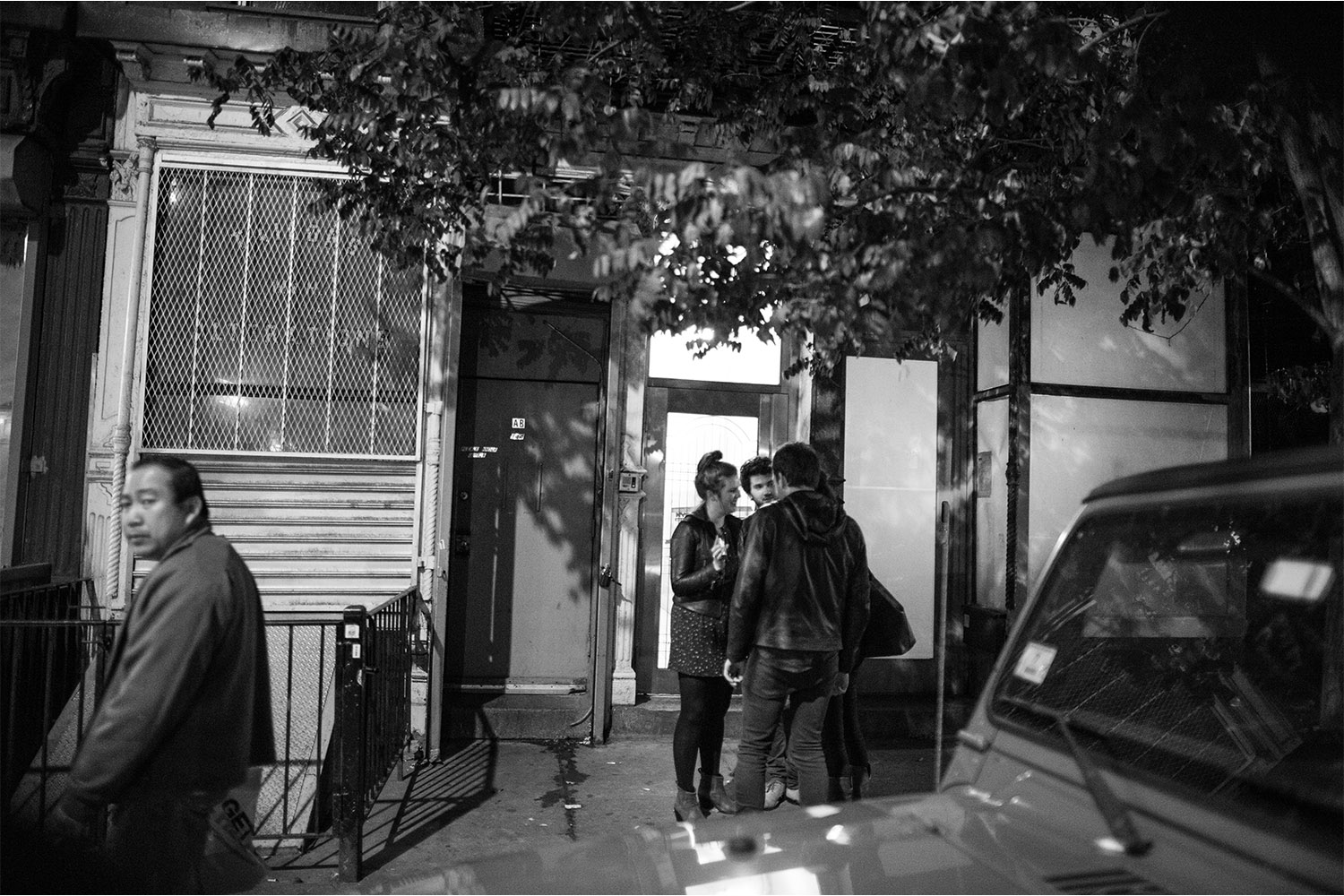
If you walk down Eldridge Street in Manhattan’s Lower East Side neighborhood, it’s very possible you’d miss what is the most important cocktail space of the 21st century. Neither the former host, Milk & Honey (2000-2012 in that space), nor its current bar iteration, Attaboy (2012-), were meant to stand out.
Call it a speakeasy if you want — the space isn’t necessarily “hidden” but rather just unassuming on the outside. Inside, however, is where you’ll find some of the best drinks you’ve ever tasted. And this year marks the 25th anniversary of 134 Eldridge as a bar space (yes, technically, it’s the 26th anniversary, as Milk & Honey opened on New Year’s Eve of 1999).
“This room is very important to us — and it’s very important to a lot of people in the cocktail world — because it’s arguably the room that helped kickstart this third wave of cocktails,” says Sam Ross, co-owner of Attaboy and creator of modern-day classic cocktails such as the Penicillin and Paper Plane.
We spoke with Ross, Attaboy co-founder Michael McIlroy and a host of other bartenders and regulars at 134 Eldridge about the impact of the two bars. The bar’s original owner, Sasha Petraske, passed away in 2015, but as you’ll read below, his memory lives on at both Attaboy and with bartenders at a host of the world’s best cocktail dens.
Milk & Honey’s Unassuming Beginnings
Milk & Honey opened on the last day of 1999/first day of 2000.
Sam Ross: Sasha Petraske, our mentor, hated the state of New York nightlife. He wanted to open the antithesis of what he was seeing in bars, and that was a place that wasn’t jam-packed or with super loud music, terrible iced drinks, women not feeling safe or comfortable, the velvet rope, all of that. As someone who didn’t really have much of a business brain, money wasn’t necessarily an issue when he opened the space. So he wasn’t really looking at profits — he wanted to reinvent the idea of a New York bar.
Michael McIlroy: The only reason he got this space was because one of the owners above us was a friend of his. And that person was the son of the dad, essentially in charge of the co-op. He was like, “No, we don’t want any bars.” Until Sasha told him what his concept was, saying, “I want to be quiet and low key.” And the dad was like, “Okay, I’ll do this under certain rules. I don’t want you to be able to see outside or inside. No signs.” So this guy’s dad kind of helped kick off the speakeasy bar.
Ross: The bar was born, and rent was $700 for the first five years.
McIlroy: And he still couldn’t turn a profit.
The Bar World’s Secret
Ross: This was 2000, so there wasn’t Yelp, there weren’t all these online reviews. The information about new spots had to come out weekly or monthly from the Village Voice or New York magazine or Time Out. The spread of information was a lot slower. And it was all reservations — there were no lines in the front.
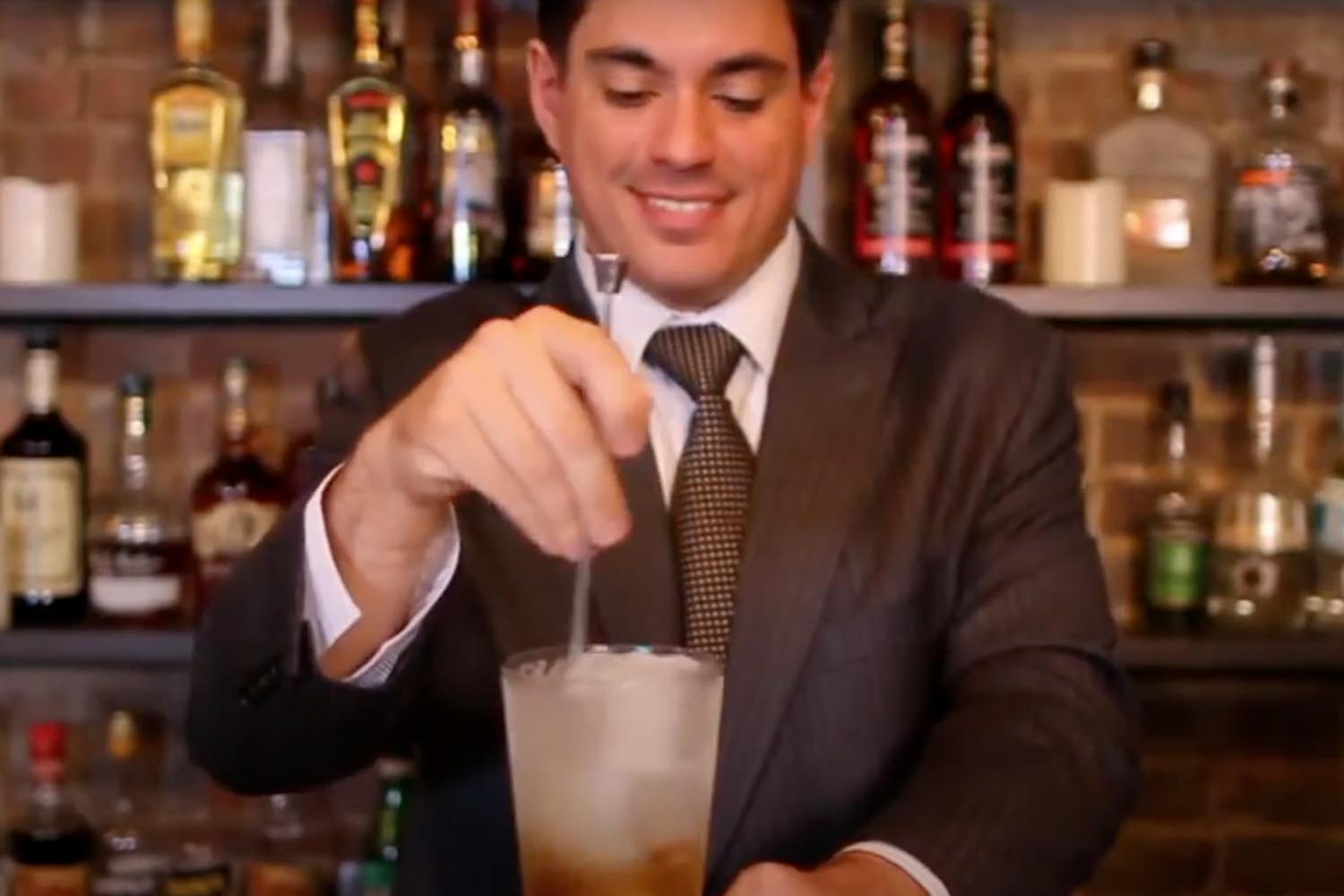
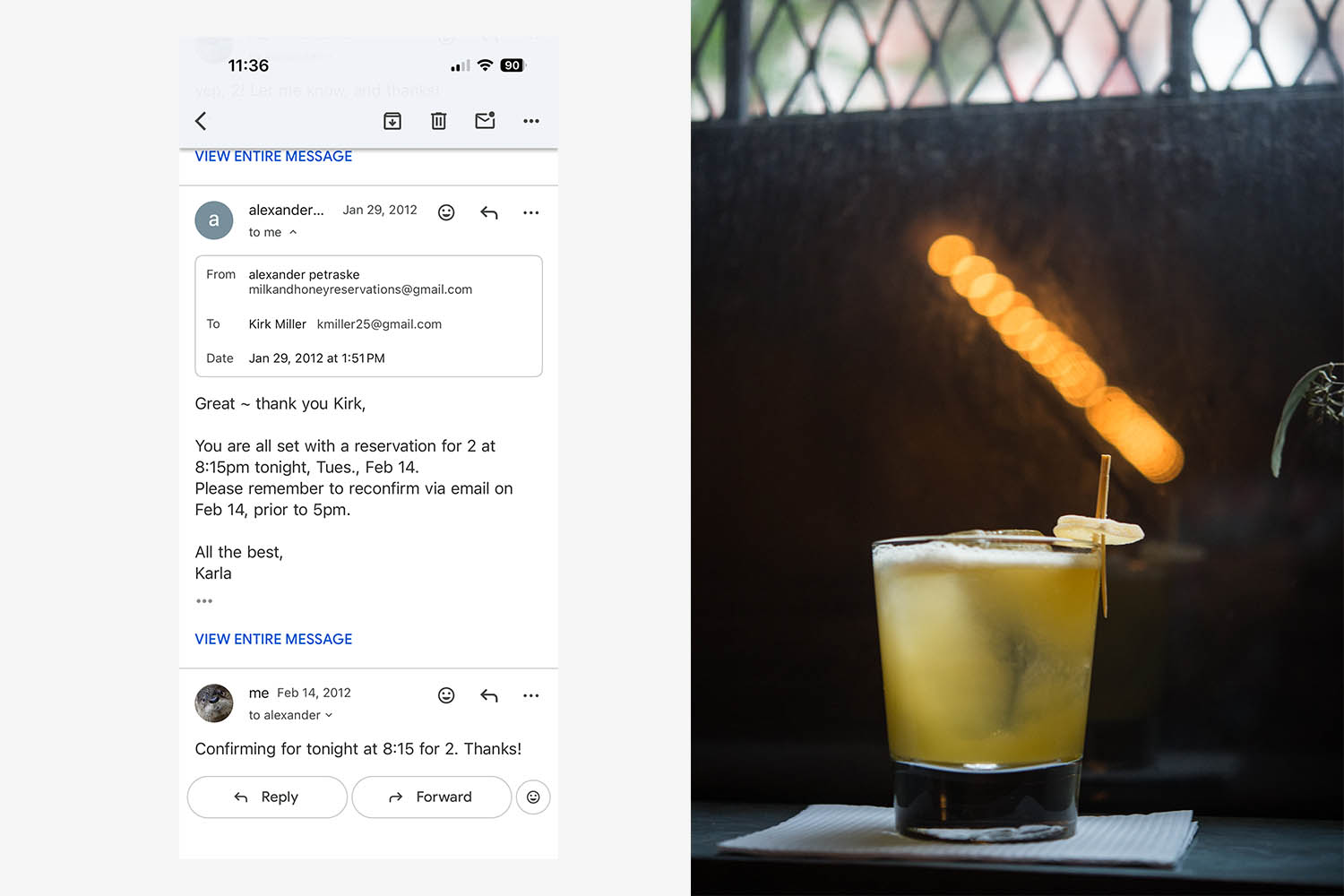
McIlroy: You could come in because you had a phone number. You would call — we actually had to talk on the phone and be like, “Hey, it’s Sam. There are four of us. We want to come by at 10:30, is that okay?” And you write it down. And every six months, Sasha would change the phone number. “The bar’s getting too busy,” he’d say. We’d be making money, then it would be crickets in here, we’d make 80 bucks a shift. But it would also be fucking awesome because you would just have the core regulars and the hospitality folks.
Ross: Sasha didn’t care about making money, and he did not want to be in the spotlight. There was one article on him in the early days, and he only agreed to it if they wouldn’t list their number, didn’t have a photo of the outside, wouldn’t list the address. And actually, the photo of him is him standing behind the Milk & Honey bar with his back turned.
Richard Boccato (former Milk & Honey employee): I was employed at Milk & Honey from 2005 to 2009. Prior to that, Sasha and I ran in a few of the same concentric circles around New York City, going back to our high school years with several friends in common. Sasha and myself are native New Yorkers, just a few years apart in age. In 1999-2000, I was working at a youth center that was run by the Greenwich Village Youth Council in the housing projects on Eldridge Street between Stanton and Rivington Streets. This was half a block away from Milk & Honey at its original location at 134 Eldridge, and I would sometimes go there on dates with girls who had ignored me in high school hallways 10 years prior. It certainly helped that I had a little juice with Sasha because otherwise I may never have set foot in that bar.
Sasha Petraske (from a Difford’s Guide interview in 2013): A year after we opened, I met a guy who lived across the street who didn’t know we were there.
For Bar Regulars, There were Rules to Follow
Georgette Moger-Petraske: (Sasha Petraske’s widow, from the forward of the couple’s book Regarding Cocktails): The legendary house rules of Milk & Honey were more than an etiquette guide for bar decorum. They could be read as a compass for consideration of others and self-governing … The house rules were cast in bronze plaques on the bathroom doors of each my husband’s bars — a gentle decree from a patient chief whose sole intention was to be a good neighbor, both to those living in the building at 134 and elsewhere on Eldridge Street. … the reverence and hum of the Eldridge Street bar was a sanctuary of seated patrons who were required to telephone before dropping in.
Ross: Sasha famously had a list of rules in here, and that was really just to get people back to being civil in bars. You know, he remembers a time where you’d be lining up at a bar, would be a plumber, actor, musician, electrician, nurse, it didn’t matter. This bar was a democratic space.
Christy Pope (former Milk & Honey employee): I started working at Milk & Honey in 2001. It was my first job in the hospitality industry. I lived near there in Chinatown and had visited several times as a guest. My roommate, Marcus, is the person who first introduced me to M&H, and he had become friendly with Sasha. One night, Marcus and I were having a drink, and Sasha was sitting with us at our table, and he commented on how things were getting busier and how he was planning to hire a cocktail waitress. I quickly blurted out that I’d like to do it — be the cocktail waitress — and Sasha asked what experience I had. I told him the things I had been doing: working for a record label, working in a clothing boutique, DJing at night, but no bar or restaurant experience. Perfect, he said. I started the following week.
Chad Solomon (former Milk & Honey employee): I first became associated with Milk & Honey in April 2002 through my partner Christy Pope, then Sasha hired me to bartend there. I was a bartender there until January 2007 and was on call after that if someone needed a shift covered. In 2006, Christy and myself partnered with Sasha to create Cuffs & Buttons, NYC’s first beverage-only catering company and essentially the catering/private event arm of M&H and Little Branch. We ran Cuffs & Buttons out of the Milk & Honey basement until 2010 and then moved over to Little Branch and operated out of there.
McIlroy: This is why we worked here for eight years. Because it’s like, yeah, I want to work for this crazy bastard because it was always about the pursuit of not just a good drink, but just good hospitality, a safe space and a good room.
Ross: Sasha credits the original Angel’s Share with the whole idea of no standing, reservations only, no loud behavior. Sasha was also no hats and restricting group sizes.
Pope: My roommate was the first person to take me to Milk & Honey. He told me that you had to call first and then be waiting nearby until you got a call back, and then they would let you know when you could come by. I was also told to be quiet and not make noise on the street to bother neighbors and not to linger directly outside the door. It was all very hush hush, and Marcus took that very seriously. Once we got the call back and walked to 134 Eldridge, we rang the buzzer and stood outside the gray door and waited. It took a few minutes before someone came to the door. We were escorted in, through a wall of black velvet curtains and emerged into what seemed like another world. Dimly-lit by candlelight, the room glowed amber to the steady beat of jazz. I don’t remember anyone else inside, except Wilder Schwartz, who was the training bartender that night. He had long hair and a white button-down shirt and suspenders. It all felt otherworldly, like stepping through the wardrobe and entering Narnia.
Boccatto: I recall the time I lost two shakers full of Blueberry Silver Fizzes all over Dale DeGroff, his wife Jill and two of their friends as they sat directly in front of me at the only four bar stools in Milk & Honey. It was one of my very first shifts there without a babysitter, and I was all alone on the tightrope. At the time, I wasn’t really aware of who Dale was, and I certainly didn’t know that Sasha considered him to be a dear friend, nor did I understand that their respective work behind the bar inspired the nascent global cocktail revival from important coordinates within New York City. Although I felt a tremendous sense of shame and embarrassment in the moment, I took inventory of the room and somehow I recognized that a terse or manic response would never be the right approach in this bar. Somehow, I managed to maintain my composure as I calmly distributed neatly folded hand towels and offered the most sincere apology I could muster without having to grovel or placate any of my guests. Then I immediately went about building another round of four Blueberry Silver Fizzes. I remember Sasha walking over to me with no urgency whatsoever, leaning in as I was about to start shaking my cocktails, and casually letting me know that he appreciated the way I had just handled myself throughout the spilling of the Fizzes. He also let me know not to charge Dale and his gang for any of their drinks.
The Drinks Were Meant to Be Simple
Ross: We didn’t have the cocktail books. We didn’t have all the access to everything we have right now. Sasha just wanted to preach simplicity. A few ingredients, fresh juice, quality booze and everything chilled as much as possible.
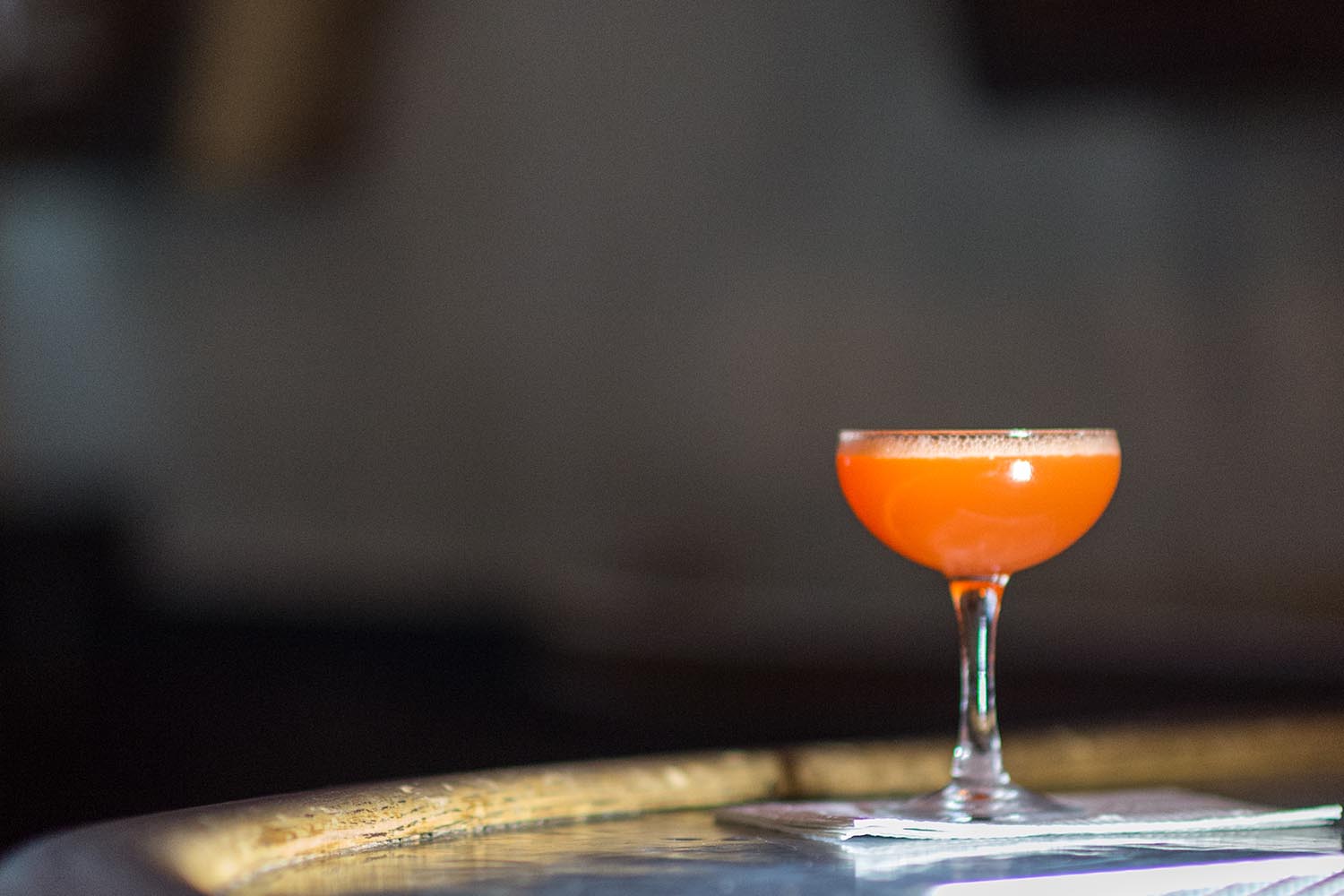
Pope: On my first trip there, Sasha sat down with us and inquired what we wanted to drink. Marcus had told me so much about the ginger drink, and he ordered that: the Moscow Mule. Sasha was excited to talk about the fresh juices they were squeezing, so I ordered a Gin & Grapefruit Juice. It was extraordinary. But for me, it wasn’t about one drink, although there were many memorable drinks for me, like the Queens Park Swizzle, Chin Chin and Red Hook. It was the drink as a whole: the balance, silky stirs or shaken froth, glassware with specially carved ice, or drinks served up in chilled cocktail glasses, stainless steel straws, fresh edible garnishes and sense of purpose.
Ross: I remember making him the Penicillin. He didn’t like smokiness. He didn’t really like bitter things either. He wasn’t a Negroni drinker. And Sasha actually hated Cynar. He said Cynar was what you would be given if you died and went to hell.
Moger-Petraske (from Regarding Cocktails): He didn’t expect an entire culture to be built on cocktails. It wasn’t like that in the early days of M&H. Guests ordering a Bartender’s Choice would specify what spirit base they would like. From there, they would simply be asked, stirred and straightforward? Something refreshing over ice? When served, cocktails would be presented by their names only, not with a rundown of every ingredient they contained. (Editor’s note: Based on my bar experiences and talking to the bartenders at Milk & Honey and Attaboy, both then and now, drinks were usually described and given some backstory). “The drink is dying,” Sasha would say, “the longer you keep it from being consumed.”
Ross: We didn’t have a menu here, I think, because Sasha couldn’t operate a laser printer.
Solomon: Being buzzed into M&H and then going through the double set of heavy black velvet curtains and emerging into an immersive alternate universe was exciting, especially coming in from Eldridge Street the way it was back then. Joseph Schwartz was bartending that first night I went. The first drink he made me was one of his cocktails, a Silver Lining (rye whiskey, Licor 43, lemon, egg white, soda, served long). It was delicious. Watching Joseph prepare that Silver Lining with the spiral egg separator affixed to the large tin while he deftly jiggered the liquid ingredients into the short shaker tin was captivating. The intentionality of his movements, the economy of his motions, the Collins glass he pulled out of the glass froster frozen with a long, hand- carved ice spear in the glass, the large cube of ice he put into the shaker and the alien sound it made compared to shaken drinks anywhere else, the straining of the cocktail over the long spear and the foam “head” encouraged by the bottled club soda to lengthen the drink, and finally the-stainless steel straw he served the drink with. It was delicious.
Boccato: I didn’t know about cocktails, and when it came time to order drinks for myself and my first date at Milk & Honey, I told the man standing before us at the now-infamous table six that we would have two dirty vodka Martinis. Extra olives. That was the first time I believe I ever exchanged truly significant words with Sasha. He didn’t blink. No judgment, whatsoever. He just went behind the bar, and he made me exactly what I asked for. I didn’t go back to Milk & Honey for a second date with that girl. Never thought too much about cocktails beyond that. Never imagined I’d be tending bar there myself someday. I was readily employed at both Little Branch and Milk & Honey for five years until Sasha and I opened Dutch Kills together in Long Island City, Queens, which still remains open to the public, seven nights a week.
Sacha Petraske (from an earlier, unnamed interview, reprinted in his NY Times obit): When it comes down to it, the Milk & Honey way is not an intellectual way of drinking, talking about cocktails. That’s just silly. It has its place. It can be thrilling to catch bits of inside baseball. But it’s nothing that needs to be talked about. Cocktails are to be experienced.
The Origins of Attaboy
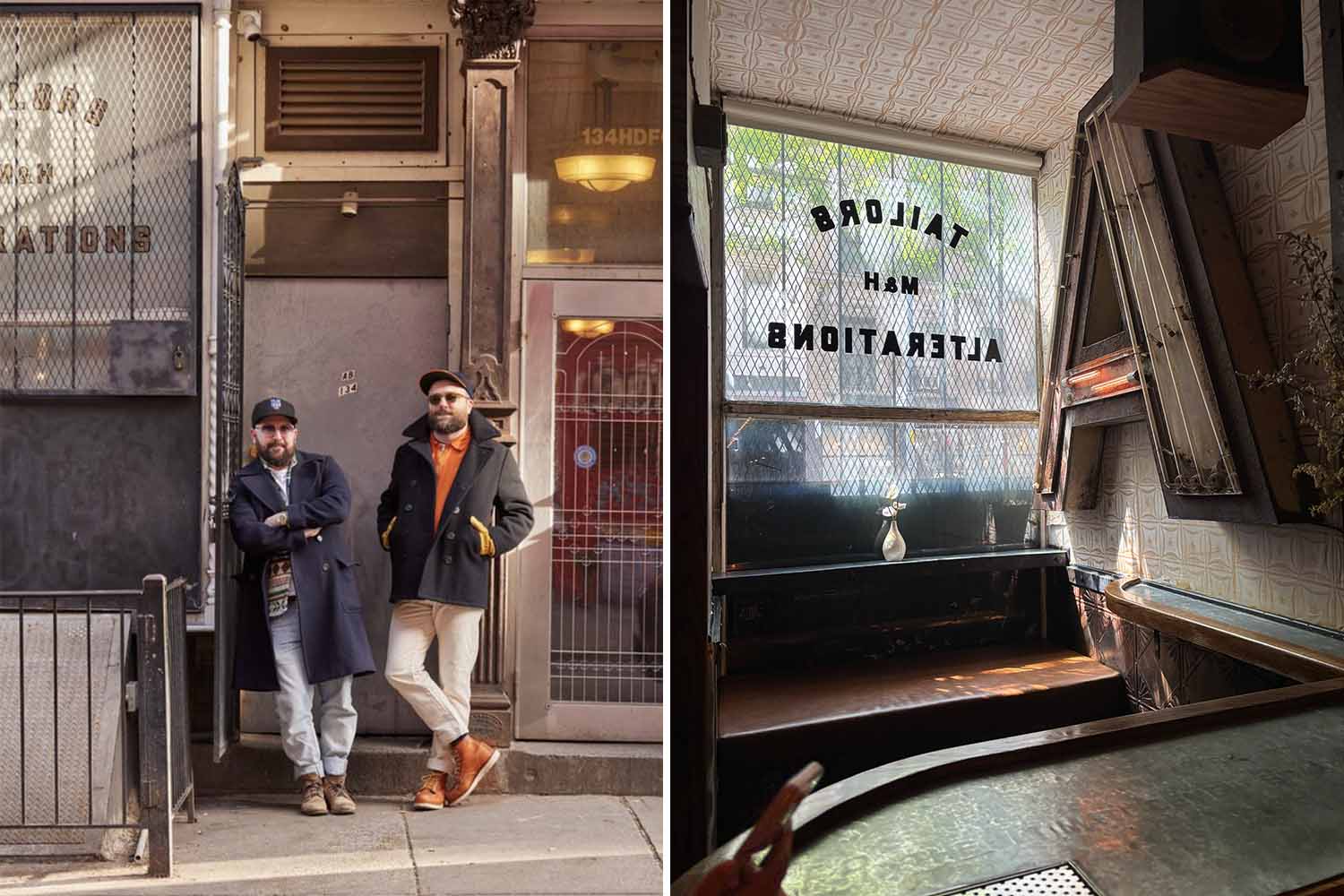
Ross: Both me and Michael came over to New York independently, him from Belfast, Northern Ireland, and me from Melbourne, Australia. We both considered ourselves career professional bartenders in our home countries, and that idea hadn’t set in yet in the United States. Sasha was expanding with Little Branch and East Side Company. He hired us separately with the idea that we’d help with the two openings and eventually transition into Milk & Honey. He said, “I hope you guys get along because you’re gonna be spending a fair bit of time together,” and here we are, 21 years later. We took it through until its end, which was December 2012. That was when he wanted to move the bar up to a new location on 23rd Street [note: that iteration, which was larger and offered food, lasted until 2014]. We had separately come to a side agreement with him about this space. It meant so much to us and so many others. We wanted to continue with it.
McIlroy: This bar was our home essentially for eight years. It meant so much to us but also to a lot of people in the hospitality world. We were like, well, let us keep it going.
Ross: When we wanted to shift to Attaboy, we thought, what would we do different? We still don’t serve vodka at Attaboy, we didn’t serve it at Milk and Honey. It’s just one of those quirks. The suspenders and bow ties and jazz — we felt we could ease up that concept a bit. Lighten it up.
Danger Danger Is More Than the Year’s Best Bar
The Bushwick rock ’n’ roll lounge is cool, vibrant and surprisingly wallet-friendlyMcIlroy: Attaboy was the only name we were gonna have for this bar. It’s the name of a clothes store in Belfast. It’s also the name of a cocktail in the Savoy Cocktail Book. The drink itself is disgusting (laughs). Anyway, now there’s a Korean place called Atoboy, we sometimes get their booze and a lot of their people.
McIlroy: “Would people still want to drink Manhattans and Negronis while listening to Daft Punk?” These are the conversations we had. But again, it turns out that people just want to drink well, have a good playlist and a good room with some handsome bartenders. We’re still doing that, hopefully after all these years as well.
Pope: When I first visited Attaboy, I was so happy. Sammy and Michael have been able to keep a spirit of Milk & Honey while creating a bar that is entirely theirs. Attaboy does not live in the shadows of what came before but is a world-class bar that is entirely the POV of Sammy and Michael. It is modern, lively and a damn fine place to have a cocktail.
Parker Marvin (former bartender at Attaboy): My first experience at 134 Eldridge was in the very early days of Attaboy. I was taken there by a friend back when Sam would still work the door himself. I ended up bartending there for over five years. I am now a restaurant owner in Chatham, NJ, and I still use a lot of what I learned working for Sam and Michael every single day.
Boccato: I delivered ice to Attaboy for Hundredweight a few times during the pandemic, but the last time I was there with a drink in my hand was in 2015, in attendance of a memorial that was held in Sasha’s honor shortly after he passed away. It was difficult for me to be there on that particular evening, for many reasons. But I can tell you the legacy of that establishment in both its current and former iterations has left a lasting and indelible impression upon the way that every single cocktail of import has ever been shaken, stirred or sold the world over. This is an incontrovertible truth as far as I’m concerned.
Marvin: My most memorable drink at Attaboy was my first Dark & Stormy while there talking to the boys about a job opportunity. Sam told me they drank them while on shift “for health.” Over the years, we would have at least one every shift, and the vast majority of Goslings consumed at the bar was by staff.
The Legacy of 134 Eldridge
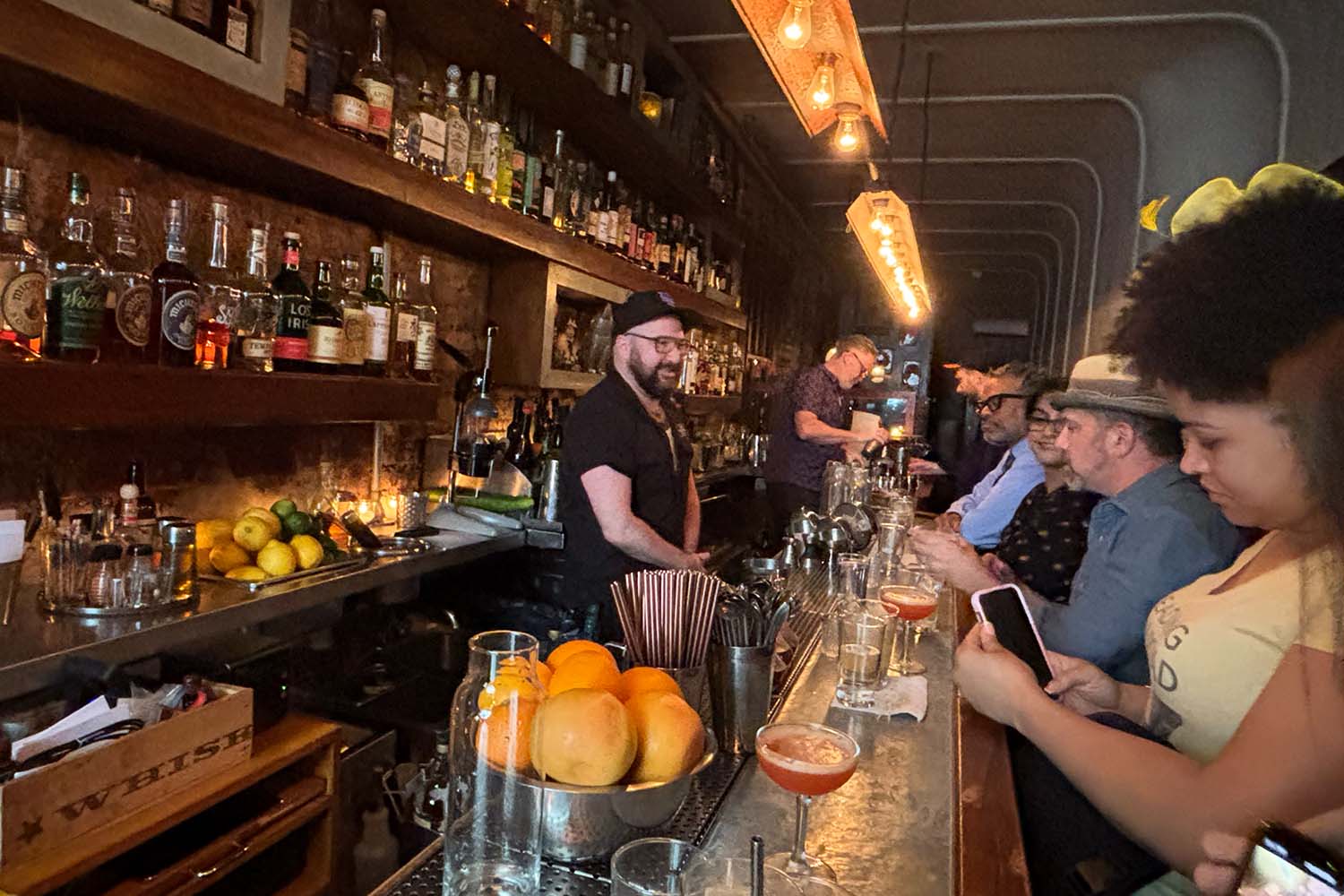
Moger-Petraske: (from Regarding Cocktails): The success of his first bar on Eldridge Street on the Lower East Side of Manhattan spawned many imitators, but [Sasha] was humbled that cocktails had finally been elevated from the state they had been in — at best, made only of two components; at worst, lackluster concoctions served in room-temperature glassware.
Pope: In so many ways, Milk & Honey changed cocktail and beverage culture in NYC and globally. For the most part, the cocktails at Milk & Honey were classic cocktails, but it’s how they were made and the care and consideration that went into them. Sasha was crazy about building a better mousetrap, and the cocktail program at Milk & Honey was the stage for that. “How and what can I do to make this cocktail look and taste better? How can it get to the customer as fast and optimal as it can be?” Hand-carved ice, fresh juices, jiggering, building by the round, measuring to tension, dilution, aeration, chilled glassware, fresh garnishes — just some of the things that made a classic cocktail sing.
Solomon: Milk & Honey fundamentally changed global cocktail culture by approaching bartending as a craft, relentlessly working on balance, technique and fresh ingredients, and set the blueprint for what a bartender-owned and driven bar could be. Milk & Honey’s ideas of etiquette elevated the bar experience from chaotic to refined. This was emulated globally, influencing the design and etiquette of modern cocktail bars.
Marvin: Attaboy changed and continues to change the culture by one intangible — they take what they do seriously but never take themselves seriously. The focus is always drinks, service and vibe, never the bartender. Nailing these components consistently night after night is what makes the place so special and so influential.
McIlroy: What you’re seeing now in the city is two types of bars: There’s the party bar and those doing kitchen-based drinks, you might say, in thin glassware. Both of these concepts are fantastic, but I feel bars like us — or Raines Law Room or Death & Co or PDT — will stand the test of time.
More Like This



We're always on the scene eating, drinking and traveling near and far to bring you the best of what's happening out in the real world. Sign up for IRL now.