

What we’re drinking: Octomore 15, the latest three whiskies in an annual series of super peaty Scotch single malts
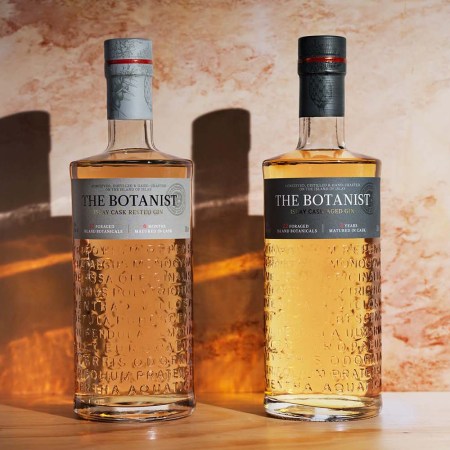
Where it’s from: Revived in 2001, Bruichladdich is located on the southernmost end of western Scotland’s Hebridean Archipelago. The Islay distillery — known for its whisky but also a really good gin — focuses heavily on local terroir; everything produced there is made with 100% Scottish barley and Islay spring water. The distillery launched the Octomore series in 2008.
Why we’re drinking these: Once again, the annual release of Octomore is the best time of year for Scotch drinkers, particularly those who like their whisky extremely peaty.
But Octomore is more than that. “When we think about Islay whiskies as a whole, it’s a peated style and a heavily phenolic, kind of medicinal style,” says Bruichladdich Head Distiller Adam Hannett. “However, Bruichladdich as a distillery is interesting because the spirit we produce is also light, elegant, fresh and floral. So even when we use this high level of peat, it’s a very different style.”
That said, this year’s Octomore includes the second most heavily peated Octomore spirit, coming in at 307.2 phenol parts per million (PPM). In contrast, other peat-heavy Scotch brands like Ardbeg usually come in around 40 to 50 PPM, with some notable exceptions. As well, this is one of the first whiskies from Bruichladdich that makes use of re-used and re-charred ex-bourbon barrels.

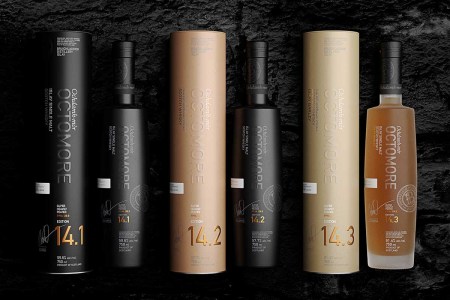
We Tried This Year’s Octomore Releases (And Three Others From Bruichladdich, Including One Standout)
The Islay distillery’s super-peaty Octomore remains awesome but the real standout goes in a completely different directionOctomore also differs from other single malts by going for a far younger maturation. “We always say [jokingly] ‘it’s too young, it’s too strong, it’s too peaty,’” Hannett says. “But age is irrelevant. Quality of distillation and casks is more important.”
So can super heavily peated whisky that’s just five years old offer something more than a smoke bomb? Past experiences say yes, but let’s dive into the three new bottles.
How they taste: All the new Octomore releases were aged for five years.
- Octomore 15.1 (108.2 PPM, 59.1% ABV): Aged in first-fill bourbon barrels along with reused/re-charred bourbon casks, this is a mix of floral and campfire smoke on the nose. The wood here delivers a sweet barbecue note full of vanilla, toffee, coconut, custard and malt, with some slightly fruity and tropical notes on the finish and offers a bit of salinity. It’s complex and delicious.
- Octomore 15.2 (108.2 PPM, 57.9% ABV): Matured in a combination of second-fill wine casks and second-fill ex-bourbon casks — and then re-casked into first-fill Cognac casks — this one is more tropical and herbal than 15.1, with a smoky citrus palate and notes of toasted oak, cinnamon, coffee and chocolate.
- Octomore 15.3 (307.2 PPM, 61.3% ABV): Aged in first-fill bourbon and Oloroso sherry casks and utilizing barley from a single farm on Islay, this one obviously has a lot of peat upfront, particularly on the nose. While that ashy component lingers on the palate, there’s a zestfulness here with a lot of orange peel, dried fruit and toffee on the palate. The fruit notes shine with a few drops of water, which you’ll definitely want to use.
Fun fact: If you want to try the most heavily peated Octomore — and possibly the most heavily peated spirit in the world — look toward 8.3. Released in 2017, it comes in at a whopping 309 PPM. My favorite review on WhiskyBase described it as the following: “Essence of Balrog having a barbecue in Hell. Strong chorizo meat. A well-manured horse’s stable, I always get that note on the strong ones. Smokey bacon crisps. The fruit notes are there but they are only slight. I was in my whisky room nosing this with the door shut and my wife could smell it as she walked past on her way to bed.”
Where to buy: The Octomore 15 series is now available at specialty retailers and online for $204 to $280.

More Like This
This article appeared in an InsideHook newsletter. Sign up for free to get more on travel, wellness, style, drinking, and culture..