
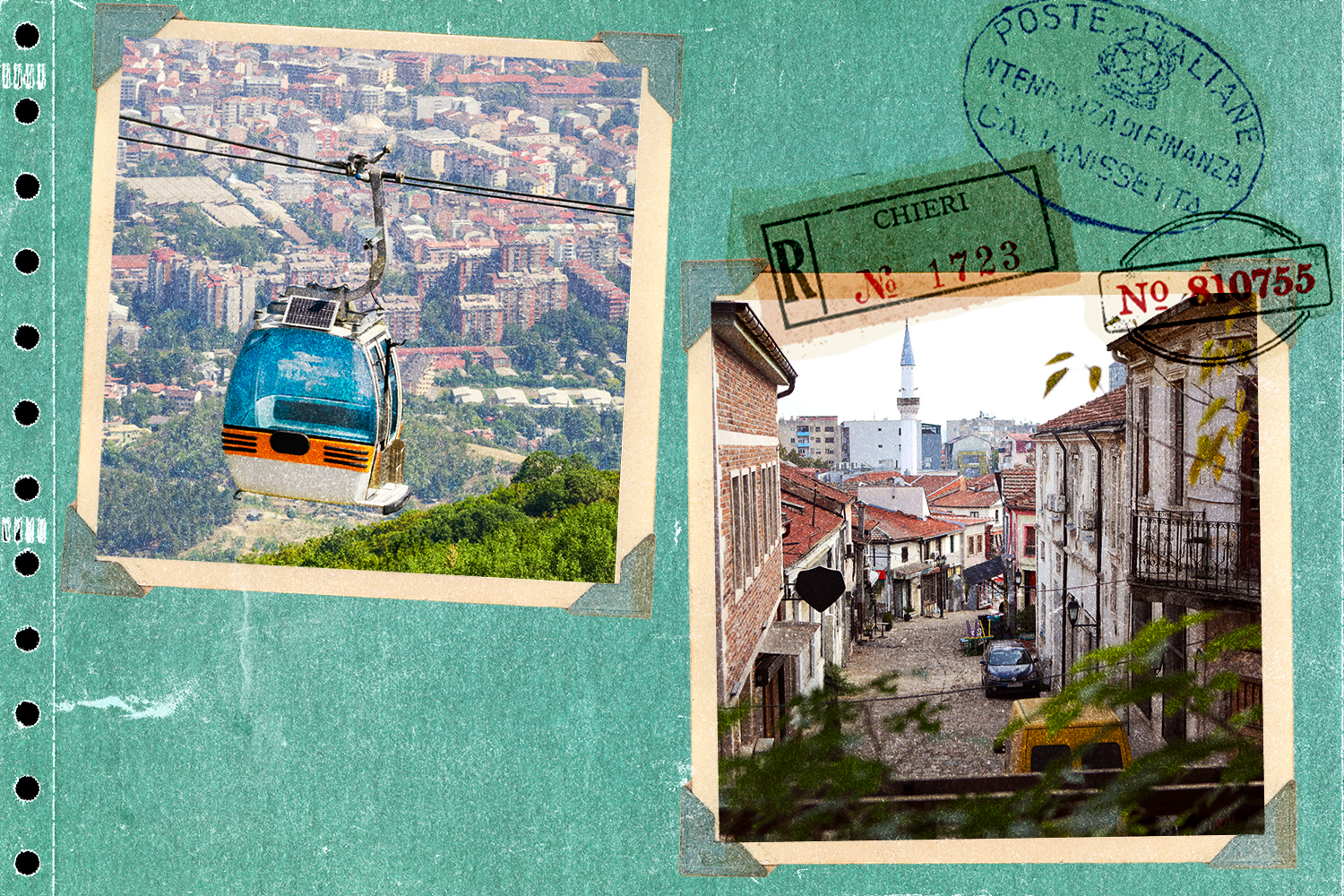
Dubbed the “weirdest capital city in Europe” by travel bloggers and journalists in recent years due to its whimsical architecture, Skopje offers a lot more than meets the eye.
The capital of North Macedonia has no shortage of quirk, sure, but its complicated history and geographical positioning have today resulted in an interesting blend of Ottoman- and Balkan-influenced culture that includes incredible hospitality, excellent traditional cuisine, a temperate climate and enough monuments and points of interest to keep you busy for the entire weekend and then some.
The city is remarkably walkable — there will be no need to take public transit or taxis once you’ve dropped your bags at your hotel — but there are a few key things to know when visiting Skopje, including the best places to get rakija, the historical sites that’ll help you understand the country better and where to find the best speakeasy-adjacent casinos.
Here’s how to spend a perfect weekend in Skopje:
How to Get to Skopje
You’d be forgiven for not knowing exactly where North Macedonia is found on the map. The landlocked Balkan country is in Southeast Europe, sharing borders with Greece, Albania, Bulgaria, Kosovo and Serbia — and Skopje is easily accessible from dozens of European cities.
The easiest way to get to Skopje is to fly into Skopje International Airport. There are no direct flights from the U.S., but flying into the capital of North Macedonia from London or Paris takes around seven hours, while direct flights from Athens or Istanbul are under 90 minutes from gate to gate.
Where to Stay in Skopje
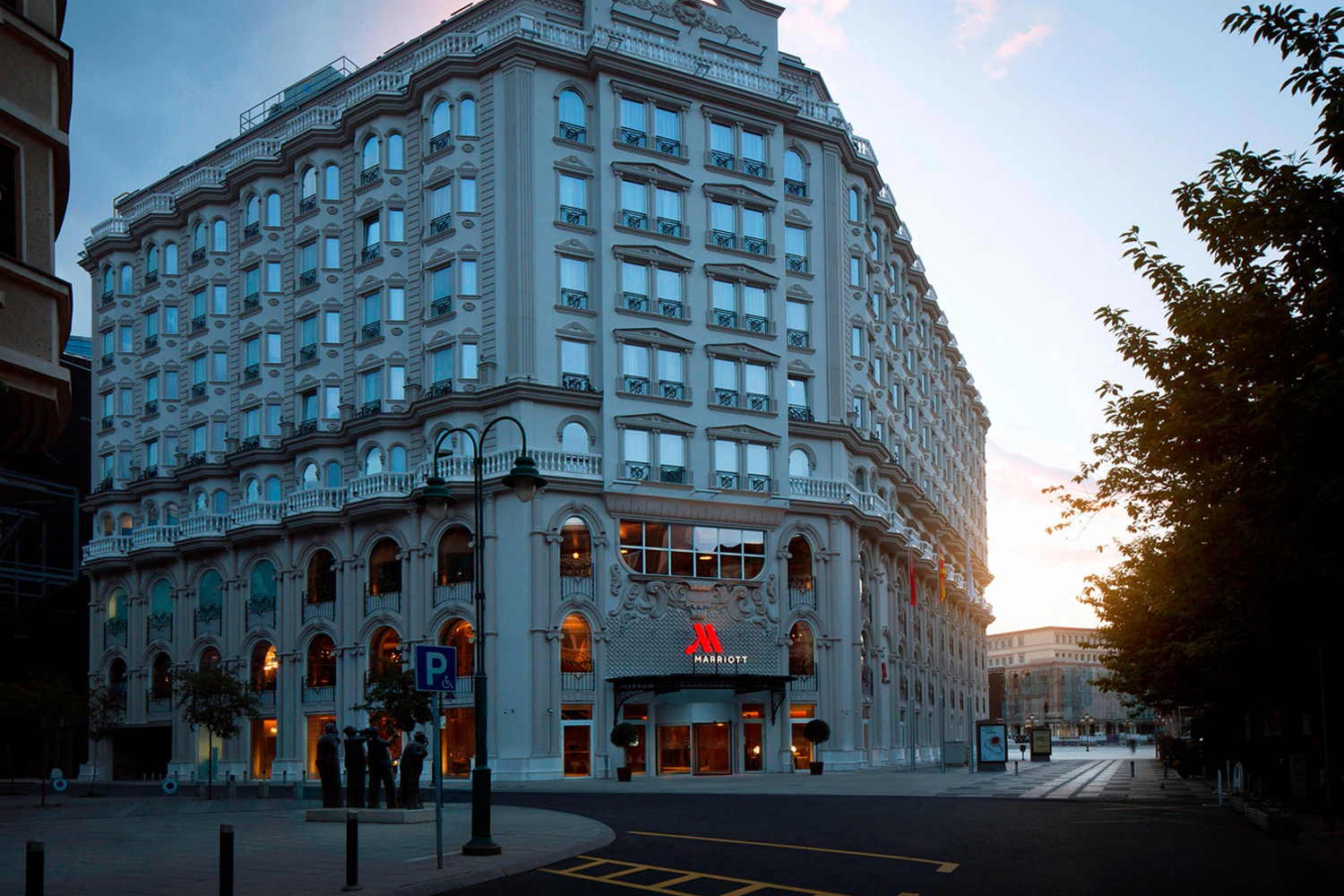
Skopje is on the smaller side as far as capital cities go, which makes it a great city for exploring on foot. If you’re only in town for the weekend, you’ll want to stay as centrally located as possible. The Skopje Marriott Hotel is right in the center of Macedonia Square and just a two-minute walk from the famous Stone Bridge and the Vardar River.
The hotel is set in an Art Deco-inspired building that serves as one of the most iconic backdrops of the city since opening its doors in 2016. While it might look like a historic property, the inside is outfitted with modern interior design throughout its 164 guestrooms and suites.
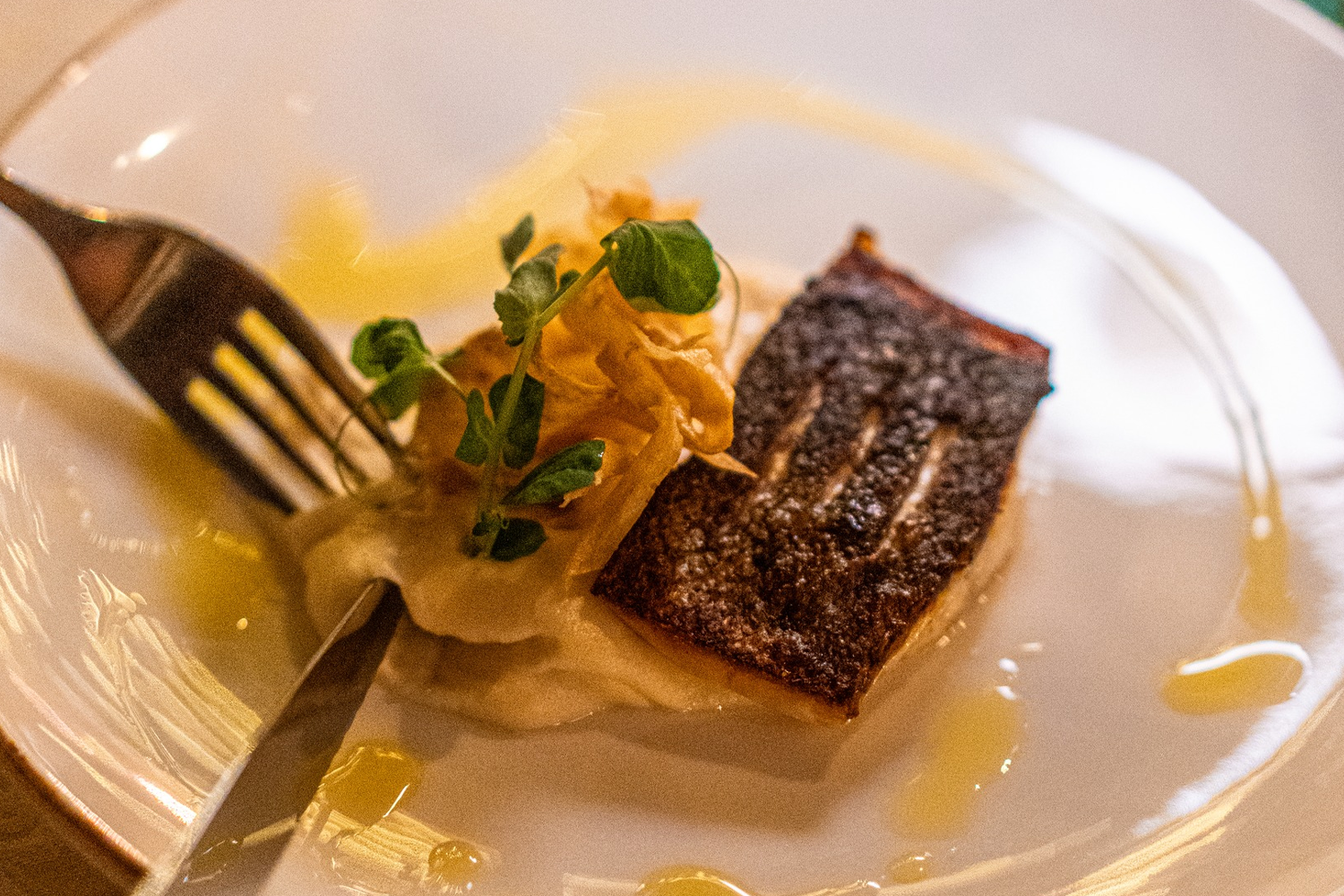
The on-site hotel restaurant is also worth writing home about; Distrikt Bar & Kitchen offers a great example of fusion food that highlights North Macedonia’s geographical position. The upscale restaurant boasts a refined Mediterranean and Eastern European menu alongside a drink list made up of a generous selection of local spirits, wine and beer.
If you lean more toward boutique hotels or out-of-the-box accommodations while traveling, consider checking into the Hotel Senigallia on the Vardar River (yes, that’s on the Vardar River). This cheeky property is housed in a wooden-masted ship just a few paces away from the Stone Bridge and Macedonian Square.
The docked ship doesn’t cruise down the river and doesn’t necessarily feel like staying on a cruise ship but rather feels like stepping into a sleek wood-paneled private club. The property also boasts a private patio space for guests to enjoy breakfast or a nightcap, showing off some of the best views of Skopje from the water.
Where to Eat and Drink in Skopje
The traditional cuisine in North Macedonia is influenced by both the Ottoman Empire and Balkan cuisines; there’s an uncanny similarity to what you’d find in modern Türkiye but with distinct differences. Take, for example, the simit pogača, which you’ll want to grab for breakfast from hole-in-the-wall Migros 2001. If you’ve been to Türkiye, you might be expecting a bagel-like bread, but in North Macedonia, the simit pogača is, in fact, a breakfast bun sliced down the middle and stuffed with a buttery burek.
Keeping in line with traditional North Macedonian cuisine, you’ll want to head to Restaurant Skopski Merak come dinner time for a hearty plate. The dining room feels like stepping into a family member’s home with cozy wood paneling and brick walls throughout. Here you’ll find a decent selection of dishes — from pork loin steak to stuffed vine leaves — as well as a great wine list that highlights the best local bottles in the region.
If you still have room for a nightcap after dinner, make your way to Rakija Bar Kaldrma and sample the national spirit of North Macedonia, a double-distilled fruit brandy. The no-frills bar looks a bit like a beer and chips dive at first glance, but it has a huge selection of rakija to choose from that you’d be hard-pressed to find elsewhere.
What to See and Do in Skopje
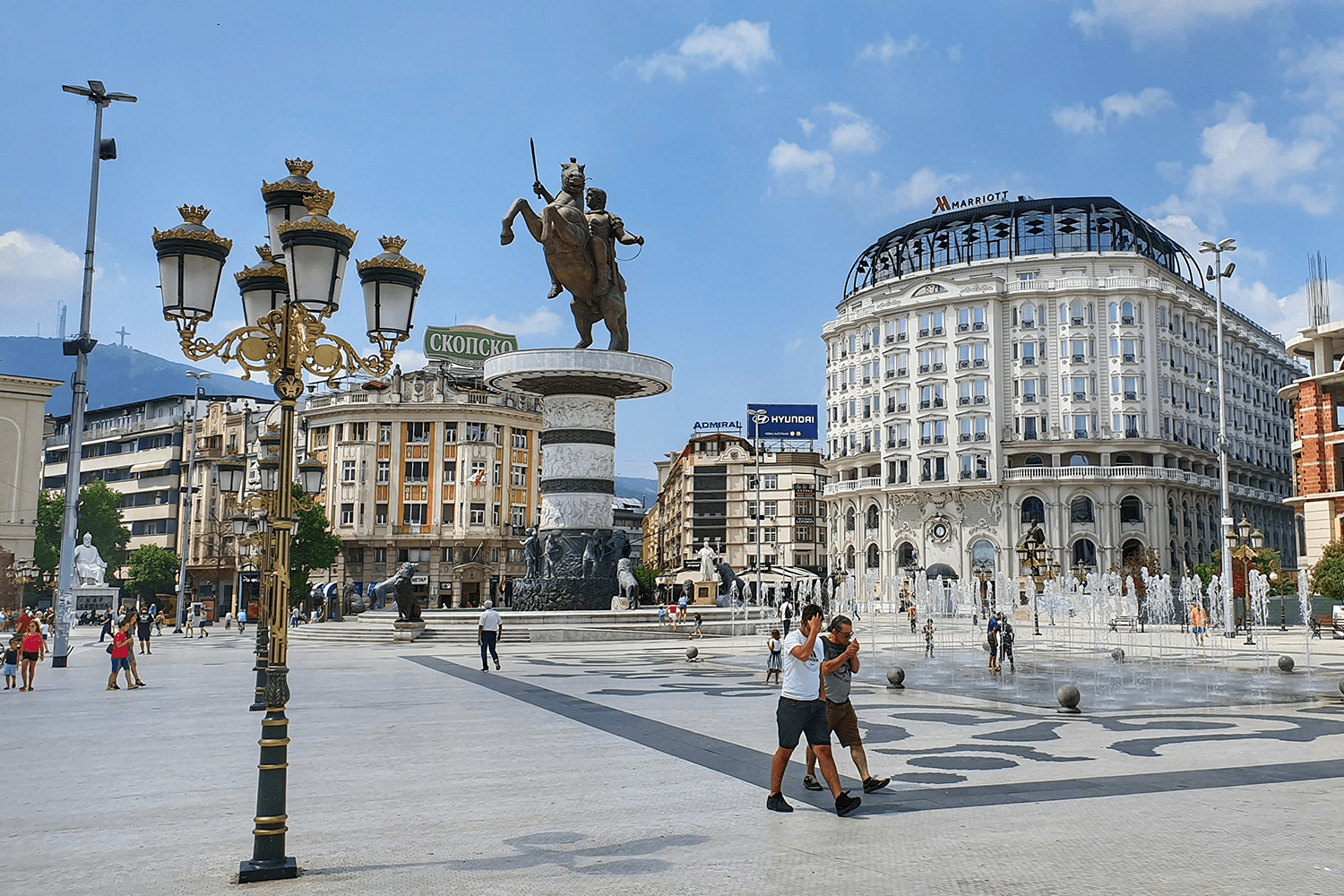
Skopje is a curious city to walk through. Between the 1963 earthquake, which destroyed approximately 80% of the city, and the more recent Skopje 2014 project which saw the city skyline transformed, the capital of North Macedonia is now home to a curious array of classical-looking new builds and enough monuments and historical statues to fill a museum. Walking across the Stone Bridge from Macedonia Square can easily take an afternoon if you allow it, with dozens of monuments dotting each side of the bridge (and throughout the rest of the city as well).
The Old Bazaar — also known as the Turkish Bazaar — is worth making a detour to while exploring the city on foot. It’s just a few minutes from Macedonia Square on the eastern bank of the Vardar River and dates back to the 12th century when Skopje was under the rule of the Ottoman Empire.
North Macedonia has an incredibly rich and complex history that can be hard to understand by just walking through the city streets or indulging in a local dish. Whether you’re a history buff or not, it’s worth paying a visit to the Museum of the Macedonian Struggle for Independence to better understand what this country has gone through. It spans major historic periods for the country, including the rule of the Ottoman Empire through to the Kingdom of Yugoslavia.
Skopje is considered by many Eastern European travelers to be the Las Vegas of the Balkans, and you’ll notice casinos on pretty much every corner of the city. If you want to try your luck, skip the flashy casinos in Macedonia Square and head to the Holiday Inn Skopje. Hear us out: the chain hotel houses a tiny little casino in the back of its lobby, almost akin to a speakeasy. There are no signs or fanfare, but Le Grand Casino-Skopje is one of the best places to play table games like blackjack and poker.
More Like This


We're always on the scene eating, drinking and traveling near and far to bring you the best of what's happening out in the real world. Sign up for IRL now.