

The sun is strong on my cheeks, and bright, even against my shut eyelids. I’ve been instructed to be patient and to keep my eyes closed, and to trust that my guide, Israel Villarroel, wouldn’t lead me astray and let me stumble face down over myself. With each crunching, damp step I take, as if walking on a half-melted, de-iced sidewalk, I move farther into one of the world’s most surreal and spectacular landscapes: Bolivia’s Uyuni Salt Flat, or Salar de Uyuni.
“Welcome to the salt flat, it’s my office,” Villarroel says. He’s my guide in Bolivia with Explora, leading me on the operator’s week-long Atacama to Uyuni Travesía. The word means a journey or crossing, and it’s a transformative one, taking guests on a private lodge-to-lodge expedition from the Atacama Desert in Chile to the Uyuni Salt Flat in Bolivia, roving between and among an endless stream of wholly distinct environments the likes of which you can’t find anywhere else.
Uyuni is the largest salt flat in the world, and at an elevation of 11,995 feet within the Altiplano, a geologic marvel that even in our modern age remains almost maddening to reach. That makes the prospect of a visit all the more rewarding, and the pinnacle of the experience may be that first jaw-dropping reveal, one that Villarroel helps orchestrate for his guests by leading them blindly into the midst of it before encouraging them to open their eyes.
The joke is that as soon as you do you’re just as blind as you were with them closed. The thick white salt, extending to the horizon and beyond, reflects the high elevation sun with a ferocious intensity. Blink a few times and begin to adjust, and the salt flat’s signature geometric patterns and textured surface come into focus. It is enormous, at a size and scale that’s made even harder to fathom due to how it manages to warp its surroundings, blurring the rules of geometry to its will.
There are no other people. No animals, even. Just colors. Shocking pure white and pale blue. When seen with a thin layer of water extending over the surface, the cracked tiles of the salt surface give way to an even more otherworldly, reflective mirrored effect, with the mountains in the distance now appearing both above and below.
It’s one of the planet’s most unique and unconquerable realms. Enough so that it feels alien in nature. More the image in your mind of Europa, perhaps, than something found here on Earth.
Getting Started in Atacama
While Explora offers its Travesía in either direction, it’s best to acclimate to the elevation, and also move towards a rightful climax of the trip in the Uyuni Salt Flat, by beginning in Atacama. “With altitude, it’s just a matter of time,” says Camilo Souza, a guide with Explora who was with me during my time in Chile.
In Atacama, Explora grades elevations on a scale from one to four. One represents elevations in and around the town of San Pedro de Atacama where their lodge is located, about 8,000 feet, moving up to four, elevations of 16,000 feet or greater. You’ll progress over the course of a few days, and if you have enough time and motivation, can work your way up to an ascent of the powerful volcanic beasts dominating the surroundings.
Starting in Atacama is not meant to undersell the destination, either. San Pedro is akin to a large-scale, natural, outdoors theme park purpose built for your entertainment — like Westworld, but instead of the robot murder and prostitution, it actually is just about the environs and the exploration.
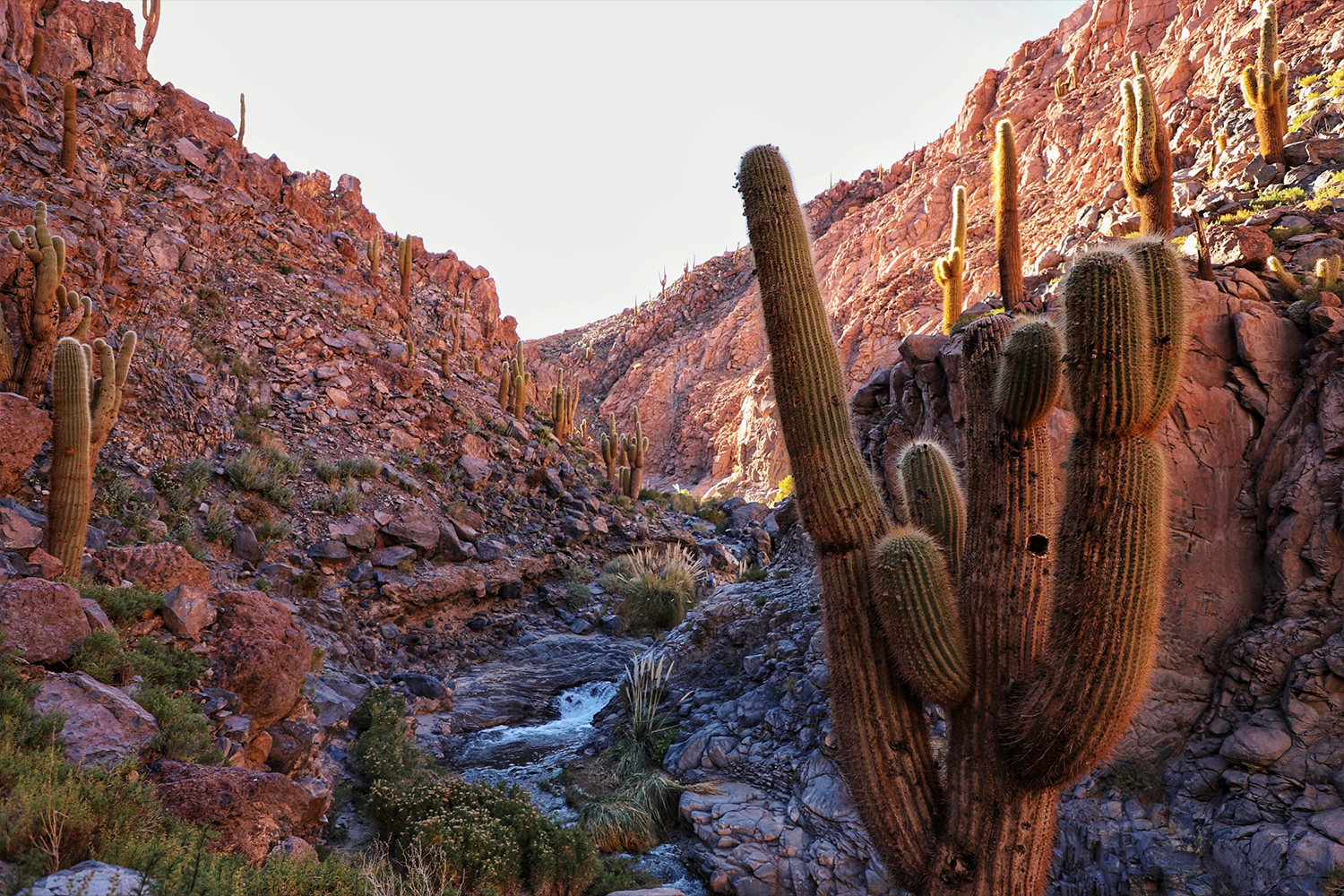
It’s a choose-your-own-adventure destination, whether hot springs and geysers, cycling, slot canyons or all-day trekking is up your alley. There are looming 20,000-foot volcanoes to gaze and gawk at, or to hike up. That includes the powerful, omnipresent force of Licancabur, at 19,409 feet, but who’s counting?


The Journey by InsideHook
Join over 100K travelers seeking trip ideas, the latest travel news, and all the inspiration you need for your next vacation.
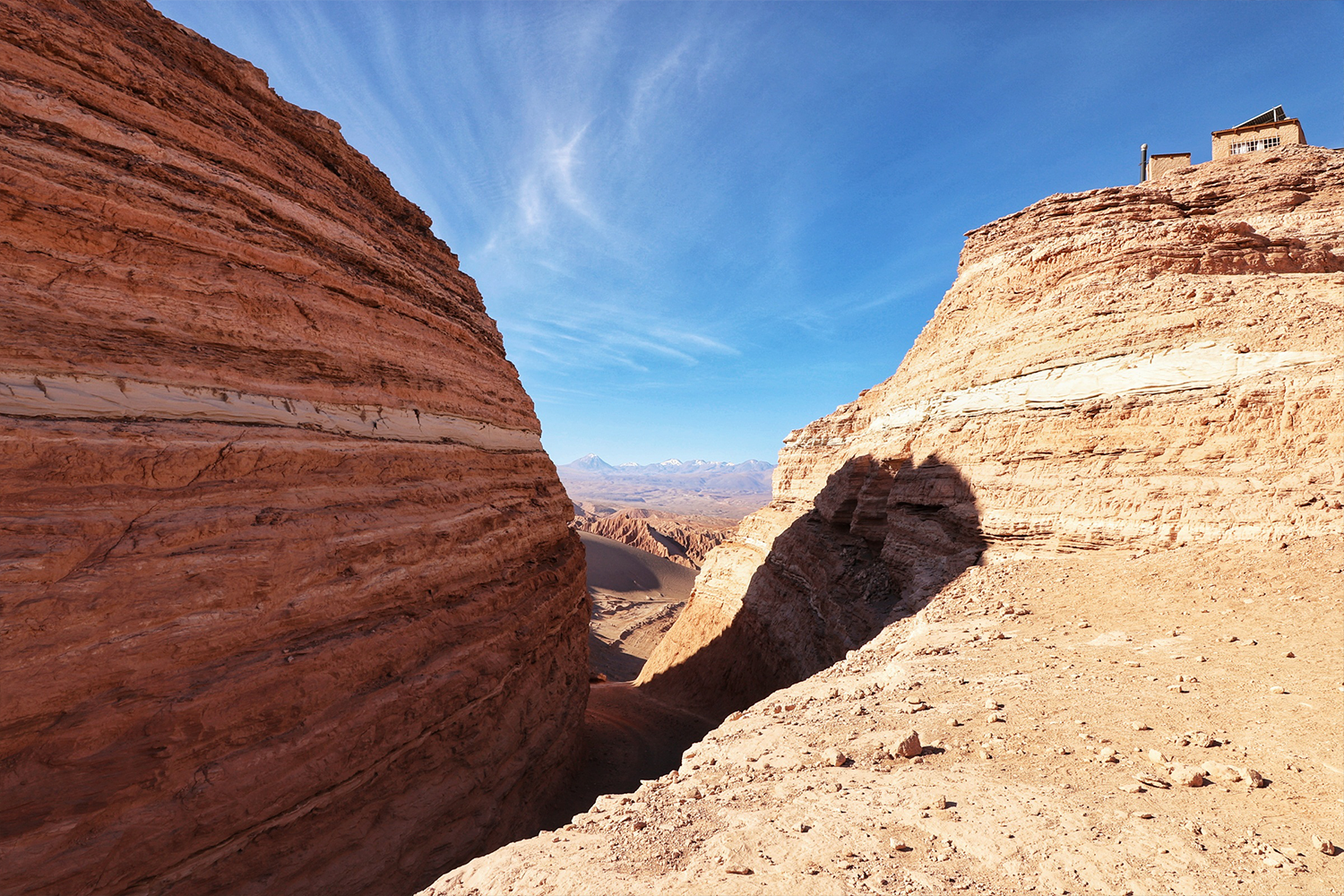
Within minutes from town, you can be walking through mega sand dunes, and I suggest heading straight there, to Mars Valley and its desolate, foreboding setting of red rocks and brown dirt with eroded, Bryce Canyon-esque valleys. Seeing the dunes up close is one thing; running down their 60-degree faces is another, as you lope down with anti-gravity leaps and bounds, reaching the bottom of a 300-foot slope in under a minute. Getting back up is a different matter.
On another outing at between 14,000 and 15,000 feet elevation, I hiked to Volcan Blanco, a sprawling geyser complex that has formed a white, mineral-rich mound amid the El Tatio geothermal field. About 8 percent of the geysers in the world are found right here within a few square miles, creating an environment that’s a study in contrasts. Boiling geysers with spouts of steam rising to the skies are found next to frozen marshes and creeks. Sudden lush patches of grasses, mosses and plants reside amid barren desert.
Back at the lodge, take advantage of what is considered to be the planet’s preeminent dark sky, home to many of our most advanced telescopes and observatories. Explora has its own semi-pro grade observatory and offers educational stargazing sessions via a 16-inch telescope. Even with your naked eye in the Atacama, you’ll enjoy a starscape that boasts an absurd level of clarity and be able to revel in the vibrant splendor of the visible Milky Way.
Crossing Into Bolivia
After three nights in Atacama, it was time to continue into Bolivia via a land border crossing. And if your experience is anything like my own, then despite doing so via legal channels, it will feel as if you’re being smuggled over. The visa process is murky and complex. The payment is made in cash, exact change only, in a dimly lit, forbidding building. Many obtuse hoops must be jumped through, and many precise procedures must be followed.
The only other travelers present in the building at the same time as myself were denied and sent back to Chile. Even entering the country feels like a worthy accomplishment. “Prepare for an adventure in Bolivia,” Villarroel says with a knowing smile.
For one thing, don’t expect the creature comforts you enjoyed in the Atacama Desert, of all places. “I like Chile, but the roads are too good,” Villarroel says with a laugh. “Prepare for off-roading.”
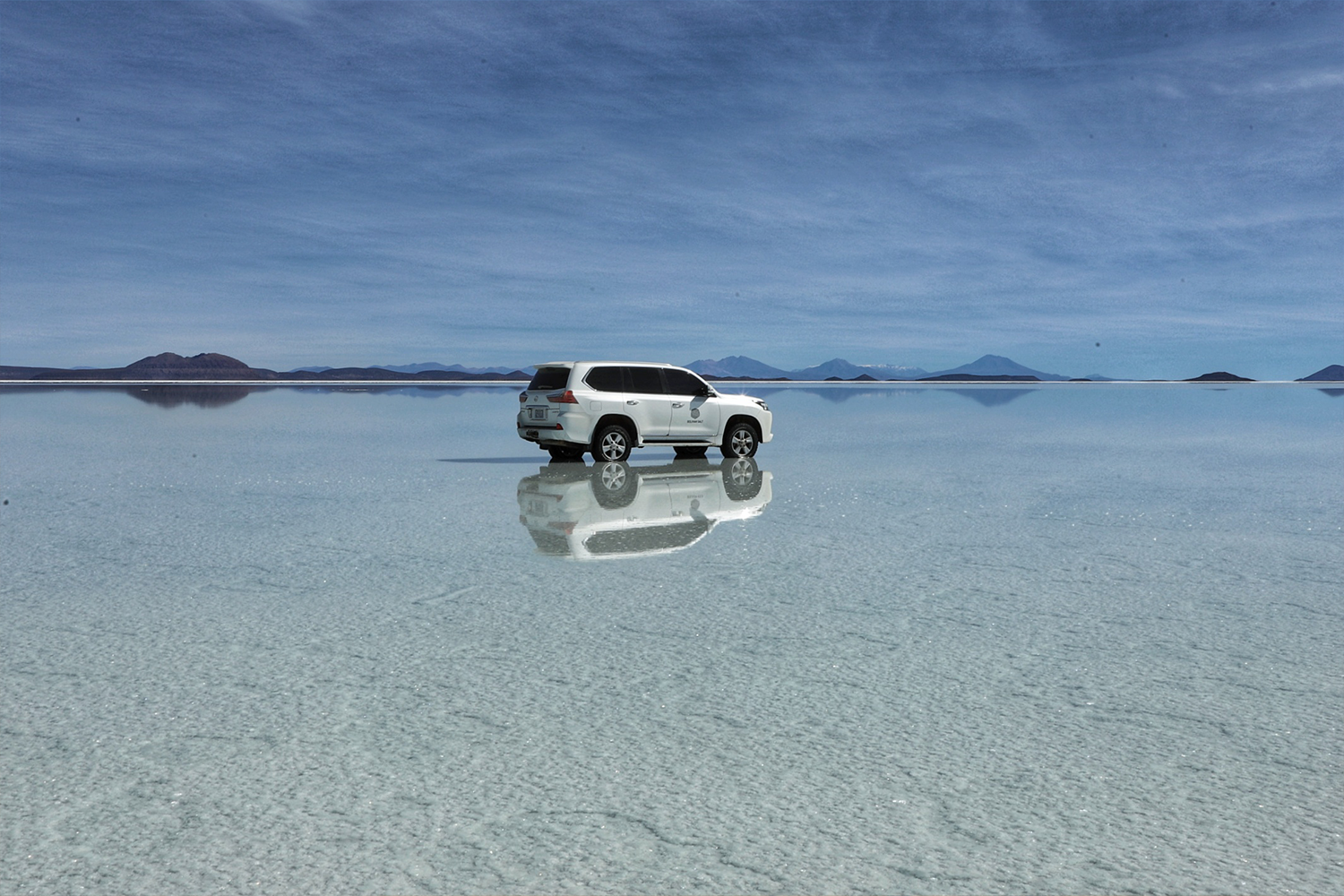
Our comfortable, rugged ride is an Lexus LX570 — basically the swankier, better appointed Toyota 4Runner — and it’s up to the task of a week in the mountains and across the salt flats with nary a road in sight. That’s not hyperbole, as from the time you cross that very official and not-at-all sketchy border into Bolivia until you’re done with your trip, you will not be on a single paved road. Roads are mere suggestions, dirt remnants of paths prior taken, as you traverse overland through the unmarked expanse. My gratitude for the deft navigational abilities of driver “Johnny Bravo” knows no bounds.
As captivating as Atacama had been, from this point forward my sense of anticipation for reaching Uyuni kicked into high gear. But first, a few jam-packed days of roving across Bolivia’s Altiplano.
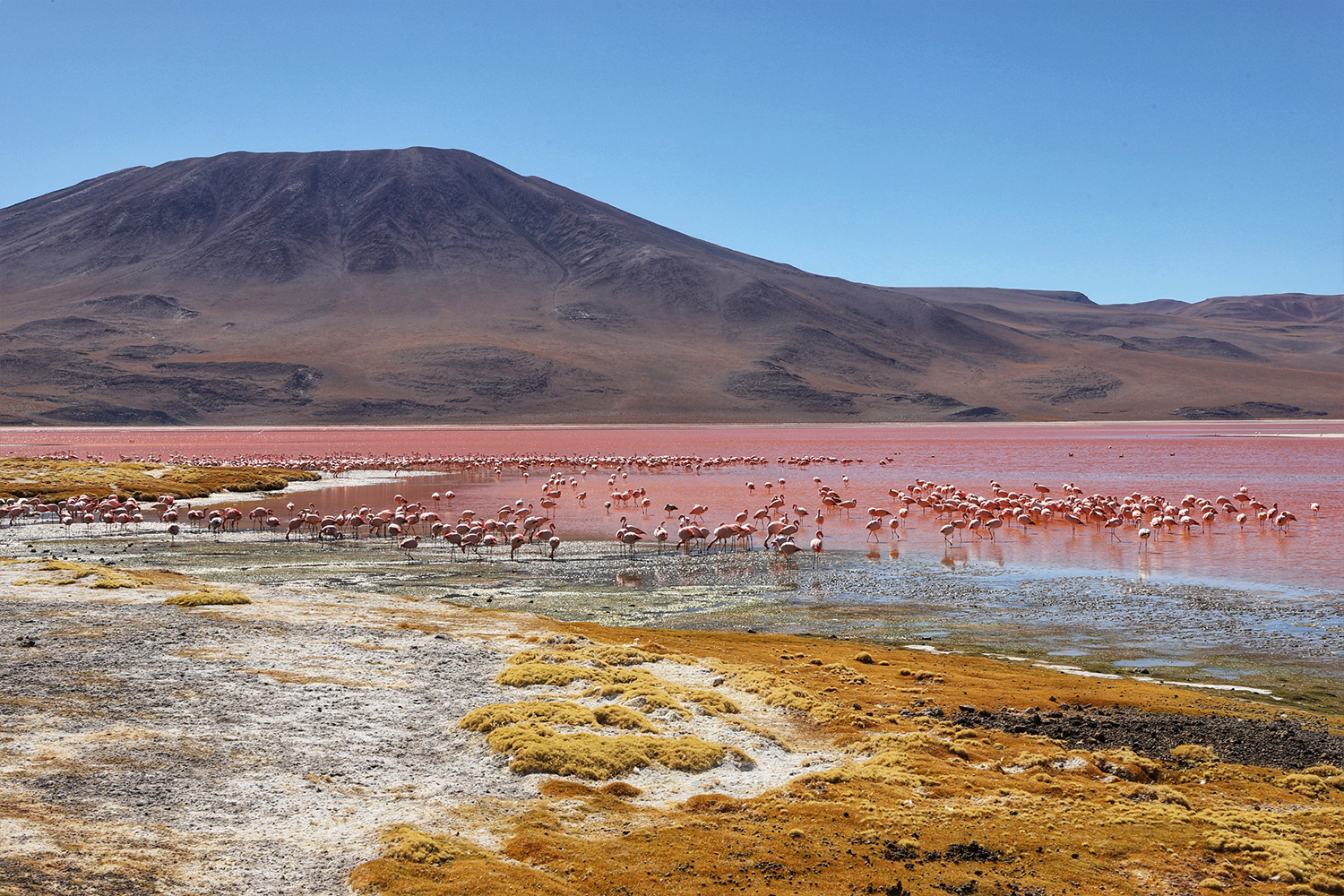
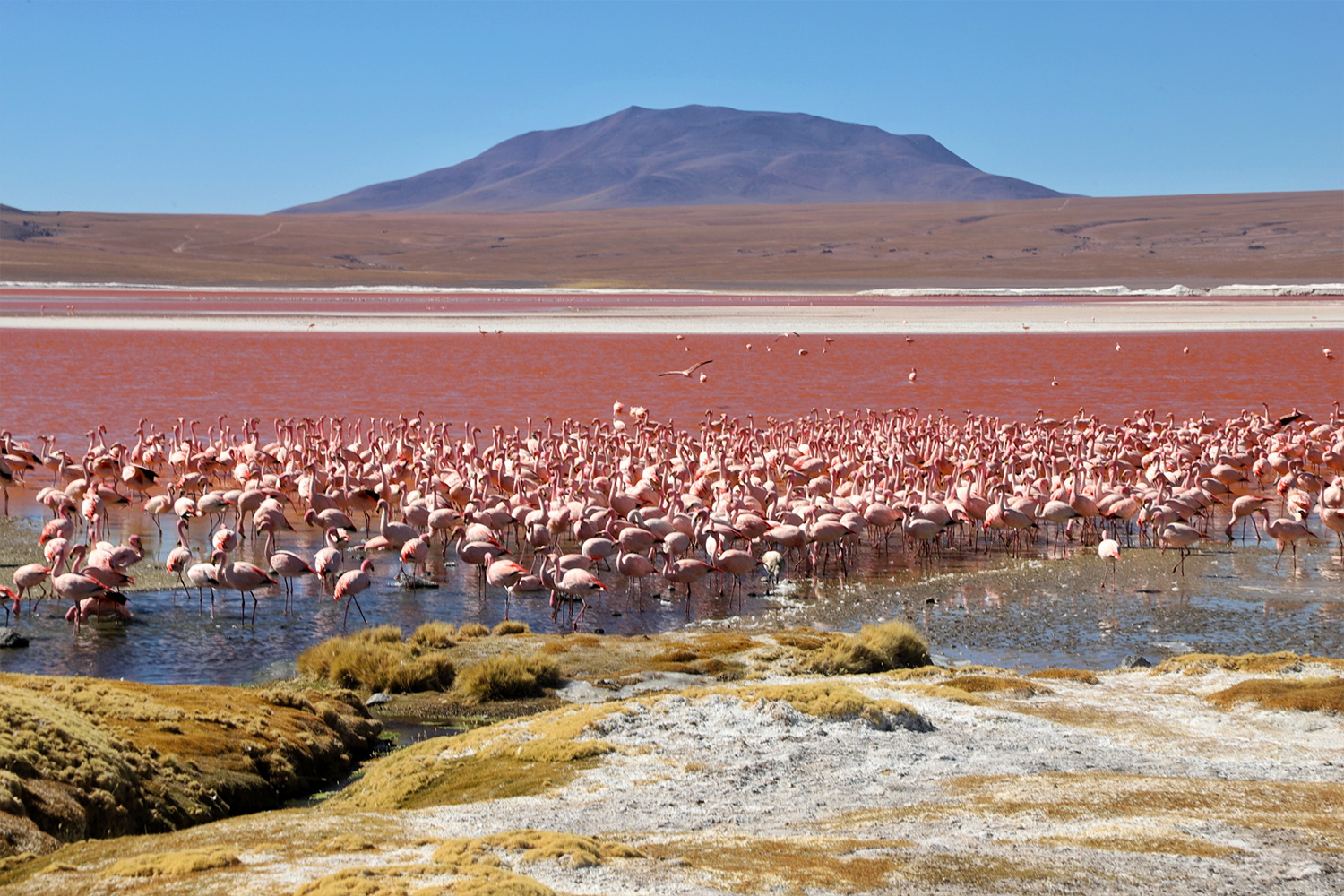
Its mineral-tinged lagoons take on an abstract palette of colors: milky white or pale green, rusty orange, deep red or bright blue. There are volcanic mud pits and fumes at 16,100 feet elevation, the high point of the trip for those who don’t make a mountain climb. And even at that elevation, three miles above sea level, there are still gigantic peaks lurking in the background, the Andes towering above all. There’s the Dalí Desert, with its wavy, multi-hued rock formations. There are 30,000-strong flamboyances of flamingos, incorporating three of their six different species in one locale.
Spending a full day in the car has never been so much fun, with one stunning sight and unforgettable scene after another. You observe, you get out and walk or hike, you photograph, you do it again, the vehicle muscling its way through as fast as the desert and mountains will let it. Which is to say: not very fast at all.
The Travesía Experience
That measured pace is also by design, and a key part of what makes an Explora Travesía so special is that they are the only high-end operator with multiple lodges spread across the vast territory. You get to immerse yourself in the surroundings in a way that no other traveler in the region can. In addition to Explora’s large, resort-style home in Atacama, it has three Bolivian mountain lodges in Ramaditas, Chituca and Jirira, at elevations ranging from about 12,000 to almost 13,500 feet.
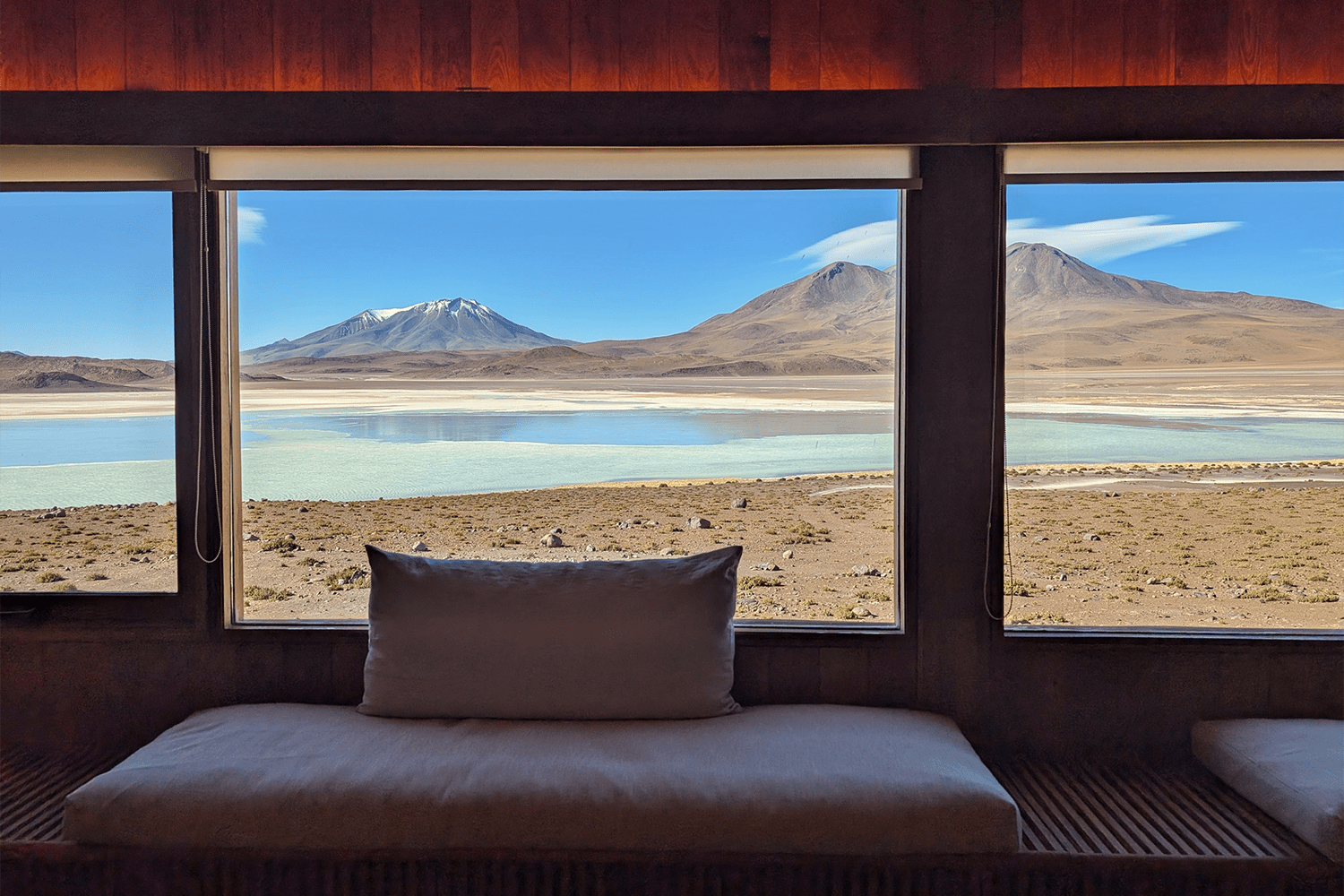
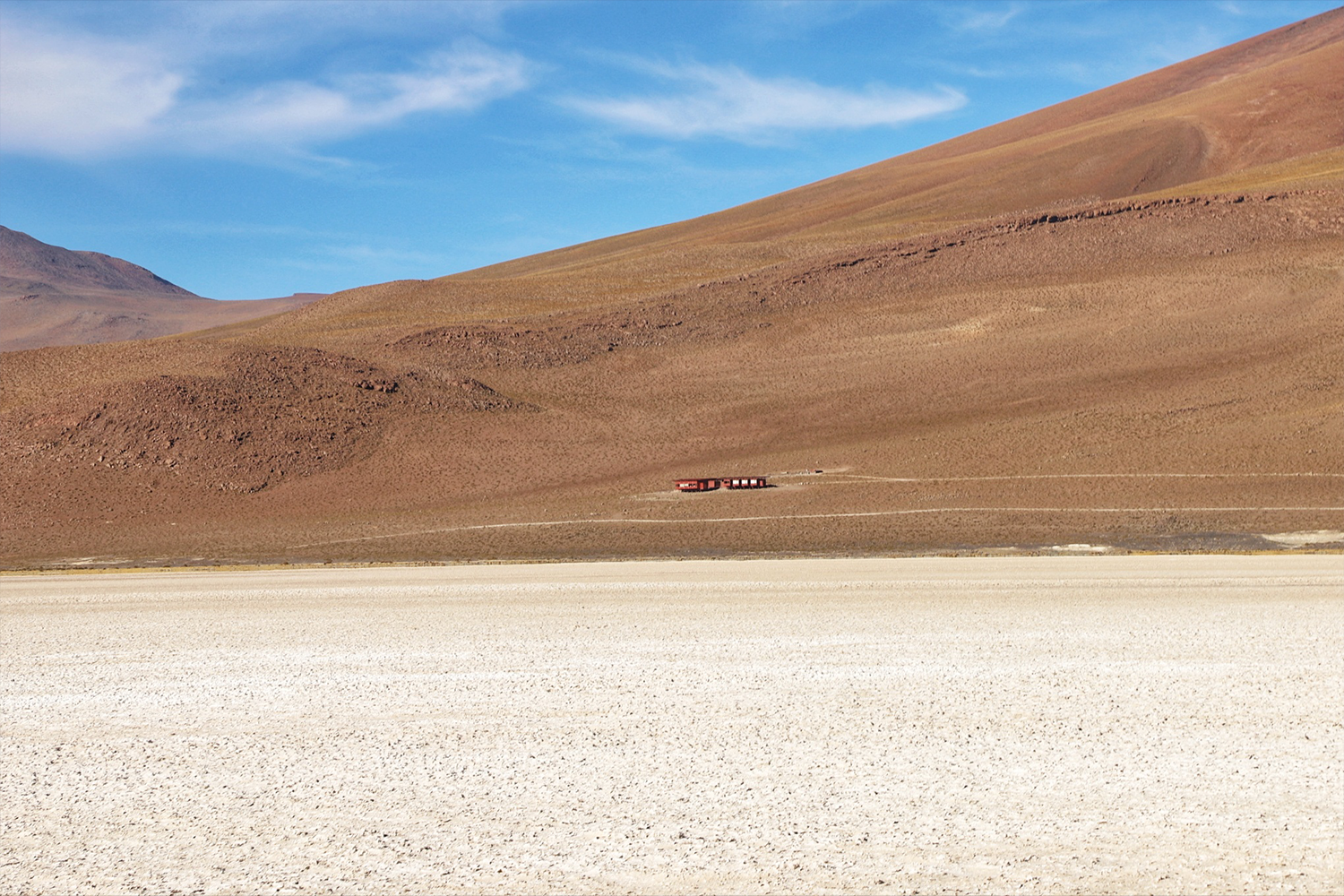
Their lodges in Bolivia are isolated to the extreme. Consisting of what almost appears as a few repurposed, stitched-together shipping containers dropped into the middle of wilderness, they are models of low impact tourism investment. Each of the lodges has the same blueprint, only varying in room count from between four to six, and they’re all located on land leased from native peoples. The buildings will be able to be taken apart and removed with a leave-no-traces ethos via architect Max Nunez’s modular, prefabricated structures. Whenever it might be time for Explora to pack up and be on their way, it’ll be as if their lodges were never there.
Rooms at the lodges feature cozy, quaint interiors with natural woods and fibers, with a common space lounge and dining room where excursion-planning sessions are held and nightly multi-course dinners are prepared by a local staff. The most luxurious aspect of the lodges is no doubt their settings, providing a pinch-me backdrop to every moment of your stay, and with ample windows bringing the ethereal surroundings into each room, you need nothing else. Pure isolation amid the elements, in comfortable style, with impeccable vibes. Whatever the Bolivian version of hygge is, this is it.
Bolivia’s main appeal is this type of wild environment, its abundance of natural beauty and the diversity of its terrain. That’s why even those in the tourism industry are working to ensure that the country retains its particular magic. “Bolivia has that kind of extreme remoteness to offer, with beautiful places to go but where you won’t always see a lot of people,” Villarroel says. On a typical overland journey day, there may be no more than a few other vehicles crossing your path from sunrise until sunset.
Still, there’s room to grow and ways to improve: facilitating easier visits for international travelers, building up infrastructure, increasing job opportunities. “The best year for tourism in Bolivia was 2019, and because of the pandemic, everything stopped and we’re not back yet,” Villarroel says. “If you ask me, Bolivia can receive more tourism.”
But the focus must remain on not just showcasing, but protecting, the epitome of the country’s earthly brilliance, the Uyuni Salt Flat. “The ultimate goal is to preserve,” Villarroel says.
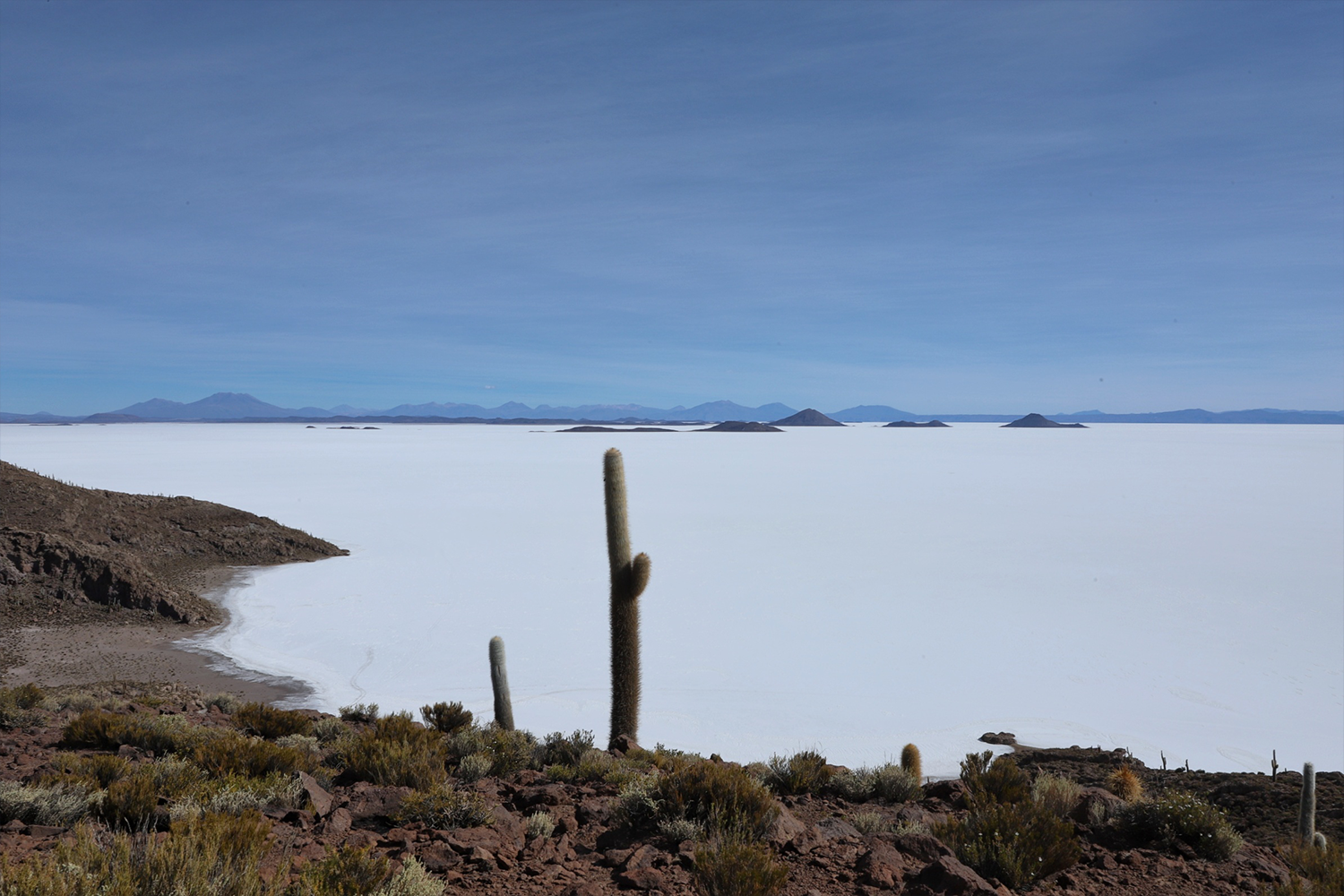
The Salar de Uyuni
You might be wondering how the Altiplano — the high plateau — and its 11,995-foot elevation salt flat even got here. The super short version is that over millions of years as tectonic plates collided and the Andes were formed, the at-first underwater mountainous formation split into divergent eastern and western ranges. As the two sides each raised up higher, the water above was trapped within the basin between. As this sea morphed into a series of lakes and then evaporated over the eons, the salt flat itself remained, trapped within the mountains as if it was dropped down into it.
The salt flat has an area of 4,086 square miles, and its footprint is expanding. “The salt flat is still growing,” Villarroel says. It’s almost the exact size of Lebanon, whether that helps you put things into perspective or not.
Not only is it increasing its scope, it’s also ever-changing. “The salt flat is very dynamic,” Villarroel says. Its thickness is also highly variable, starting as a thin crust on its shores and then increasing in depth as you move to its interior, where there can be a salt depth ranging up to 10 meters. Its deepest bounds may be more than 100 meters.
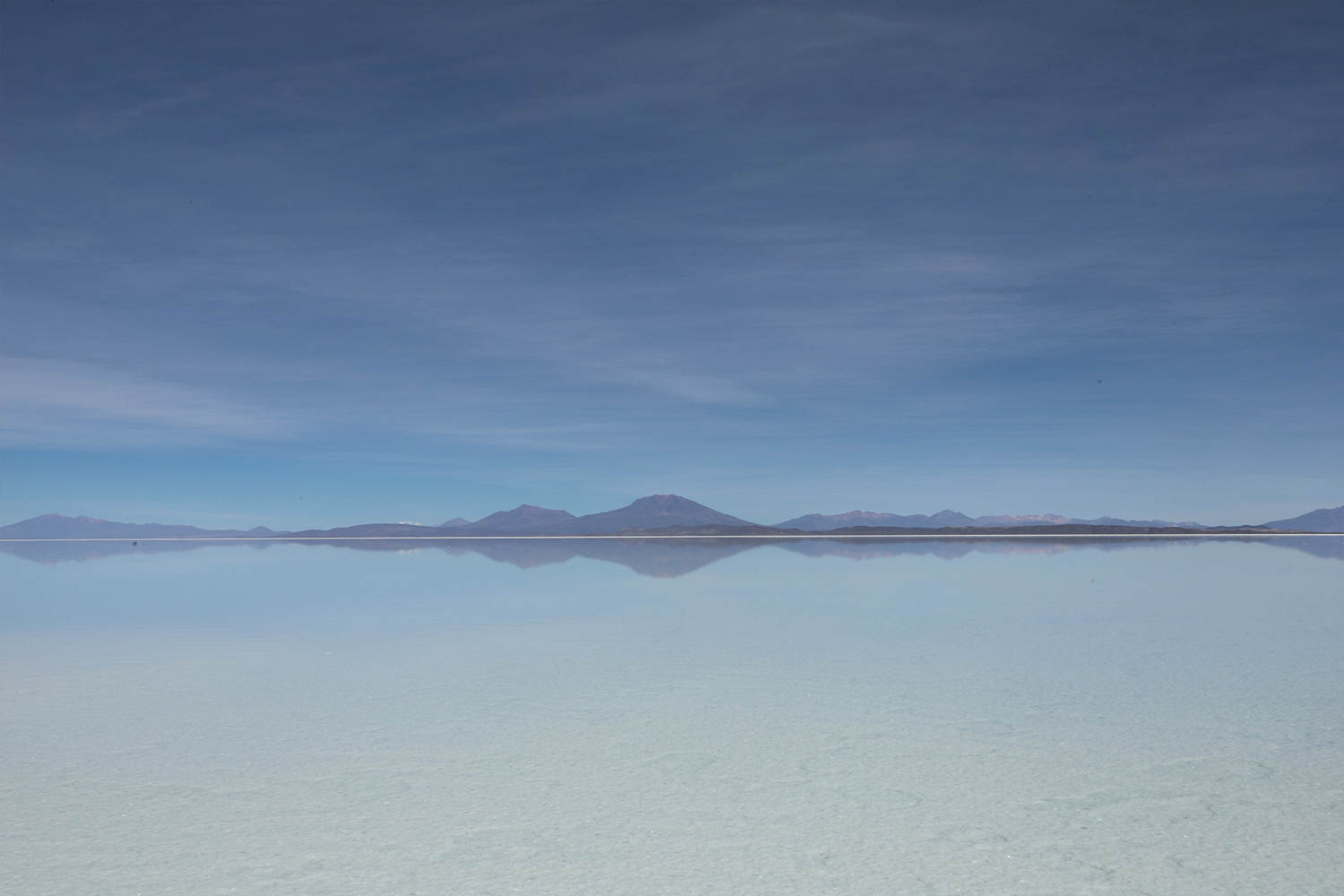
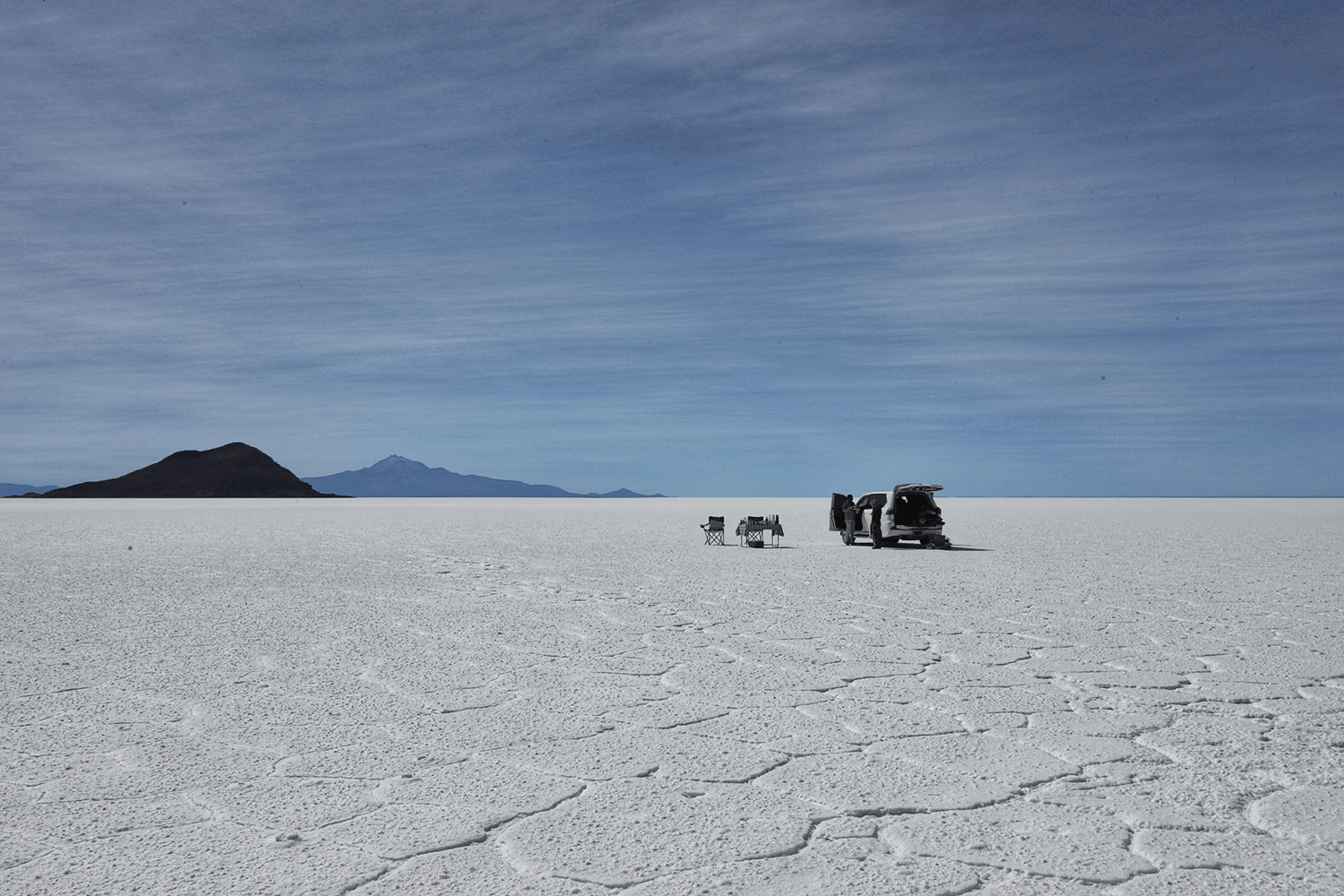
During the wet season, or in its aftermath before lingering water has evaporated, a sheer reflective surface will stretch as far as the eye can see, and on wind-free days, a majestic mirrored lake will appear. Driving through the water, even if there’s only an inch of it, would be a painful process if it weren’t so breathtaking. You’re forced to maintain a glacial, consistent crawl — we covered about 15 kilometers in two hours — because splashing your vehicle’s underboard and electronics with the corrosive saltwater would fry them right quick. The even keel and steadiness of Johnny Bravo, the cabrón himself, knows no bounds.
Gliding through that shallow, reflective water while approaching the white salt land or “shore” at its edge feels perhaps more like driving atop the frozen ice of a freshwater lake and approaching instead the snow-covered land surrounding it. Islands rise up within the flat and from a distance appear as if they are the peaks of mountains rising above cottony cloud cover. But they’re rocky outcrops amid a dry sea, islands you can drive to instead of docking at.
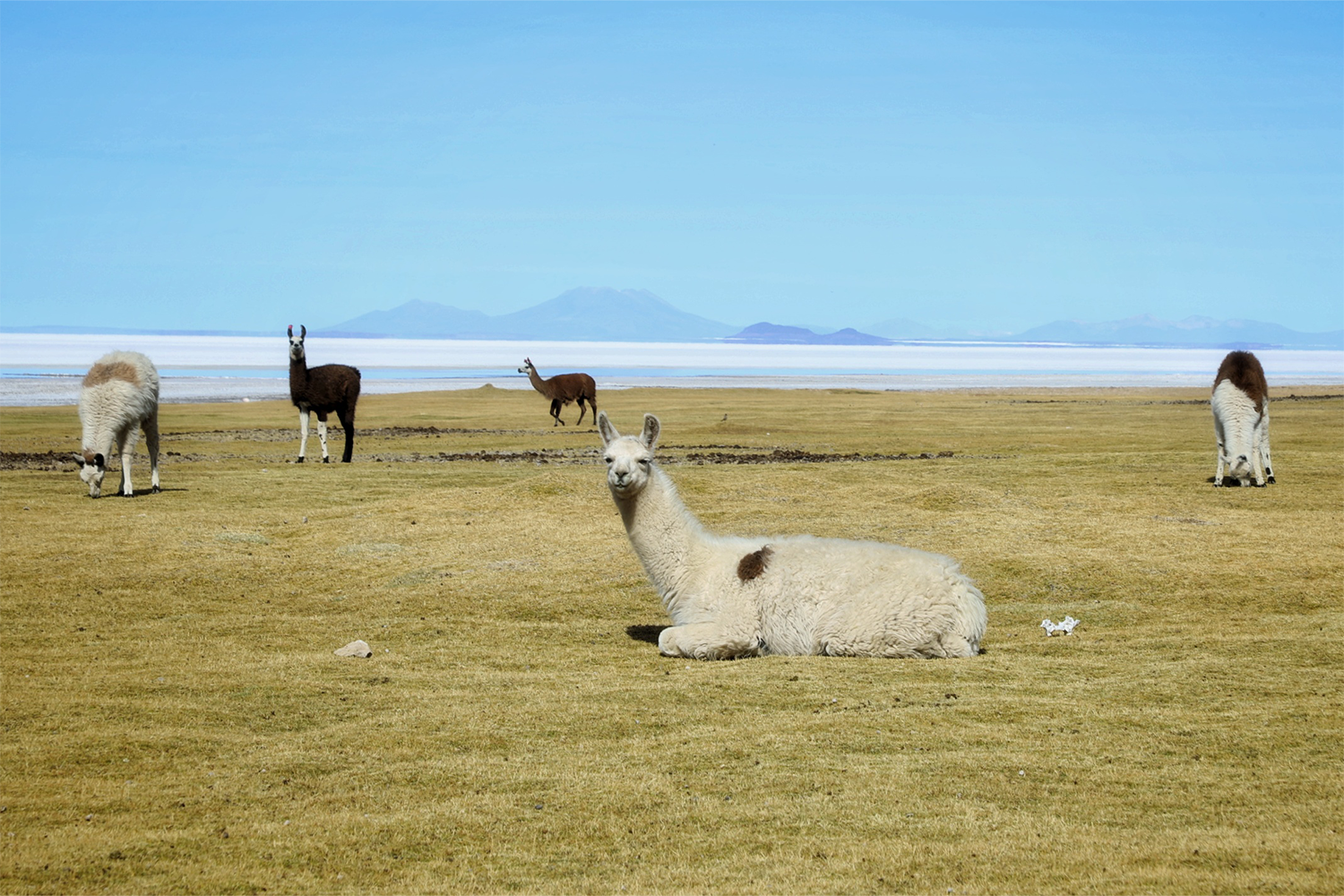
On my last full day in Uyuni, we walked through marshy terrain filled with grazing llamas before hopping on fat-tired mountain bikes for a session of salt flat cycling. The salt gave way with a pleasant crunchiness as we cruised over the surface of the Salar, and it struck me once more with clarity that there was absolutely not a single other soul around, llamas excluded. (No offense, guys.)
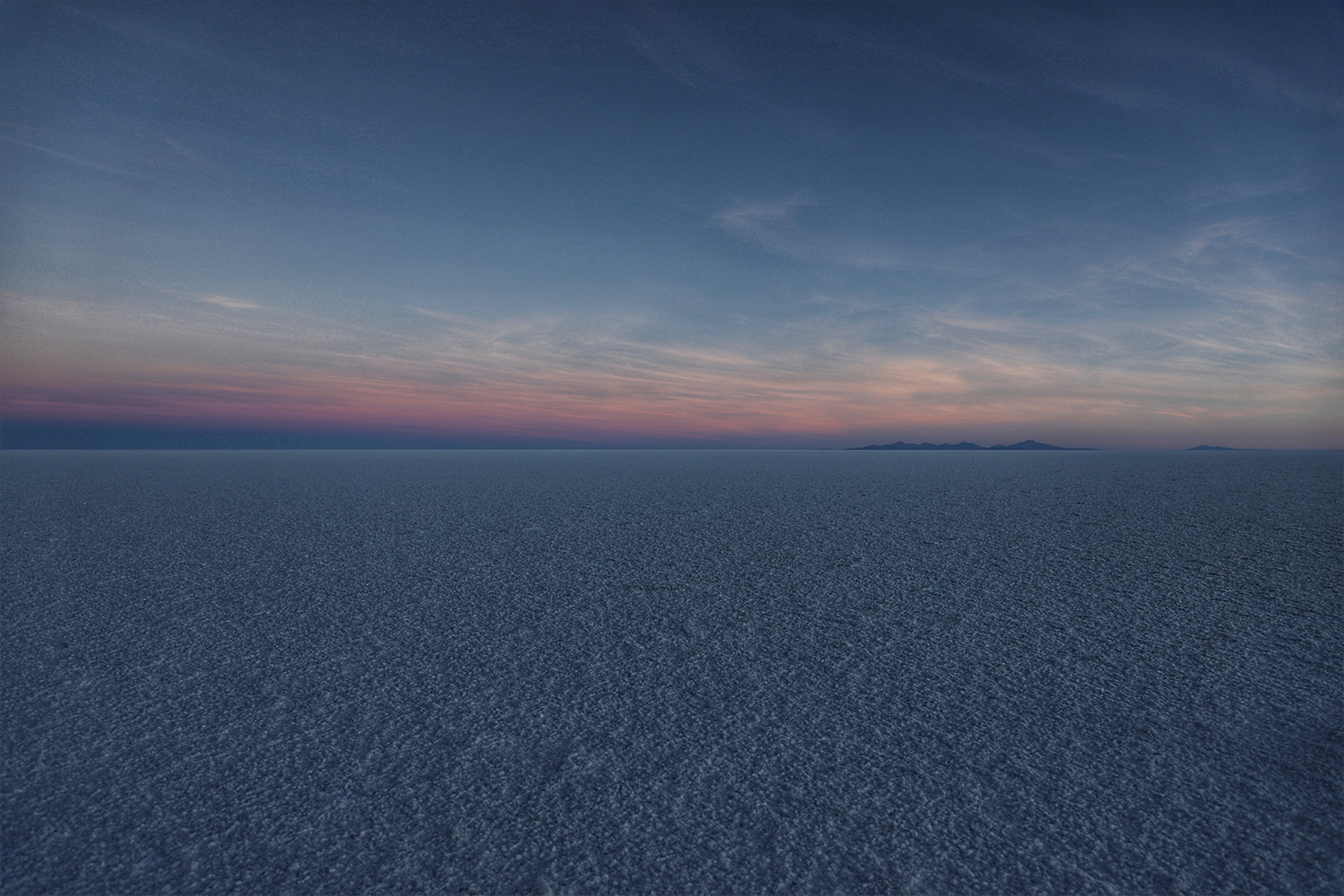
Then and there, Uyuni was my personal playground amid one of the world’s most incredible landscapes. Why aren’t there more people coming here? For the sake of the land’s preservation — and in honest selfishness for being able to enjoy it in this fashion — I’m glad they aren’t.
The sun reflects off the salt and creates a shining, blinding canvas of white. The jagged spires of Volcan Tunupa are soaring upwards to 17,457 feet on my left, and to my right, it’s an all-encompassing blanket of salt. As dusk approaches, it soon becomes the setting for one of the most sensational sunsets you’re bound to ever see. You can find a great beach sunset anywhere, but the pastel colors showcased here as the salt flat transforms, seemingly flipping a switch from sheer white to pitch black, cannot be replicated. Night emerges in an instant and the temperature plummets as many thousands of stars begin popping up and announcing themselves.
It is sui generis. You need to see it, feel it, breathe it, to understand, and for the lucky few who have managed to do so, Bolivia’s Uyuni Salt Flat reigns supreme as an achievable, though inimitable, adventure.
More Like This
This article appeared in an InsideHook newsletter. Sign up for free to get more on travel, wellness, style, drinking, and culture..