

How do airlines calculate the fares that you see when booking a flight? The answer varies from airline to airline, and there are some mysteries in the process, as the controversy that erupted last month over solo travelers being charged more than people traveling in groups indicates. With AI gaining ground in various industries, it’s not exactly a shock to hear that airlines are using this technology to set some fares, but the extent to which at least one is embracing it might come as a surprise.
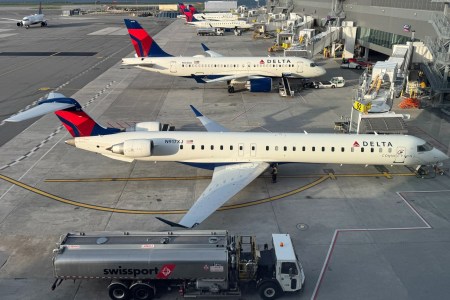
That airline? Delta. In an article for One Mile at a Time, Ben Schlappig has more details on what Delta is currently doing — and what their plans are going forward. Citing comments made by Delta’s president, Glen Hauenstein, on a recent earnings call, Schlappig writes that Hauenstein shared plans to dramatically increase the role AI plays in calculating airfares.
“[T]oday, we’re about 3% of domestic. Our goal is to have about 20% by the end of the year, and that’s a goal,” Hauenstein said on the call. “I mean, we can report back on what the actual numbers are. But you have to train these models as you might and you have to give it multiple opportunities to provide different results. So we’re in a heavy testing phase.”
Delta has partnered with the company Fetcherr, whose website touts their use of the “Large Market Model (LMM), an adaptable AI engine that forecasts demand and market trends with precision, empowering real-time decision-making.” Last year, Fetcherr raised $90 million in funding for its products. “Fetcherr employs AI to generate optimal market moves, dynamically optimizing pricing and automating real-time publishing of prices,” the company’s CEO, Roy Cohen, told TechCrunch last year.

Delta Announced Changes to Its Seating Options. Some Travelers Aren’t Pleased.
What’s the difference between a product and an experience when flying?The rise of AI technology isn’t the first time airlines have utilized algorithms to calculate airfares. The travel site Kayak first rose to prominence in part because of its ability to predict whether a given fare would go up or down in the coming weeks or months.
That raises the question: how will this new development differ from previous algorithmically-generated fares? Schlappig’s analysis suggests that it won’t be great for travelers. “I’m also not sure it’ll have a radical impact, simply given the competitive landscape,” he added. If you’re traveling via Delta and you notice a dramatic change in airfares from last year to this year, this new technology might be at the root of it.
More Like This
This article appeared in an InsideHook newsletter. Sign up for free to get more on travel, wellness, style, drinking, and culture..