

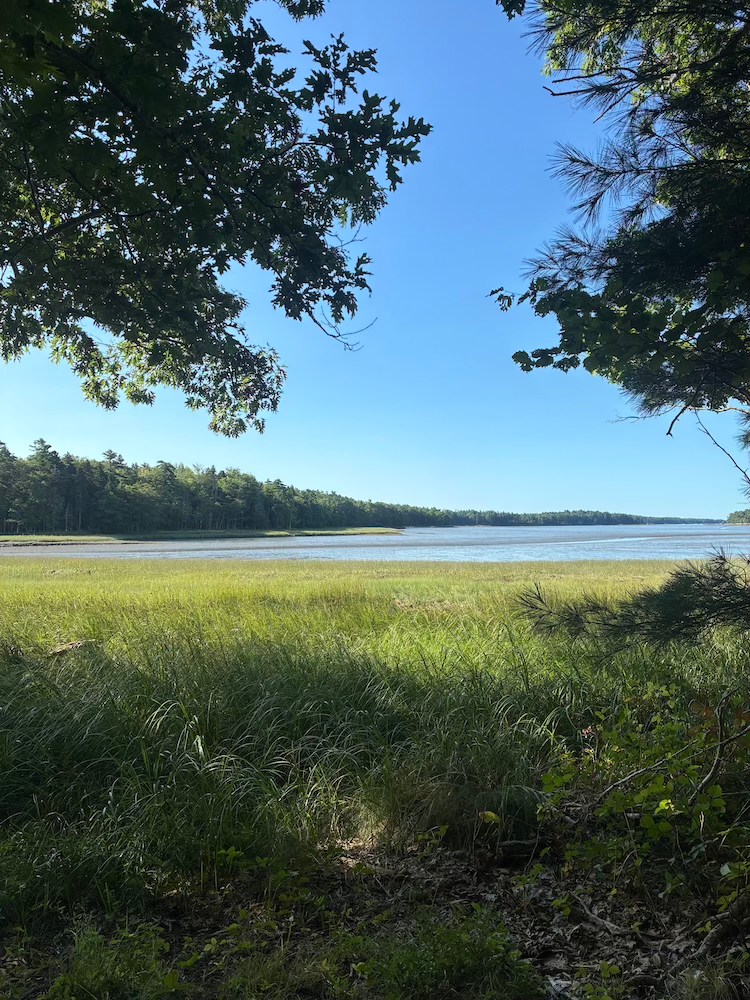
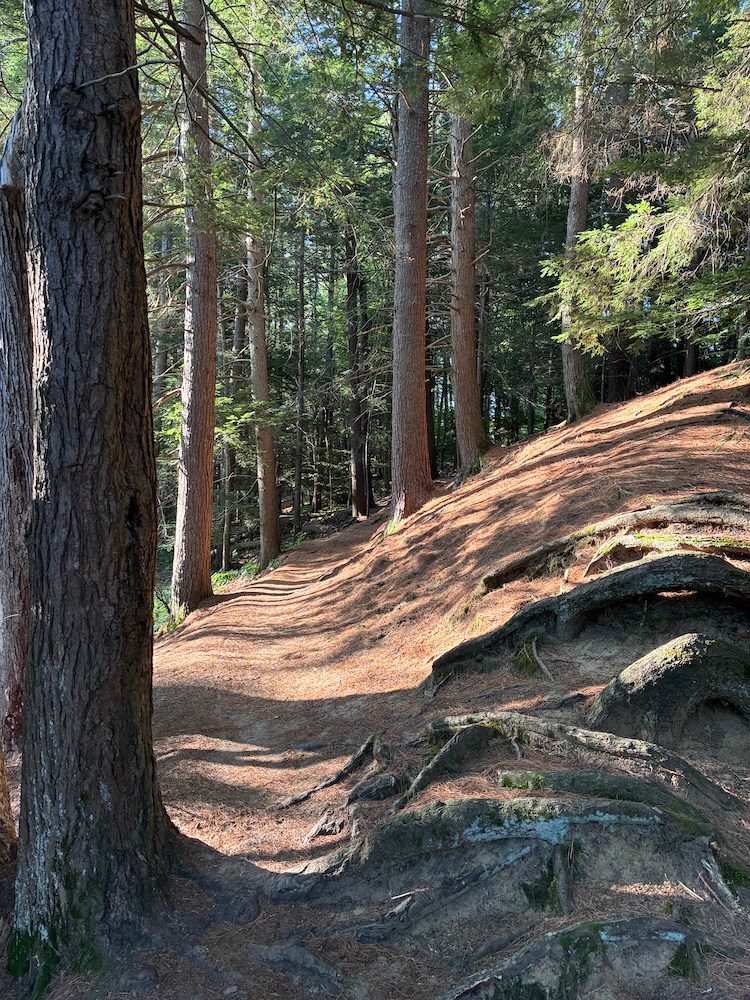
For about 40 years, I’ve been running the same trails, in the same town, in the same state where I’ve lived all but a few seasons of my life. This loosely connected system of winding footpaths, faded singletrack and rutted roads has no official name. Even to call this collection of trails a “system” feels overly conceptual. Like many parts of Midcoast Maine, neighborhoods like the one I grew up in (and where I still live) tend to exist on the fringe of the forest, and the forest on the fringe of the ocean. The trails I run stitch all these worlds together like a poorly designed patchwork quilt.
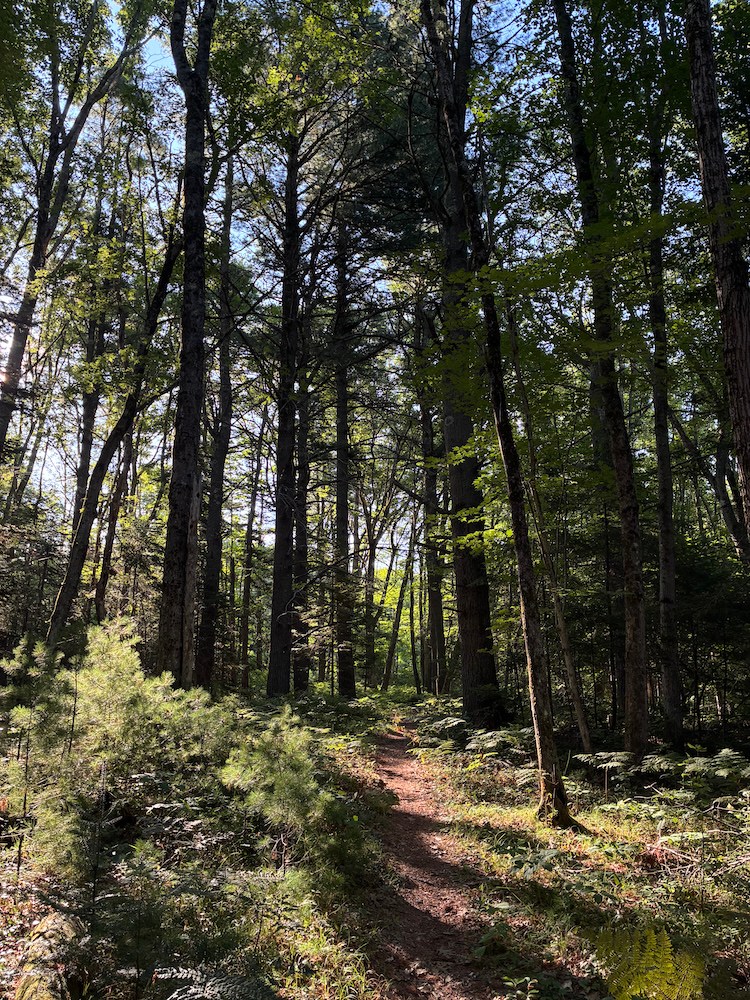
On any given run, I’ll likely pass through a couple woodlots, some fir glades, pastures and pine barrens. I’ll traverse a few low-elevation ridges, trace the shore of some mudflats and salt marshes, cross a handful of culverts, creeks and nameless ravines. Sometimes I’m running on conservation land, other times private property. In some sections, I’m passing through a 200-year-old town common. In the most feral regions, I’m sneaking around the former properties of a decommissioned military base. There are zero postings that tell you where one kind of land ends and another begins. On my way out of town, I might pass two or three people walking their dogs on a busy day. Once I’m a mile or so into the woods, everyone just disappears.
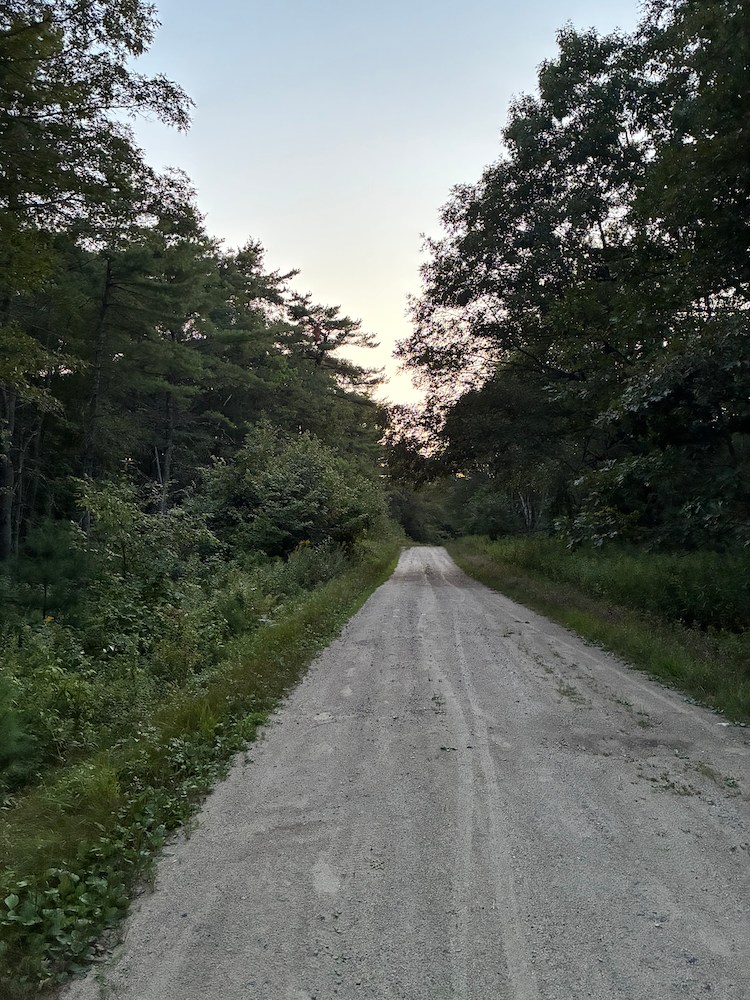
The trailheads are, in most cases, identifiable only by random and mostly indecipherable ephemera: a cement piling with some broken rebar sticking out, a “Deer Crossing” sign overgrown with roadside bramble, a few sagging chains where you can enter the treeline through a shadowy portal. In some of the more developed areas, there are little maps expressing what the trails might look like if seen from above, with some vague accounting of mileage tacked on. But I’ve been running on these trails long before the signs and maps showed up, so trust me when I say the abstract visuals do little to capture the experience on the ground.

I Don’t Map My Runs
The only technology I’ve ever used to map my runs is a basic digital watch that tells me when I start and when I finish, how many hours and minutes I’ve been out, and whether or not it’s time to get back home for dinner. (My current model of choice: a black and orange Casio Illuminator that I bought at my local Walmart for 16 bucks.) The only data I really keep is a vague sense of how long it takes me to complete a series of loops that I run in a mostly random sequence (which I commit to in my driveway before I head out). These metrics emphasize only what I already know: as I approach 50, I’m not getting any faster.
Despite what the internet suggests, running deeper into the places we’re from, rather than wider into the places we’re not, might have something to teach us about why we run.
The more interesting map is generated by the semi-mystical process of repetition. When I was 12 or 13 years old, I started running portions of these trails, maybe three to six miles at a time, and about once a week. Since my early 30s, I’ve been running these trails seven to 15 miles at a time, around four to five times per week, with a couple big breaks between injuries. If I had to slap a number on my accumulated runs, I might say it would total well over 2,000, maybe even closer to 3,000. The number of miles I’ve logged on these trails is big enough to be irrelevant. Call it 20,000. But who cares?
For me, the revelation here is that by logging a few thousand runs on the same trail system for thousands of accumulated miles and for decades on end, I’ve started to understand something about how intimate the relationship can be between my body, my memory, the land, the ocean, time, space and the little trails that bind them all together.
Waypoints of the Past
If I close my eyes, I find that I can glide, dreamlike, through just about every contour and corner of this trail system — akin to those national park videos that play on little treadmill screens.
Along the way, I run past half a life of experiences that stand like little waypoints of the past: here’s where my buddies and I built a moss-covered hut that has since been reclaimed by a swamp; here’s the hill where we always fashioned a giant kicker on snow days, practicing daffies and backscratchers until the sun went down; here’s where I used to chase my dad around a long-defunct fitness course whenever he came to visit me on the weekends.
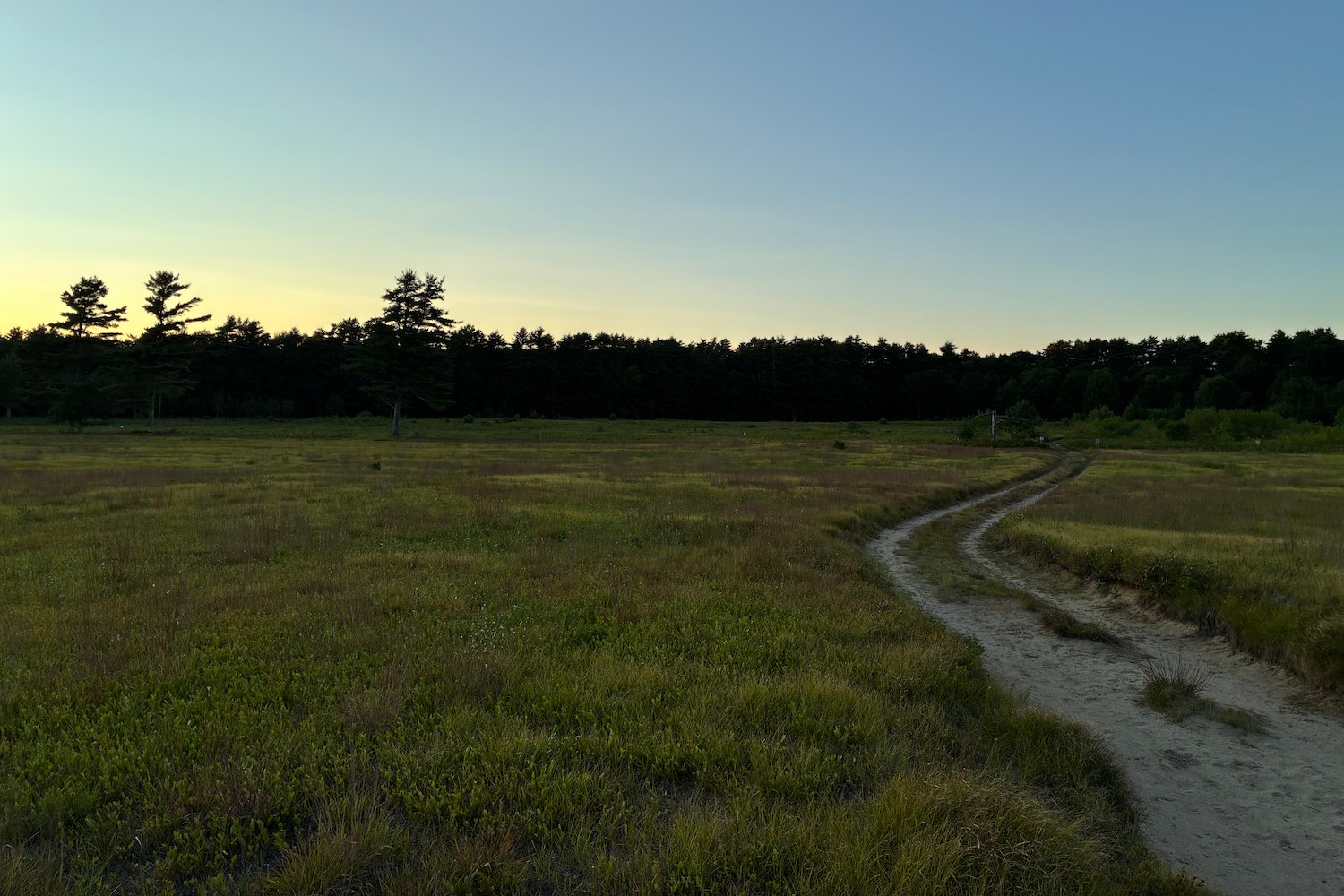
Here’s the blueberry field where, under a full-moon solstice, I experienced the greatest running hours of my life, on an evening that somehow (predictably?) prompted a major argument with my wife about why I spend so much time running around the woods. Here are the agricultural fields where, in recent years, Somali women adorned in colorful dirac have started to harvest vegetables — a cultural signifier that, as a boy growing up in a very different Maine, I could never have imagined. Here’s the little gorge where, at the golden hour, I’ll often often find a small herd of deer that, on more than one occasion, and for a few seconds at a time, have let me run among them before they disappear on trails even less knowable than mine. Here are the little ponds, no bigger than a coffee table, where I sometimes catch sea-run brook trout before they go back out to sea.
None of this information can be captured in units or shared in two dimensions. No technology can enhance what I’ve gained by running in the same place, throughout radically different seasons, across radically different phases of my life. It has no shape or form, cannot be uploaded to any platform, and therefore has no value to anyone besides me. A few times, I’ve run these trails with friends who track their runs on watches and apps. Maxed out, the entire trail network is something like 30 miles long, and takes about four hours to complete. You’d have to ask them the estimated vert. All I know is that if I start it sometime around sunrise, I’m always back in time to coach my kids’ soccer game.
The Same Land and Sea
Here is something that I’ve been wrestling with in recent years: I’ve logged miles in some of the most charismatic and heavily YouTubed wilderness areas of the country — the Grand Canyon, the San Juans, the coastal ranges of Southern California, the White Mountains and North Woods of New Hampshire and Maine. On these runs, I’ve crossed valleys and climbed to vistas that have made me dizzy with awe. But my memory of these experiences exists mostly as a gallery of scenery and fun — I ran around, saw some really beautiful places, had a good time with friends and returned home happy, blistered and tired. Despite having left a pretty massive carbon footprint flying around the country, I guess there’s nothing wrong with any of this.
But no part of my past is carved into the topography of these runs; the routes themselves do not float holographically across the strange cartography of my subconscious. To find this kind of deep connection, I’ve had to stay in the same place, return to the same land and sea, and run the same trails over and over and over again, far beyond the normal threshold of boredom, repetition, tedium and fatigue.
Despite what the internet suggests, running deeper into the places we’re from, rather than wider into the places we’re not, might have something to teach us about why we run. Unfortunately, the only way to train this deviceless technology is by feeding it the same kind of information day after day, year after year, with very little to show for it beyond the invisible maps inside your head.
More Like This


Twice a week, you'll find guinea pig features, personal essays and expert interviews on living better — for however long you’re here. Subscribe to Champ now.