
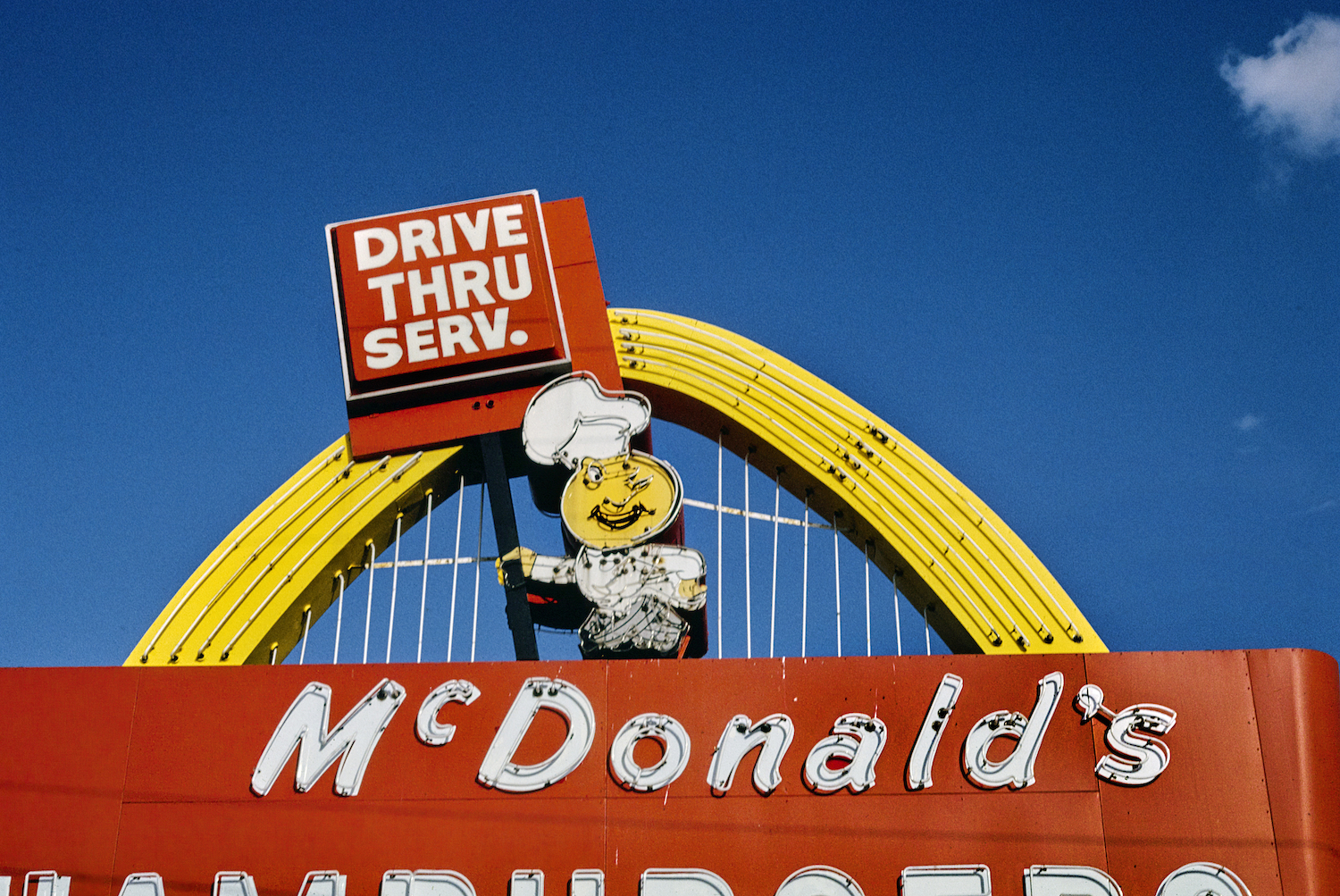
My fiancée grew up in another country and doesn’t watch sports, so any time I have the game on, she’s flabbergasted by the American advertising experience. It’s mostly gambling apps and pharmaceutical drugs, but whenever fast food slams onto the screen, I ask her, Would you eat that? She always wrinkles her nose. Oh my god, absolutely not.
Her disgust is justified. Not only is fast food usually fried and chock-full of artificial flavors, the specific fast food that appears on TV is sometimes styled with motor oil, hairspray and even glue. That’s a tough bite.
Still, I assumed she was in the minority. A good chunk of Americans must really appreciate the work of food stylists, right? These adverts keep making it through focus groups, and food marketing commands an annual budget of at least $14 billion (a figure from 2017, in which 80% of spending promoted fast food, sugary drinks, candy and unhealthy snacks).
All to say, I was very surprised to learn that gazing at glistening buckets of ultra-processed crap seems to make you want it less.
Visual Indulgence
According to a recent study, “visual indulgence in unhealthy food content can reduce subsequent actual consumption.” The authors had dieting participants consume content from a food blog and observed that A) they were more likely to engage with unhealthy food than healthy food and B) that engagement reduced real-world consumption of unhealthy food.
How is that possible? Were they disgusted by the dishes, like my fiancée? Nope — they were satisfied. Images and videos of unhealthy food scratched a “visual” itch, which then diminished their “gustatory” cravings. The authors call this process “cross-modal satiation.”
“Our results also show that viewing food-related media does not directly lead to increased consumption for restrained individuals,” the authors write. “Instead, browsing food images may serve as a self-regulatory strategy to help prevent overeating.”
Suppression Backfires
The paper mentions various applications for this information, suggesting it could be put to use by public health leaders, marketers, content creators, etc. Perhaps Arby’s should stop showing us the meats all the time, as apparently it’s bad for business.
At the personal level, this is a fascinating look at our relationship with suppression. The participants who were told to suppress thoughts about unhealthy food were the most likely to watch more content about it — and eat less of it. It’s possible that embracing content about something you’re trying to avoid is better than trying to avoid it.
It’s also interesting to see a rare scientific case for more media, in an era when screen time and commercials are very much the big bad. But I think the key here is thoughtful consumption with a clear purpose. If there’s a food you’re trying to eat less of in the year ahead, consider finding a few seconds to gaze at it like Homer Simpson. Then snap back to your day, satisfied.
More Like This








Twice a week, you'll find guinea pig features, personal essays and expert interviews on living better — for however long you’re here. Subscribe to Champ now.