

Functional fitness was never something I was interested in when I was younger. Instead, my 20s were all about vanity workouts. Anything that could get me to sculpted abs? Sign me up. It wasn’t until I became old enough to groan while getting out of a chair that I became more concerned with my mobility and how to maintain it.
Research shows people experience a loss of mobility with age, resulting from “multiple impairments in the central nervous system, muscles, joints, and energetic and sensory physiological systems.” These declines can make mundane tasks harder (such as carrying groceries), while increasing clumsiness and the risk of injury. Functional fitness helps slow this process down through workouts that mimic everyday activities, incorporating movements such as lunges, squats, twists and other simple yet effective exercises. That way, you don’t have to tell your buddies you hurt your back getting up from the toilet.
While investigating mobility hacks, I stumbled on a term I’d never heard before: “loaded stretching.” Recently popularized on social media, loaded stretching essentially refers to stretching with weights. Although it may seem like a new online trend, certified personal trainer Sergio Pedemonte notes that the concept has been around for decades and is often referred to under different names, such as “eccentric holds, deep stretch, or stretch under load.”
In contrast to concentric exercises, which involve contracting muscles to build strength, eccentric exercises lengthen muscles with the assistance of resistance. In Pilates, this is done through reformer machines; but resistance can also come from holding a weight.
As for what it can do for reducing daily aches, pains and potentially embarrassing injuries, “loaded stretching is great for mobility,” Pedemonte confirms.
The Benefits of Loaded Stretching
Instead of having to choose between building flexibility or strength, loaded stretching is good for gaining both. According to Pedemonte, eccentric loading is good for mobility because it stretches the muscle while still using it, “which makes it stronger and move better.” By lengthening and strengthening them, muscles and tendons increase their tolerance, allowing them to withstand more stress. “This builds muscle mass and improves range of motion while reducing injuries.”
A review of research shows that combining eccentric exercises with concentric ones improves speed, power and performance more effectively than strength training alone. There’s also evidence that eccentric stretches use less energy compared to other workouts, which means they are easier to adapt for people with injuries and varying physical abilities.


The Weird Little Move That Makes Your Hips Feel 10 Years Younger
One morning ritual could be your cheat code for long-term mobilityHow to Incorporate Loaded Stretches Into Your Workout
One example of a loaded stretch that you may already be doing at the gym is a dumbbell chest press. “The loaded stretch is in effect as you reach the end point of the rep, and the dumbbells are at the sides of the chest,” Pedemonte explains.
The difference with loaded stretches is that you’re going to want to use a lighter weight than traditional strength training. Pedemonte recommends using weights from one to 10 pounds. “Remember not to force the weight past your range of motion, but control the movement first through the range.”
Although eccentric exercises like loaded stretching are generally suitable for people of all strength levels, there is a risk of injury, primarily when performed with poor form or excessive weight. To manage these risks, avoid overloading with too much weight. And if you’re unsure about how to perform a specific exercise, Pedemonte recommends consulting with a trainer at your gym. With that in mind, here are a few simple stretches he recommends for you to load up on at home.
Loaded Stretch Hip Hinge
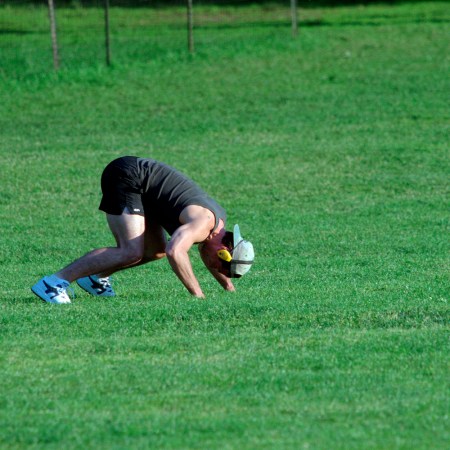
This eccentric exercise involves combining a standard hip hinge stretch with a light weight of your choice. Stand straight with your feet shoulder-width apart, toes pointed slightly outward and knees slightly bent. Hold a five to 10-pound dumbbell in each hand, with your arms straight down. Then slowly lean or hinge from your hips, keeping your back straight. As you lower the weights, “slow down or pause as you start to feel a strong stretch in the hamstring and glutes,” Pedemonte says. Hold for up to 15 seconds.
Eccentric Push-Up Holds
A loaded push-up is a push-up with the added resistance of weight on your back. However, a push-up hold does not require any added weight to be an eccentric exercise. By simply doing a regular push-up and holding the downward position for 15 seconds, your body weight provides the resistance. However, if you choose to add weight to the push-up hold, make sure to use a lighter load than you would for a standard loaded push-up, since you’ll be holding the bottom position instead of moving through the full rep.
Eccentric Goblet Squat
This one’s like a push-up hold, except you don’t need to add weight for an eccentric deep squat. The resistance comes from holding the squat position. However, for added tension, hold a five-pound dumbbell at your chest.
Stand with your feet slightly wider than shoulder-width apart and toes angled outward. Slowly and with control, lower your body while engaging your core, bending your hips and knees, until your hips are below your knees. Hold in the lower position for anywhere from one to 15 seconds. For added stability, Pedemonte suggests holding onto a doorknob or a tree.
Doorway Stretch
While loaded stretching involves combining stretching with resistance, a doorway stretch or pectoral stretch is an excellent example of how everyday items around the house can add a little tension to eccentric exercises. Stand in a doorway and place your arms at a 90-degree angle with your forearms on the frame. Step forward with one foot and hold for 15 seconds on each side. For added tension in chest muscles, lean forward slightly.
Hamstring Stretch With Resistance Band
Lying on your back with one foot in the air, place a resistance band on the middle of your foot, and pull back with your hands. Hold on each side for 15 seconds. The simple stretch is proof that loaded stretching doesn’t have to be complicated, and sometimes you can do it lying down.
The Bottom Line
For me, the best part of discovering loaded stretching was learning that a majority of the exercises I was already doing were already iterations of loaded stretching. Now, with a better understanding of how eccentric movements work and why they’re crucial, I can approach my hip hinges and squats more intentionally to maintain mobility. Learning to pay more attention to things in life that used to seem inconsequential is a significant part of growing older. As it turns out, my aging back is no exception.
More Like This



Twice a week, you'll find guinea pig features, personal essays and expert interviews on living better — for however long you’re here. Subscribe to Champ now.