

I am one of those guys who thinks about the Roman Empire a lot — like pretty much daily. I’m enamored with Rome and its history, partly because my family hails from the region, partly because it’s just fucking fascinating. And out of all the tidbits, facts and cultural kernels there for the taking, there’s nothing more interesting than the food culture of Rome.
Katie Parla — a food writer, culinary guide and cookbook author who’s been living in Rome for almost 25 years — couldn’t agree more. Her deep love for the history and culinary landscape of the Italian capital comes to life in her newest tome, Rome: A Culinary History, Cookbook, and Field Guide to Flavors that Built a City. Not only is it filled with delicious recipes and tips about eating in Rome right now, it opens with a robust history of how its inhabitants ate throughout the millenia, from the Iron Age to today.
Parla and I hopped on FaceTime this week to chat about Rome and the culinary splendor that makes this city so magical.
This interview has been edited for brevity and clarity.

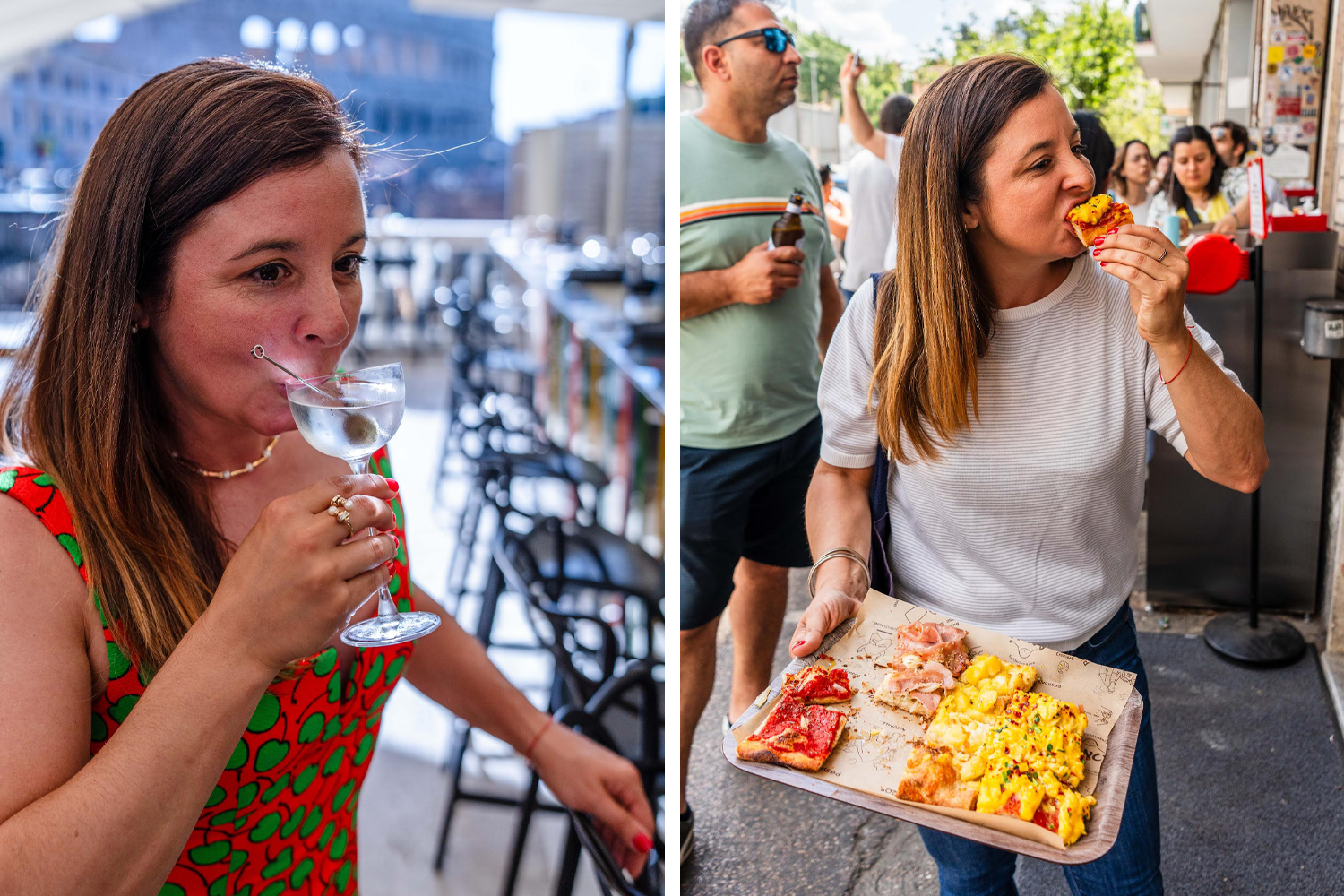
First of all, the book is amazing. I’m so obsessed with the history. I have your other book on Rome, Tasting Rome, which I also love. What made you want to do a second cookbook on the city?
It’s been 10 years, which, as you know from reading the history section, is not that long in Rome’s grand timeline. But a lot of things have changed. I’m not quite at 25 years living in Rome, but I was itching to do something that brought together all the stuff I do because I love sharing Roman history with people in a distilled way. And the three ways I know how to do that are writing guides, monologue history and writing recipes.
So I felt it was the right time to do something grander in scope, that I could structure exactly as I wanted, which definitely would not have been signed off on by a major publisher. So I basically put three books under one cover with the idea that this is the first version, and it can be refreshed and updated as Rome evolves.
That’s a really cool idea. Let’s start from the beginning and go back to the history of the Empire. Reading about these big banquets they would have, I didn’t realize that the fish sauce garum was a Spanish and North African import. I always thought that was an inherently Italian thing.
There was definitely domestic production, especially the area around the Bay of Naples. But Italy has never produced all the food needed to feed the peninsula. Just like with olive oil or grains, the Romans outsource a lot of their food supply with the dual purpose of abundance. Europe is your agricultural space. When you conquer a huge area, you have to keep people working and busy. Otherwise they’d rebel against what was actually a very oppressive regime.
The Romans were pretty cosmopolitan eaters. Those who could afford it would have much more exotic things on the table than garum, like flamingo tongues apparently. Providing calories and flavors for people was a good way to continue their rule.
I was enamored with the section about the Renaissance and how the North is where things like cafe culture really started. When that was brought to central Italy, is it something the Romans of the time really embraced? Or do you think there was pushback there?
When there was coffee and cafe culture flourishing in Italy, Rome had barely any coffee shops. It was something that for sure had a hub in Venice — there would have been hundreds and hundreds of cafes to Rome’s small handful of places. Coffee’s not something that is mainstreamed in Rome until the 20th century. As the capital of the Papal States, there was a wealthy court in Rome, and therefore luxury goods. But it didn’t necessarily have the same gravity as cities like Naples or Palermo, which had so much wealth.
I didn’t even realize that Southern Italy had that much wealth back in those times. Because you think about a lot of people who immigrated to the United States, and a lot of them came here from Southern Italy for better opportunities.
When we contemplate the internal migration and immigration abroad, it’s in that post-unification era. But before unification, the Southern part of Italy was incredibly wealthy and had a really diverse economy. But after it was brought into the Italian kingdom, it was also a threat. So the House of Savoy systematically disrupted agriculture and landholding, which led to widespread peasant poverty because it wasn’t an equitable system during the pre-unification period. But the landholders would have been, to a great extent, the church, which was also the enemy of the House of Savoy. The people who farmed for these landholding families survived. But when the agricultural system is disrupted, people starve. And so there’s a ton of migration, first to Italian cities and then abroad, mostly to the United States.
I could continue with this tangent all day, so I’ll back up slightly to cafe culture, which didn’t really come in until the 20th century. And I know that has a lot to do with the invention of the horizontal espresso machine and Mussolini and his push for people to drink coffee, get energy, get more work done.
In the late 19th and early 20th century, there were all these world fairs going on, and a lot of the industrial coffee machine production is based in and around Milan. And yes, there are all these exhibitions where Italian inventors are showing their things, and they encounter entrepreneurs who take their good ideas and make them scalable. So that’s when a lot of the first espresso practices are established. It’s also in this era that the Moka pot becomes a thing. But coffee was still a really expensive luxury good. The way people drank it for most of Italian history, in fact, was not in espresso form. It was closer to the Turkish and Greek style.
Oh, that’s really interesting. I had no idea it was similar to coffee from those countries.
And I’m sure when in Rome, you visited Sant’Eustachio or Tazza d’Oro. Those places are famous and historic, but they both opened in the 1930s.
So new compared to everything else. It’s crazy.
Oh yeah. And all the ads, iconography and artwork in those places is leaning into colonial messaging, and it coincides with Mussolini’s invasion of Ethiopia. Mussolini was famous for lying about provenance. So the coffee was definitely coming from the Caribbean and South America, but the public messaging was that it was coming from Ethiopia, which was a colonial aspiration, first for the House of Savoy and then the Duce.
This Cookbook Celebrates the Diverse Foodways of the Italian Islands
We chatted with author Katie Parla about pesto, harvesting capers and the eggplant substitute that makes a perfect parmigianaSpeaking of that era, I’ve been reading Ada Boni’s book, and you have a bit of a chapter about her in Rome. It’s amazing to me that she was putting out all these recipes with her magazine after unification, getting them to people all over the country. Going back into her history and that time in Rome, were there any ingredients from other places that came to Rome and became really iconic?
That’s a great question. I hesitate to give any absolute answers to this, but certainly dry pasta, which was mastered in the Bay of Naples and is introduced to Rome. Pasta factories are built in places like the Circus Maximus, and there was a mill and drying techniques that are clearly inspired by the Bay of Naples’ dried pasta production.
People don’t realize that Rome is very much a dried pasta city. Has it always been that way?
Pasta is something that, even today, isn’t really the primary carbohydrate in large parts of Italy. Polenta and rice are much more common. Pasta became really aligned with national identity in the 20th century, and lots of Mussolini’s rhetoric and the people around him are positing pasta as a symbol of national unity. Like tomatoes, it’s something everyone associates with Italian culture, but these things coalesce in the 20th century, not before. But Romans, like those in Naples, historically have dried pasta most days. Then on Sundays, Saturdays or holidays is when you do your egg-based pasta and your lasagna, your pasta al forno. And then gnocchi is a Thursday thing.
Really? Why Thursday?
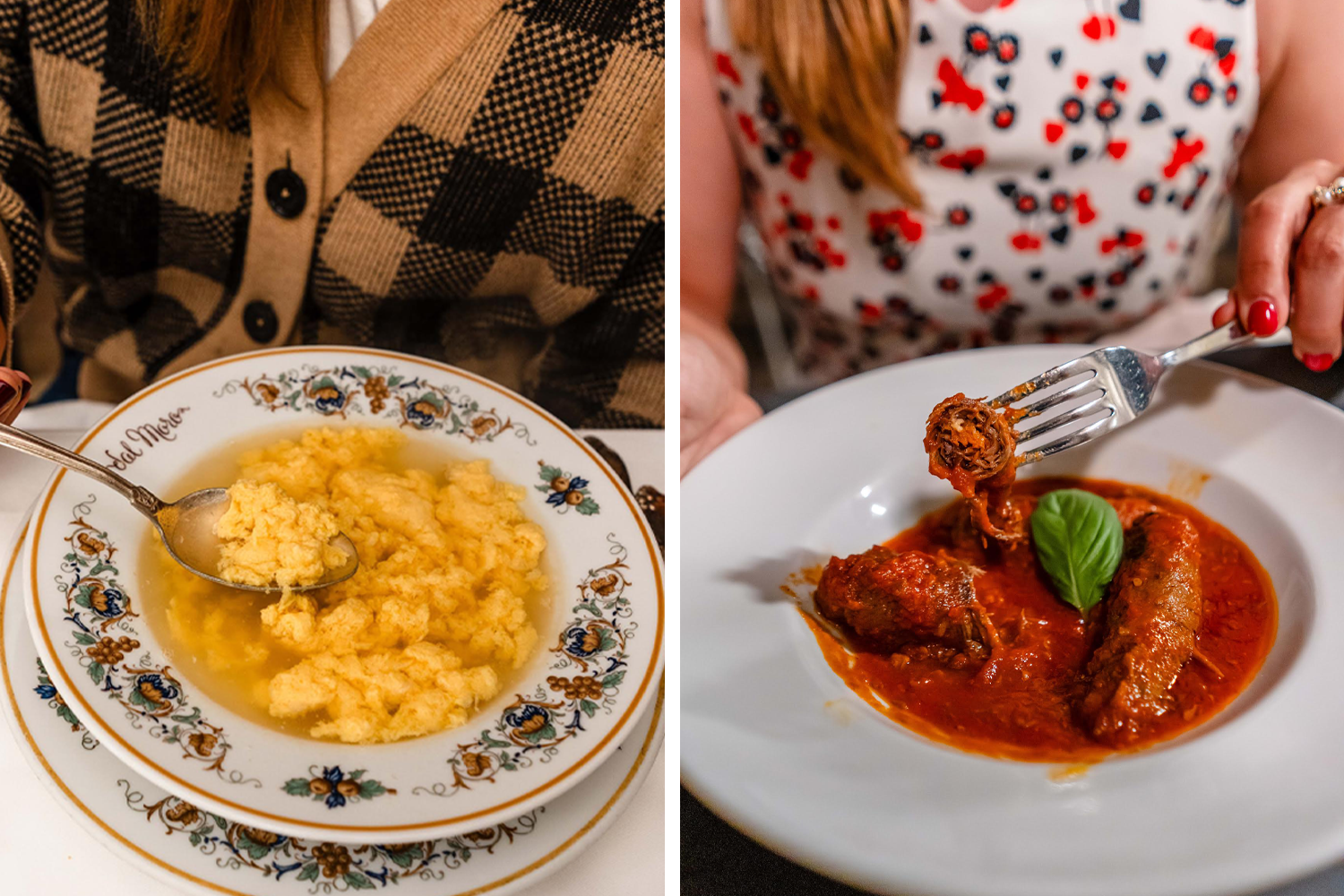
Because Fridays were lean days on the Catholic calendar. You were expected to abstain from meat. So gnocchi were likely the solution to fill people up the day before they have to “fast.” The Roman culinary canon calls for gnocchi on Thursday, fish on Friday and tripe on Saturday.
Oh, I love that. To me, tripe is a decadent thing, rich and delicious. Is that kind of seen as the week’s big meal?
It just takes a long time to prepare. So it’s good on the weekends when you’re not working.
So pasta isn’t even like the main carbohydrate in a lot of households. But Rome is obviously known for their four staple pastas, which we love. Is there another type of pasta behind the scenes that we’re not hearing about as much?
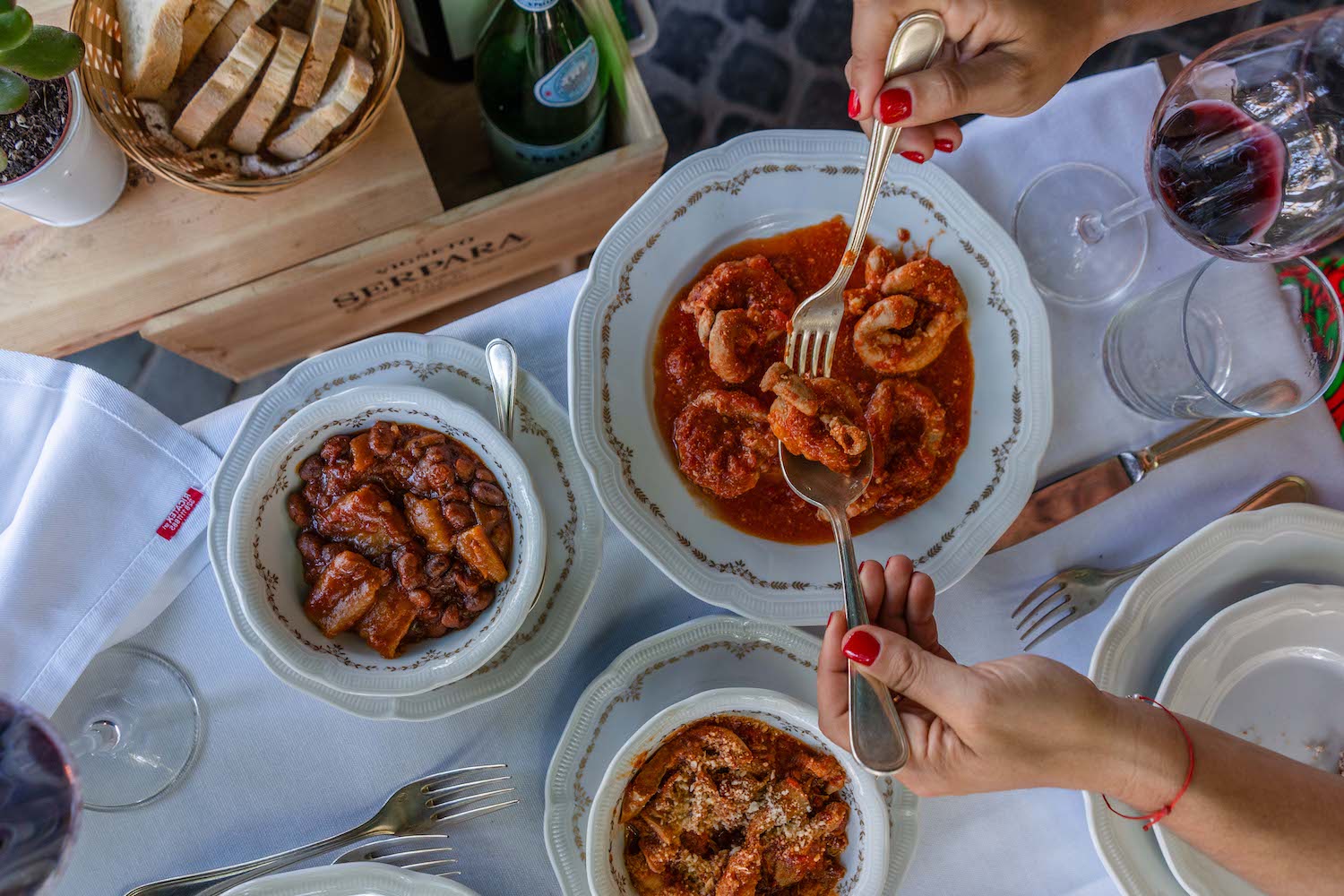
I wouldn’t even consider the “four pastas” to be the most iconic. Rigatoni with the sauce that oxtails have been simmered in is a classic, and ditto for rigatoni tossed with the sauce that meat rolls, involtini di manzo, have been cooked in. That’s a classic. But for me, the most iconic Roman pasta is rigatoni with pajata, the intestines of milk-fed veal. It’s distinctly Roman and not an ingredient that exists, to any extent I know, outside of Rome. It kind of encapsulates all the things, from the use of all the parts of veal, a long-simmered sauce, a tomato base. Sure, gricia, amatriciana, carbonara and cacio e pepe are easy to put together in a category, and they’re way more famous now than they were 10 years ago.
Ten years ago, no one knew what the hell I was talking about if I mentioned those being the four Roman pastas.
It kind of gives me the chills sometimes. I’m like, there are 40 Roman pastas. Honestly, something that no one talks about and is one of the most important winter dishes is minestra con broccoli e arzilla, which is a super brothy romanesco and skate soup with spaghetti broken into it. That’s the defining winter dish. And then of course pasta e fagioli, which is not necessarily Roman, or pasta with lentils because that’s home food.
Right, that’s what you’re making on a Tuesday night or anytime. It’s easy, it’s cheap. I actually read about pajata for the first time on your blog, back when I visited Italy in 2015. I got to my aunt’s house in Isola del Liri, and I was telling her how I really want to try this dish. So when I went to Rome, my cousin and her partner took me to this place an hour away. The woman came out and said, “This is what mama’s cooking tonight.” They always have the pajata, and it was such a magical dish. I was in heaven. And my cousins couldn’t stop laughing because I was so enamored by it. Do people make it at home, or is it more of a specialized thing for restaurants?
It’s definitely a trattoria dish, but when you go to any butcher shop, they sell it already prepared, cut into segments, turned into rings and bound with whatever the intermuscular fat is called. Barely anyone under 60 is cooking it at home, but some people are.
Another thing I’ve always been curious about. Has traditional meal coursing — like antipasto, followed by a primo, followed by a secondo — always been the typical way of eating in Rome?
I can’t remember if there are menus in Ada’s book, but it would have been normal for upper middle-class people hosting dinners at home to have multi-course meals with a lot of French influence. Pairing certain dishes with certain plates and silverware, that’s very much influenced by French culinary tradition. Even some of the preparations and ingredients are clearly taking cues from France. But there’s a distinction between how people in the early 20th century were eating and how people ate in the post-war era. Because in the pre-war era, a lot of Roman dishes would have been one-pot meals — a lot of brothy soups, things that fill you up.
Trattoria culture is also a post-war phenomenon. There would have been settings before the war, but that way of eating is a post-war thing. So people are encountering this new way of eating because finally they can afford to go out in the post-war boom. So the trattoria evolved into these multi-course events that are down-to-earth and affordable but have numerous portata, numerous dishes.
You do food tours in Rome and meet all of these people coming in from out of town. When people come to Rome for their first or second time, what’s the biggest misconception about the city’s cuisine that you hear?
There are a lot, but I think a lot of people turn up thinking that Romans eat at trattoria all the time, and no one can afford that. Yes, the trattorias are all full, but there are a lot of fucking people in Rome, so of course the trattorias are full. But people eat a lot of food on the go, especially at lunchtime. There’s no three-hour boozy lunch culture — that’s gone. So people go to the cafeteria, the tavola calda, and so many bakeries and cafes now have a little section that is turned over at lunchtime to cook home food. So for 12 bucks or something, you get a couple of courses and a drink.
It’s not a city where people go home for lunch or pack their lunch. There’s still this convivial moment, it just happens to be concentrated into a shorter amount of time with dishes that have more of a home-cooked feel. A lot of braised meats and, honestly, roast beef, especially in the summer. That’s the number one thing you’re gonna find. My favorite, favorite, favorite thing from the cafeterias is the tomato stuffed with rice. It’s so fucking good, and almost no trattoria serve that.
But this is what I always tell people — definitely book dinners out if you want, but also make room for all the other cool food spaces that don’t make it into all the listicles.
I really love that. I can’t remember what era it was, but I do remember reading about it in your book, talking about how there were these walk-up restaurants and people could buy a little soup or a little meat or something like that. That’s a fun full-circle moment here.
That was very much a Roman imperial way to cook when people didn’t have cooking facilities at home. So you go to the thermopolium, and it was literally a takeaway, very much like a cafeteria.
Grabbing it to go, eating it on the sidewalk, whatever they could do. I want to talk about one of the recipes in Rome. I made the coda alla vaccinara from your book two weekends ago. I’ve never made it with white wine and combo of raisins, pine nuts and cocoa powder. It was absolutely fantastic. I’m curious if the addition of raisins and pine nuts originally came from somewhere other than Italy? Or is this how Romans have always cooked this dish?
There are two coda schools of thought. The very frugal version is without pine nuts, raisins and the cocoa powder. It’s a lot of celery, like a lot of celery, wine and oxtail, braised until super soft. The pine nut and raisin thing is a combo from Southern Italy, typical of the Roman Jewish tradition. It’s a very enriched version of a peasant dish. What are considered poor cuts to us now were actually consumed by middle-class and upper-class people because they’re delicious. But the spices, seasonings and extra additions, those are shorthand for a higher status.
I think one thing a lot of people are not familiar with — and one of the best parts of Roman cuisine — is the quinto quarto, aka the offal of butchered animals. It’s so important to Roman food. I would love to know about some of the other touchstones you love and think people should eat more of.
The best thing on the planet is coratella, which is essentially lamb pluck that’s cooked separately. In the wintertime, you add artichokes to that. But coratella is an incredibly typical Roman dish that lives in the same universe as rigatoni with pajata and is completely synonymous with this food culture. As are battered and fried brains that could be a starter or a secondo. That’s one of those lost and disappearing dishes that not everyone makes all the time, but you can certainly buy lamb brains and calf brains at most butcher shops. Nervetti is also a total Roman classic, which is the cartilage from bovine hooves.
How do they prepare those?
You poach it until soft. And then you toss it with a giardiniera-type situation. It’s really, really good.
It sounds good! I’ll keep my eyes peeled next time. Obviously in a place like Rome, there are a lot of people coming into the city from other places, a lot of other cultures that are bringing their foodways. Even within the past decade, what are some of the cultures that you see introducing their foodways into the Roman canon and maybe some ways that that’s happening?
The one thing that comes to mind is the trapizzini filling, ziggini, which is an Ethiopian and Eritrean stew. There are a lot of chefs and cooks that have gone abroad in the past decade and a half. So there’s some fermented stuff going on from people who have followed the Nordic situation. There’s a lot of not always super successful Italian-Japanese fusion. There are quite a lot of South American chefs in Rome in the fine dining category that are introducing ingredients and techniques. But in terms of Roman cuisine absorbing and changing, I don’t see it in any considerable way.
You know what to expect from Roman food, which is lovely in its way. But there’s one line from your book that made my jaw drop, and I could talk about it for hours. You were saying that Italy having a national cuisine is still an unfixed thing today. That’s so crazy to me! Italy is this unified place, but every area still has its cuisine. And I think it makes the book even more interesting that Roman cuisine is so singular.
The Roman culinary identity, at least as we see it today, is not fixed — it’s in evolution to some extent. But if you look back to the menus of the 1970s or the 1920s or the 1860s, they’re radically different from each other, even though we’re in the same city.
But for the most part, the things we eat on the table today, they kind of coalesced into a series of dishes post-war, post-1980s even, which has also led to some dishes to vanish or become really difficult to find. But I think generally, what the recipes in Rome do is put together what we eat now.
And, like you said, that gives the book a place to evolve for later editions. Do you see the cuisine evolving much in the next 10, 20, 50 years?
Twenty for sure. Fifty though — I hope I’m retired by then!
I know, right? I hope I am, too. What’s your favorite recipe from the book?
The cacciatore.
I feel like cacciatore is one of those dishes that’s seeped its way into the American vocabulary. But I don’t think a lot of people know that dish is Roman.
It also doesn’t have tomatoes in it here. It’s a wine and vinegar sauce. So good.
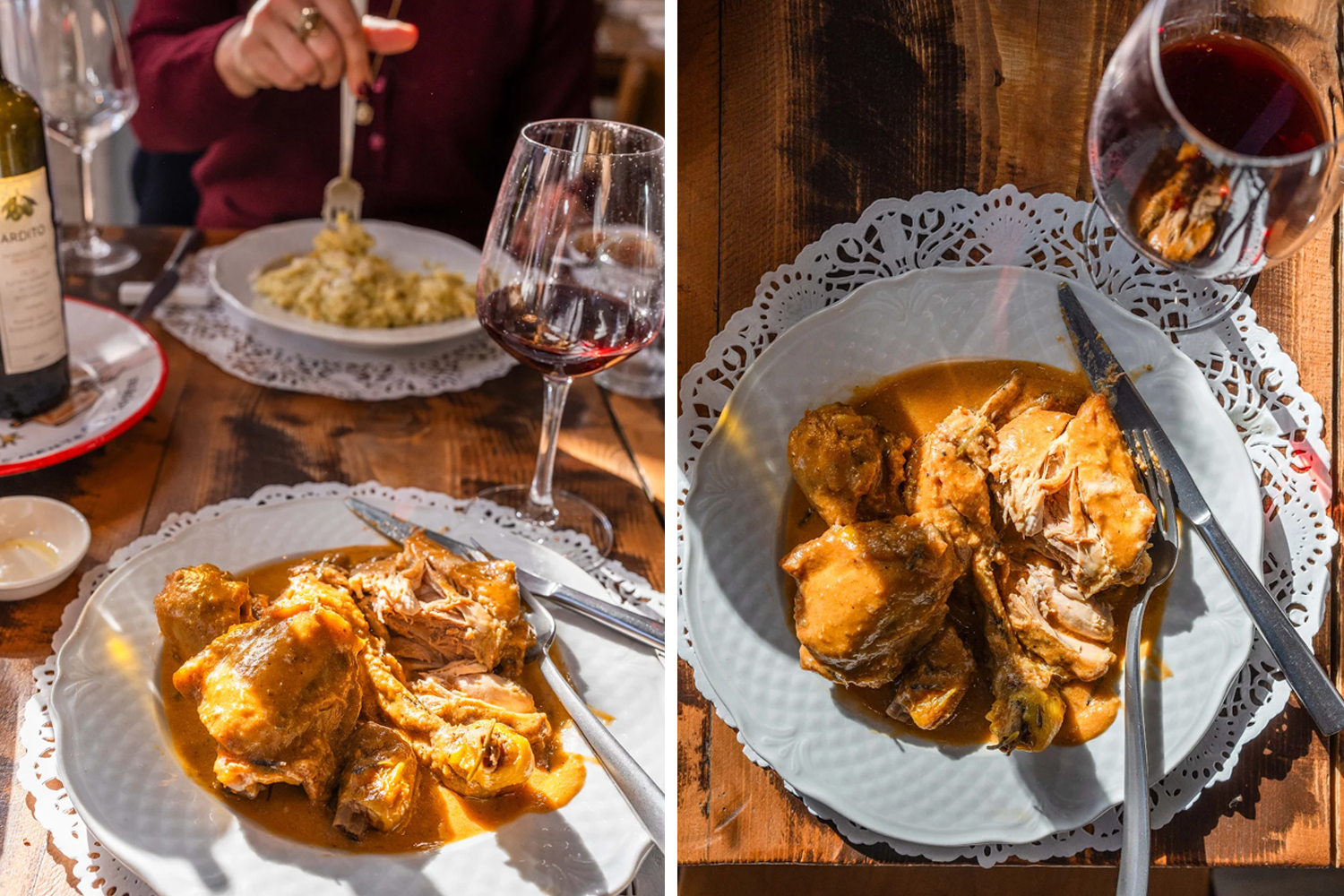
“Pollo alla cacciatora, or “hunter’s chicken,” is a staple of central Italian home cooking, though its form varies widely from region to region — and even more so across the Atlantic,” writes Parla in Rome. “I grew up eating the Italian American version in New Jersey, where tomato sauce, mushrooms, peas, and more often made their way into the pot. But when I moved to Italy, I discovered that the Roman and southern styles lean more herby and acidic, relying on white wine and white wine vinegar instead of tomatoes to brighten the dish. My version takes inspiration from Stefano Callegari’s at Trapizzino, which, in turn, is influenced by his mother Luana’s recipe. I skip the breasts and use only dark meat so everything stays tender and juicy. Plus, the dish only gets better after a night in the fridge.”
Pollo alla Cacciatora
Servings: 4 to 6
Ingredients
- 3 lbs. bone-in chicken legs and thighs, separated
- Sea salt
- .25 cup extra virgin olive oil
- 2 garlic cloves, smashed
- Leaves from 1 sprig rosemary, roughly chopped
- Leaves from 1 sprig sage, roughly chopped
- .75 cup dry white wine
- 2 cups chicken broth, vegetable broth or water, plus more as needed
- .25 cup white wine vinegar
Directions
-
-
Season the chicken with salt. Transfer to a covered container and refrigerate for at least a few hours and up to 12 hours.
-
Remove the chicken from the refrigerator 90 minutes before you intend to cook.
-
Heat the olive oil in a large pan over low heat. When the oil begins to shimmer, add the garlic and cook just until it begins to take on color, about 5 minutes. Add the chicken, skin-side down, increase the heat to medium, and cook until browned on all sides, 10 to 12 minutes. Add the rosemary and sage and cook until fragrant, 30 seconds. Add the wine, increase the heat to high, and cook just until the alcohol aroma dissipates, about 1 minute. Add the broth and bring to a simmer.
-
Reduce the heat to low and cook, partially covered, checking at the 30-minute mark to be sure there is enough broth in the pan. Add more as needed to keep the chicken partially submerged. Cook until the chicken is super tender and easily releases from the bone, about 1 hour. Add the vinegar about 10 minutes before the chicken is ready. If at this point the sauce is really juicy, leave the pan uncovered, increase the heat to medium high, and cook until the liquid thickens. Season with salt and pepper. Serve directly from the pan (and eat with your hands).
-
More Like This


We're always on the scene eating, drinking and traveling near and far to bring you the best of what's happening out in the real world. Sign up for IRL now.