
Years back, Sir Ian McKellen reflected on his health for the papers, saying, “I am lucky. I don’t have aches and pains. I do Pilates regularly which is a series of stretching exercises and I recommend it to anyone of my age because the temptation is not to exercise when you get older.”
He also mentioned his proclivity to stay active during commutes: “I always walk up the escalator on the Tube and I live in a house with a lot of stairs.”
Wise words — and little wonder that McKellen, now 86, is very much alive and kicking (he’s also still frequently spotted on the London Underground.)
Exercise that’s woven into a daily regimen is one of the most powerful ways to retain strength and extend health span. A 2023 study of “vigorous intermittent lifestyle physical activity” even found that brief bursts of effort — like taking the stairs — could serve as a promising intervention for cancer prevention.
So, stairs matter. And it’s not just whether you take them or not — it’s how you take them. Do you lean forward when you climb? Crab-shuffle on the way down? Can you take two at a time? These aren’t just quirks of your gait, they’re clues into your mobility, sense of balance and long-term strength. Here’s what to look for.


7 Ways to Trick Your Brain Into Enjoying Exercise Again
Want to be more consistent and less fatigued? These expert-backed strategies will help.How to Take the Stairs
I understand that it can feel silly to deconstruct a movement pattern you’ve done since early childhood. But as you age, your bones shrink and your muscles lose their oomph — both of which impact your coordination.
It’s possible (even likely) that you walk up the stairs differently now than you did at 25. So here’s a reminder of best practices for taking the stairs, plus some red flags you may not have clocked.
Good Form
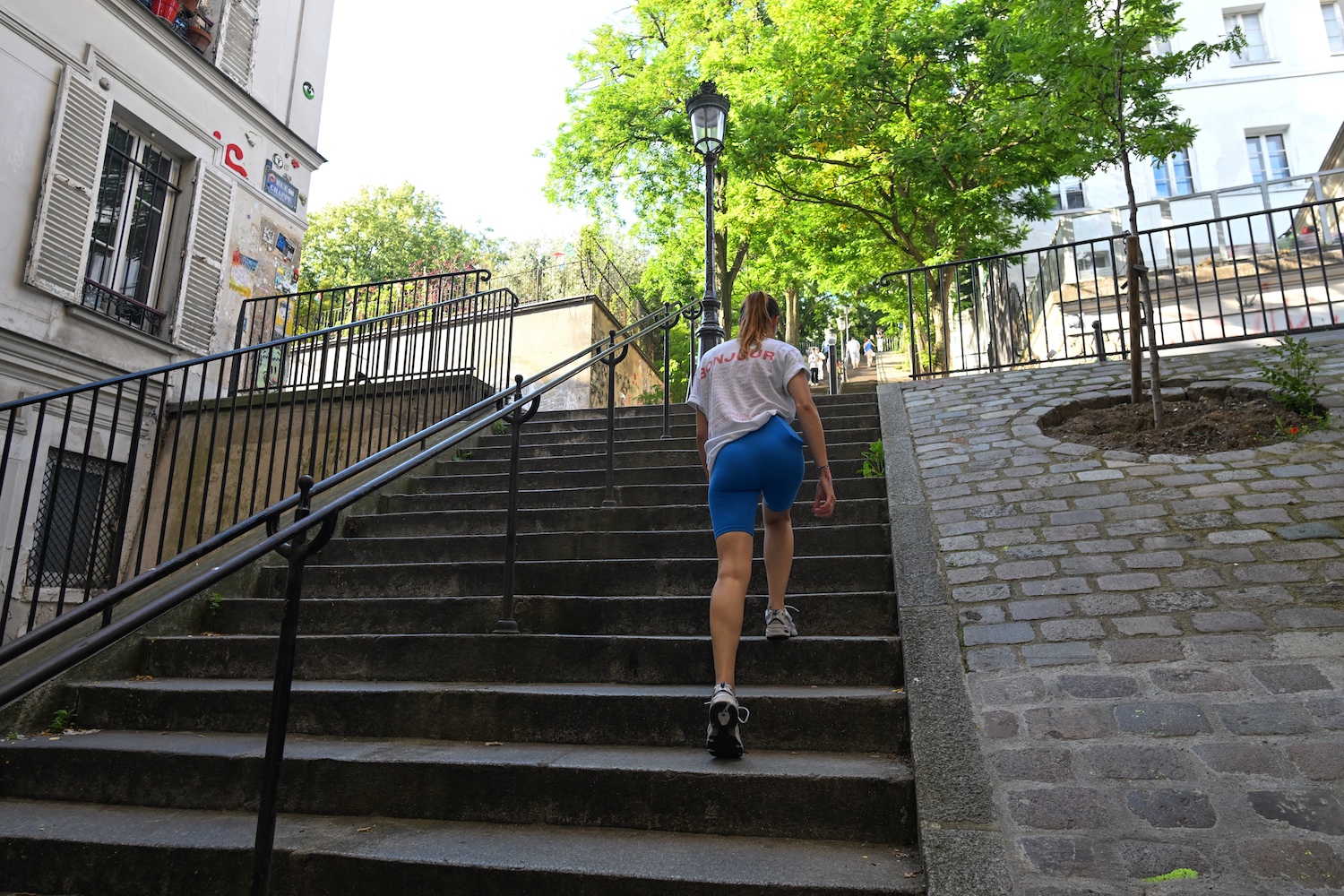
For starters, proper stair-walking is reminiscent of a march. It’s common for adults to hunch forward, relying on the quads (and knees!) to move from one step to the next, but you want to stand tall as you make progress and engage your glutes and hamstrings. Imagine that at the lip of each stair is an invisible trip wire, and you need to place the foot over it to land safely.
It’s best to stay controlled and strong. Rely on your own power, not the momentum of the movement. This is especially pertinent when descending stairs. Your footfalls should be purposeful, and as quiet as possible.
Red Flags
Climbing (or descending) stairs is almost always a forward movement. Here are some signs that you’re deviating from that path:
- Your knees are collapsing inward. Always make sure to track them straight over the toes, and the hips and shoulders will follow suit.
- You’re yanking yourself up the stairs via handrail. This signals instability, or maybe the ghost of an old injury.
- You’re turning or twisting your body mid-climb. That’s classic fatigue or compensation, and a quiet sign you might be out of shape.
I live in a fourth-floor walk-up, and by the end of the day — particularly with a backpack — I catch myself starting to “shuffle” up the stairs. Not a full crab-walk, but a diagonal, forward-sideways hybrid. Other times, my foot barely clears the step, landing with the heel hanging off the edge — just for a moment, but long enough to be risky.
Can You Pass These Stair Tests?
Your first two tasks are: A) start seeking out stairs more often and B) perform a self-audit when you do. Figure out whether your technique needs some tinkering along the way. Once you’ve done that, try these three, stair-related fitness tests:
- Skip a step: When’s the last time you tried to skip steps? This is a great way to put your balance and strength to the test. Just remember to honor the proper form outlined above.
- Stair climb test: Based on a study by the European Society of Cardiology, you should be able to climb 60 steps (four flights of stairs) in 90 seconds or less. Anything over that, and you need to take a closer look at your heart health. If you can manage 40-45 seconds, you’re in excellent shape. No running or skipping steps.
- Grocery march: Grab two heavy bags (or dumbbells, or anything with weight) and climb two full flights without using the handrail, leaning forward or stopping to readjust. Think: hauling groceries up to the apartment — but with perfect form.
More Like This


Twice a week, you'll find guinea pig features, personal essays and expert interviews on living better — for however long you’re here. Subscribe to Champ now.