

For the past few weeks, I’ve been practically living in the Lincoln Center area, trying to soak up as much of the happenings of the NYFF as I could handle. There’s something joyous about the festival’s atmosphere, celebratory even. All my conversations with critics, publicists and industry folks were centered around the movies we were most excited about, crowd reactions in the theaters and how we could possibly attend everything we wanted to see. It might also have to do with how most of the dealmaking has been done by this point in the calendar year — and how there are no awards to compete for. Also, I’m sure there’s some excitement for filmmakers and industry folks looking to enjoy New York in the autumn instead of schlepping through the Park City snow during Sundance — or risk falling down the red stairs at Cannes.
Duncan Sheik’s Final Gift to New York Theater
The singer-songwriter and composer, who died this month at the age of 56, pushed Broadway into the 21st century. Now, his works are set to reignite off-Broadway.There’s something for everyone, from big-name directors making world premieres and indie darlings getting their time in the limelight to restorations and revivals of old works for new eyes. Some late additions to the festival lineup, like the Nathan Fielder-directed documentary You Can See Everything and the Paul Thomas Anderson-directed concert film Cameron Winter at Carnegie Hall, drew in early lines for standby tickets and tested relationships between journalists and publicists over some of the most coveted tickets of the festival. Other films, like Yuval Abraham and Rachel Szor’s NAZA, an investigative documentary detailing the Israel Defense Forces’ weapons systems and their usage in Gaza, drew crowds outside the theater to protest the film’s claims.
There are as many stories surrounding the festival as there are films in the slate, and though it is impossible to get into it all, in the spirit of being comprehensive, I figured I could tell some of them through the films I watched.
Paper Tiger
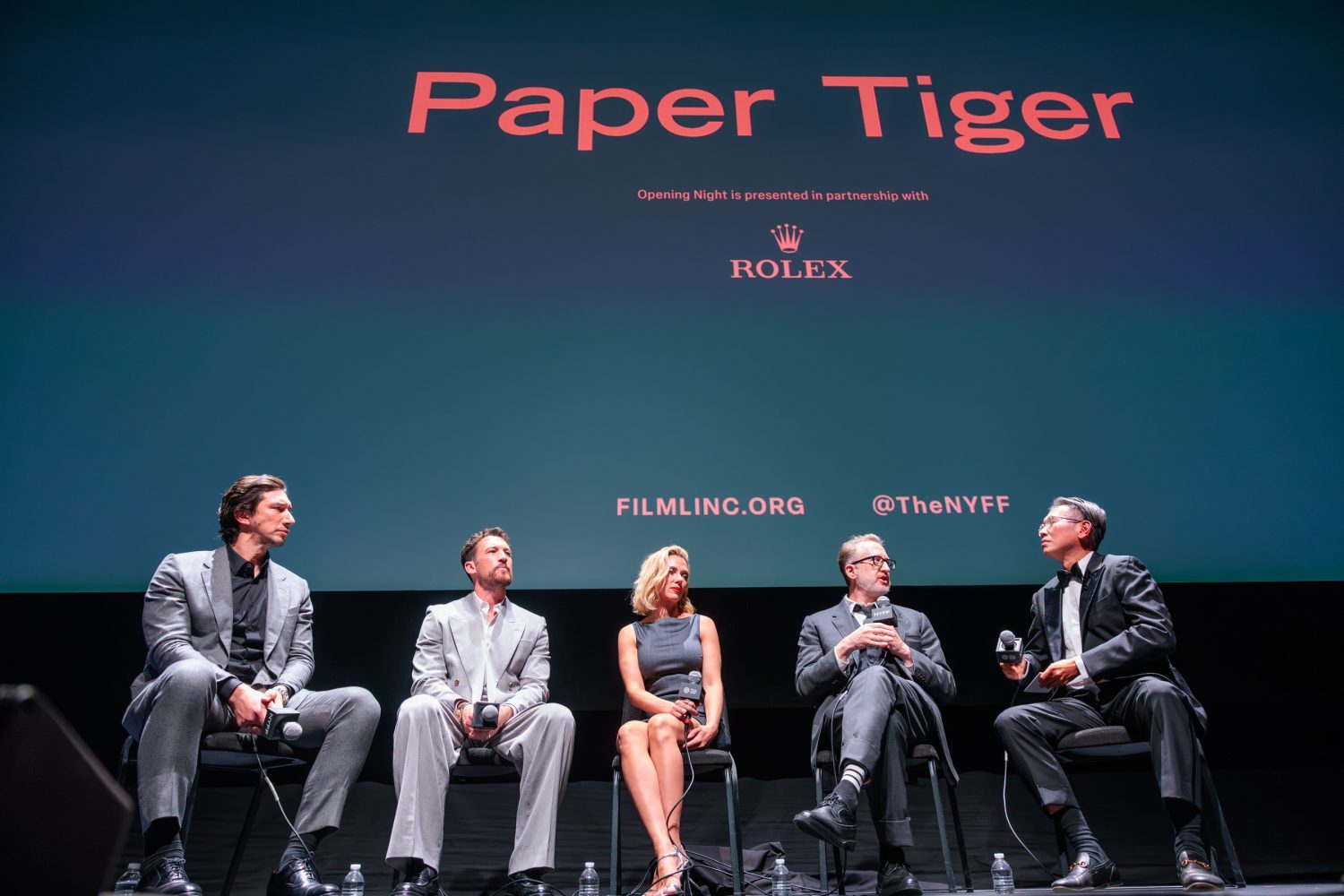
On the day of the official kickoff of the festival, I lined up early in the morning outside the Walter Reade Theater for a press screening of James Gray’s Paper Tiger. It was more than an hour before the actual start time, yet the line had already snaked around the concrete perimeter of the theater’s atrium. During the week of the press and industry screenings preceding the actual festival, this was common for the buzzier films with big names like Paper Tiger, Gray’s New York period-piece crime thriller, starring Adam Driver and Miles Teller as two brothers who must deal with a business opportunity gone awry. The other draw of our morning showing was the Q&A with Gray and his two stars, which was going to be every journalist’s best chance of seeing Adam Driver up close.
The film adheres to a tightly plotted, classical structure that moves slowly but deliberately, and James Gray’s inner New Yorker really comes out in the details. There are the big ones, like making the shady workings of the Gowanus Canal a major plot point, and the small ones, like a graduation party that takes place at Terrace on the Park, a quintessential quinceañera and sweet 16 venue for anyone who grew up in Queens. While it may seem obvious that hearing a director talk about their work would give one an increased appreciation for the artistry on display, in Gray’s case, it was especially interesting given Paper Tiger’s conventional approach — he’s working very much in the tradition of the classic Hollywood crime movies of the ’70s and ’80s and isn’t exactly making you question the nature of the image, French New Wave style. Without giving too much away, he was explaining the sound design in one particular scene, a tense encounter in a car, and to create the feeling of dread, he slotted in the sounds of a slaughtered pig. At times, hearing him talk about the movie and his creative choices felt more interesting than the actual movie, which is either a testament to his remarkable speaking ability or a jab at the movie for not being able to speak for itself.
After the morning showing, I decided the rest of the day was a wash and that no work was getting done, and then treated myself to a long lunch at Keens, craving the old-world feel of the bygone New York that Gray depicts so vividly in his movie.
Once Upon a Time in Harlem
On a Tuesday evening at Alice Tully Hall, I ran into my old boss as the crowd that had just attended Eleanor Coppola’s Making Marie Antoinette exited the theater. We chatted for no longer than 30 seconds as the volunteers working crowd control whisked us away, trying to make room and organize the lines for the upcoming screening of Once Upon a Time in Harlem.
I was particularly excited for this one, a documentary directed by William Greaves and his son David that was initially conceived in 1972, when William gathered various artists, writers and thinkers from the Harlem Renaissance at Duke Ellington’s home in Harlem to discuss the legacy of their artistic and political movement. Though it was unfinished at the time of William’s death in 2014, his wife Louise revived the project and secured funding, and at the time of her death in 2023, she’d entrusted the production to her granddaughter and David’s daughter, Liani. The film was still unfinished last year and in need of funds to take it over the line, when New Yorker film critic Richard Brody attended a private screening and wrote a glowing review, calling it one of the greatest works of creative nonfiction he’s ever seen. Apparently that review was enough for the Greaves family and producer Anne De Mare to get funding from the Ford Foundation to finish the film and premiere it at Sundance this past January. All hail the power of criticism!
In case you were wondering, Brody is absolutely correct. It is rare for a film to be as brilliant and entertaining as it is socially important, let alone a work of nonfiction. The Greaves team makes use of dynamic flourishes like the signature split screen that one might recognize from his most popular work, Symbiopsychotaxiplasm: Take One, but the film is carried by the conversations and interviews of the amazing subjects who decided to come that day. They have heated debates about the impact of the Harlem Renaissance and the relationship between artistic struggle and political struggle during that time, accompanied by occasional comic relief from great personalities like the artist and writer Richard Bruce Nugent and the pianist and composer Eubie Blake. In one scene, the activist Richard Benjamin Moore recites the entirety of Claude McKay’s poem “If We Must Die,” in response to the lynching of Black Americans across the country in the summer of 1919, which garnered a long applause and near-standing ovation from everyone in the theater.
It was almost midnight when I exited the theater, rejuvenated by the possibilities of art and full of swirling, muddled ideas about lost histories, and the importance of archiving and maintaining records of the present, that I couldn’t possibly sleep. So, I did what any sensible person would do and collected my thoughts over an 11 p.m. dinner at P.J. Clarke’s.

Gone to Earth
This year, as part of its ongoing relationship with the NYFF, Rolex officially unveiled its new filmmakers lounge in the Lincoln Ristorante across the street from Alice Tully Hall. It was mostly branded as a place for filmmakers to hang out between screenings, but once people got word that there was a beautiful, glass-lined room across the street from the theater, studios began booking the space for receptions every night. A sign of a successful launch!
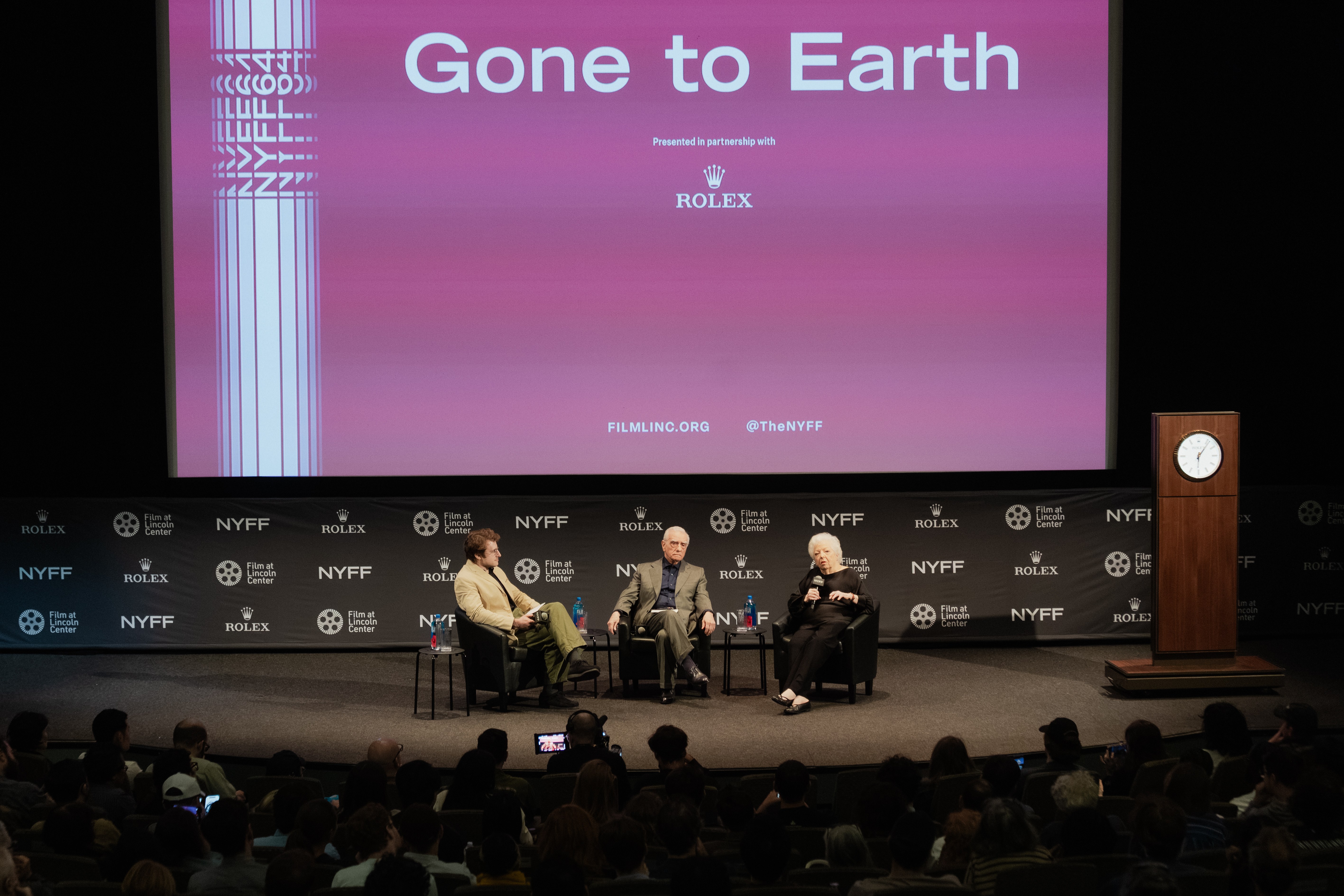
Beyond the lounge and the happenings of the NYFF, Rolex is a partner of Martin Scorsese’s nonprofit organization The Film Foundation, dedicated to the preservation and restoration of classic cinema, and helped put together a showing of the beautifully done restoration of the Michael Powell and Emeric Pressburger classic Gone to Earth. Set in the 19th-century English countryside, the film follows a young woman living in tune with nature as she becomes swept up in a web of desire between the various men who vie for her affection. As I was watching the movie, I kept trying to figure out what it is about the English countryside that has inspired filmmakers across the years — from gems like the 1978 adaptation of Watership Down to this past year’s Sheep Detectives — but watching the gorgeous, rolling hills of Gone to Earth, whose restoration was overseen by Martin Scorsese and his longtime editor Thelma Schoonmaker, convinced me to look up flights to Shropshire.
The screening was followed by a Q&A with Scorsese and Schoonmaker, who was married to Michael Powell until his death in 1990. I listened to them talk about the film’s troubled history in the hands of Hollywood producer David Selznick, their luck in uncovering the director’s original print in the British Film Institute’s archive and details that Technicolor can bring out in the film, from brightening the lush, green hills of the countryside to highlighting the dirt on a pair of slacks. While I could hear Scorsese talk all day about how the innocence found in nature is often corrupted by the interests of the industry, the moderators knew him and Schoonmaker had places to be and ended the talk without opening the floor to audience questions.
It is remarkable how far behind you can fall in life if you dedicate your time to watching movies all day long. And yet, what a joy it is to be able to do such a thing.
More Like This


This article appeared in an InsideHook newsletter. Sign up for free to get more on travel, wellness, style, drinking, and culture..