
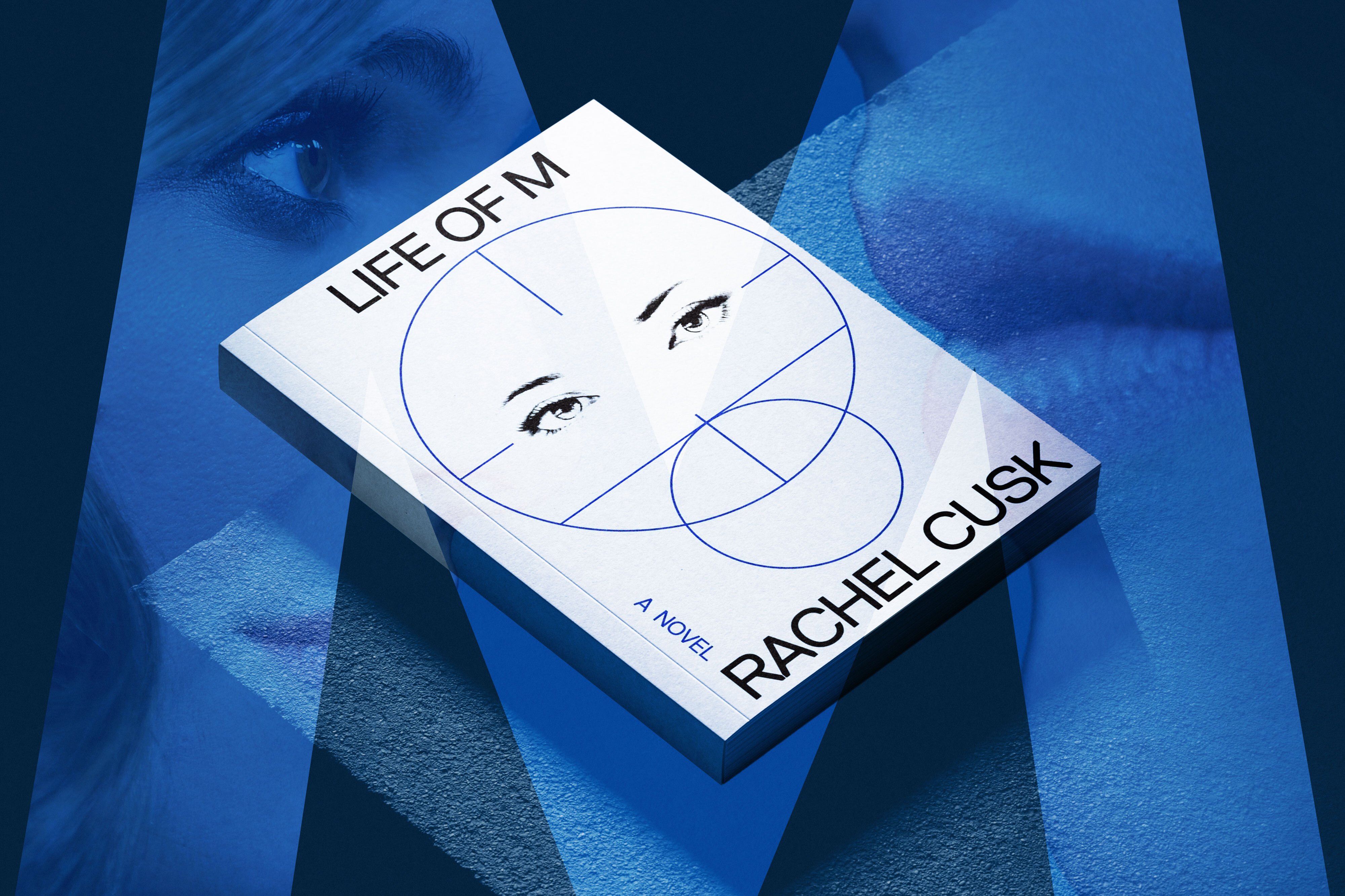
Happy Rachel Cusk week to all those who celebrate. If you were planning on reading her new novel Life of M, you’re probably at least mildly aware of the drama surrounding the accusation that the book’s main character is inspired by Natalie Portman. I first read about this in an article in the British conservative outlet Unherd, one that seemed more interested in generating buzz and clicks than offering any kind of actual engagement with the text. How British. Since then, the reviews have been slowly coming in, some good, some critical, some overly concerned with the whole Portman of it all. The attention around the tabloid controversy has gotten so out of hand that Cusk has come out herself to state that whether or not it’s really Natalie Portman “isn’t really the point.”
Two of the most insightful reviews I read, by Becca Rothfeld in The New Yorker and Ryan Ruby in the New Left Review, call into question the efficacy of Cusk’s attempt to dissolve the traditional structures of fiction, something she started doing with the Outline Trilogy after experiencing immense backlash for her 2012 divorce memoir Aftermath. In her review of Life of M, Rothfeld asserts that Cusk’s continued project to shed things like plot and narrative has reached shaky territory, with a main character who is “little more than a device for thematizing the dissolution of the self,” and a structure with different narrators that fails to come together in a satisfying fashion. At the end of his piece, Ruby suggests that Cusk benefits from that blurred sense of the truth, able to simultaneously critique Portman’s celebrity while maintaining distance under the guise of it being a work of fiction. These critiques of the novel are ones you can levy on any of her works since Outline, which makes me wonder whether our exhaustion is not with Cusk’s novel specifically, but with autofiction in general.
Autofiction, or at least talking about autofiction, was hugely popular in the 2010s and early 2020s, with writers like Ben Lerner, Tao Lin, Karl Ove Knausgård and Sheila Heti publishing relatively plotless works featuring fictionalized versions of themselves and experiences drawn from their own life. While mining your life for inspiration is nothing new, part of the value of the genre, aside from neat marketing, was that it wasn’t concerned with questions of characters and events being true or not. It assumed a kind of dialectic relationship between fact and fiction — we tell ourselves stories, we deem them to be true and those truths inform our future stories, so it goes. Those novels from the 2010s, in Jonathan Sturgeon’s words, worked to “[redistribute] the relation between the self and fiction,” freeing the writer to think about loftier questions, like how a person should be.
In the hands of a great writer like Cusk, there’s tremendous appeal in eschewing the traditional structure of the novel to get closer to answering the questions you find interesting in writing. Reading Outline for the first time was occasionally dizzying, and I would come up for air at the end of a chapter kind of stunned, deeply affected by passages I hadn’t quite made sense of. The thing is, Cusk is able to get away with achieving so much while using so little because she’s a brilliant writer and a dazzling stylist. In the hands of someone more mediocre, like the majority of other writers, the appeal of simply writing about the things in your life is its relative ease. How often do you encounter fiction in a literary magazine that comes off like unedited diary entries? How often do you encounter diary entries on Substack that aspire to read like fiction?


Weed Is Chic Now. Too Bad for This Former Stoner.
John DeVore gave up getting high decades ago. Now he has to deal with normies being stoned 24/7.Autofiction, in its lesser forms, seemed to be everywhere in New York in the early 2020s. Literary magazines like Forever Mag and Heavy Traffic that received coverage from prestige publications featured writers who were either heavily influenced by the genre or, like Chris Kraus, were already stalwarts of the form. The novels associated with that world, willingly or not, were overly maligned and under-read, and the stylistic conventions we might associate with the form are replicated in Substacks everywhere. Even Cusk’s own MO has become popular enough to be parodied; in Maya Binyam’s excellent 2023 novel Hangman, the nameless narrator listens to his fellow plane passenger recount his life story and various anxieties, only for him to suddenly die midway through the flight. I can’t help but wonder if a saturated market of mediocre novels and Substack writing has cheapened the value of autofiction as a form, subconsciously convincing us to see Cusk’s work in a less favorable light. If everyone can hop online, assign initials to their friends and exes, and write about their day in banal, disaffected fashion, then suddenly this style of fiction writing doesn’t seem so impressive.
Our collective fatigue with solipsistic fiction might explain why readers are turning to big, plotted novels like Lonesome Dove and East of Eden. Maybe we seek some escapism, or at least some imagination, from our great writers, and want them to think beyond exercises in style and form to give us a story we can hold onto. Maybe the world needs Jonathan Franzen to finally come out with the second installment of his Crossroads Trilogy.
More Like This


This article appeared in an InsideHook newsletter. Sign up for free to get more on travel, wellness, style, drinking, and culture..