

A few months ago, Bill Maher lamented the reluctance of Democratic politicians to appear on Real Time. Given that the last few episodes’ guests have included James Talarico, Adam Schiff and now the sitting governor of Pennsylvania, something seems to have changed. Whatever the reason for it, Real Time is a stronger show when its guests are bipartisan — or, at least, it makes for better debates.
The governor in question was Pennsylvania’s Josh Shapiro, there to discuss the book Where We Keep the Light and field questions from Maher on whether he was seeking his party’s nomination for president in 2028. (Shapiro declined to answer.) Their conversation included a discussion of the relationship between elected officials and their constituents, and Shapiro’s call to be a “Get Shit Done Democrat.” (Quoth Maher: “You’re nobody in politics if you don’t use bad words.”)
Shapiro made a straightforward but understandable case, arguing that not solving problems can lead to an increase in cynicism. He mentioned the evolution of the permitting system in Pennsylvania under his tenure as governor as one example: “You’ve got to show [people] government can work.”
Shapiro also addressed the ongoing war with Iran, taking issue with the vague justifications offered for it. “I think if you don’t have clarity on why you’re going in, you have no way of knowing how the hell to get out,” he said.
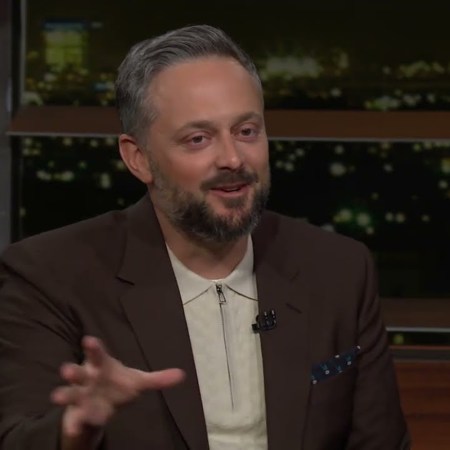
For the night’s panel discussion, Maher welcomed Anthony Scaramucci and Lloyd Blankfein, both of whom have new or forthcoming books, to the stage. “I’ve never had two Wall Street guys on the show at the same time,” Maher said, which led to a discussion of the growth of income inequality in the U.S.
Maher cited a recent Forbes list of the world’s richest people, noting that Elon Musk’s wealth corresponded to 2.7% of the country’s GDP. “John D. Rockefeller, at the early part of the last century, was worth 2.5% of [the] GDP,” Maher said. “But they did something about it: they broke up Standard Oil, there were anti-trust laws being passed.”
Maher went on to bring up his issues with both communism and “advanced socialism,” but also conceded that the current system doesn’t seem to be working. That, in turn, led him to ask his guests how they might make the country more financially equal.
Scaramucci cited the Citizens United decision as a factor in how we got to this point. Blankfein made the case for “a more progressive tax system than we have today,” as well as more social services available for free. Maher seemed on board with this, pointing out that some CEOs, including the heads of Nvidia and Anthropic, have called to be taxed more.
Maher also got more philosophical about the effects of extreme amounts of wealth. “Is it worth it to have to have bodyguards around you all the time when you go out, knowing that people hate you so much because you’re so rich and you live so ostentatiously?” he asked.
Blankfein responded that he didn’t see the ostentatiousness. “Were you at Bezos’s wedding?” Maher replied.
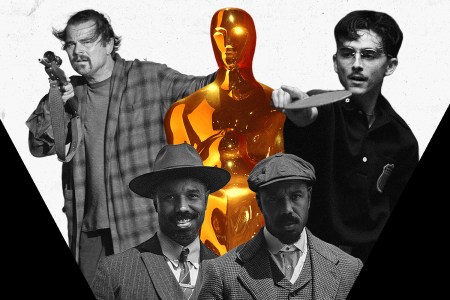
2026 Oscar Predictions and Proclamations: Who Will Win, Who Should Win and Who Got Snubbed
Can “Sinners” upset “One Battle After Another”? Is it curtains for Timothée Chalamet? Our final ballot is in.For the final segment of the episode, Maher looked back on the tenth anniversary of the #OscarsSoWhite campaign.“The Oscars are no longer a long, boring show full of white people. It’s a long, boring show full of all people!” he said. For Maher, this fit into a broader argument about why progressives should embrace instances where aspects of society have, in fact, improved. And he made a convincing case that the Oscars have, in fact, given more awards to a more diverse group of nominees in recent years.
Things moved from there to a broader critique of the Academy Awards, with Maher bringing up classics that never won Best Picture, from Citizen Kane to Saving Private Ryan. He also contrasted Al Pacino’s best roles (The Godfather, Serpico) with the one he actually won an Oscar for in Scent of a Woman: “It’s like honoring Michael Jordan for when he played baseball.”
And this led to a more spurious argument, in which he argued that awards often went to actors playing disabled characters on screen. The accompanying graphic featured a number of recent winners, and…Maher knows Troy Kotsur — who won an Oscar for his work in CODA — is deaf in real life, right? Because his photo was up on screen, alongside the likes of Jamie Foxx as Ray Charles in Ray. It was an odd note on which to end the argument, which drifted dramatically from its starting point.

Other notable moments from this episode:
- Maher on the current situation in the Strait of Hormuz: “We have complete military superiority except for the one place where we apparently need complete military superiority.”
- Lloyd Blankfein on crypto: “I guess I’m too old to like it.” (He and Scaramucci had an extended debate over the merits and drawbacks of the technology in question.)
- One segment found Maher imagining Ed Sheeran playing James Bond: “He has a license to kill, but prefers to listen.”
More Like This


This article appeared in an InsideHook newsletter. Sign up for free to get more on travel, wellness, style, drinking, and culture..