
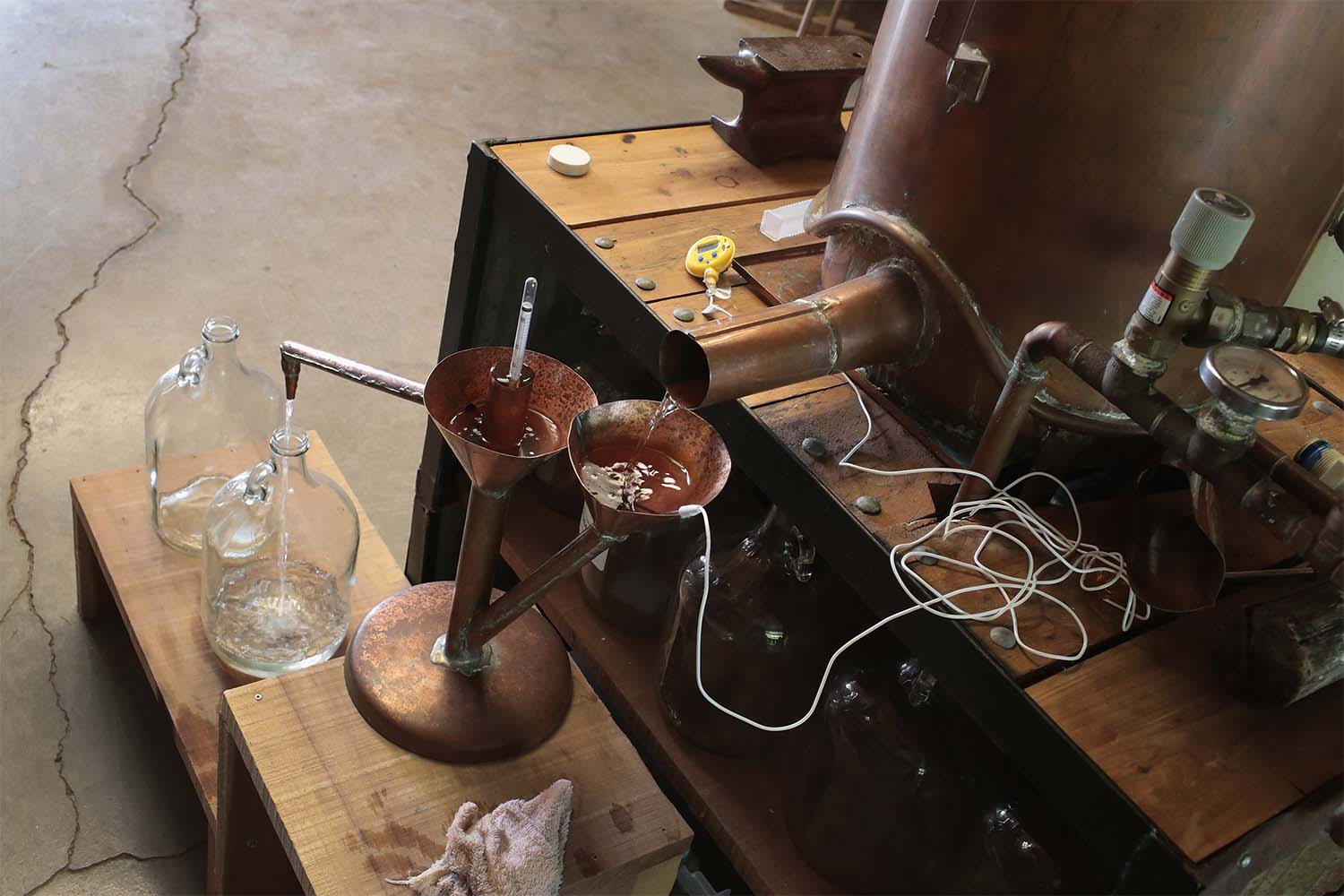
Early April brought good news for wannabe home distillers. The 5th U.S. Circuit Court of Appeals in New Orleans struck down a nearly 158-year-old federal ban on home distilling, ruling it unconstitutional and in favor of the nonprofit Hobby Distillers Association and four of its 1,300 members. Per Reuters, the original ban dates back to Reconstruction and was intended to thwart liquor tax evasion.
Nevertheless, the initial overturn of the ban was pretty limited. Home distilling is still subject to federal law and would require a permit from the Alcohol and Tobacco Tax and Trade Bureau. And that recent ruling only covered three states: Texas, Mississippi and Louisiana.
And then 11 days after that ruling, the 6th U.S. Circuit Court of Appeals in Cincinnati called the ban a “necessary and proper means” of collecting federal excise tax on distilled spirits. Which basically means things are business (or not) as usual for home distilling as we await a potential Supreme Court decision.
Confused? I was, so I consulted with Aaron Hyde, the author of How to Distill: A Complete Guide from Still Design and Fermentation through Distilling and Aging Spirits, with whom I had previously spoken about the legality of home distilling (at the time, Hyde lived in New Zealand, which had a much more lenient approach to making your own booze).
A Crash Course in the Semi-Legal World of Home Distilling
The new book “How to Distill” is everything you want to know about making your own hooch — if it wasn’t extraordinarily difficult to do so legallyThe takeaway is complicated, but for home distillers, there’s a path forward that recalls both cannabis and home brewing.
InsideHook: Where are we in the fight to legalize home distilling?
Aaron Hyde: For the first time in over 150 years, things are finally getting challenged in a meaningful way. The federal ban on hobby distilling is genuinely based on antiquated and uncertain constitutional standing.
To lay it out fully, the U.S. Court of Appeals for the Fifth Circuit (that’s Texas, Louisiana and Mississippi) ruled this month that the longstanding federal prohibition on distilling spirits at home is unconstitutional. This conversation essentially had to go somewhere. The court concluded that Congress cannot ban an otherwise lawful activity solely because it might be hard to tax, saying that, in theory, it would give Congress virtually unlimited police power on what they might deem “taxable” personal activities.
They also ruled that the home distilling ban is “anti-revenue” and that by banning it, it essentially prevents the government from collecting any taxes at all — the argument being that the government is directly undermining the justification used to defend the law since 1868. That’s an interesting argument, especially if the government sees it the same way and decides to tax the hobbyist or home distiller, which would be better than nothing!


At the same time, the Sixth Circuit Court of Appeals (which covers Ohio, Michigan, Kentucky and Tennessee) upheld the ban, reasoning that Congress may bar home distilling under the Constitution’s “Necessary and Proper Clause” even if taxation alone cannot justify it.
Take note of who this Circuit Court serves — the heart of our distilling culture, Bourbon Country. To me, this means there will be significant lobbying from the industry, which, unfortunately, is counterproductive to further developing a strong distilling and spirits culture in this country. Take note of what legalizing homebrewing in 1978 did for craft brewing and what craft brewing did for beer culture here in the United States. I believe the Sixth Circuit Court is also making the argument that the courts shouldn’t “meddle” in things Congress should be responsible for policing.
So now, we have a disagreement between two courts, known as a circuit split. This is the key reason the issue will now, almost definitely, head to the U.S. Supreme Court. I’m not sure how fast that will happen.
Are you hopeful this might lead to an outcome overturning the ban?
Circuit splits are one of the strongest predictors that this will go to the Supreme Court, and I think it’s a good thing. This disagreement proves there is a constitutional inconsistency or misuse or misinterpretation. This case no longer lives in the margins of our court system, and from what I understand, the Supreme Court has shown increasing interest in these sorts of disputes and constitutional clarifications over the past decade.
I believe the Fifth Circuit’s logic aligns with where our judges typically agree. They seem skeptical of upholding antiquated laws that increase federal authority and remove personal freedoms that live in a gray area. I could be wrong, or the lobbyists could be too strong.
If, for some reason, this case does not get to the Supreme Court because it seems strange or too fringe, I wonder if Congress might act to make permits and taxes easier for home distillers. They seem keen to tax right now (see: tariffs).
Where does that leave home distillers currently?
Home distilling is not suddenly legal, unfortunately. The decision currently applies only within the Fifth Circuit states. I have seen no update based on the ruling from federal agencies, like the Alcohol and Tobacco Tax and Trade Bureau (the TTB), who permit distilleries, providing a framework or license for lawful home distilling. We’re making steps forward, but it’s not legalized yet.
At the end of the day, a ban that’s more than a century old is no longer simply widely accepted by our federal government as lawful. Will a federal government that sometimes has a hard time pivoting on things like this be able to make the moves necessary to federally legalize home distilling? We’ll see. As with cannabis, can states act on their own? Yes, and now is the time to do it. They can follow the lead of West Virginia (it’s not often we get to say that) and formally legalize home distilling. West Virginia has not fallen apart since doing this over a year ago, nor have liquor sales suffered any more there than elsewhere.
While there is momentum, states should move away from this antiquated law.
More Like This



This article appeared in an InsideHook newsletter. Sign up for free to get more on travel, wellness, style, drinking, and culture..