
Somewhere on the path of my long and winding automotive obsession, I fell hopelessly in love with Land Rover Defenders. There was something about their boxy reductionism and Serengeti-ready ruggedness that triggered my appetite for vehicular honesty. Once snagged, I was hooked for life.
My first entry point into the Landy lifestyle was my beloved 1963 Land Rover Series 2A, an even cruder contraption than the still-rudimentary Defender it preceded (that is, the models built from 1983 to 2016). A few years after that purchase, I dove deeper into addiction by acquiring a 1992 Defender 110 while working remotely in Italy, a logistical and financial dice roll that exchanged expensive car rental fees for the unknowns of a notoriously temperamental truck.
My learning experiences were disruptive and inconvenient, but the overseas driving adventures and importation of the diesel-powered rig back to the States became weirdly redemptive, not unlike the ways a dysfunctional relationship can be perversely satisfying. Despite the D110’s chronic porosity — in terms of weather and its oil incontinence — I loved nearly everything about it. But eventually it came time to sell it and move on.
Having experienced Defenders in both their most painfully vintage and capably modern forms (including the most powerful variant of the revived Land Rover model), I couldn’t help but raise an eyebrow when I was invited to drive an early example of the Ineos Grenadier back in 2023. I had a strong attachment to the icon, which reinforced my personal and journalistic responsibility to question whether this Defender pretender could match the original.

First, a bit of background. British billionaire and founder of Ineos chemicals group Jim Ratcliffe had such a hankering for old-school Defenders that when Jaguar Land Rover pulled the plug in 2016, he made a bid to purchase the tooling equipment and rights to the discontinued model. In a classic case of an unstoppable force meeting an immovable object, the manufacturer held tight to its archaic IP.
“There was a polite back and forth conversation,” George Ratcliffe, Jim’s son and Ineos Automotive President of the Americas, told me. “It obviously caused a stir when they said, Actually, we’re going to rebrand and bring out the new Defender.”
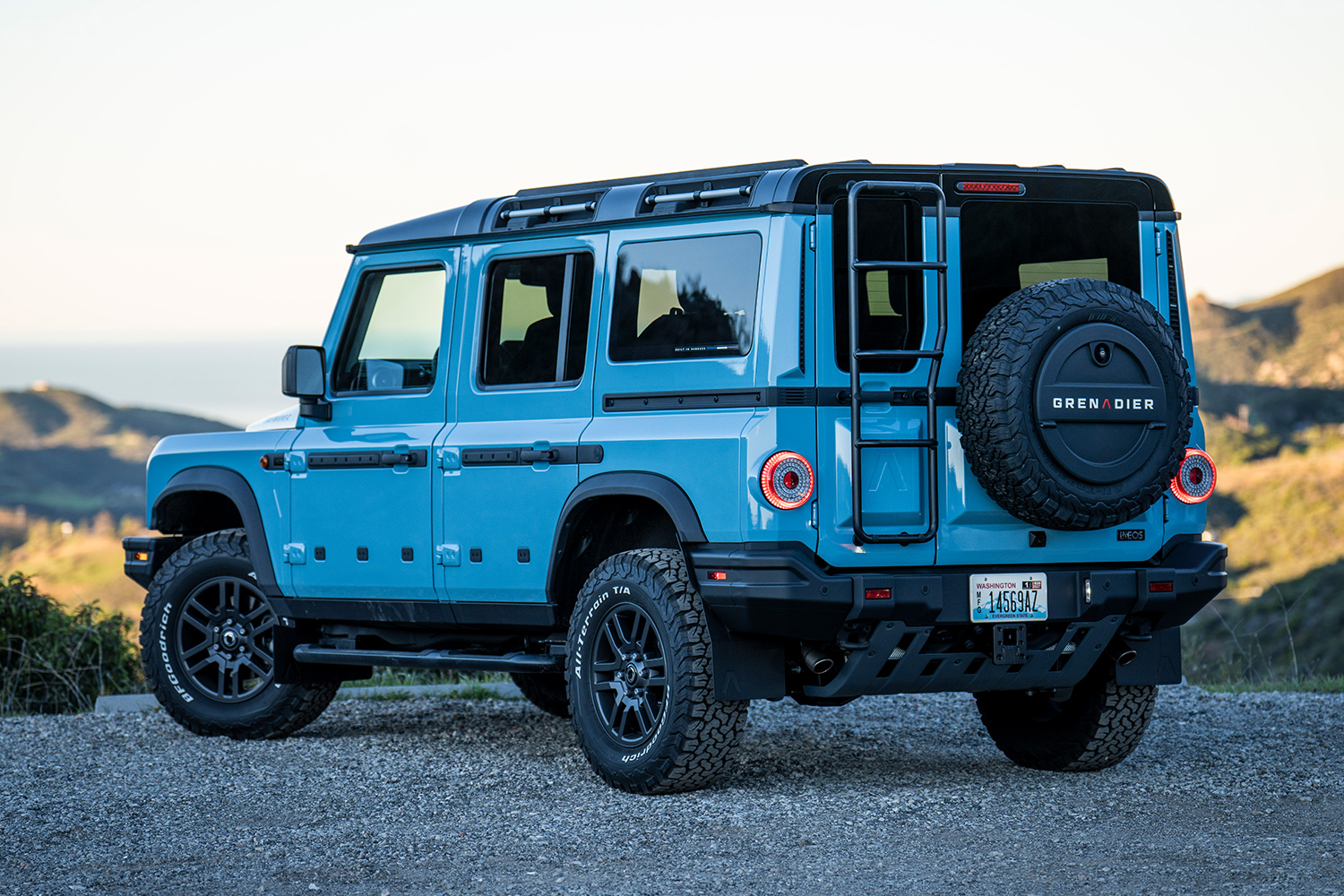
That move nudged the elder Ratcliffe to build a better mousetrap. A billion-and-a-half or so dollars later, Ineos produced the Grenadier, a functional off-roader named after the London pub where Jim penned a rough sketch of his ideal SUV. The concept echoed the Defender’s round headlights, distinctive silhouette and letterboxed windshield. But more critically, it aimed to address some of the Land Rover’s inherent ills.
The Defender Pretender?
When Ratcliffe’s retort finally saw the light of day, the haters did their predictable hating at first blush, accusing the new kid on the block of trying to knock off the original. But a closer look revealed this was no Chinese-style knockoff.
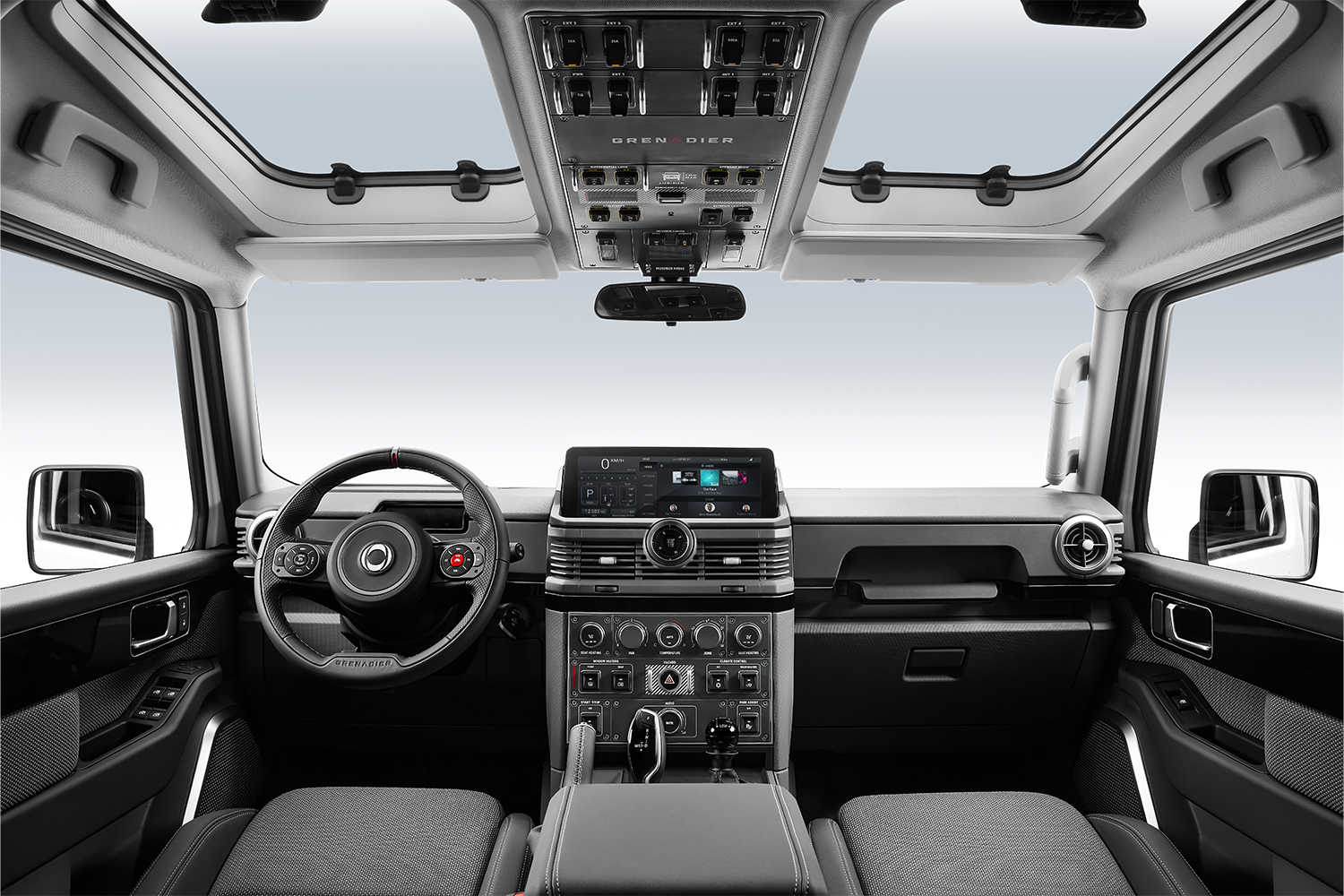
Opening the squared-off door with similar external hinges reveals an interior equipped with a plethora of buttons and switches and an overhead panel that has more in common with an aircraft cockpit than an SUV built in Hambach, France. It also wasn’t afraid to stray from the automotive playbook by incorporating functional details like exterior mounting rails for off-road accessorizing and a dashboard that placed the instrument panel as a central touchscreen to free the driver’s line of sight. Underneath the interior, which can be hosed down and drained when muddied, are coilovers and twin solid axles by Carraro, an Italian tractor supplier. No complex air suspension here.
The great thing about capable off-roaders is they encourage you to venture off the beaten path; the sketchy thing about capable off-roaders is it can be difficult to know when to say when.
Car nerds will notice that the gear shift lever is unmistakably BMW, a telltale sign of the Bavarian-sourced drivetrain that pairs BMW’s bulletproof B58 engine, a 3.0-liter turbocharged inline-six, with the tried-and-true ZF eight-speed automatic transmission.
A reliance on simple solutions and mechanicals over electronics is a recurring theme: while the average new car packs around 150 electronic control units (ECUs), the Grenadier contains only 37. The idea is to reduce the odds of getting stranded in the middle of nowhere due to crippled electronics, though it also means niceties like single-tap window switches must be sacrificed to the gods of simplicity.
Now This Is a Proper Off-Roader
My first Grenadier experience came in 2023 with a prototype and a whole bunch of caveats: kindly ignore the Christmas tree of warning lights, and let’s not drive beyond this closed off-road course. The limitations were fairly standard for pre-production drives, but internet chatter later suggested that the vehicle’s steering had a tendency to wander at highway speeds. There were also the usual niggling issues that plague all new carmakers — electrical bugaboos, ADAS errors, finicky sensors and flaws with the fit and finish. Nothing unusual for a built-from-scratch production car, but tasty fodder for mainstream shoppers and internet commentators alike.
Then, this February, about three and a half years after serial production launched, I took a deeper dive by spending a day on and off-road with the updated 2026 model year Grenadier (which starts at $71,000), followed up by a week behind the wheel of a 2025 model. I was particularly keen on driving the refreshed model not only because of long-awaited improvements to the steering and air conditioning, but because I also wanted to see if the Grenadier overcame the early teething pains which, frankly, made it all too easy to pigeonhole as a Defender 1.5.
“Tough Luxury”: Our First Drive in Land Rover’s No-Expense-Spared Off-Roader
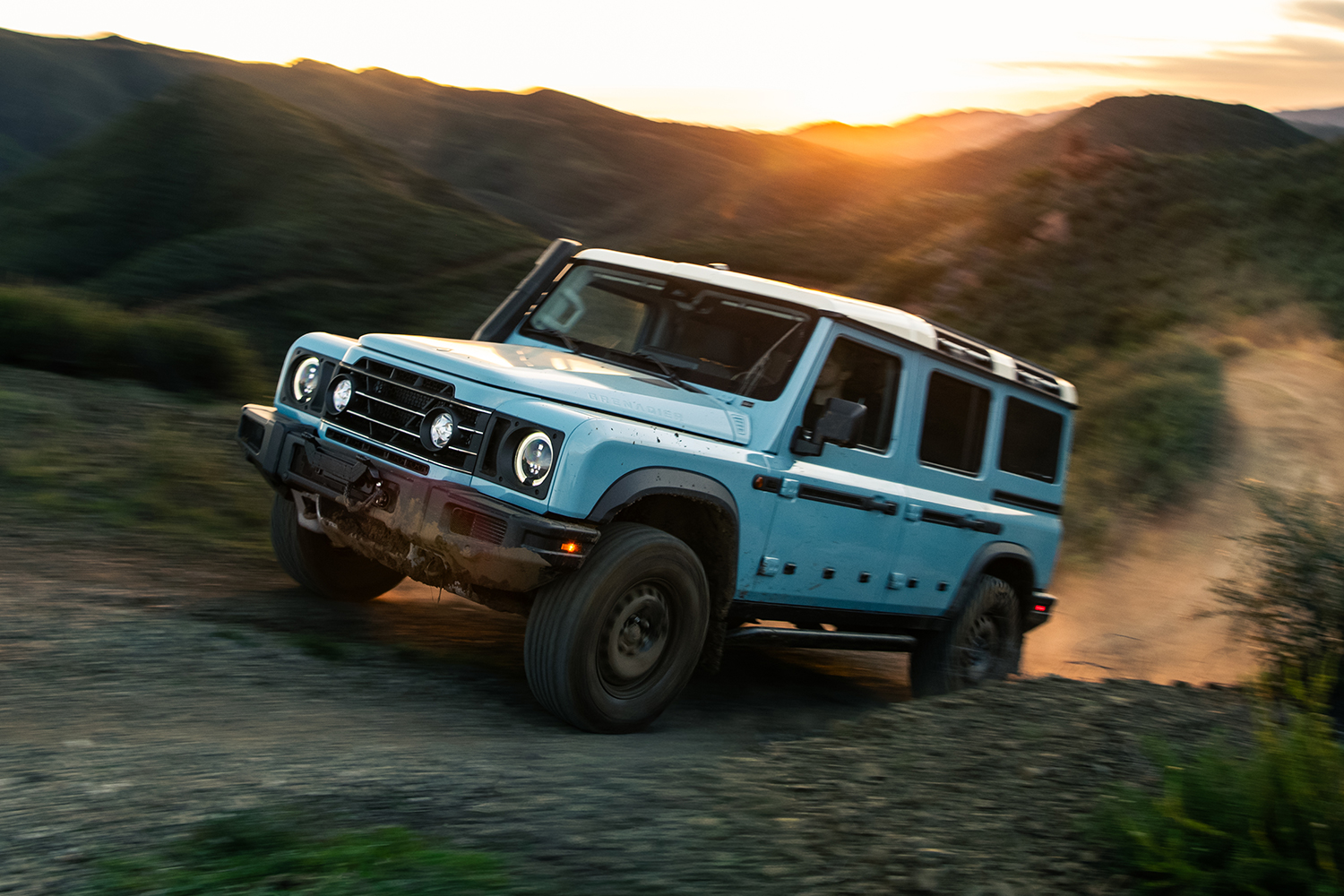
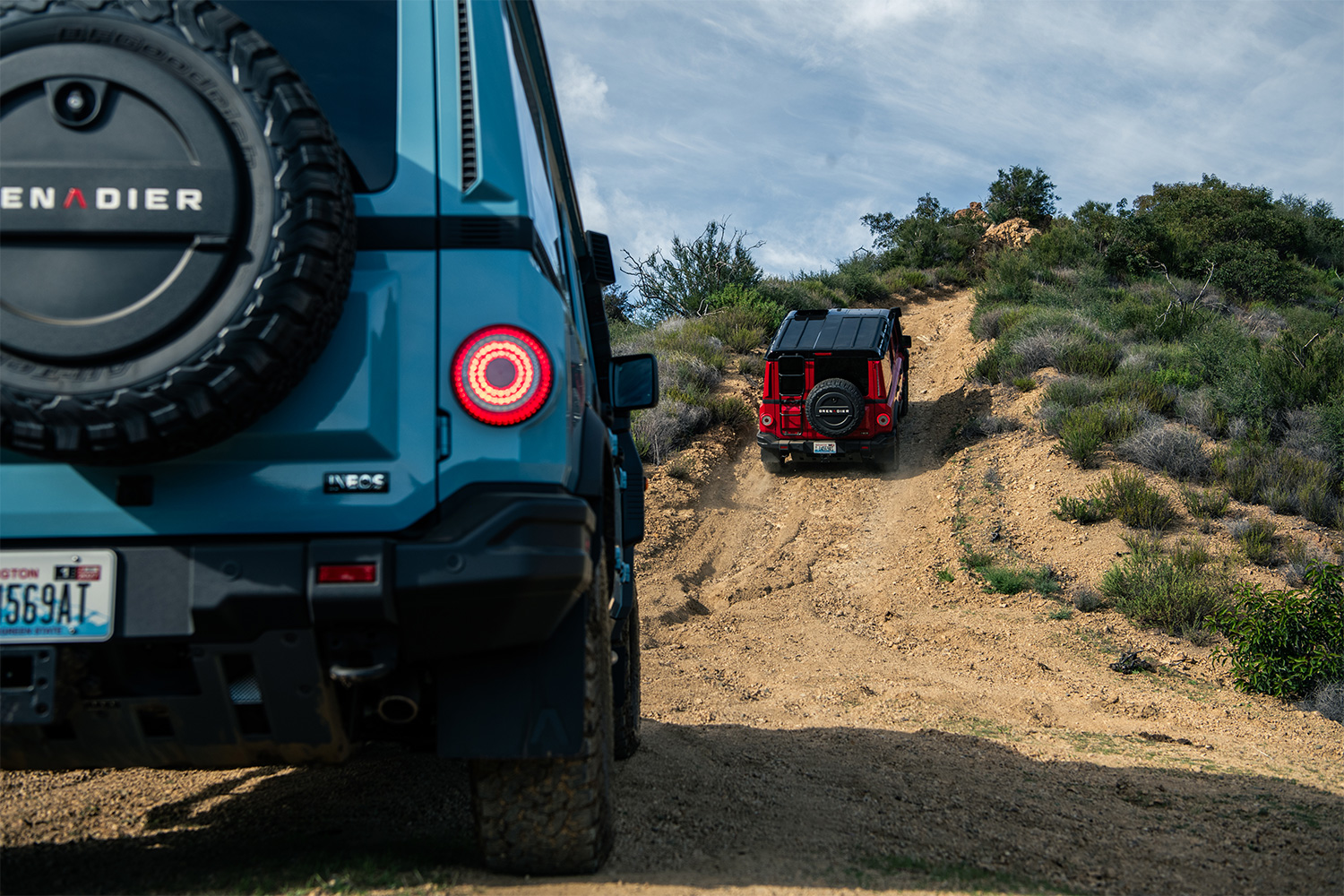
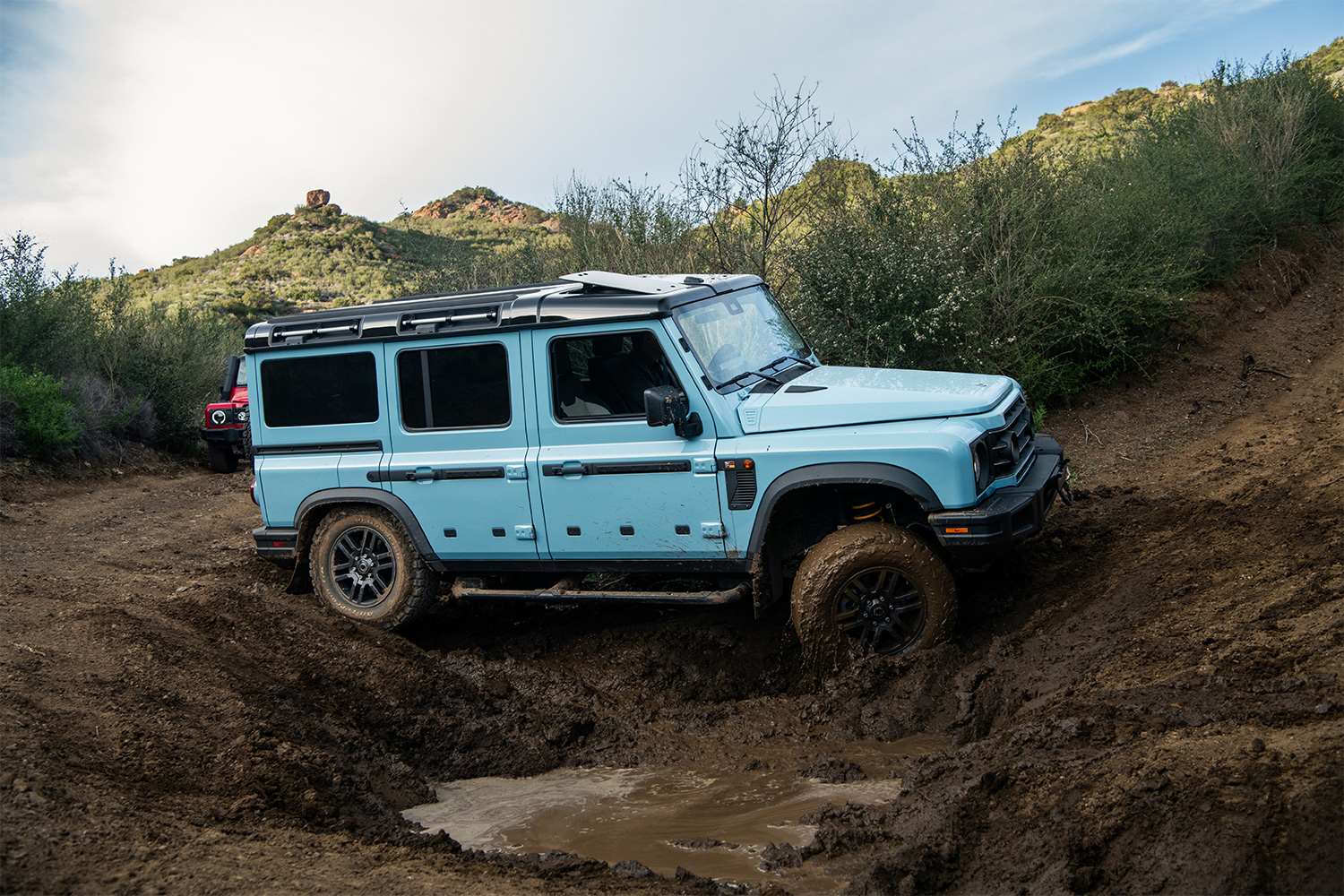
To test the new Defender OCTA, hailed as the most capable and most opulent version of the SUV ever made, our correspondent tackled rocky crags and sand dunes in South AfricaAs I had experienced on California’s Rowher Flats trails in 2023, the Grenadier again proved to be a stout, capable off-roader in the hills overlooking Malibu. Tapping the overhead “Offroad” button reconfigures traction and stability control, throttle response, power distribution and a number of other parameters to make the SUV ready for rough-and-tumble driving.
With clear sightlines and a commanding view, the Grenadier’s surefootedness gives you the confidence that all but the most challenging obstacles can be driven over or through if tackled properly. Stuck in the mud? Lock the rear differential, and if absolutely necessary, the front as well, and the truck will pull ahead like a billy goat. Tackling extremely uneven uphill surfaces? Yank the ball-shaped transfer-case shifter knob to click into low gear and you’ll crawl up all but the most unforgiving routes, and then back down again with hill-descent control if you like.
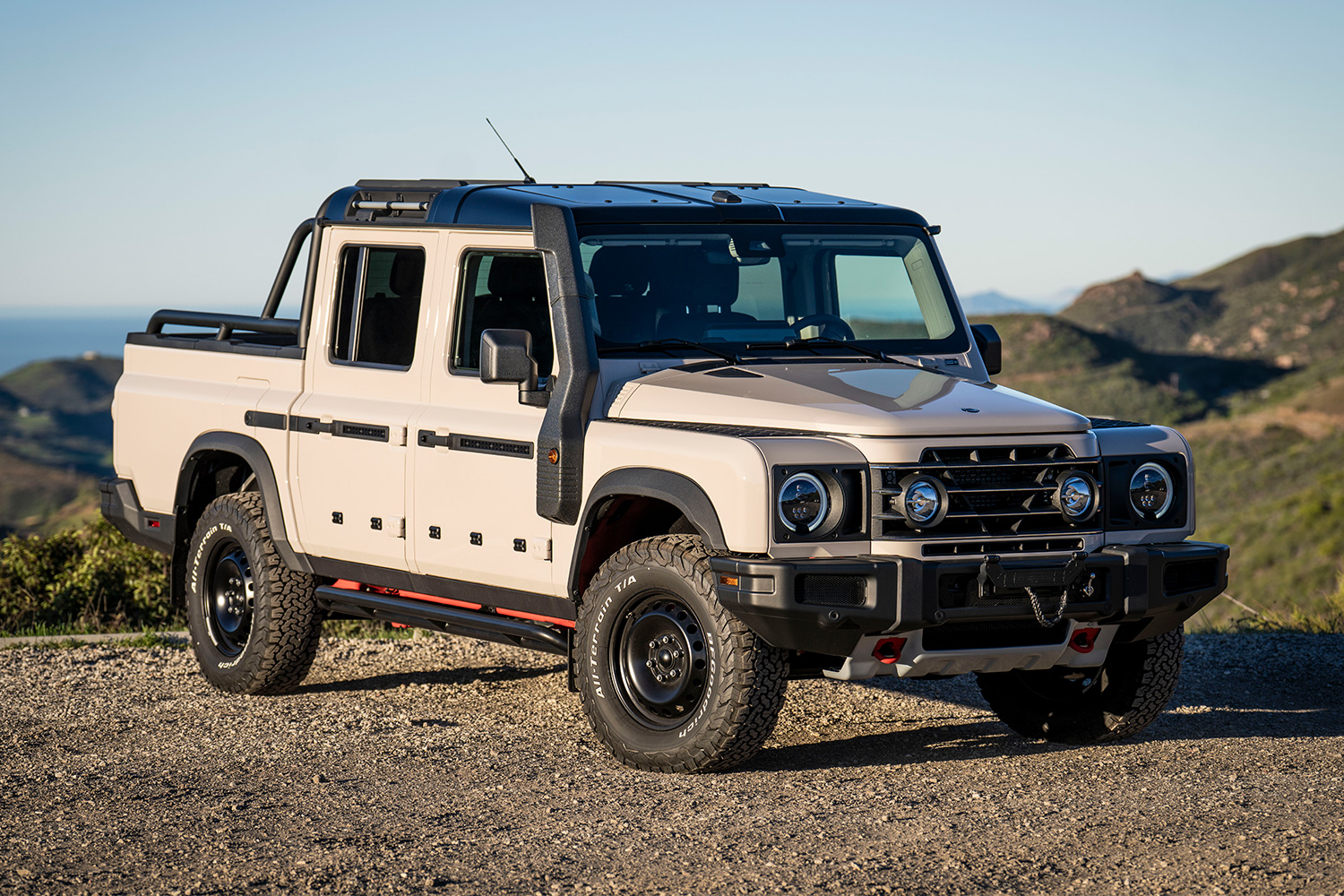
Under these supervised circumstances, the Grenadier performed remarkably well, just as it had when I first off-roaded it several years back. I did manage to bend the rear skidplate after scraping through a particularly steep departure angle in the Quartermaster pickup truck. But considering the severity of the grade and the Quartermaster’s foot-longer length than the standard Station Wagon (or SUV) model, I viewed the prang as excusable, especially since it happened on an easily replaceable part that’s meant to protect more valuable structures.
Emboldened by that go-anwhere experience, I later took matters into my hands when Ineos loaned me the tony Arcane Works Detour, a fancier $147,000 alternative to the more elemental Trailmaster ($79,000), Fieldmaster ($79,000) and Black Edition ($83,000) trim levels available for the SUV.
The great thing about capable off-roaders is they encourage you to venture off the beaten path; the sketchy thing about capable off-roaders is it can be difficult to know when to say when. Consider the water feature at the Hungry Valley State Vehicular Recreation Area I decided to traverse. Since the water appeared shallow, I ventured in, not even bothering to press the “Wading” button which disengages some electrical features like the engine fan in order to save them from damage. In seconds, the truck had sunk so deep that water was spilling over the hood.
“Oh jeez, oh jeez, oh jeez,” I blurted into my Ray-Ban Metas, an immortalized moment that reveals how close I got to disaster.
Remarkably, the truck emerged unscathed and unsunk, with no water creeping into the cabin. I also approached a steep wall climb a few times and, unable to achieve enough traction with the axles unlocked, attempted a higher entry speed that scraped the front skidplate. I likely could’ve climbed it with locked axles, but once again perhaps took a too-casual approach to the proceedings.
Pros and Cons in the Real World
The Grenadier may be built for off-road escapes, but let’s face it, most will spend more time traversing urban jungles. To that end, I also spent over 300 miles crisscrossing L.A. and Orange County during my week-long loan with the boxy head-turner.
For starters, while the steering has indeed been improved by the vehicle’s quicker on-center ratio and greater self-centering tendency, the recirculating-ball setup is still very much an off-road-focused system biased towards robustness, not steering feel or precision. Whipping the Grenadier around town requires attention and focus, particularly when negotiating slower corners — though the ‘26 model does feel more manageable than ‘25s and prior.
The ladder-frame chassis and non-independent suspension backs up the Grenadier’s off-road bias; don’t look for the surprising plushness of present-day G-Wagens or Defenders, which have adopted partial and fully-independent suspension setups, respectively. This old soul still rocks solid front and rear axles which helps off-road articulation (just like an old-school Defender) at the cost of on-road comfort. Also affecting the experience is a fair amount of wind noise at highway speeds.
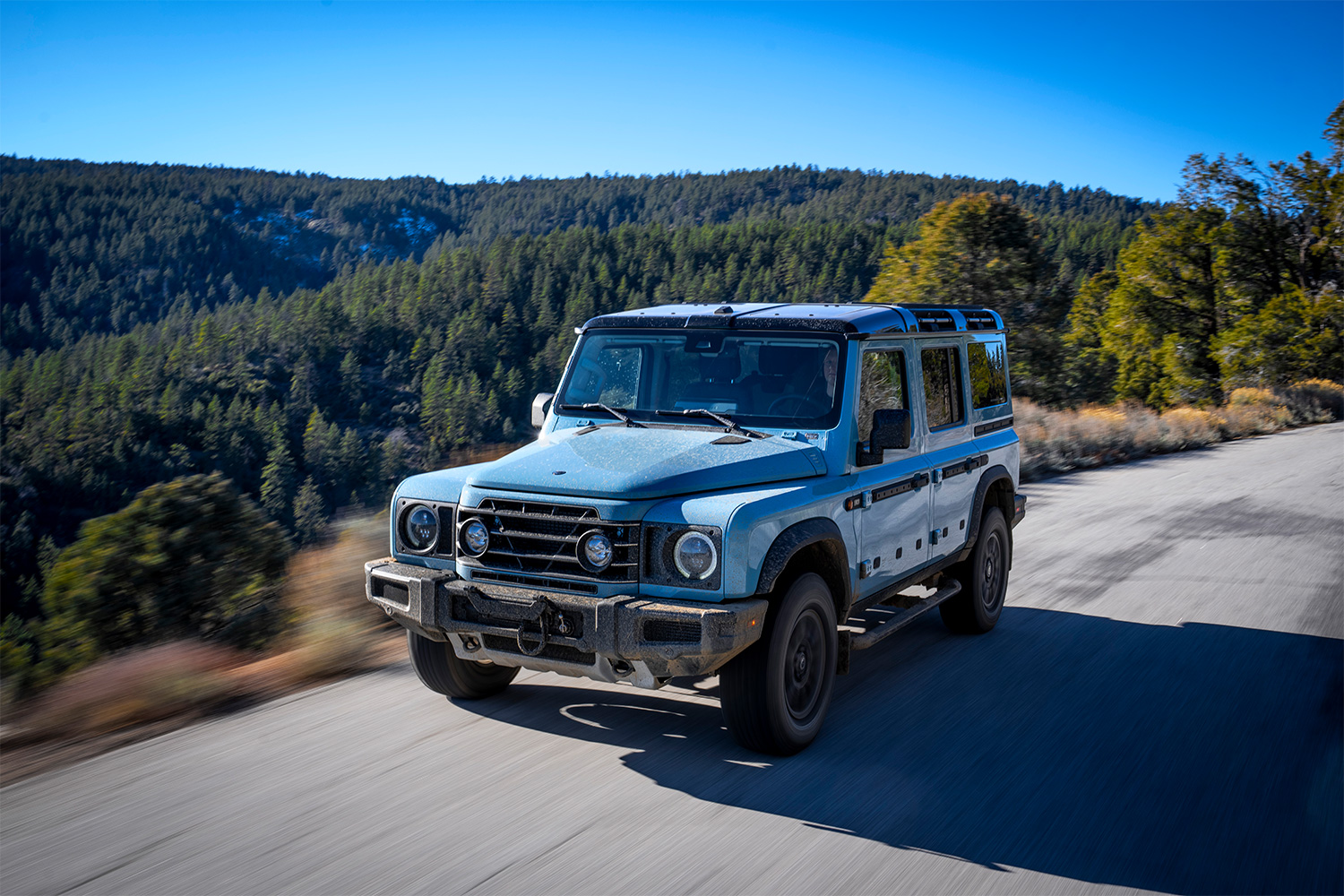
While we’re circling back to the O.G. Defender, there’s no escaping the question of comparative build quality. While the new Defender redefined the model with next-level construction, high-powered engines and sophisticated options like hydraulically linked suspension, the Grenadier splits the difference between old and new by feeling better put together than an original Defender, but remaining simple and stripped down enough to make the modern Defender seem like a spaceship in comparison. Sure, it’s far more solid-feeling and weatherproof than the rickety Defenders of yore, but it also shares some philosophical similarities thanks to its minimal features like manual-adjusted seats, a mechanical steering pump and a manual handbrake.
“If an electric handbrake goes wrong, you’re stuck; with a manual handbrake you lift the rear seat and with two 10mm spanners you can fix the handbrake in the field,” said Gregor Hembrough, Ineos Automotive Executive VP of the Americas. “It’s about being able to complete the journey, not getting stuck because you don’t have the right laptop.”
As mechanically gratifying as a relatively analog machine like the Grenadier can be, I did find myself frustrated that the 2026 model year examples were equipped with more legally required ADAS systems like lane-keep assist and attention monitoring that tediously need to be switched off manually every time the truck is keyed off. I also saw a couple of fleeting warning lights that resolved themselves, which echoed my friend and colleague Matthew Scott’s experience having owned a Grenadier for several years.
Scott shared his frustrations on social media about everything from leaky door seals to issues with his front driveline. While the driveline issue might have been exacerbated by the fact that he lifted his suspension by 1.2 inches, he said other owners have experienced failures without modifying their ride height. Some of the annoying chimes (like the Europe-mandated speed warning) have since been addressed with over-the-air software fixes, but he said his early example’s steering and front-axle issues dissuade him from driving it more frequently. Despite this, he described the Grenadier as “one of the modern cars I’ve loved the most.” He added wistfully in a private message, “It could be so good.”
All of that sounds eerily familiar to this former Defender driver — that ownership experience was one of the most passionately maddening love-hate car bromances I’ve had. And for every experience like Matthew’s there are also those from folks like his colleague Scott Brady who drove an early unit across East Africa.
If an electric handbrake goes wrong, you’re stuck; with a manual handbrake you lift the rear seat and…you can fix the handbrake in the field.
– Gregor Hembrough, Ineos Automotive Executive VP of the Americas
Brady, who emphasized that he was supplied a loaner but paid his own expenses, said, “I didn’t have a single failure or check-engine light. It seems most of the issues are on modified units…they do not like to be lifted more than about 30mm without front driveshaft issues.” He added, “I like them enough that I am buying a Quartermaster next month as my personal vehicle,” despite calling out that “the steering is not up to par with the rest of the car…otherwise, I really like them for travel and backcountry use.”
Decidedly analog (despite the mandatory safety nannies) and defiantly different from the vast number of purportedly rugged SUVs on the market today, the Ineos Grenadier remains in its infancy.
“We are very much still a new car company,” one spokesperson reminded the group of assembled journalists at the media drive I attended.
Passing the Torch
As for Ineos’s place in the space originally created by Land Rover founders Maurice and Spencer Wilks in 1947, consider Jim Ratcliffe’s complicated relationship to the nearly 80-year-old British brand. Despite disagreeing with the luxed-up modernity of the new Defender, Ratcliffe’s son George said it was merely the absence of an old-school Defender equivalent that led his father to develop the Grenadier. “It comes from the fact that we used to have them and drive them,” the younger Ratcliffe said, “and eventually you couldn’t buy a new one.”
Despite the moonshot investment into an entirely new automotive marque, Ratcliffe’s family still embraces the legacy carmaker that inspired Ineos. “Look at our garage and there’s lots of Defenders as well because we’ve always loved the brand,” George said.
Perhaps the ultimate testimony lies in their purchase and restoration of the first production Land Rover, serial number 001 (aka JUE 477), which was rechristened on a several-thousand-mile, month-long journey across the Gobi Desert in Mongolia. Several Ineos Grenadiers served as support vehicles, an implied passing of the torch from Land Rover’s origin story to an alternate take on its future.
Ineos has overcome the initial inertia of keeping that torch aflame, but how it remains lit will depend on the carmaker’s ability to weather myriad headwinds, like a fickle marketplace, tariff uncertainties and ever-stiffening competition. The Grenadier’s future may not be guaranteed, but perhaps that’s all the more reason to root for this plucky underdog.
More Like This

This article appeared in an InsideHook newsletter. Sign up for free to get more on travel, wellness, style, drinking, and culture..