

Editor’s note: Mandy Naglich is an Advanced Cicerone, Certified Taster, journalist, author and drinks educator. If you’re going to trust one person to order a drink while 30,000 feet in the air, it’s her.
Whether it’s flight delays, airport security or family drama, it feels like things line up to annoy us during holiday travel. But there’s one thing we can collectively look forward to when the seatbelt sign finally turns off: the moment when the beverage cart pulls up to your row.
That said, your favorite drink might be a disappointment in-flight, as the cabin atmosphere affects our sense of taste and smell. Unless you know how to properly order on a plane to maximize flavor and pleasure! When it comes to the best airplane drinks, it’s more about chemistry than quality. In my award-winning book, How to Taste, I showcase insights from top chefs and scientists on how the airplane cabin environment affects the senses of taste and smell. Using their tips, there are actually scientifically-proven ways to order drinks you’re more likely to enjoy in flight.
Before your trip, here’s what you need to know for the ultimate in-flight drinking experience.
How to Taste Everything (and Not Sound Pretentious)
How taste expert Mandy Naglich demystifies whiskey, beer and moreWhat Do Drinks Lose in the Air?
Long before Buzzballz went viral, Spirit Airlines carried them on board. But passengers may be disappointed in just how different their favorite spherical cocktail tastes in-flight compared to on the ground.
“At cruising altitude, lower humidity and cabin pressure can dull sweet and salty notes while amplifying acidity and bitterness,” says Stephanie Laster, managing director, onboard dining experience at Delta Airlines. “That insight shapes everything — from the wines we select to the cocktails we craft — so that flavors remain balanced and enjoyable in the air.”
So your Margarita would need about 30% more sugar and salt to match your typical sea level experience. And because those flavors are suppressed, the same Margarita would taste much more sour in an airplane seat than in an airport bar.
This dulling of flavor is so striking that Cathay Pacific partnered with Hong Kong Beer Co. to craft a beer specifically for enjoying at altitude. To create this ideal beer-sipping experience, Cathay Pacific’s Wine, Spirits and Beverages Manager Ronald Khoo says the team did three things: decreased the bitterness of the beer to deal with the loss of sweetness, increased the aroma and flavor additions to enhance aroma, and decreased the carbonation level for optimal in-flight service.

“On the ground, Betsy Beer is bold, aromatic and subtly sweet,” Khoo says. “In the air, the sweetness softens and the citrus, coming from dried Hong Kong mandarin orange peel and Amarillo and Simcoe hops, becomes more prominent.”
Those pungent aromas of herbal hops and fruity citrus are essential because the sense of smell is suppressed by cabin dryness and pressure. “When you’re in a pressurized cabin, your sense of smell is less sharp, and that changes the entire experience,” Laster says. “We notice that bold citrus or spice-forward [aromas] really pop.”
What Do Drinks Gain in the Air?
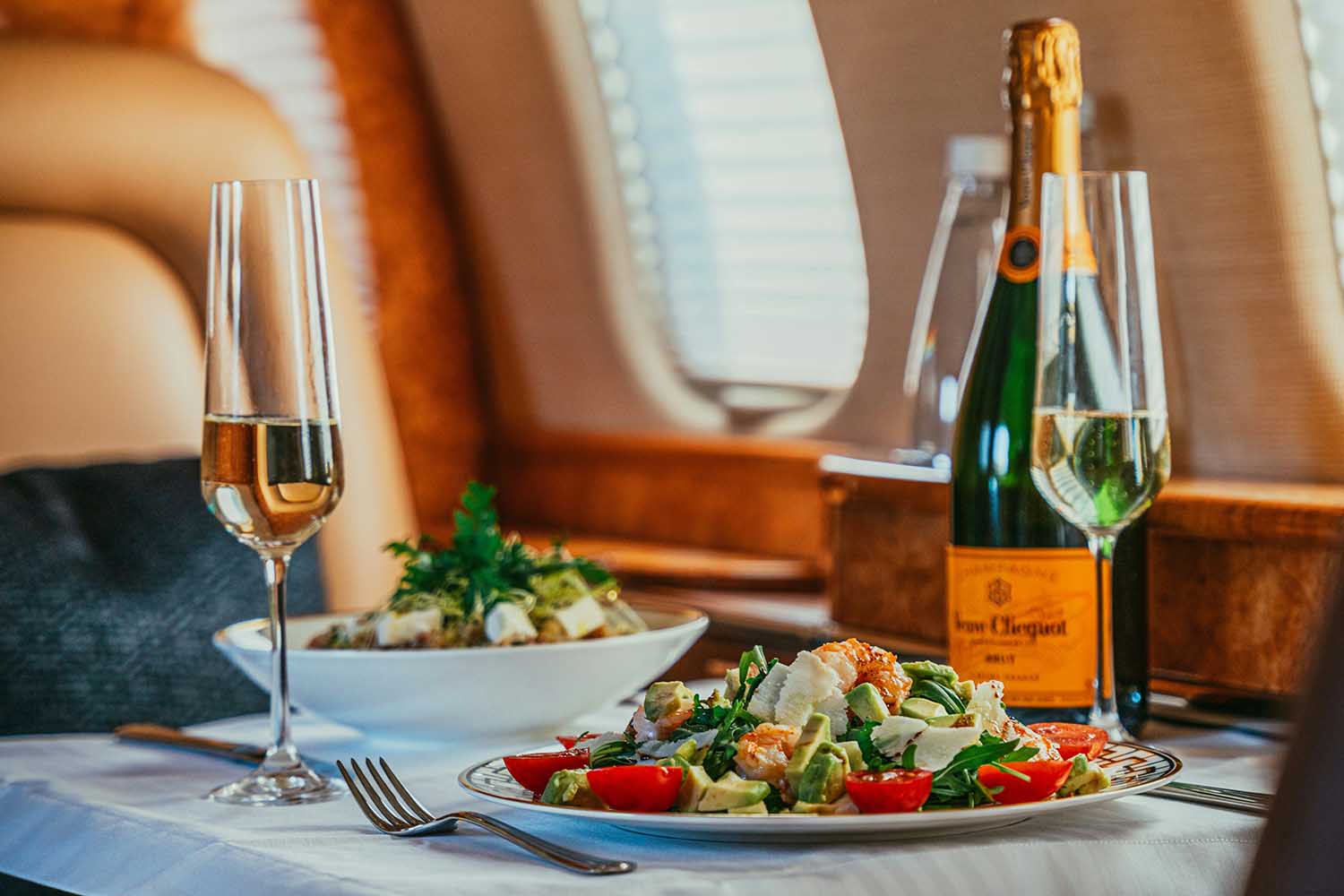
While sweetness, saltiness and aroma are suppressed, mouthfeel and umami receive a boost on board a plane. “At a lower air pressure, carbonation escapes more slowly, which leads to longer head retention and a perceived increase in carbonation,” Khoo says. This means your Champagne feels extra zippy and bubbly onboard. Laster says that sparkling waters and wines are popular choices with passengers. It’s one of the reasons Delta partnered with Champagne Taittinger — they’ll never run out of the bubbles that guests suddenly crave when they reach altitude.
But bubbles aren’t the only texture people notice more acutely in the air. Drinks that are silky, heavy, creamy, astringent (drying), spicy or cooling will also register more quickly. Charles Spence, professor at the University of Oxford and author of Gastrophysics: The New Science of Eating, says texture is the “new thing” when it comes to enhanced drinking experiences. On a flight, specifically, rather than increasing the sweetness of a drink by 30% to make up for the loss of perception, “you could add more interest via texture rather than sugar.”
This means the prickly spice of ginger ale is intensified, as is the rough drying quality of a tannic red wine. Laster says the team at Delta specifically selects red wines with soft tannins to serve in-flight for this reason.
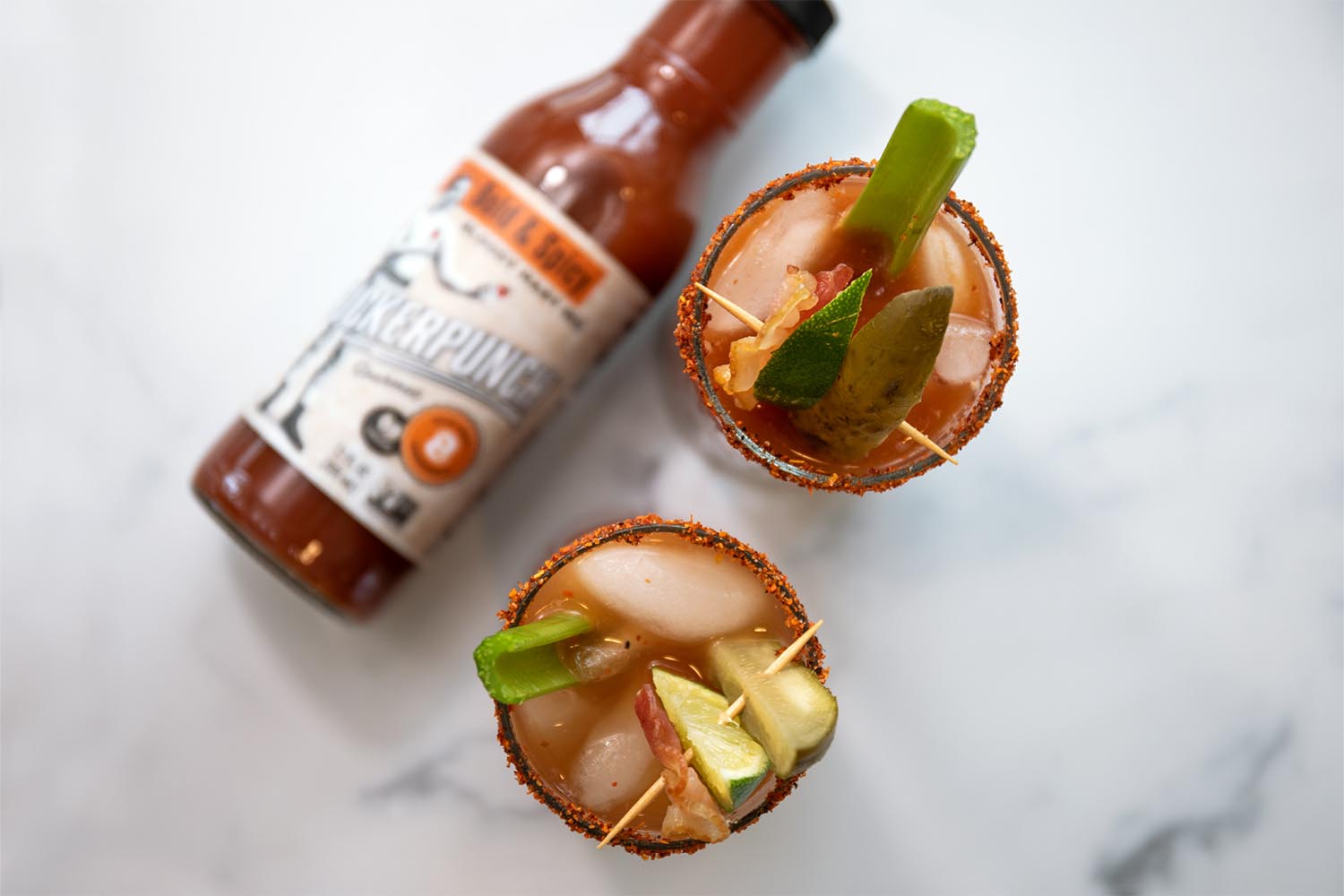
Additionally, unlike the other basic tastes, our perception of umami flavor is not reduced at altitude. Spence says 25% of passengers order a Bloody Mary post-take off to enjoy the combination of its elevated savory flavor and emphasized silky texture. Beyond tomato juice, other drinks with umami — like green tea, sake and olive brine (hello in-flight Dirty Martini) — will also shine. The umami of green tea is so satisfying on board that Cathay Pacific cabin crew receive comprehensive training, which covers special temperature targets (the boiling point of water is lower at altitude) and extraction times for their specially selected JING green teas.
How Can You Order the Best Airplane Drinks?
Spence notes that yes, the drinks in first class do taste better simply because they’re served out of real glass. “The weight of the glass feels right,” he says. He notes in his book that people associate a heavier glass with more satisfying drinks.
But just because we can’t all be in the front of the plane doesn’t mean we have to miss out on the pleasure of a satisfying in-flight tipple. You can certainly bring your own glass, just make sure it’s sturdy enough to get through security unharmed. And the same would go for your own cocktail glass (but make sure the flight team knows you only brought the glass from home, not the booze).
Once we have the glassware set, what should go inside it? While Spence acknowledges a Bloody Mary is certainly more flavorful and umami-rich at altitude, he personally always goes for a Gin and Tonic once the wheels are up. The fizz of tonic will feel more intense, and an ultra-aromatic spirit like gin will awaken our suppressed sense of smell. When it comes to the perfect in-flight beverage order, texture and aroma should be at the forefront of your mind. Whether it’s the enhanced scent of Betsy Beer, an extra expressive full-bodied white wine or a cocktail with a sweet aromatic juice, the more you can smell, the better.
On a recent flight, I ordered a Garibaldi (a combination of Campari and orange juice shaken until fluffy) because I thought the soft texture and aromatic herbs would fit these rules. But alas, the orange juice came across as sour and harsh. Which brings me to the next rule of ordering: Choose a drink that has low bitterness and sourness. Because we miss out on the sweetness to balance these other flavors, the hops of an IPA can lean too bitter in an airplane cabin, as can the bite of an amaro or tannic wine.
When looking for extra texture, lots of aroma, and low bitterness and sourness, both Khoo and Laster say they reach for the same drink: sparkling wine. At 35,000 feet, Champagne will enjoy a fizzier feel and elevated brightness from acidity, plus the constant stream of bubbles helps carry the maximum aroma toward the nose.
However, I find a makeshift Kentucky Mule (a mix of ginger beer and bourbon) to be the ideal answer. The vanilla aroma of the whiskey tricks my mind into thinking I can taste sweetness, even if the perception is dulled. The zesty heat of ginger combines with ample carbonation for a heaping dose of texture. And there is nothing inherently acidic or bitter (as long as I skip the lime wedge that I might reach for on the ground).
Whichever drink you decide to order, let these tips guide you to a beverage that improves your travel day and helps you enjoy the finer things in life.
More Like This


We're always on the scene eating, drinking and traveling near and far to bring you the best of what's happening out in the real world. Sign up for IRL now.