
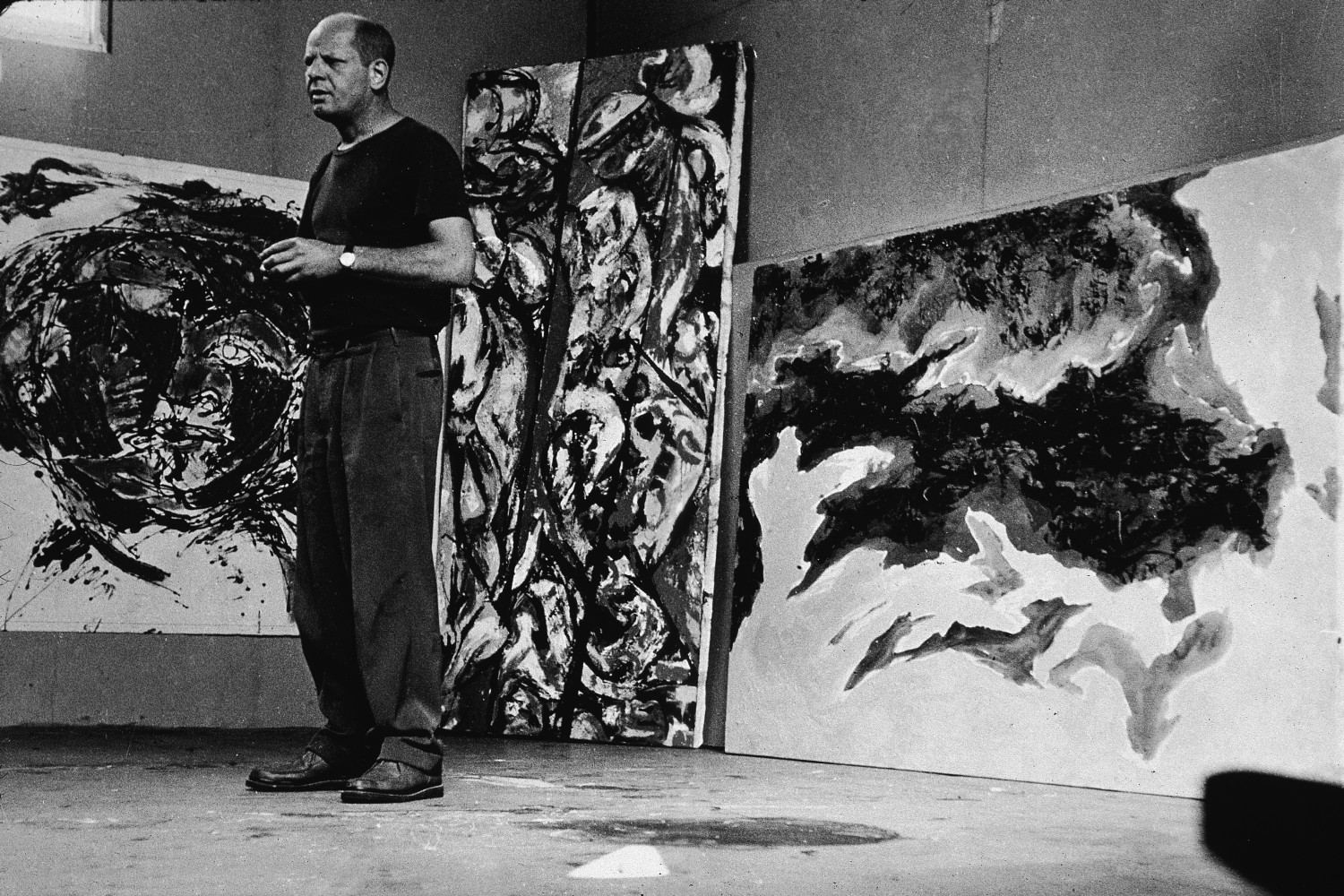
Like any field, the art world is home to many mysteries. Often, those mysteries can surround centuries-old works of art — such as whether a painting sold for hundreds of millions of dollars was actually the work of Leonardo da Vinci. When you venture into the 20th and 21st centuries, however, there are still questions that linger around certain paintings and sculptures — including one work by Jackson Pollock that’s currently on display at the Museum of Modern Art.
Earlier this month, the journal Proceedings of the National Academy of Sciences published a paper that answered a decades-old art-world question: how did Pollock achieve the memorable blue color in his painting Number 1A, 1948?
As the paper’s authors wrote, the analysis of the painting’s colors has taken place across several years. “While past work has identified the red and yellow pigments that form part of his core palette, the vibrant blue in the painting has remained unassigned,” they noted. The researchers working on this project used spectroscopy to analyze samples from the painting, eventually determining that the specific color is manganese blue.
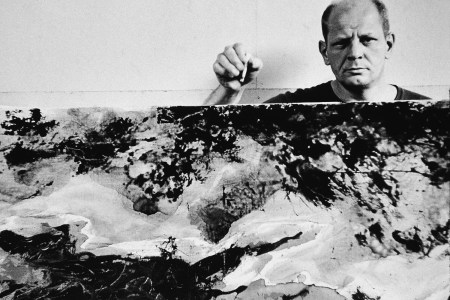
Europol Raid in Bulgaria Unearths Lost Jackson Pollock Painting
Apparently the painting was dedicated to Lauren BacallIn an article on the discovery for the Associated Press, Adithi Ramakrishnan wrote that this is “the first confirmed evidence” of Pollock making use of manganese blue in one of his paintings. The AP also pointed out that manganese blue is no longer available to contemporary artists: production of the color in question ended over concerns surrounding its environmental impact.
This latest discovery, though, is something else: a case of science and art history converging to expand our knowledge of both disciplines.
More Like This





This article appeared in an InsideHook newsletter. Sign up for free to get more on travel, wellness, style, drinking, and culture..