

“Who would buy it?”
That was the question the higher-ups at the Rover company asked themselves back in the early 1950s when they dreamt up an entirely new category of car: the luxury SUV. Of course, it wasn’t called that seven decades ago (“SUV” entered the vernacular in the mid-’70s), but the British automobile maker was toying with the idea of creating a hybrid of its Land Rover (a workhorse vehicle for farmers, inspired by the wartime Jeep, that was introduced in 1948) with its higher-end Rover saloon cars. Eventually, they decided to shelve it.
Then came a rumble from across the pond: The success of utilitarian vehicles like the Jeep Wagoneer and Ford Bronco convinced Rover to look again. That’s how, back in 1965, engineers Gordon Bashford and Charles Spencer King started working on a vehicle that, King said, aimed “to combine the comfort and on‑road ability of a Rover saloon with the off‑road ability of a Land Rover. Nobody was doing it.”
The result, officially launched in 1970, was dubbed the “Range Rover.” Its basic design would remain largely unaltered for some three decades. The marque is still the U.K.’s most valuable export vehicle.
“Luxury SUVs are everywhere now, but then the Range Rover was in many ways a weird product, one that really had to find its own niche,” explains Giles Chapman, author of The Range Rover Story and the forthcoming Sir William Lyons on Jaguar (Jaguar and Land Rover now form the Tata Motors-owned company Jaguar Land Rover).
“It was brilliant on mud or sand, but a hard drive on a road,” Chapman adds. “The Range Rover was something you could drive from your country estate into a market town and still feel well turned-out. I think its success over the decades has been down to its ability to speak to that middle-class dream of blending country and urban living. It’s the original ‘Chelsea tractor,’” as it would come to be nicknamed in the mid-‘90s, not altogether affectionately.
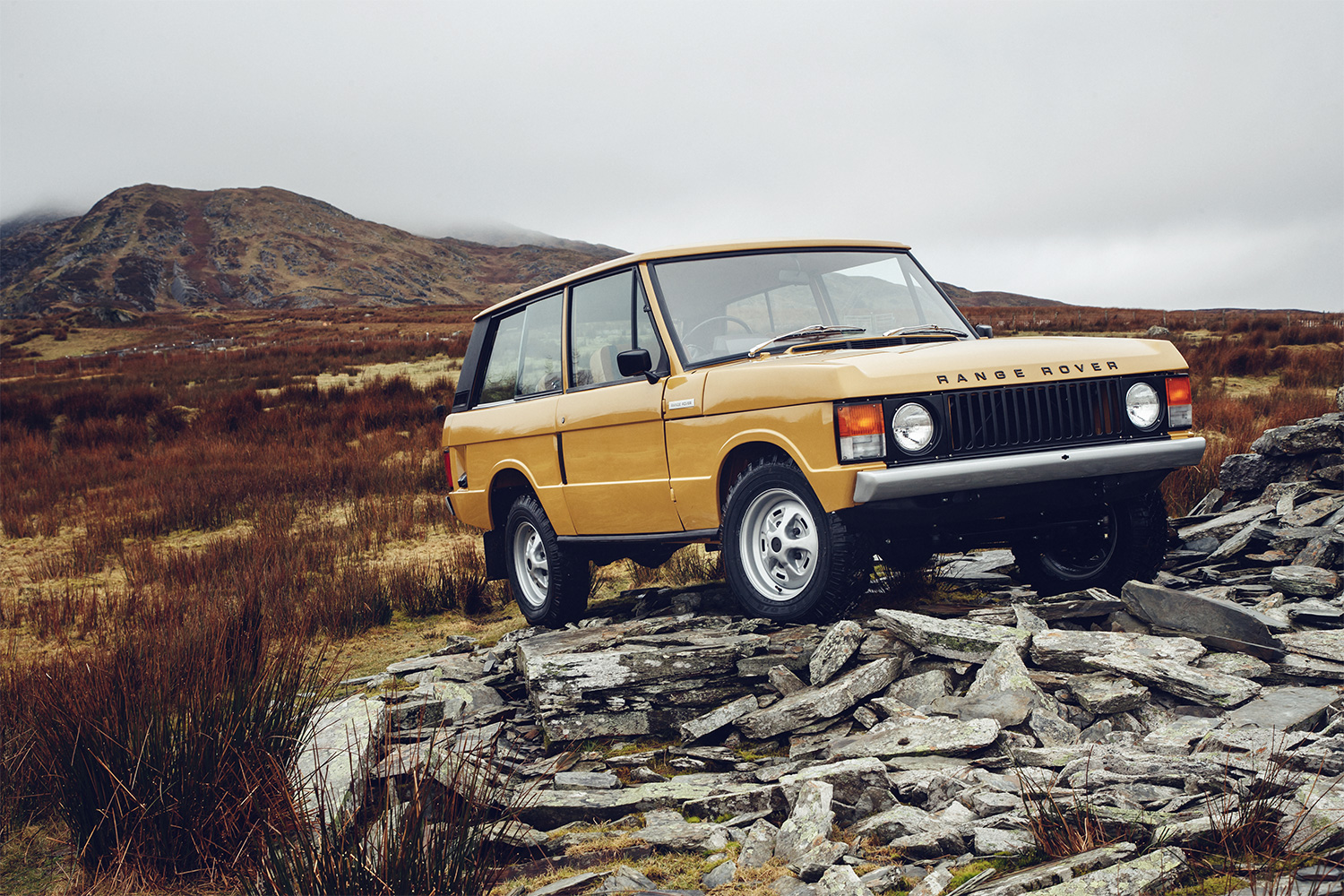
The signature boxy shape of the Range Rover would also make it iconic — its year of launch saw it displayed in the Louvre as an example of excellence in industrial design — even if that was a last-minute idea. The original concept was, perhaps, too saloon-like. Bashford and King had used straight-edged panels to cover mechanicals for testing and, on seeing this, Rover’s management identified a refined version of that as the way to go.
“In fact, that shape — a floating roof, high waistline, short front and rear overhangs, this big glass house, a car that you sit on and not in — would become and still is a big reason for why people bought the car,” says Ryan Miller, Range Rover’s global product director. “Customers are very protective of that shape. They want it to stay more or less the same, just evolved [with each model] to be better. It’s the shape that has, I think, become iconic. You can’t create an icon. You have to earn it. So we’re very protective of it.”
There was a moment when it seemed everyone’s successful dad had a Range Rover.
– Taylor Congleton, Founder of Congleton Service
Certainly there was much else that was progressive about the Range Rover: those original body panels were aluminum, for example, mounted on a steel chassis; it was also the first car to come with permanent four-wheel drive. The vehicle was properly tough: it originally had vinyl seats and a floor you could hose down.
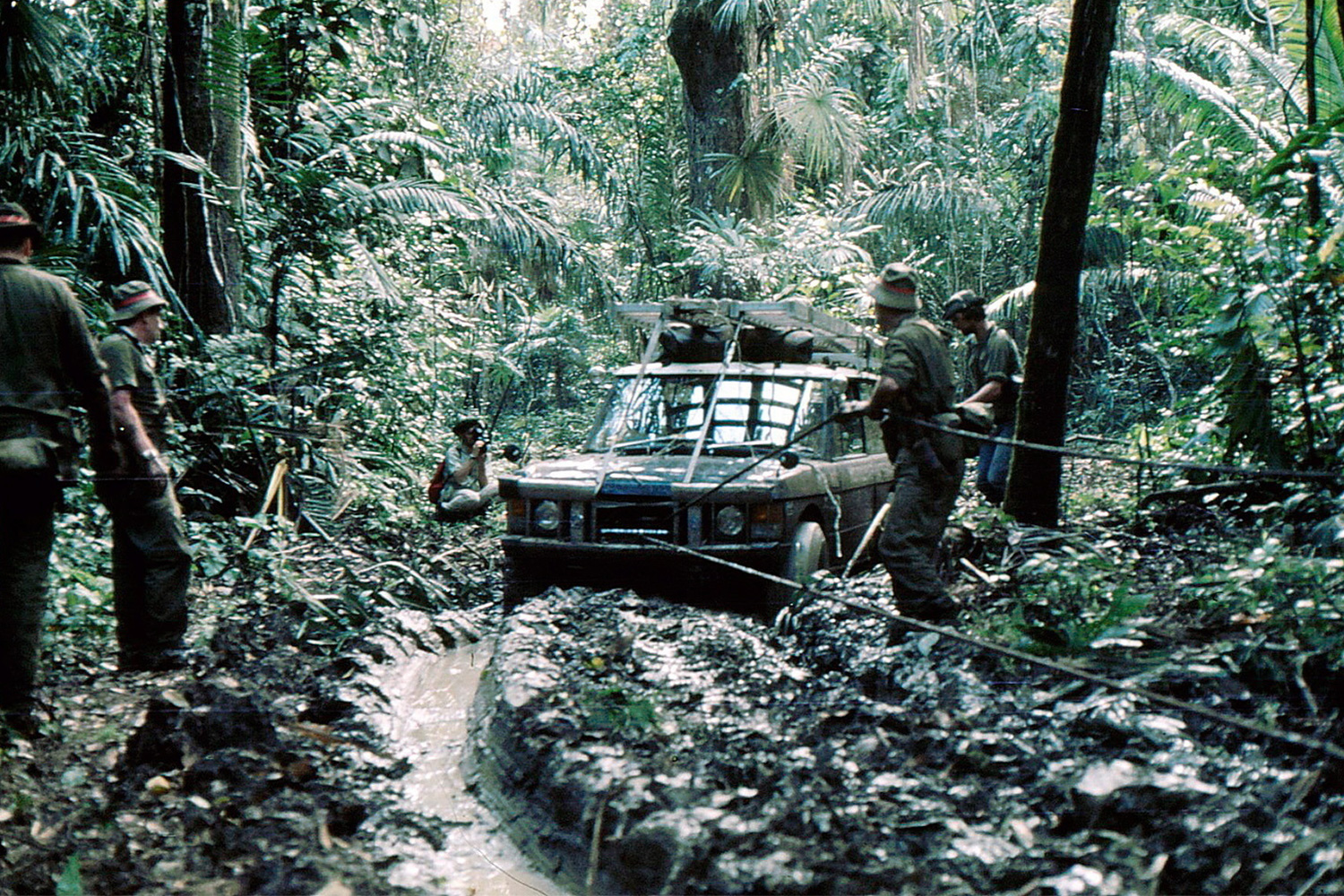
It quickly proved its serious mettle, too. In 1971 and 1972, a team of British soldiers drove Range Rovers from Anchorage, Alaska, to Tierra del Fuego, Argentina, through snow and ice, swamp and rainforest, much of it judged impassable. The first Dakar Rally of 1979? The car category was won by a Range Rover. Here was, as leading British car magazine Motor would put it at the time, a vehicle “that is equally home in Park Lane, the Sahara, a cart track or a ploughed field.”
“Its capability is very much part of its authenticity, even if the majority of these vehicles don’t go extreme off-roading, of course,” says Miller. “The point is that drivers know they can. There’s a reassurance in that — you know it’s going to get you home safely. A bit akin to wearing a diving watch, it’s a tool in your armory.”
Although, the Range Rover isn’t quite as utilitarian as that might suggest. If the vehicle created this new market segment, inevitably other manufacturers got in on the act, too. And so, while the brand would insist on retaining its rugged functionality — plans to produce a version with a V12 engine were dropped after the necessary hood extension was deemed as limiting its off-road capabilities, while controls were designed to be operated by gloved hands, and not just white-gloved hands — the Range Rover has steadily ascended into ever more leather-and-wood luxuriousness. Even if Miller insists it’s a restrained, understated kind of luxuriousness, “less about decoration and lots of jewelry for its own sake and more about creating a car you can drive for four hours and yet leave you feeling better after than when you started out.”
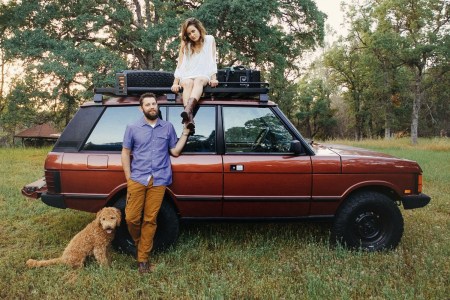
“[The older] range Rovers make great statues — just standing there they look great, with the kind of lines that, even unbadged, you can see it’s a Range Rover,” says Taylor Congleton, founder of Congleton Service, a leading Range Rover refurbishment specialist in the U.S. where clients pay up to $100,000 to have their classics completely disassembled and re-built with more up-to-date bespoke parts. “The Range Rover invented the idea of the SUV, or at least the kind you’d actually want. It’s just really good at a lot of things. And in the U.S. it answered a kind of Anglophile reach for what was a nice British car.”
“But I think [the marque] was cooler when it seemed to be less about country clubs and golf,” he says. “There was a moment when it seemed everyone’s successful dad had a Range Rover.”
What I Wish I Knew Before I Bought a Range Rover Classic
Thinking about buying the old-school SUV? Read this first.That broad capability was still there when a diesel engine was introduced in the mid-1980s; it set 27 diesel speed records, including one where it averaged 100 mph for 24 hours. But the Range Rover was by now also a vehicle that pulled off collaborations with the likes of Vogue magazine. As Chapman puts it, “It would become the kind of vehicle that, given all of its opulence and thick cream carpets, you wouldn’t want muddy boots to get anywhere near it.” Some thought that meant the Range Rover had lost its soul.
With further renditions bringing in the likes of air suspension and monocoque design — and eventually with competition from brands like Bentley and Aston Martin — the Range Rover’s price bracket crept up and up. By 2000, Range Rovers tipped over the £50,000 ($67,000) mark. With the latest iteration, you can pay over a quarter of a million dollars.
This may not have pleased Charles Spencer King. The Range Rover, he said in 2004, was “never intended as a status symbol, but later incarnations of my design seem to be intended for that purpose.” All the same, it’s good to know that your status symbol will get you through rough terrain — when you finally accept the idea of getting your tires a bit dusty.
More Like This

This article appeared in an InsideHook newsletter. Sign up for free to get more on travel, wellness, style, drinking, and culture..