

Stop us if you’ve heard this before: the NHTSA is looking into concerns over Tesla’s Full Self-Driving feature. If you’re left with an overwhelming sense of deja vu here, there’s a very good reason for that — as Ars Technica’s Jonathan M. Gitlin reports, this latest investigation is the 14th time the agency has opened an investigation into the automaker’s high-profile system.
According to the agency’s own report, the investigation was opened as a result of incidents where “a Tesla vehicle experienced a crash after entering an area of reduced roadway visibility conditions with FSD -Beta or FSD -Supervised (collectively, FSD) engaged.” The reduced visibility, the NHTSA continued, resulted from “sun glare, fog, or airborne dust.”
One of the four crashes resulted in the death of a pedestrian, the agency reported, while another injured one of the participants.
Given that Tesla’s self-driving feature is an important part of the forthcoming Cybercab, which the automaker announced earlier this month, this latest investigation represents a metaphorical bump in the road for Tesla. Without self-driving features, Tesla’s existing lineup of vehicles can still be driven just fine. The Cybercab’s lack of a steering wheel or pedals, at least in the version shown at the launch event, would prevent that.

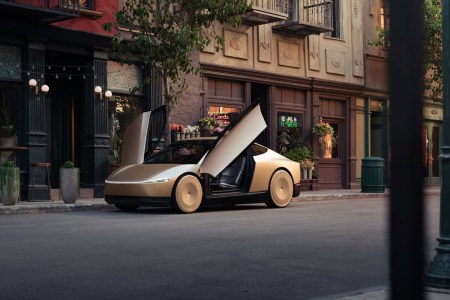
How Seriously Should We Take Elon Musk’s Cybercab Promises?
Tesla has scaled back its ambitions beforeAs Gitlin points out at Ars Technica, the investigation could lead to a recall of the affected vehicles. That’s not a small number: according to the NHTSA’s own estimates, the issue could affect over 2.4 million Teslas manufactured between 2016 and 2024. Between a wide-ranging recall and the implications for the Cybercab, this investigation could have significant implications for Tesla.
More Like This


This article appeared in an InsideHook newsletter. Sign up for free to get more on travel, wellness, style, drinking, and culture..