Nota bene: All products in this article are independently selected and vetted by InsideHook editors. If you buy something, we may earn an affiliate commission.
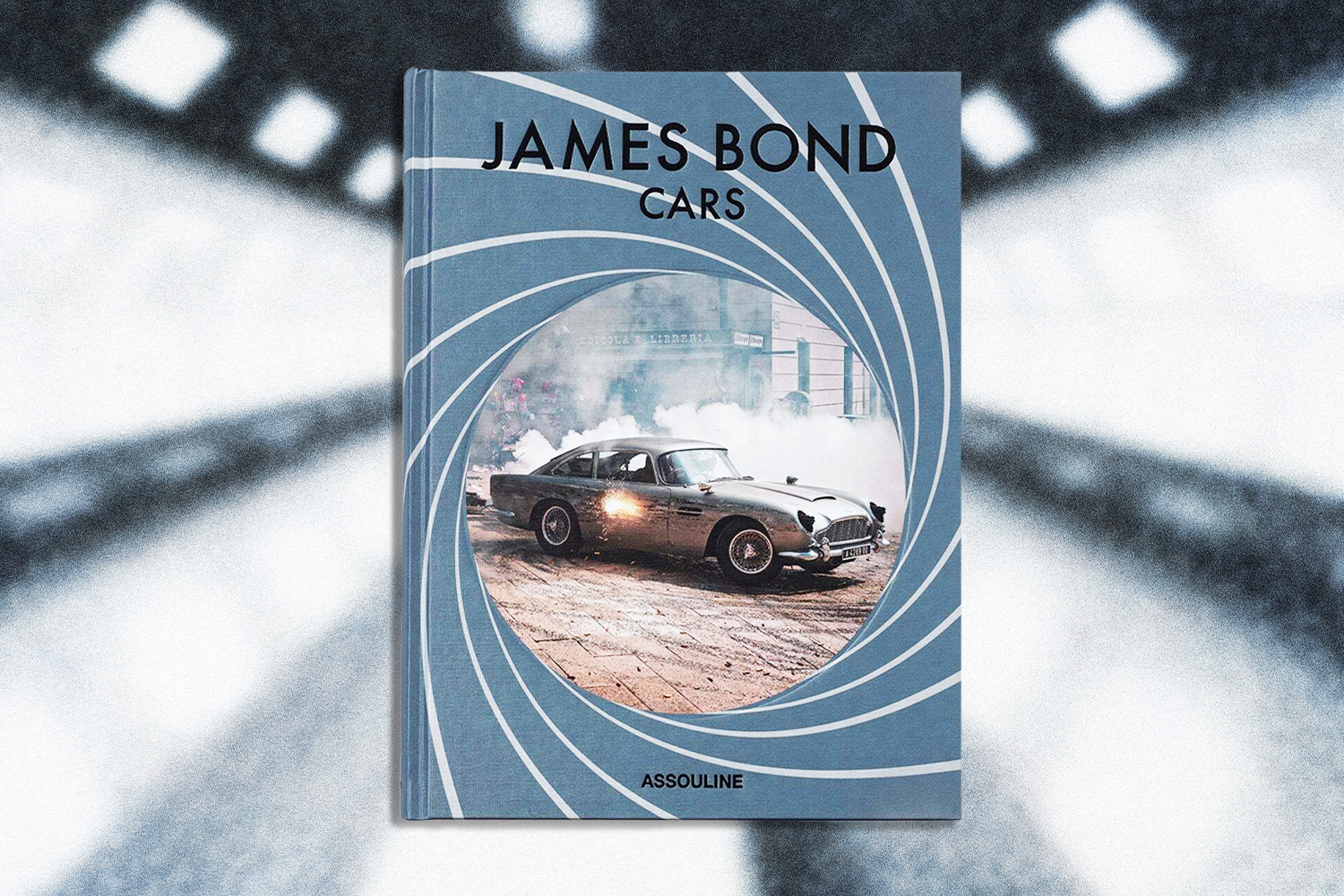
Since his first onscreen appearance in Goldfinger, James Bond has driven some of the most eye-catching high-performance vehicles the world has ever seen. Now, the new book James Bond Cars takes stock of a certain secret agent’s automobiles of choice. It’s a welcome trip through both automotive and cinematic history, and we have a selection of images from it here.
James Bond Cars, published by Assouline, was curated by Chris Corbould, whose screen credits include special effects work on decades of Bond’s onscreen adventures. (Corbould also won the Academy Award for Best Visual Effects for his work on Inception.) In addition to an array of images from the book, Corbould shared his thoughts and insights with InsideHook on some of the cars that James Bond made famous below.
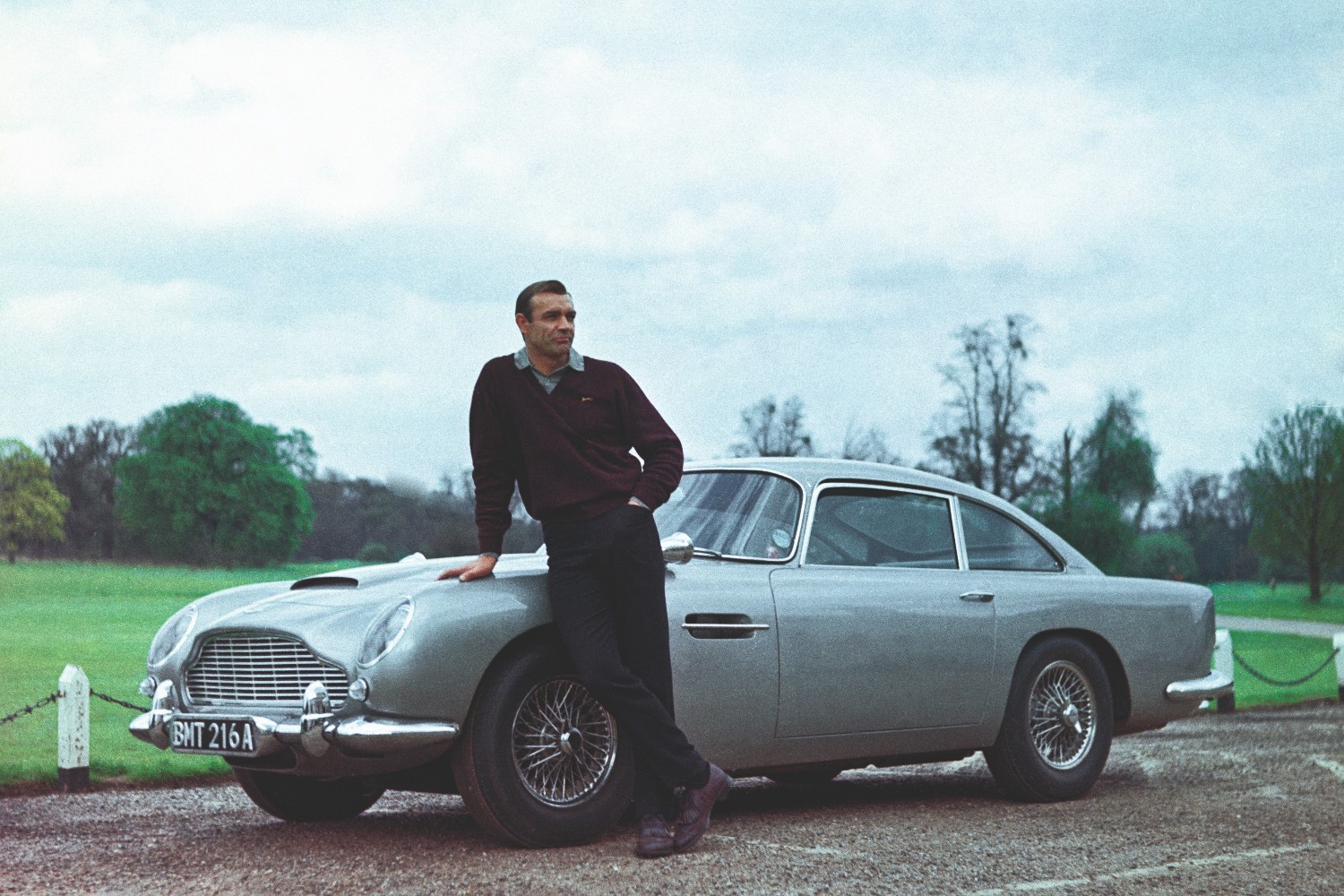
Aston Martin DB5 in Goldfinger (1964)
Obviously, Goldfinger was before my time. I was only about six when that came out. But it’s a beautiful car, and James Bond made it an iconic car, a legendary car. It went on to many James Bond films. I think that the marriage between Aston Martin and James Bond was sealed in that early film, and stood us in good stead for the rest of the series.
I did the Batman trilogy with Christopher Nolan. I started looking through on the internet to see when the first Batmobile was, and I couldn’t get a direct answer on that. But certainly, the DB5 was one of the first stylish cars to be involved in an action scene with gadgets, which I think really appealed to the audiences in those days.

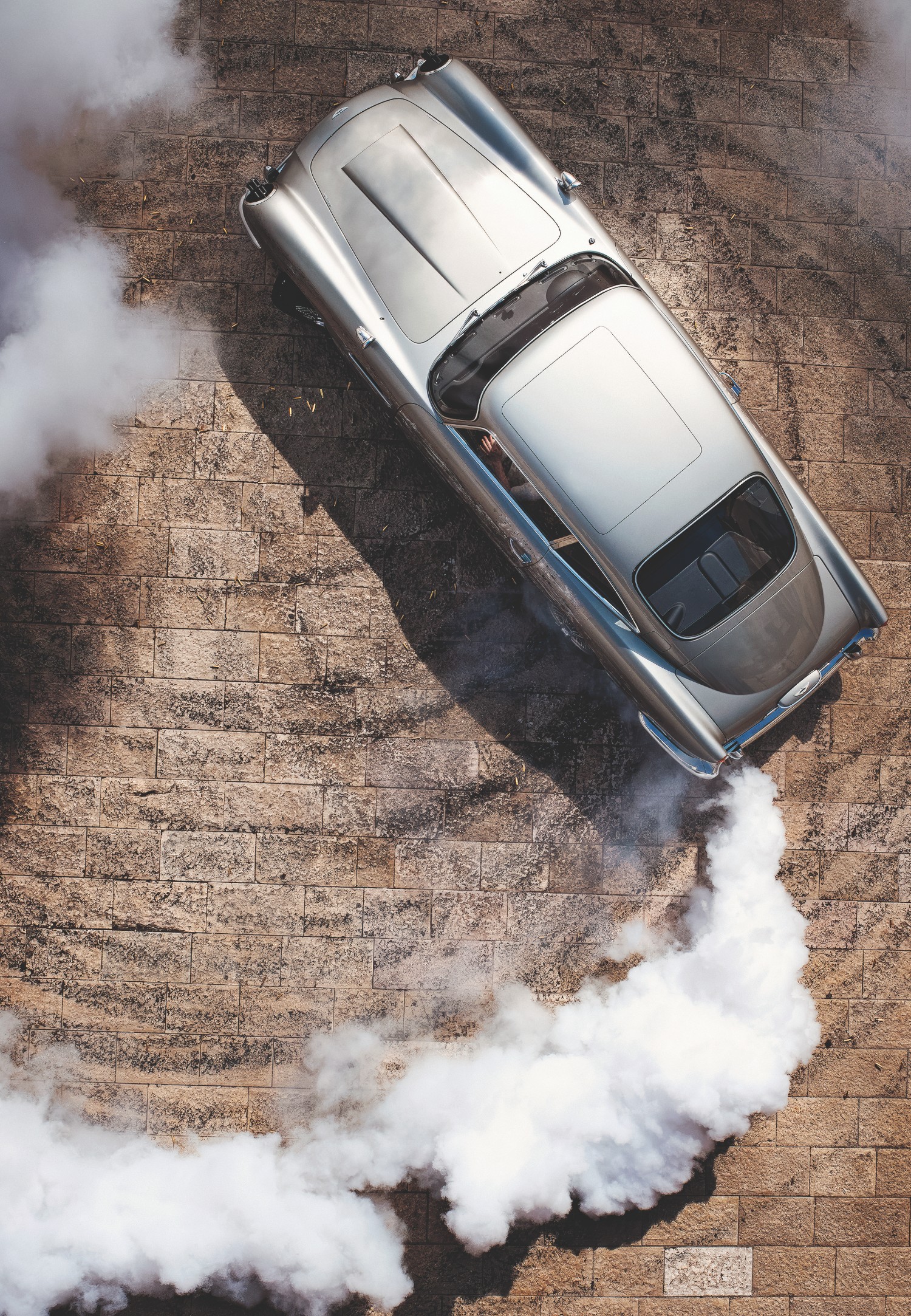
Aston Martin DB5 in No Time to Die (2021)
I could talk for about four hours about that sequence. I was heavily involved in designing the sequence, myself and Lee Morris and the stunt coordinator. At the start of the story of No Time to Die, Bond, in theory, had retired. Historically, his personal car was the DB5. So it made sense that that was going to be the car that opened the film.
We all started putting our ideas into what the chase could be, but we knew it was going to be the DB5. So my job was to go along to Aston Martin and talk to them about availability, etc. I went to Aston Martin and met up with [Chief Creative Officer] Marek Reichman and his team. I’ll never forget it: we were all sitting around a big table, and he said, “Well, Chris, what car are you planning to use in this film?” I said, “Well, it’s the DB5.”
There was a bit of a hush in the room because, obviously, they like to get their latest model in the film so they can sell more of them. But, you know, when they heard the DB5, it was, “OK, all right. Is that the main car?” “Yeah, it is the main car.” “OK, all right.”
So once they got used to that idea, Marek said, “Well, how many would you like? How many do you think you require?” So I said, “I think we need 10.” Again, there was a deadly silence in the room. And he said, “You really want 10 DB5s?”
I said, “Yeah, I think we’re going to need them, from what I know of the action sequence so far.” So once they got used to that idea — and they’re very good — they think about it for a little while and then they’re totally on board. They’re a great team at Aston Martin. We quickly came to the conclusion that we would have two pristine original DB5s for Daniel Craig to pull up in, pull away in, get out of. And then Aston Martin would build us eight others, identical replicas, which is what they did.
For two of them, my special effects man fitted driving pods on the roof so we could drive at high speed through Matera with Daniel and Léa Seydoux inside. They could concentrate on their acting without having to worry about skidding around corners. We left that to three-time British Rally champion Mark Higgins, who was driving it on the roof. Two of the other cars we put all the gadgets on. And then we had four other cars that were out-and-out stunt cars, totally roll-caged up.
At this stage, we didn’t actually know what the ending of the sequence was going to be. At one stage, Bond was going to get to the end and push his car off a cliff. We just wanted to make sure we had enough cars to do the sequence.
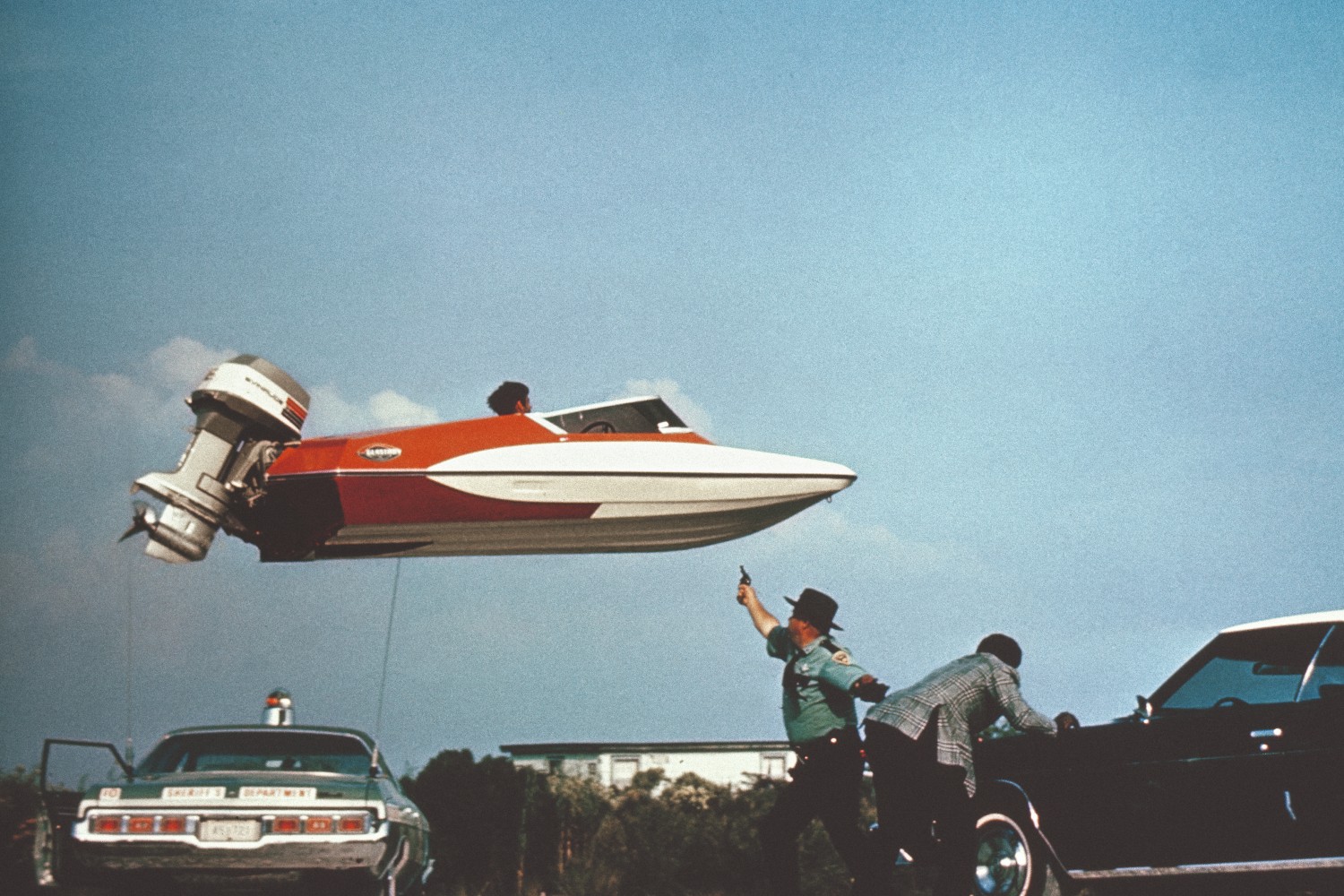
Glastron GT-150 Boat in Live and Let Die (1973)
That was a long way before my time. I know of the stunt and what I’ve read in the various magazines and whatever. I can’t give you any inside details on that particular stunt, unfortunately.

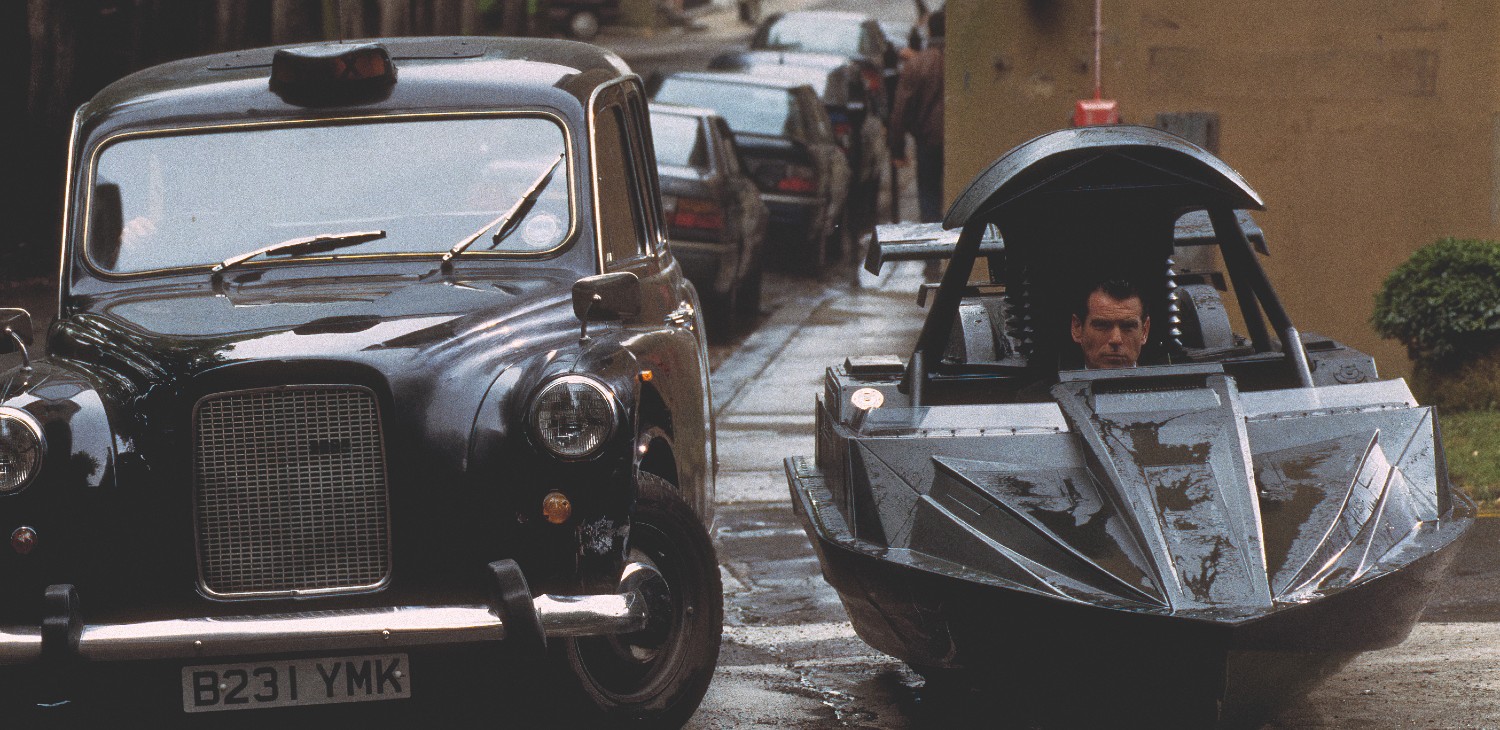
The Q Boat in The World Is Not Enough (1999)
For The World Is Not Enough, we did this spectacular chase up the River Thames with these boats. They’re shallow water jet boats, and they race round little islands at really high speed, and they can turn on the sixpence. I mean, they’re a vicious ride when you’re driving them. We shot this whole sequence with these boats up the River Thames, past the Houses of Parliament. We had an official complaint from the Houses of Parliament because we were making too much noise.
At one stage, Bond decides to take a shortcut, and he goes on land to take a shortcut to get to the Millennium Dome to cut off the baddie, as it were. And what you can see in that shot is the road version. In theory, he’s supposed to be skidding along in his hull, but obviously, to get the shots, we stuck a motorized engine inside with wheels so we could have an element of steering to get him across the land part of it.
What a New Biography of Ian Fleming Tells Us About James Bond’s Creator
A new look at Fleming’s life has gotten rave reviews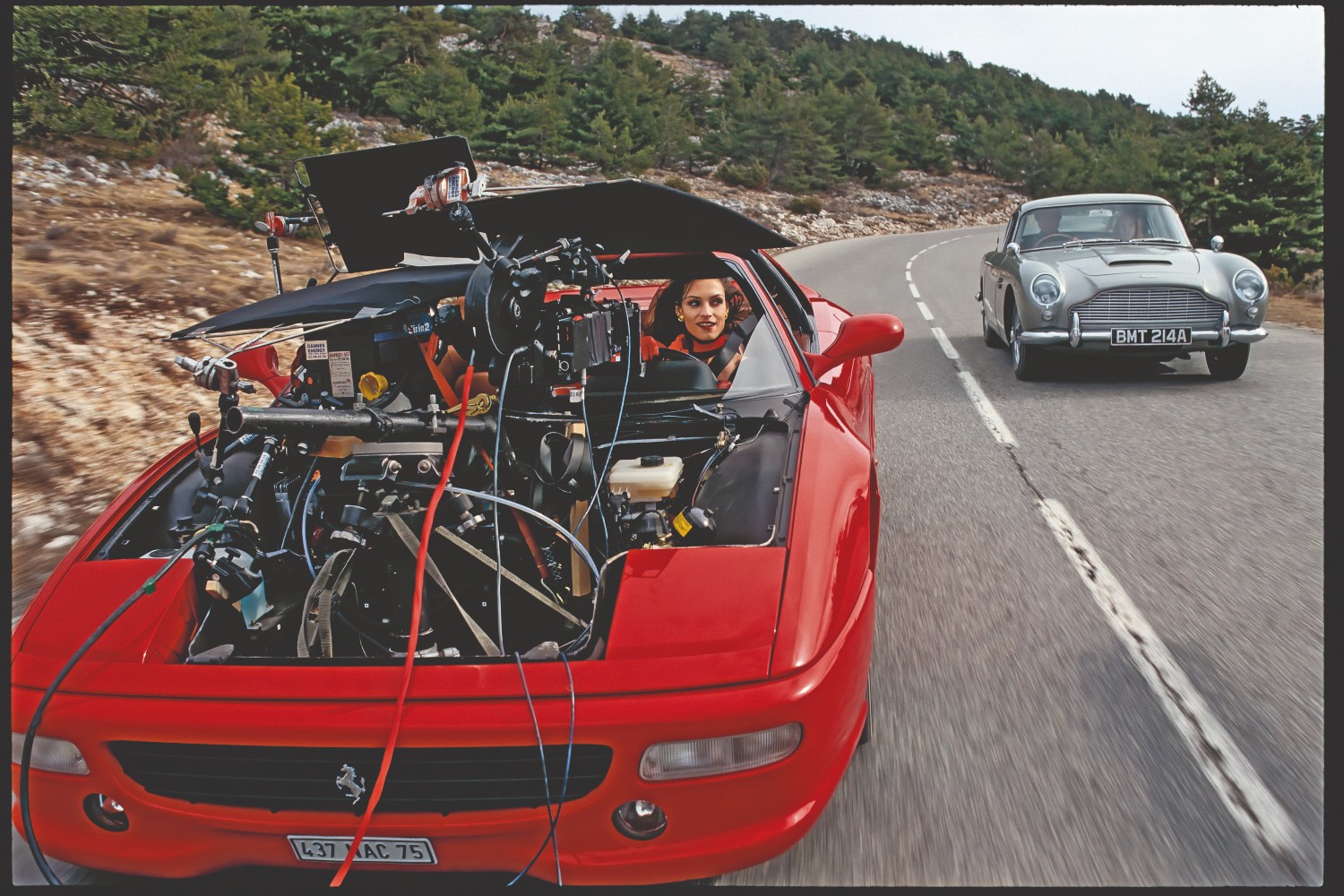
Ferrari F355 in GoldenEye (1995)
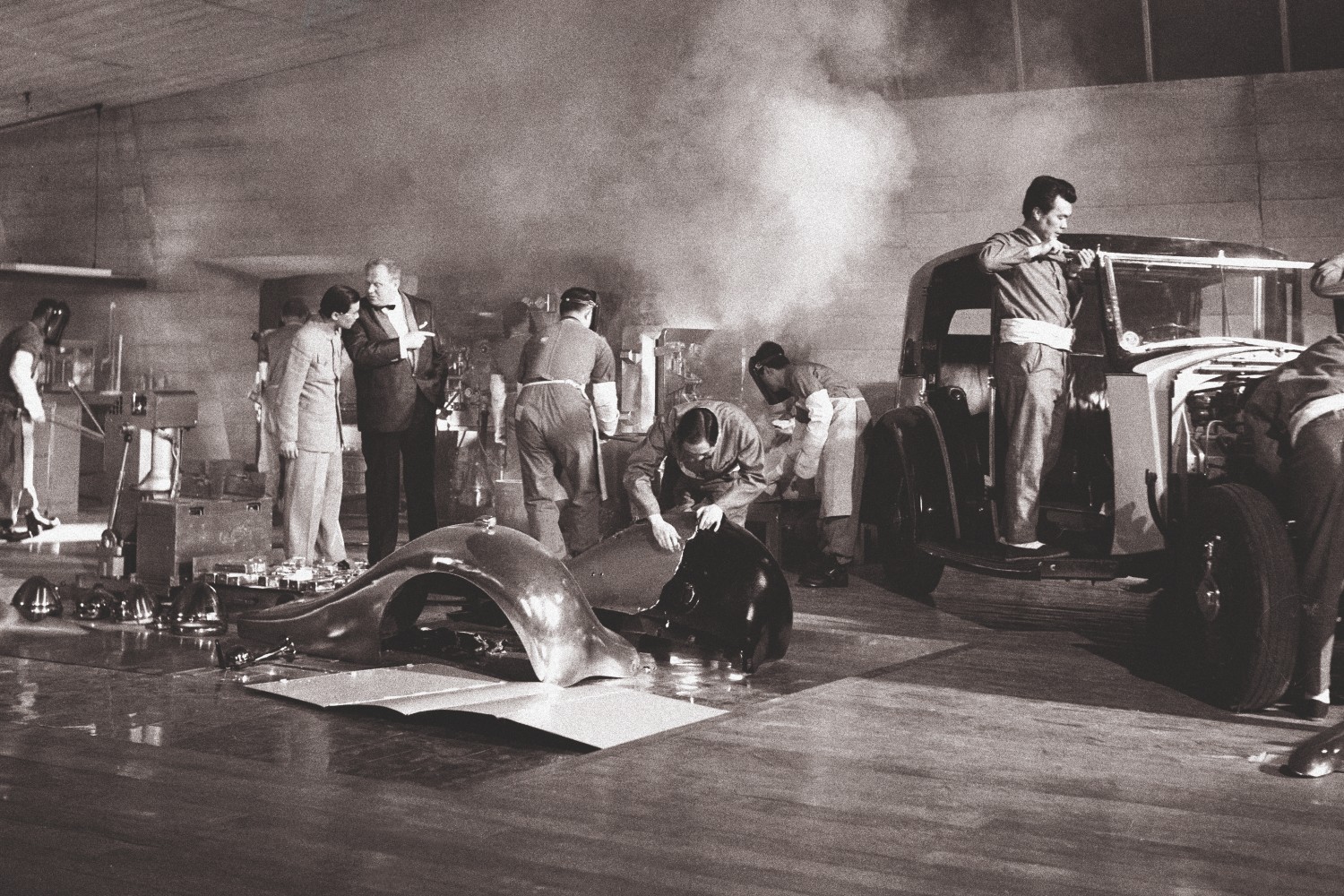
All of those mechanisms that you see on there are purely to mount the camera and the lights. Nothing more than that. Literally, they took off the bonnet so they could get the fixings on the engine brackets because the whole body is fiberglass, so not much to hold onto. They decided to take the bonnet off and put camera mounts on the engine, and across the top, there’s lights with gobos to make shades and all that.
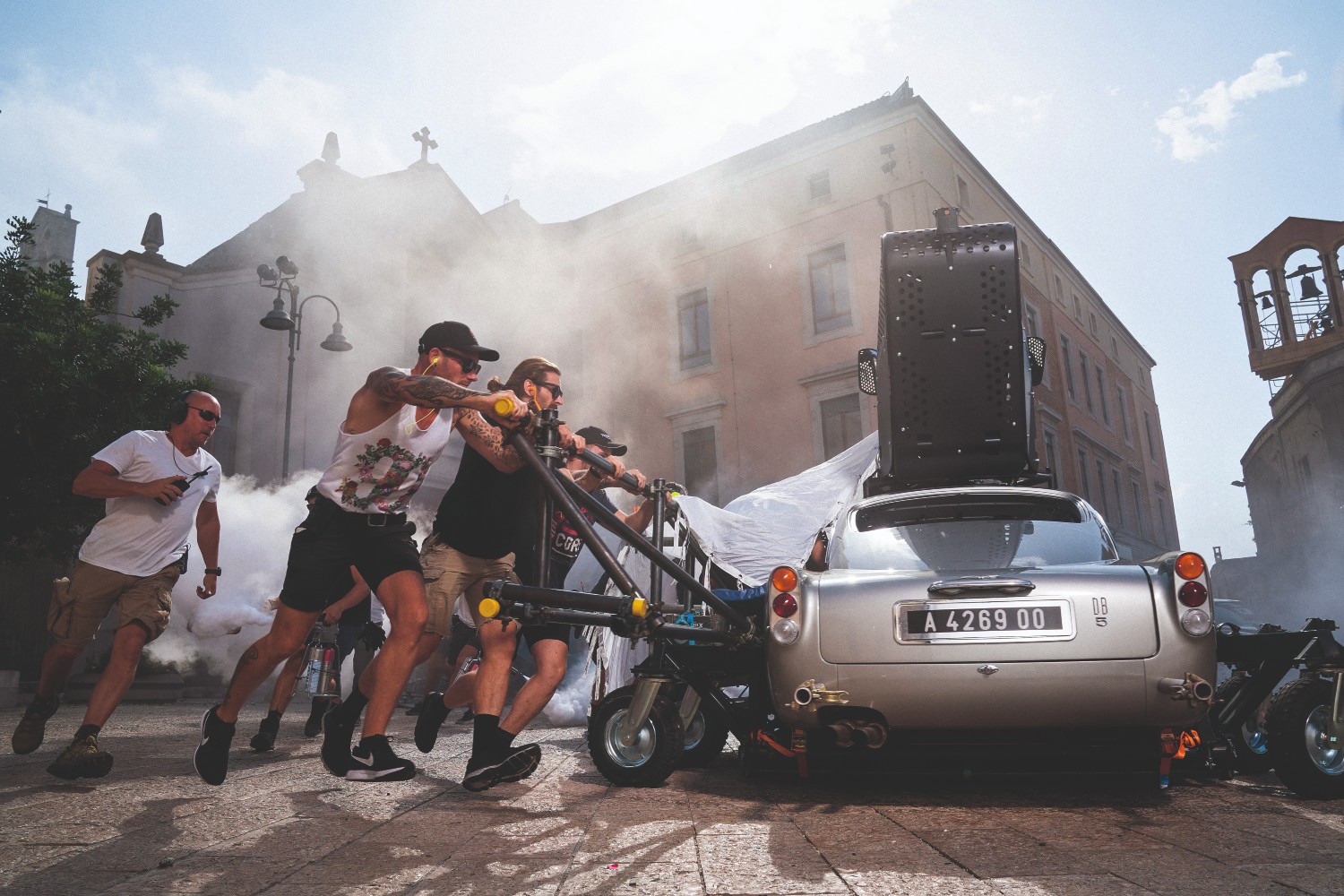
Aston Martin DB5 and Land Rover Defender in No Time to Die (2021)
I think, if I remember correctly, that was close-up shots inside the car of Daniel Craig and Léa Seydoux and we had to find a way of rotating it round in the easiest possible way many, many times without the risk of using the real engine to do it. We came up with this method of just putting wheels on it, almost on the back end of it on a trolley, and then pushing it round so they could go round and round and round and round perfectly safely.
We had two car chases in No Time to Die, and the Aston Martin was one. And then we had the brand new Land Rover Defender in the other sequence. That was a bit of a crash course, because the Land Rover Defender hadn’t been released yet. So we worked very closely with Jaguar Land Rover to get these vehicles; they were prototypes, really. Everywhere we went we had to keep them covered up so the press didn’t get a look at them before they were officially released.
We shot it on several locations. One was up in a private estate up in Scotland. We shot a part of it out in Norway. We shot a part of it in Windsor Great Park, when they’re in the fog. Because the winds were ever-changing, we had to have big smoke machines on every corner of the set, which was about a square mile.